Français (France)
  Nederlands (nl-NL)
 South India – Geographic and Historical Overview
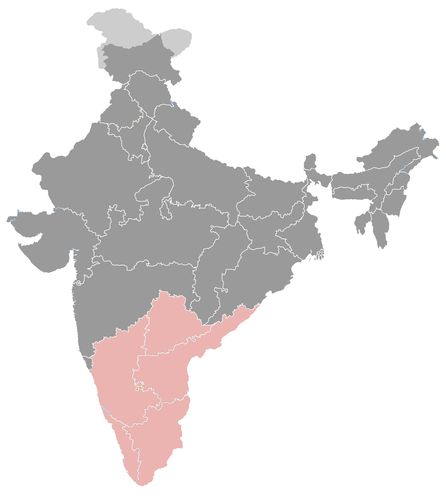
South India comprises the states of Tamil Nadu, Kerala, Karnataka, Andhra Pradesh, and Telangana. It covers the peninsular part of the subcontinent, bordered by the Western Ghats, the Eastern Ghats, and the Deccan Plateau, stretching to the shores of the Arabian Sea and the Bay of Bengal. Major rivers include the Godavari, Krishna, Kaveri, and Periyar.
Historically, South India developed distinctive political, cultural, and religious traditions while maintaining connections with the wider Indian world. The region saw the rise of temple cities, unique Dravidian architecture, and a network of structured regional kingdoms. Religious traditions such as Hinduism, Jainism, and Buddhism flourished here, along with later Islamic and Christian influences. Its coastal position also enabled active maritime trade with Southeast Asia, the Arab world, and Europe.
Power and Religion in Southern India
In Southern India, dynasties often tied their political power to the dominant religion—most commonly Hinduism—to affirm their legitimacy and strengthen authority. Temples functioned not only as spiritual centers but also as economic and cultural hubs, enhancing the ruler’s prestige. Monumental construction and state-funded rituals reflected the central role of religion in governance.
However, some dynasties also sponsored minority religions such as Jainism, Buddhism, or, later, Islam, to promote tolerance, encourage trade, or consolidate alliances. This selective patronage, though less common, demonstrated a pragmatic approach to power.
India did not experience religious wars comparable to those in Europe, but tensions could arise when certain cults were deemed non-conforming or politically undesirable. In such cases, places of worship could be converted or destroyed, not out of doctrinal hostility, but for reasons of territorial or symbolic control.
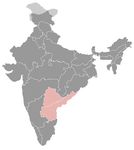
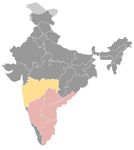
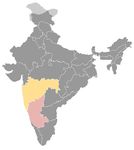
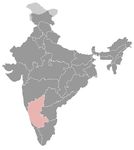
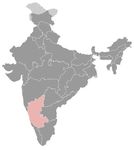
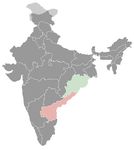
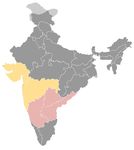
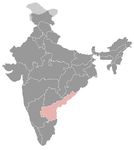
This page organises the dynasties of South India, according to a chronological structure based on millennia and centuries. The associated maps indicate the present-day location of the relevant states and link to the detailed pages.
1st millennium BCE
4th century BCE
Dominant religions, depending on the period: Hinduism, Buddhism
Supported or encouraged religion: Jainism.
( Assam, Bihar, Delhi (NTC), Goa, Gujarat, Himachal Pradesh, Karnataka, Kerala, Madhya Pradesh, Maharashtra, Odisha, Punjab, Rajasthan, Tamil Nadu, Telangana, Uttar Pradesh, Andhra Pradesh, Chhattisgarh, Haryana, Jharkand, Manipur, Meghalaya and Uttarakhand )
3rd century BCE
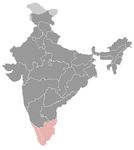
Dominant religion: Hinduism
Supported or encouraged religions, depending on the period: Buddhism, Jainism, Christianity.
( Kerala, Madhya Pradesh and Tamil Nadu )
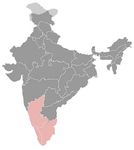
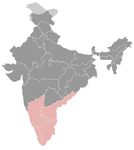
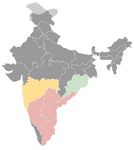
Dominant religion: Hinduism
Supported or encouraged religion: Buddhism.
( Goa, Karnataka, Maharashtra, Odisha, Tamil Nadu, Telangana and Andhra Pradesh )
2nd century BCE
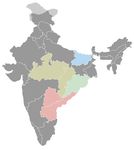
1st century BCE
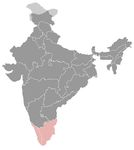
Dominant religion: Hinduism
Supported or encouraged religion: Christianity.
( Kerala and Tamil Nadu )
1st millennium
3rd century
4th century
5th century
6th century
7th century
8th century
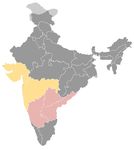
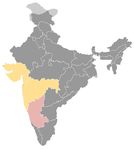
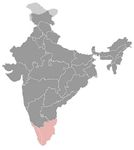
Dominant religion: Hinduism
Supported or encouraged religions, depending on the period: Islam, Christianity.
( Kerala and Tamil Nadu )
9th century
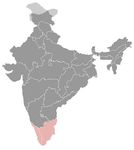
Dominant religion: Hinduism
Supported or encouraged religions, depending on the period: Buddhism, Christianity.
( Kerala, Madhya Pradesh and Tamil Nadu )
10th century
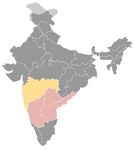
Dominant religion: Hinduism
Supported or encouraged religions, depending on the period: Buddhism, Jainism.
( Goa, Karnataka, Madhya Pradesh, Maharashtra, Telangana and Andhra Pradesh )
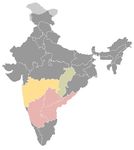
Dominant religion: Hinduism
Supported or encouraged religions, depending on the period: Buddhism, Jainism.
( Karnataka, Madhya Pradesh, Maharashtra, Telangana, Andhra Pradesh and Chhattisgarh )
2nd millennium
11th century
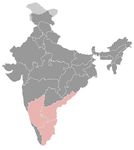
Dominant religion: Hinduism
Supported or encouraged religion: Jainism.
( Karnataka, Tamil Nadu and Andhra Pradesh )
12th century
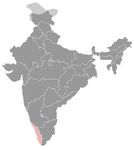
Dominant religion: Hinduism
Supported or encouraged religions, depending on the period: Islam, Christianity.
( Kerala )
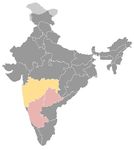
Dominant religion: Hinduism
Supported or encouraged religion: Jainism.
( Karnataka, Maharashtra and Telangana )
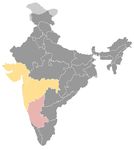
13th century
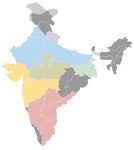
Dominant religion: Islam
Supported or encouraged religions, depending on the period: Hinduism, Buddhism, Jainism.
( Bihar, Delhi (NTC), Gujarat, Karnataka, Madhya Pradesh, Maharashtra, Punjab, Rajasthan, Tamil Nadu, Telangana, Uttar Pradesh, West Bengal, Haryana, Jharkand and Uttarakhand )
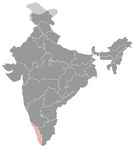
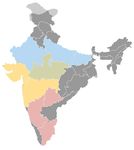
Dominant religion: Hinduism
( Bihar, Delhi (NTC), Gujarat, Karnataka, Madhya Pradesh, Maharashtra, Rajasthan, Tamil Nadu, Telangana and Uttar Pradesh )
14th century
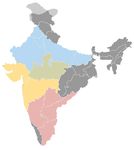
Dominant religion: Islam
( Bihar, Delhi (NTC), Goa, Gujarat, Karnataka, Madhya Pradesh, Maharashtra, Odisha, Punjab, Rajasthan, Tamil Nadu, Telangana, Uttar Pradesh, West Bengal, Andhra Pradesh, Chhattisgarh and Haryana )
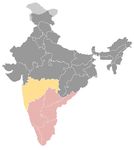
Dominant religion: Hinduism
( Goa, Karnataka, Kerala, Maharashtra, Tamil Nadu and Andhra Pradesh )
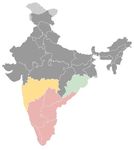
Dominant religion: Hinduism
Supported or encouraged religion: Jainism.
( Goa, Karnataka, Kerala, Maharashtra, Odisha, Tamil Nadu, Telangana and Andhra Pradesh )
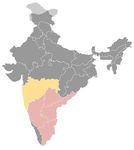
Dominant religion: Islam
Supported or encouraged religion: Hinduism.
( Goa, Karnataka, Maharashtra, Tamil Nadu, Telangana and Andhra Pradesh )
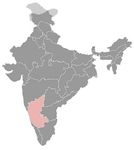
15th century
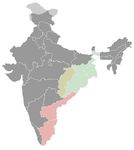
Dominant religion: Hinduism
( Odisha, Tamil Nadu, West Bengal, Andhra Pradesh, Chhattisgarh and Jharkand )
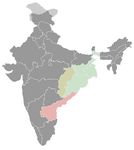
Dominant religion: Hinduism
Supported or encouraged religions, depending on the period: Buddhism, Jainism.
( Odisha, West Bengal, Andhra Pradesh, Chhattisgarh and Jharkand )
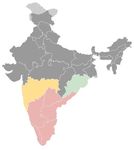
Dominant religion: Hinduism
Supported or encouraged religion: Jainism.
( Goa, Karnataka, Kerala, Maharashtra, Odisha, Tamil Nadu, Telangana and Andhra Pradesh )
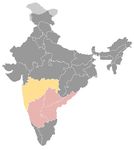
Dominant religion: Islam
( Goa, Karnataka, Maharashtra, Telangana and Andhra Pradesh )
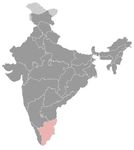
Dominant religion: Hinduism
( Tamil Nadu )
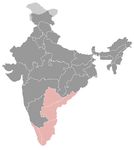
Dominant religion: Hinduism
Supported or encouraged religions, depending on the period: Islam, Christianity.
( Kerala, Tamil Nadu, Telangana and Andhra Pradesh )
16th century
Dominant religion: Hinduism
Supported or encouraged religion: Jainism.
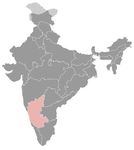
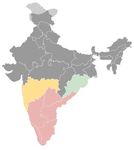
( Goa, Karnataka, Kerala, Maharashtra, Odisha, Tamil Nadu, Telangana and Andhra Pradesh )
Dominant religion: Islam
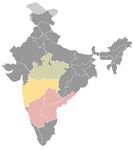
( Karnataka, Madhya Pradesh, Maharashtra, Telangana and Andhra Pradesh )
Dominant religion: Islam
Supported or encouraged religions, depending on the period: Hinduism, Jainism, Christianity, zoroastrianism.
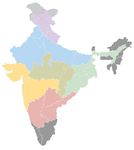
( Assam, Bihar, Delhi (NTC), Gujarat, Himachal Pradesh, Karnataka, Ladakh, Madhya Pradesh, Maharashtra, Odisha, Punjab, Rajasthan, Telangana, Uttar Pradesh, West Bengal, Andhra Pradesh, Chhattisgarh, Haryana, Jammu & Kashmir, Jharkand and Uttarakhand )
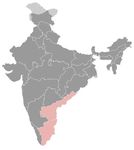
Dominant religion: Hinduism
( Tamil Nadu and Andhra Pradesh )
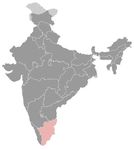
Dominant religion: Hinduism
( Tamil Nadu )
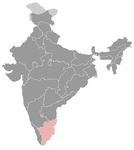
Dominant religion: Hinduism
( Tamil Nadu )
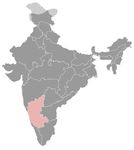
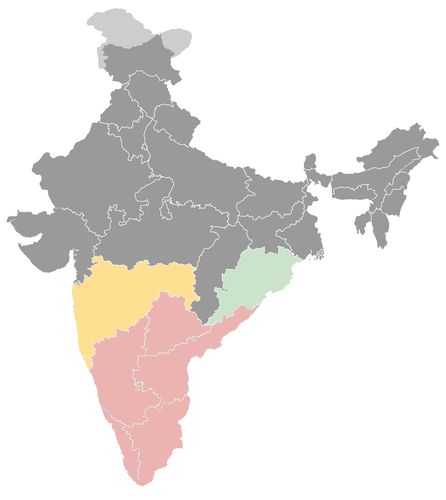
Dominant religion: Hinduism
Supported or encouraged religion: Jainism.
( Goa, Karnataka, Kerala, Maharashtra, Odisha, Tamil Nadu, Telangana and Andhra Pradesh )
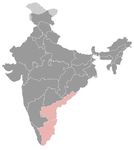
Dominant religion: Hinduism
( Tamil Nadu and Andhra Pradesh )
17th century
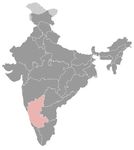
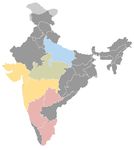
Dominant religion: Hinduism
Supported or encouraged religion: Islam.
( Gujarat, Karnataka, Madhya Pradesh, Maharashtra, Tamil Nadu, Telangana and Uttar Pradesh )
18th century
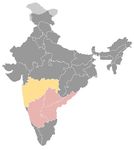
Dominant religion: Islam
Supported or encouraged religion: Hinduism.
( Karnataka, Madhya Pradesh, Maharashtra, Telangana and Andhra Pradesh )
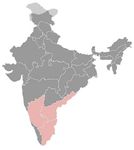
Dominant religion: Islam
Supported or encouraged religions, depending on the period: Hinduism, Christianity.
( Karnataka )
19th century

( Assam, Bihar, Delhi (NTC), Gujarat, Himachal Pradesh, Karnataka, Kerala, Madhya Pradesh, Maharashtra, Odisha, Punjab, Rajasthan, Tamil Nadu, Telangana, Uttar Pradesh, West Bengal, Andhra Pradesh, Chhattisgarh, Haryana, Jharkand, Meghalaya, Mizoram, Nagaland, Tripura and Uttarakhand )
20th century
( Assam, Bihar, Delhi (NTC), Goa, Gujarat, Himachal Pradesh, Karnataka, Kerala, Madhya Pradesh, Maharashtra, Odisha, Punjab, Rajasthan, Sikkim, Tamil Nadu, Telangana, Uttar Pradesh, West Bengal, Andhra Pradesh, Chhattisgarh, Haryana, Jharkand, Meghalaya, Mizoram, Tripura and Uttarakhand )
 Links to the main sections of the site