

 Français (France)
  Nederlands (nl-NL)
 • Use the markers to explore the content •


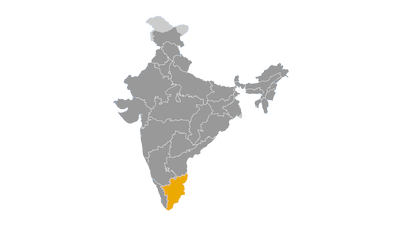
Tamil Nadu Through the Ages: From Ancient Tamil Kingdoms to a Modern Indian State
A Cradle of Dravidian Civilization
Tamil Nadu occupies a unique position in the history of the Indian subcontinent due to the remarkable continuity of its language, culture and political traditions. Located at the southern tip of the Indian peninsula, the region became the centre of Tamil civilization, one of the oldest continuously living cultural traditions in the world.
Human settlement in the area dates back to prehistoric times. Archaeological discoveries from the Paleolithic and Neolithic periods indicate the presence of early human communities across various parts of the region. During the Iron Age and Megalithic period, large numbers of burial monuments, stone circles and dolmens appeared throughout present-day Tamil Nadu.
Recent excavations at the archaeological site of Keezhadi in the Vaigai River valley have transformed scholarly understanding of early Tamil society. The discoveries suggest the existence of an advanced urban culture with literacy, craft specialization and organised trade networks several centuries before the beginning of the Common Era.
The Sangam Age and the Early Tamil Kingdoms
Between approximately the third century BCE and the third century CE, Tamil Nadu experienced the period known as the Sangam Age, often regarded as the classical era of Tamil civilization.
The history of this period is documented through an extensive body of Tamil literature composed by poets associated with literary academies known as Sangams. These texts provide valuable information about political institutions, social life, warfare and trade.
Three major dynasties dominated the region during this period: the Cholas in the Kaveri basin, the Pandyas around Madurai and the Cheras in the western territories corresponding largely to present-day Kerala.
The prosperity of these kingdoms depended heavily on maritime trade. Tamil ports maintained commercial relations with the Roman Empire, the Arabian Peninsula and Southeast Asia. Roman coins and imported goods discovered at archaeological sites testify to the intensity of these exchanges.
The Sangam period established Tamil as one of the principal literary and administrative languages of South Asia and laid the foundations of a distinct regional identity that remains strong today.
The Kalabhra Interregnum and Religious Change
Between the third and sixth centuries CE, the political history of Tamil Nadu becomes less clear due to the limited availability of written sources. This era is often referred to as the Kalabhra Interregnum.
The origins and identity of the Kalabhras remain uncertain, but their rule appears to have disrupted the dominance of the traditional Tamil dynasties.
The period witnessed the expansion of Buddhism and Jainism in southern India. Both religions received patronage from local elites and contributed to the development of educational and monastic institutions.
From the sixth century onward, the Bhakti movement transformed the religious landscape. The devotional traditions of Shaivism and Vaishnavism spread rapidly through the activities of poet-saints known as the Nayanmars and Alvars.
The Rise of the Pallavas
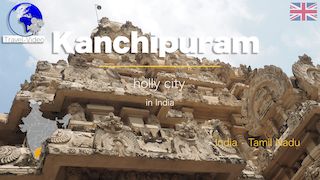
From the sixth century, the Pallava dynasty emerged as the dominant political power in northern Tamil Nadu. Ruling from their capital at Kanchipuram, the Pallavas controlled much of southeastern India for several centuries.
Their reign marked a decisive stage in the development of Dravidian architecture. Rock-cut temples and structural stone temples constructed under Pallava patronage became models for later South Indian dynasties.
The monuments of Mamallapuram represent some of the finest examples of early Dravidian art and architecture. During this period, maritime contacts with Southeast Asia intensified, facilitating the spread of Indian cultural influences throughout the region.
The Pallavas also played an important role in promoting Sanskrit learning while simultaneously encouraging the development of Tamil literary traditions.
The Zenith of the Chola Empire
Between the ninth and thirteenth centuries, Tamil Nadu entered one of the most remarkable periods in its history with the rise of the Chola Empire.
Under rulers such as Rajaraja I and Rajendra I, the Cholas created a powerful empire extending far beyond southern India. Their influence reached Sri Lanka, the Maldives and parts of Southeast Asia.
The Chola administration became famous for its efficiency and sophistication. Extensive irrigation systems, reservoirs and canals increased agricultural productivity in the fertile Kaveri delta and supported a growing population.
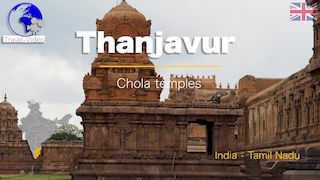
Economic prosperity enabled extraordinary achievements in architecture, sculpture and bronze casting. Temples constructed during this period rank among the masterpieces of Indian civilization.
The Brihadisvara Temple at Thanjavur remains one of the greatest monuments of South Asian architecture and illustrates the political and religious ambitions of the Chola rulers.
The Cholas also developed one of the most powerful naval forces in medieval Asia, transforming Tamil Nadu into a major maritime centre of the Indian Ocean world.
The Revival of the Pandyas and Northern Invasions
From the thirteenth century onward, Chola influence gradually declined while the Pandya dynasty regained prominence in southern Tamil Nadu.
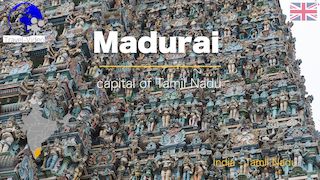
Madurai emerged as a major political and cultural centre. However, this period also witnessed the arrival of new military powers from northern India.
In the early fourteenth century, armies of the Delhi Sultanate under the command of Malik Kafur launched military campaigns into southern India. These invasions weakened the traditional Tamil kingdoms and altered regional power balances.
For a brief period, the Madurai Sultanate controlled portions of Tamil territory before being replaced by new regional powers.
Vijayanagara and the Nayak States
From the fourteenth century, Tamil Nadu increasingly came under the influence of the Vijayanagara Empire, which became the dominant political force in southern India.
The rulers of Vijayanagara governed much of Tamil Nadu through provincial governors known as Nayaks. Following the decline of the empire in the sixteenth century, several Nayak rulers became effectively independent.
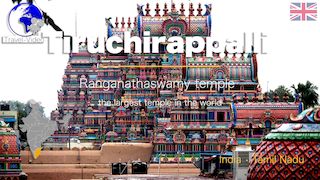
The Nayaks of Madurai, Thanjavur and Gingee played an important role in the cultural and architectural development of the region. Many temples were expanded during this period through the construction of enormous gopurams, the monumental gateway towers that characterize South Indian temple architecture today.
The Nayak period also witnessed significant developments in literature, music and dance traditions that continue to influence Tamil culture.
Marathas, Europeans and Colonial Rivalries
During the seventeenth and eighteenth centuries, Tamil Nadu became an arena of competition involving the Marathas, the Nawabs of Arcot and various European powers.
The Marathas established control over Thanjavur, where a Maratha dynasty ruled for nearly two centuries.
At the same time, European trading companies expanded their presence along the Coromandel Coast. The Portuguese were followed by the Dutch, the French and eventually the British.
The establishment of Madras by the East India Company in 1639 marked a turning point in the history of the region. The city rapidly developed into one of the principal administrative and commercial centres of British India.
British Rule and the Madras Presidency
During the nineteenth century, Tamil Nadu became part of the Madras Presidency, one of the largest administrative divisions of British India.
The colonial administration introduced railways, ports and modern educational institutions. Commercial agriculture expanded, while Madras emerged as an important centre of intellectual and political activity.
The city became a focal point for social reform movements, educational development and the growth of modern political consciousness in southern India.
Nationalism and the Dravidian Movement
Tamil Nadu played an important role in India's struggle for independence. Numerous political leaders, intellectuals and activists from the region participated in nationalist movements throughout the twentieth century.
Alongside Indian nationalism, a distinct political movement emerged in southern India: the Dravidian movement. It criticised perceived northern domination and advocated for the protection of Tamil language and culture.
This movement profoundly influenced the political landscape of post-independence Tamil Nadu and continues to shape regional politics today.
The Formation of Modern Tamil Nadu
Following Indian independence in 1947, the region became part of Madras State.
The linguistic reorganisation of Indian states in 1956 led to adjustments of state boundaries according to major language groups. In 1969, Madras State was officially renamed Tamil Nadu, meaning "Land of the Tamils".
Since then, politics in the state has largely been dominated by parties emerging from the Dravidian movement, whose influence extends beyond politics into education, social policy and cultural life.
A Historical Legacy in Contemporary India
The history of Tamil Nadu is distinguished by an extraordinary degree of cultural continuity. Few regions of the world have preserved a literary language, social traditions and regional identity over more than two thousand years with such continuity.
This historical legacy explains the distinctive position that Tamil Nadu occupies within contemporary India. The state represents both one of the oldest centres of civilization in South Asia and one of the most dynamic economic and cultural regions of modern India.
Its history demonstrates how ancient traditions and modern development can coexist within a society that remains deeply conscious of its historical roots while actively participating in the transformations of the twenty-first century.


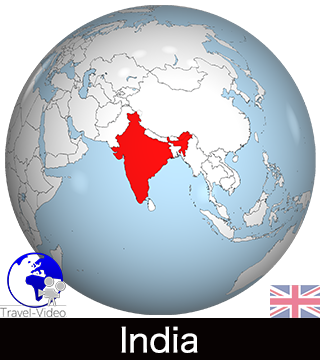
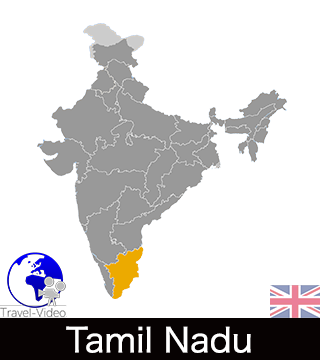


Contemporary Tamil Nadu: Dravidian Heritage, Industrial Growth and Maritime Connections in Southern India
A Major State at the Southern Tip of India
Tamil Nadu occupies the southeastern extremity of the Indian peninsula and ranks among the country's most urbanised, industrialised and economically diversified states. Bordered by the Bay of Bengal to the east, the Indian Ocean to the south and the Arabian Sea through the Gulf of Mannar and the Palk Strait, the state occupies a strategic position along the maritime routes of the Indian Ocean.
Tamil Nadu shares land borders with Kerala to the west, Karnataka to the northwest and Andhra Pradesh to the north. The Union Territory of Puducherry also consists of several enclaves located within Tamil Nadu's territory.
The capital city, Chennai, serves as the state's principal administrative, industrial, financial and cultural centre and is one of the largest metropolitan areas in India.
Geography and Physical Features
Despite its association with extensive coastal plains, Tamil Nadu possesses a varied physical geography. Much of the eastern part of the state consists of fertile plains stretching along more than one thousand kilometres of coastline bordering the Bay of Bengal.
The western and northwestern regions are dominated by sections of the Western Ghats and Eastern Ghats mountain systems. The Nilgiri Hills, Anaimalai Hills, Palni Hills and Shevaroy Hills form some of the most important highland areas.
The state's highest point is Doddabetta in the Nilgiri Hills, which rises to 2,637 metres above sea level.
The river system is dominated by the Kaveri River, which serves as the principal source of irrigation and supports one of India's most productive agricultural regions in its delta. Other important rivers include the Vaigai, Palar, Tamiraparani and Bhavani.
The coastline contains several important ecosystems, including the mangrove forests of Pichavaram and the coral reefs of the Gulf of Mannar.
Climate and Environmental Conditions
Tamil Nadu experiences a tropical climate with relatively high temperatures throughout the year. Unlike much of India, the state relies heavily on the northeast monsoon, which provides the majority of annual rainfall between October and December.
This climatic pattern strongly influences agricultural cycles and water management strategies.
Coastal districts are periodically exposed to tropical cyclones originating in the Bay of Bengal, while interior regions often experience drought conditions and water shortages.
Environmental management has become increasingly important due to rapid urbanisation, industrial expansion and growing pressure on water resources.
Climate change, coastal erosion and groundwater depletion are among the major environmental challenges facing the state.
Population and Demographic Characteristics
Tamil Nadu has a population exceeding seventy million inhabitants and ranks among India's most densely populated states. It also possesses one of the country's highest levels of urbanisation.
The overwhelming majority of the population belongs to the Tamil linguistic community, which maintains a particularly strong regional identity based on language, literature and cultural traditions.
Tamil serves as the official language of administration, education and public life. English also plays an important role in higher education, business and international communication.
Hinduism is the dominant religion, but the state also contains substantial Muslim and Christian communities. Christianity has deep historical roots in parts of the coastal regions due to early trade contacts and later European influence.
Smaller Jain, Buddhist and Sikh communities are also present, reflecting the state's long history of cultural interaction.
Chennai and the Major Urban Centres
Chennai is India's fourth-largest metropolitan area and one of the country's most important economic centres. The city hosts major automotive, information technology, pharmaceutical and port industries.
Coimbatore serves as the principal industrial centre of western Tamil Nadu and plays a major role in textiles, engineering and information technology services.
Madurai remains one of southern India's leading cultural and religious centres because of its historical importance and commercial influence.
Tiruchirappalli occupies a strategic position in the Kaveri basin, while Salem, Erode, Hosur and Tiruppur function as important industrial and commercial centres.
Tiruppur has developed into one of the world's major hubs for garment manufacturing and textile exports.
Administrative Organisation and Political Structure
Tamil Nadu operates within India's federal constitutional system and is governed by an elected Legislative Assembly, a Chief Minister and a Governor representing the Union government.
The state is divided into districts responsible for local administration, infrastructure development and public services.
Political life in Tamil Nadu has been dominated for decades by parties originating from the Dravidian movement. Their influence extends well beyond electoral politics and has shaped social policy, education and cultural institutions.
This political continuity has contributed to relatively stable governance and long-term development planning.
Transportation and Infrastructure
Tamil Nadu possesses one of India's most developed transportation networks. National highways connect major cities and industrial centres efficiently across the state and with neighbouring regions.
The railway network is extensive and provides important links both within southern India and to the rest of the country.
The Port of Chennai ranks among India's largest and busiest ports. Other major ports such as Ennore, Thoothukudi and Nagapattinam also play significant roles in international trade.
Chennai International Airport serves as one of southern India's principal aviation hubs, while Coimbatore, Madurai, Tiruchirappalli and Thoothukudi also maintain important airports.
The state's extensive infrastructure has contributed significantly to industrial growth and export-oriented economic development.
Agriculture and Rural Economy
Although industry and services dominate the modern economy, agriculture remains an important source of employment and income in many districts.
Rice cultivation dominates the fertile Kaveri delta, often referred to as the rice bowl of Tamil Nadu. Other important crops include sugarcane, cotton, bananas, coconuts, groundnuts and various spices.
The state is also a major producer of flowers, fruits and horticultural products.
Irrigation systems, reservoirs and tanks inherited from earlier historical periods continue to play a central role in agricultural production.
However, irregular rainfall and water disputes concerning river sharing have increased pressure on agricultural communities in recent decades.
Industrial Development and Modern Economy
Tamil Nadu possesses one of the largest and most diversified economies among Indian states.
The manufacturing sector is particularly important. The Chennai metropolitan region is sometimes referred to as the "Detroit of India" because of its concentration of automobile manufacturers and suppliers.
The state is also a major centre for textiles, electronics, petrochemicals, pharmaceuticals and heavy engineering industries.
Information technology and business services have expanded rapidly, particularly in Chennai and Coimbatore. Technology parks and special economic zones attract both domestic and foreign investment.
Tamil Nadu has additionally become one of India's leading producers of renewable energy, especially wind power and solar energy.
Maritime Trade and Tourism
The state's long coastline has historically connected Tamil Nadu with Southeast Asia, the Middle East and Europe. Maritime trade continues to play an important role in the economy through ports and shipping infrastructure.
Tourism represents another major source of revenue and employment. Historical monuments, temple architecture, beaches and hill stations attract millions of domestic and international visitors each year.
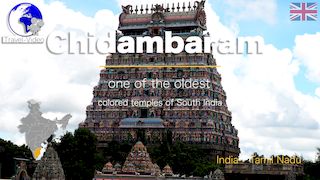
Religious tourism occupies a particularly important position, with destinations such as Madurai, Rameswaram, Chidambaram and Kanchipuram receiving large numbers of pilgrims.
Cultural Identity and Contemporary Society
Tamil culture remains the defining characteristic of the state's identity. The Tamil language possesses a literary tradition extending over two millennia and continues to occupy a central position in public life.
Classical Carnatic music and Bharatanatyam dance remain major artistic traditions and continue to receive institutional support.
Festivals such as Pongal, the harvest celebration, play an important role in social life and reflect the continuing importance of agricultural traditions.
Traditional crafts remain economically and culturally significant, including silk weaving in Kanchipuram, bronze casting and stone sculpture inherited from earlier historical periods.
Education and Future Challenges
Tamil Nadu possesses one of India's strongest educational systems and hosts numerous universities, engineering colleges and research institutions.
The state has achieved high levels of literacy, healthcare provision and industrial employment compared with many other parts of India.
Nevertheless, important challenges remain. Water scarcity, environmental pollution, urban congestion and the effects of climate change increasingly influence public policy.
Reducing inequalities between rapidly developing metropolitan regions and less prosperous rural districts also remains an important objective.
Contemporary Tamil Nadu therefore represents one of India's principal economic engines while maintaining a strong cultural identity rooted in more than two thousand years of Tamil civilisation and historical continuity.