

 Français (France)
  Nederlands (nl-NL)
 • Use the markers to explore the content •


From the Kingdoms of the Ganges to the Political Heart of India: The Historical Evolution of Uttar Pradesh
A Foundational Region of Northern Indian Civilization
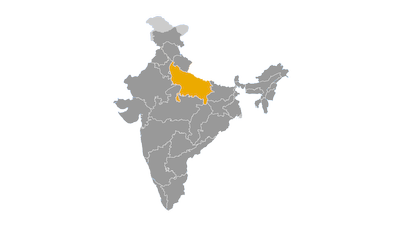
Uttar Pradesh occupies a central place in the history of the Indian subcontinent. Situated in the fertile Indo-Gangetic Plain and crossed by the Ganges and its major tributaries, the region has been home to some of India's most important religious traditions, imperial capitals and cultural centres. Over several millennia, it has played a decisive role in shaping the political, spiritual and intellectual history of South Asia.
The earliest evidence of human settlement dates back to the Paleolithic and Neolithic periods. The fertile river valleys encouraged the development of agriculture and permanent settlements at an early stage.
During the Bronze Age, western parts of present-day Uttar Pradesh were influenced by the wider sphere of the Indus Valley Civilization, while eastern regions became increasingly associated with the emergence of Indo-Aryan societies that later dominated the Gangetic Plain.
The Vedic Age and the Rise of Early Kingdoms
Between the second and first millennia BCE, the region became one of the principal centres of Vedic civilization. Many of the sacred texts of Hinduism refer to territories corresponding to present-day Uttar Pradesh.
This period witnessed the emergence of the Mahajanapadas, the great kingdoms that dominated northern India during the first millennium BCE.
Among the most important were Kosala, centred around Ayodhya, Kashi around Varanasi and Vatsa with its capital at Kaushambi.
The region acquired exceptional religious significance during this era. According to Hindu tradition, Ayodhya is the birthplace of the deity Rama, while Varanasi gradually became one of Hinduism's holiest cities.
The development of urban centres, trade routes and political institutions transformed the Gangetic basin into one of the most influential regions of ancient India.
Buddhism, Jainism and the Classical Empires
Uttar Pradesh also played a central role in the history of Buddhism and Jainism.
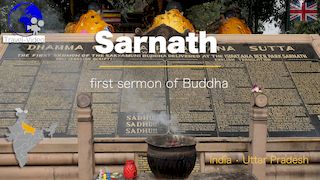
During the sixth century BCE, the teachings of the Buddha and Mahavira spread throughout the Gangetic Plain. After attaining enlightenment in present-day Bihar, the Buddha delivered his first sermon at Sarnath near Varanasi, making the site one of the most sacred places in the Buddhist world.
The region was incorporated into the Mauryan Empire during the third century BCE. Under the rule of Ashoka, administrative institutions expanded and Buddhism received significant imperial patronage.
Following the decline of the Mauryas, several dynasties controlled the region before Uttar Pradesh became one of the principal centres of the Gupta Empire between the fourth and sixth centuries CE.
The Gupta period is frequently described as a golden age of classical Indian civilization. Literature, mathematics, astronomy and philosophy flourished, while Sanskrit culture reached new heights of influence.
Many scientific and intellectual achievements associated with this period had a lasting impact on Indian and global history.
Regional Kingdoms of the Early Medieval Period
After the collapse of the Gupta Empire, political fragmentation characterised much of northern India.
In the seventh century, Emperor Harsha established his capital at Kannauj, which became one of the most important political centres in the subcontinent.
Following Harsha's death, Kannauj became the object of prolonged rivalry between several major powers, including the Gurjara-Pratiharas, the Rashtrakutas and the Palas of Bengal.
For centuries, control of Kannauj symbolised supremacy over northern India and the Gangetic Plain.
Meanwhile, cities such as Varanasi, Prayagraj and Ayodhya continued to develop as major religious and cultural centres.
Turkish Invasions and the Delhi Sultanate
Beginning in the eleventh century, invasions originating in Central Asia transformed the political landscape of northern India.
The campaigns of Mahmud of Ghazni and later Muhammad Ghori paved the way for the establishment of long-lasting Muslim rule in the region.
Uttar Pradesh gradually became one of the core territories of the Delhi Sultanate founded in the early thirteenth century.
Cities within the region acquired considerable military and administrative importance, while new architectural, artistic and intellectual influences from Persia and Central Asia became integrated into local traditions.
The interaction between Islamic and indigenous cultures contributed to the emergence of the Indo-Islamic civilisation that would shape much of northern India for centuries.
The Mughal Zenith in the Gangetic Plain
Uttar Pradesh reached a new level of political prominence under the Mughal Empire from the sixteenth century onward.
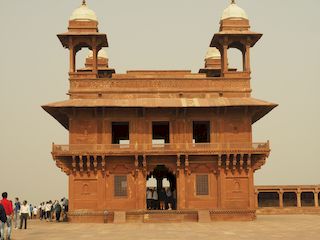
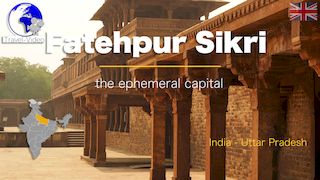
The emperor Akbar established his capital at Fatehpur Sikri near Agra for a period before moving the imperial court elsewhere. Nevertheless, Agra remained one of the principal cities of the empire.
Under Mughal rule, the region benefited from agricultural prosperity, thriving crafts and its strategic location along major trade routes.
The Mughal period left an extraordinary architectural legacy. Palaces, forts, gardens and mausoleums constructed during this era remain among the most celebrated monuments in the world.
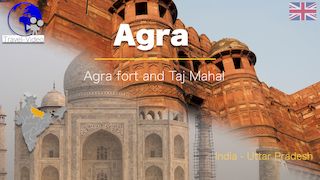
The Taj Mahal, built during the reign of Shah Jahan in the seventeenth century, continues to symbolise the artistic achievements of Mughal architecture.
The coexistence of Persian influences and indigenous traditions also fostered remarkable developments in music, poetry, cuisine and literature.
The Decline of Mughal Authority and Regional Powers
During the eighteenth century, the gradual weakening of Mughal authority allowed new regional powers to emerge.
The Nawabs of Awadh, ruling from Lucknow, became one of the most influential political forces in northern India while formally maintaining loyalty to the Mughal emperors.
Lucknow experienced a remarkable cultural flowering characterised by advances in literature, music, architecture and cuisine.
At the same time, the Marathas extended their influence into parts of the region before the growing intervention of the British East India Company transformed the political balance.
British Rule and the Rebellion of 1857
Throughout the nineteenth century, Uttar Pradesh progressively came under British control.
The region played a central role in the Indian Rebellion of 1857, often regarded as the first major uprising against British colonial rule.
Several cities of present-day Uttar Pradesh became major centres of resistance, including Meerut, Kanpur, Lucknow and Jhansi.
The rebellion was ultimately suppressed, but it profoundly influenced Indian political consciousness and contributed to the later development of nationalism.
Following the uprising, the British reorganised the territory as the North-Western Provinces and Oudh, later known as the United Provinces.
Nationalism and the Independence Movement
During the twentieth century, Uttar Pradesh became one of the principal centres of the Indian nationalist movement.
Many leading figures of the independence struggle maintained close connections with the region. Political organisations, student movements and campaigns of civil disobedience were particularly active throughout the province.
Allahabad, now known as Prayagraj, emerged as a major intellectual and political centre of Indian nationalism.
Several prominent national leaders, including members of the Nehru family, were closely associated with the city and the wider region.
The Formation of Modern Uttar Pradesh
Following Indian independence in 1947, the United Provinces became the state of Uttar Pradesh in 1950 with the adoption of the Constitution of India.
The state retained much of its historical importance due to its population size and political influence.
In 2000, the mountainous northern districts were separated to create the new state of Uttarakhand, reducing the territory of Uttar Pradesh while preserving its central role within the Indian Union.
A Continuing Political and Cultural Influence
Today, Uttar Pradesh remains India's most populous state and occupies a unique position in national politics.
Its demographic weight gives it enormous influence in parliamentary elections and in the broader political life of the country.
At the same time, the state remains one of the most important centres of Hindu pilgrimage, Buddhist heritage and Indo-Islamic culture.
From the Vedic kingdoms of the Gangetic Plain to the imperial capitals of the Mughal era and the centres of modern nationalism, Uttar Pradesh has continuously stood at the heart of Indian history.
Few regions in the world have contributed so consistently to the religious, political and cultural development of a civilisation over such a long period. The contemporary identity of Uttar Pradesh remains deeply shaped by this exceptional historical legacy, which continues to influence both the state itself and the wider Indian nation.


Contemporary Uttar Pradesh: Demographic Powerhouse, Cultural Heartland and Economic Transformation in Northern India
A Central State in the Indian Union
Uttar Pradesh occupies a unique position within modern India. As the country's most populous state and one of its most influential political regions, it plays a decisive role in national affairs. With a population larger than that of most sovereign nations, Uttar Pradesh exerts considerable influence on India's economy, politics and cultural life.
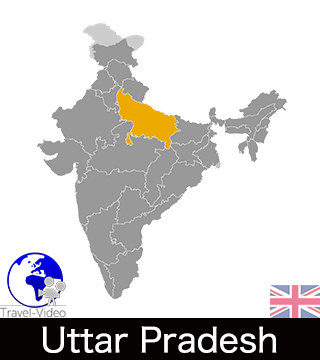
Located in the northern part of the country, the state borders Uttarakhand and Himachal Pradesh to the north, Haryana and the National Capital Territory of Delhi to the west, Rajasthan to the southwest, Madhya Pradesh to the south, Chhattisgarh and Jharkhand to the southeast, Bihar to the east and Nepal to the north.
Lucknow serves as the state capital, while several other cities fulfil major industrial, religious, educational and administrative functions.
Geography and Natural Environment
Most of Uttar Pradesh lies within the vast Indo-Gangetic Plain, one of the most fertile agricultural regions in the world.
The terrain is generally flat and consists largely of alluvial deposits created over thousands of years by the major river systems of northern India. These fertile soils have supported dense populations and intensive agriculture for centuries.
The northern districts extend toward the foothills of the Himalayas, while the southern parts of the state include portions of the Bundelkhand region, characterised by rocky plateaus and more irregular landscapes.
The state's geography is dominated by an extensive river network. The Ganges crosses Uttar Pradesh from west to east and receives several major tributaries, including the Yamuna, Gomti, Ghaghara, Rapti, Chambal, Betwa and Son rivers.
These waterways provide irrigation, support agriculture and hold immense religious significance for millions of people.
Climate and Environmental Challenges
Uttar Pradesh experiences a humid subtropical climate marked by considerable seasonal variation.
Summers are extremely hot and dry, with temperatures frequently exceeding forty degrees Celsius in many districts. The southwest monsoon, arriving between June and September, provides the majority of annual rainfall.
Winters are generally cool and can become cold in northern areas, where dense fog often disrupts transportation during the early months of the year.
Environmental challenges have become increasingly important in recent decades. Air pollution affects many urban centres, while water quality in several rivers remains a major concern.
Groundwater depletion, soil degradation and periodic flooding in eastern districts also present significant policy challenges.
Population and Demographic Diversity
With a population exceeding two hundred million inhabitants, Uttar Pradesh is by far the most populous state in India and one of the largest demographic units in the world.
This enormous population represents both a major economic asset and a substantial challenge for public services, infrastructure and employment generation.
Although urbanisation continues to accelerate, a large proportion of the population remains engaged in rural activities and agriculture.
Hindi serves as the official language of the state and is spoken by the majority of the population in various regional forms and dialects.
Urdu also enjoys official recognition and retains considerable cultural importance, particularly in urban centres and among Muslim communities.
Hinduism is the dominant religion, while Uttar Pradesh is home to one of India's largest Muslim populations. Smaller Sikh, Christian, Jain and Buddhist communities contribute to the state's religious diversity.
Major Cities and Their Functions
Lucknow functions as the administrative and political capital of the state while preserving its historical reputation as a centre of literature, music and refined culture associated with the former Nawabs of Awadh.
Kanpur remains one of northern India's most important industrial cities, particularly in the leather, textile, engineering and chemical sectors.
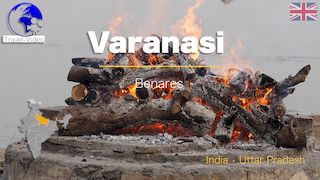
Varanasi occupies a unique position as one of the oldest continuously inhabited cities in the world and one of Hinduism's most sacred pilgrimage centres. It also serves as an important educational and cultural hub.
Agra continues to attract international visitors because of its Mughal architectural heritage and remains one of India's leading tourism destinations.
Prayagraj combines administrative functions with major religious significance due to its role as the host city of the Kumbh Mela, one of the world's largest religious gatherings.
Noida and Greater Noida, situated near Delhi, have emerged as rapidly growing centres of information technology, services and manufacturing.
Administrative Structure and Governance
Uttar Pradesh operates within India's federal system through an elected Legislative Assembly, a Chief Minister and a Governor representing the Union government.
The state is divided into numerous administrative districts responsible for local governance, infrastructure development and public services.
Given the exceptional size of its population, the management of Uttar Pradesh represents one of the most complex administrative challenges in contemporary India.
Its political significance extends beyond state boundaries because the number of parliamentary seats allocated to Uttar Pradesh gives it a major influence in national elections.
Transportation and Infrastructure
Uttar Pradesh possesses one of India's largest transportation networks.
The railway system is particularly dense and connects the state's major cities with every part of the country.
In recent years, large investments have been made in expressways and highway construction. Modern road corridors now connect Delhi with Lucknow, Agra, Prayagraj and Varanasi, significantly reducing travel times.
Several international airports operate within the state, including those in Lucknow and Varanasi, while the rapidly expanding airport infrastructure around Noida is expected to strengthen international connectivity further.
The Ganges waterway is also being developed as part of broader efforts to expand inland freight transportation.
Agriculture and Economic Activity
Agriculture continues to play a central role in the economy and employs a large proportion of the population.
The fertile alluvial plains support the cultivation of wheat, rice, sugarcane, potatoes, pulses and oilseeds.
Sugarcane is one of the state's most important agricultural products and sustains a large sugar-processing industry.
Uttar Pradesh is also among India's leading producers of milk, fruits and vegetables.
Alongside agriculture, manufacturing remains important in cities such as Kanpur, Agra and Ghaziabad, where industries include textiles, leather goods, chemicals and food processing.
The service sector has expanded rapidly, especially in western districts that benefit from proximity to the Delhi metropolitan region.
Information technology, finance and business services have become increasingly significant contributors to economic growth.
Culture and Contemporary Society
Uttar Pradesh occupies a central place in Indian cultural life.
The region has made major contributions to Hindustani classical music, Urdu poetry, Hindi literature and traditional performing arts.
Local crafts continue to possess both cultural and economic importance. The silk saris of Varanasi, the chikankari embroidery of Lucknow, the marble handicrafts of Agra and the leather products of Kanpur are recognised throughout India and beyond.
Religious festivals remain central to social life. Diwali, Holi, Eid al-Fitr and Eid al-Adha are celebrated across the state, while the Kumbh Mela attracts millions of pilgrims and visitors from around the world.
Education and Research
Uttar Pradesh hosts several of India's oldest and most respected educational institutions.
Universities in Lucknow, Prayagraj, Aligarh and Varanasi play major roles in higher education and research.
Technical institutes and professional training centres have expanded considerably in response to industrial growth and the changing needs of the labour market.
Challenges and Future Development
Despite substantial economic progress, Uttar Pradesh continues to face major developmental challenges.
Improving educational outcomes, healthcare provision, employment opportunities and infrastructure remains a priority for policymakers.
Reducing regional disparities between urban and rural areas, improving environmental sustainability and ensuring efficient resource management are equally important objectives.
Contemporary Uttar Pradesh therefore represents a state of contrasts and opportunities. It combines some of the oldest cultural traditions of the Indian subcontinent with the rapid economic and social transformations of modern India. Its demographic weight, political influence and cultural significance ensure that its future development will continue to shape the trajectory of India as a whole.