

 Français (France)
  Nederlands (nl-NL)
 • Use the markers to explore the content •

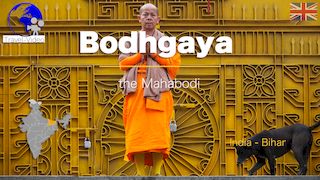
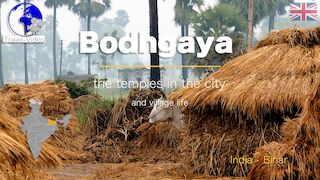
Bihar, India • Mahabodhi temple in Bodhgaya

Bihar, India • Gurdwara Patna Sahib, one of the five main gurdwaras in India

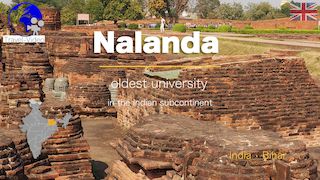
Bihar, India • the ruins of India's oldest university at Nalanda
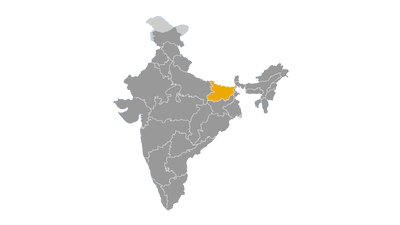
Bihar Through the Ages: The Historical Evolution of One of India's Oldest Civilizations
Early Settlement and the Origins of Bihar
Bihar occupies a unique place in the history of the Indian subcontinent. Located in the fertile Gangetic Plain, the region has been continuously inhabited since prehistoric times. Archaeological discoveries in several districts have revealed evidence of Neolithic settlements, stone tools and early agricultural communities, demonstrating that the abundant natural resources of the Ganges basin encouraged the establishment of permanent human habitation from an early period.
During the Vedic age, the region became home to several influential kingdoms, including Videha, Anga and, most importantly, Magadha. Situated along major trade routes and supported by fertile agricultural land, these early states laid the foundations for Bihar's future political prominence.
Bihar also occupies a central place in the religious history of Asia. It was within this region that both Buddhism and Jainism emerged as major philosophical and religious traditions, profoundly influencing civilizations far beyond India.
The Rise of Magadha
By the sixth century BCE, the Kingdom of Magadha had become the dominant political power in eastern India. Initially ruled by the Haryanka dynasty, followed by the Shishunaga and Nanda dynasties, Magadha steadily expanded through military strength, efficient administration and agricultural prosperity.
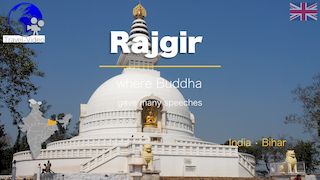
Its early capital, Rajagriha (modern Rajgir), was later replaced by Pataliputra, strategically located near the confluence of major rivers. The city's advantageous position enabled it to develop into one of the largest political and commercial centres of ancient India.
During this period, Bihar became a remarkable centre of intellectual and spiritual activity. Siddhartha Gautama attained enlightenment beneath the Bodhi Tree at Bodh Gaya, marking the birth of Buddhism. Around the same time, Mahavira, the twenty-fourth Tirthankara of Jainism, travelled extensively throughout the region, spreading his teachings. Both religions would eventually spread across much of Asia, making Bihar one of the world's most influential religious landscapes.
The Mauryan Empire and the Golden Age of Pataliputra
In the late fourth century BCE, Chandragupta Maurya overthrew the Nanda dynasty and established the Mauryan Empire, the first empire to unite much of the Indian subcontinent. Pataliputra, located near present-day Patna, became its magnificent imperial capital.
Under Chandragupta and his grandson Ashoka, the empire reached unprecedented territorial extent. Following the devastating Kalinga War, Ashoka embraced Buddhism and adopted policies based on non-violence, religious tolerance and ethical governance. His inscriptions, carved on pillars and rocks throughout the empire, remain among the most valuable historical sources for ancient India.
During the Mauryan period, Bihar became the political, administrative and intellectual heart of one of the world's largest ancient empires. Buddhist missions sponsored by Ashoka carried the religion to Sri Lanka, Central Asia and Southeast Asia, greatly extending Bihar's cultural influence.
The Gupta Period and India's Classical Age
Following centuries of political fragmentation, Bihar became part of the Gupta Empire during the fourth century CE. Historians frequently describe this era as the Golden Age of Indian civilization.
The Gupta rulers promoted remarkable advances in mathematics, astronomy, literature, medicine, philosophy and art. Agricultural productivity, commercial activity and political stability contributed to widespread prosperity throughout the region.
Bihar remained one of India's foremost intellectual centres. Hindu traditions flourished alongside Buddhism, while educational institutions continued to attract scholars from across Asia. This period also witnessed significant achievements in Sanskrit literature and scientific thought that would influence later generations throughout the subcontinent.
The Pala Dynasty and the Flourishing of Buddhist Learning
From the eighth century onward, Bihar came under the rule of the Pala dynasty, which controlled much of present-day Bihar and Bengal. The Pala rulers became among the greatest patrons of Mahayana Buddhism.
Their reign witnessed the expansion of several world-renowned monastic universities, including Nalanda, Vikramashila and Odantapuri. These institutions attracted students, monks and scholars from Tibet, Nepal, China, Korea and Southeast Asia.
The curriculum extended well beyond religious studies. Mathematics, astronomy, medicine, grammar, logic and philosophy were taught alongside Buddhist theology, making these universities among the most advanced centres of higher learning in the medieval world.
The international prestige of these institutions made Bihar a major intellectual crossroads connecting India with the wider Buddhist world.
Muslim Invasions and the Delhi Sultanate
The political landscape changed dramatically at the end of the twelfth century when the armies of Bakhtiyar Khalji invaded Bihar. During these campaigns, the great monastic universities of Nalanda and Vikramashila suffered catastrophic destruction, bringing an end to centuries of Buddhist scholarship centred in the region.
Bihar subsequently became part of the Delhi Sultanate. Although political authority changed, agriculture remained productive due to the fertile Gangetic plains, while trade continued along established river and land routes.
Over time, Hindu and Muslim communities developed a shared regional culture, contributing to the religious and social diversity that continues to characterize Bihar today.
Bihar under the Mughal Empire
During the sixteenth century, Bihar was incorporated into the Mughal Empire under Babur and was more firmly integrated by Emperor Akbar. The province became an important agricultural and administrative region within the empire.
Patna emerged as a major commercial centre, particularly renowned for its trade in saltpetre, an essential ingredient in gunpowder, as well as textiles, sugar and agricultural products. Its location on the Ganges enabled merchants to transport goods efficiently throughout northern India.
Mughal administration strengthened revenue collection, improved infrastructure and encouraged commercial expansion, contributing to the region's continued prosperity.
During the eighteenth century, as Mughal authority declined, Bihar gradually came under the influence of the Nawabs of Bengal before eventually falling under British control.
British Colonial Rule
The Battle of Buxar in 1764 marked a decisive turning point in Bihar's history. Following the British victory, the East India Company gained control over Bihar together with Bengal and Odisha.
Colonial economic policies focused heavily on agriculture. Indigo, opium and other cash crops were cultivated extensively for export, often placing severe burdens on local farmers through heavy taxation and exploitative land tenure systems.
The region actively participated in the Indian Rebellion of 1857. One of its most celebrated leaders was Kunwar Singh, who became one of the most respected military commanders of the uprising against British rule.
In 1912, Bihar and Orissa were separated administratively from the Bengal Presidency, creating a distinct province under British administration. Railways and transportation infrastructure expanded during this period, primarily to facilitate the movement of agricultural commodities.
Bihar and the Indian Independence Movement
Bihar played a prominent role in India's struggle for independence.
In 1917, Mahatma Gandhi launched the Champaran Satyagraha in northwestern Bihar to defend indigo farmers against exploitative plantation practices. This campaign became the first successful application of Gandhi's method of non-violent civil resistance and marked a turning point in the Indian nationalist movement.
Throughout the following decades, political leaders, students and ordinary citizens from Bihar participated actively in the Non-Cooperation Movement, the Civil Disobedience Movement and the Quit India Movement of 1942.
When India achieved independence in 1947, Bihar became one of the constituent states of the newly formed republic.
Bihar Since 1947
Independent Bihar has experienced profound political, economic and administrative transformation. Despite remaining predominantly rural, the state has gradually expanded its educational institutions, transportation infrastructure and public services.
A major territorial reorganisation occurred in 2000 when the mineral-rich southern districts were separated to form the new state of Jharkhand. This division significantly reduced Bihar's industrial base while leaving agriculture as its dominant economic sector.
Since the beginning of the twenty-first century, successive governments have focused on improving roads, bridges, electricity supply, education and healthcare. Economic growth has accelerated in several sectors, although Bihar continues to face significant challenges related to poverty, employment opportunities, rapid population growth and recurring floods caused by the Ganges and its Himalayan tributaries.
Few regions have shaped the history of India as profoundly as Bihar. As the birthplace of the Mauryan Empire, the cradle of Buddhism and Jainism, the home of the ancient universities of Nalanda and Vikramashila, and an important centre of India's independence movement, Bihar has exercised an influence extending far beyond its borders. Today, its extraordinary historical legacy continues to define its cultural identity and ensures its enduring importance within the history of the Indian subcontinent.


Contemporary Bihar: Geography, Economy and Society in the Heart of the Gangetic Plain
A Strategic State in Northern India
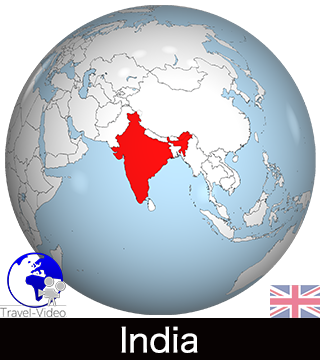
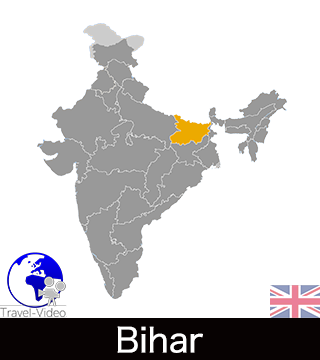
Bihar is one of India's most populous states and occupies a central position in the fertile Gangetic Plain. Located in the northeastern part of the country, it serves as an important link between northern India, eastern India and neighbouring Nepal. Its strategic location has made Bihar a major corridor for trade, transportation and cultural exchange for centuries.
The state is bordered by Nepal to the north, West Bengal to the east, Jharkhand to the south and Uttar Pradesh to the west. Most of Bihar consists of vast alluvial plains formed by the Ganges and its tributaries, creating some of the most fertile agricultural land in the country.
The terrain is generally flat, with only a few low hills appearing in the southern districts near the Chota Nagpur Plateau. While this geography greatly benefits agriculture, it also makes large parts of the state highly vulnerable to seasonal flooding.
Rivers, Climate and Natural Environment
The Ganges River dominates Bihar's geography, flowing from west to east across the state before continuing toward West Bengal. Numerous Himalayan tributaries—including the Gandak, Kosi, Bagmati, Kamla, Son and Punpun rivers—join the Ganges within Bihar.
These rivers deposit nutrient-rich alluvial soils that sustain intensive agriculture. However, they also pose significant challenges. The Kosi River, often called the "Sorrow of Bihar," is particularly notorious for changing its course and causing devastating floods that regularly damage villages, crops and infrastructure.
Bihar experiences a humid subtropical climate with three distinct seasons: a hot summer, a monsoon season from June to September and a relatively mild winter. Most annual rainfall occurs during the monsoon, making agriculture heavily dependent on seasonal precipitation.
Although much of Bihar is devoted to agriculture, the state also contains valuable natural habitats. Valmiki National Park, located along the Nepalese border, is Bihar's principal protected area. Part of the larger Valmiki Tiger Reserve, it provides habitat for Bengal tigers, leopards, Asian elephants, sloth bears, deer and numerous bird species. Forest conservation and wildlife protection have become increasingly important as population density continues to grow.
Population and Cultural Diversity
With a population exceeding 120 million people, Bihar ranks among India's most populous states. It is also one of the country's most densely populated regions. Although urbanisation has accelerated in recent decades, the majority of the population continues to live in rural areas.
Hindi is the official language of the state, while several regional languages remain widely spoken in everyday life. These include Maithili, Bhojpuri, Magahi, Angika and Bajjika, each associated with distinct historical and cultural regions. Urdu also enjoys official status as an additional language and is widely used by parts of the population.
Hinduism is the predominant religion, while Islam represents a significant minority. Smaller communities of Buddhists, Jains, Sikhs and Christians contribute to Bihar's religious diversity, reflecting the state's long history as one of South Asia's principal spiritual centres.
The coexistence of multiple languages, traditions and religious communities continues to shape Bihar's cultural identity.
Major Cities and Administrative Structure
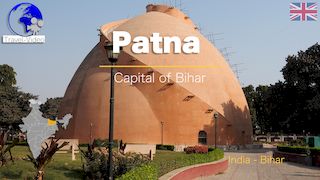
Patna, the state capital, is Bihar's largest city and its political, economic and educational centre. Built near the site of the ancient city of Pataliputra, Patna serves as the headquarters of the state government and remains one of the most important urban centres in eastern India.
Gaya is internationally known for nearby Bodh Gaya, where Siddhartha Gautama attained enlightenment beneath the Bodhi Tree. Every year, pilgrims from across Asia and around the world visit this UNESCO World Heritage Site.
Muzaffarpur is recognised for its litchi production and serves as a major commercial centre in northern Bihar. Bhagalpur is renowned for its silk industry and its location on the Ganges, while Darbhanga functions as the cultural centre of the Mithila region and is known for its educational institutions and historical heritage.
Administratively, Bihar is divided into numerous districts governed by the state administration based in Patna. Local governments oversee rural development, public services and municipal administration, while the state government is responsible for education, healthcare, infrastructure and economic planning.
Transportation and Connectivity
Bihar has significantly improved its transportation infrastructure during the past two decades. National highways connect the state with Delhi, Kolkata, Lucknow and other major Indian cities, while extensive road improvement programmes have enhanced regional accessibility.
The railway network is among the busiest in India. Patna, Gaya, Muzaffarpur and Bhagalpur serve as major railway junctions linking northern, eastern and northeastern India. These connections are essential for passenger travel as well as the movement of agricultural and industrial goods.
The Ganges has regained importance as an inland waterway through India's National Waterway 1, which connects Uttar Pradesh with West Bengal. River transport is increasingly viewed as a sustainable complement to road and rail freight.
Jay Prakash Narayan Airport in Patna provides regular domestic connections with major Indian cities. Gaya International Airport handles both domestic flights and international services, particularly those serving Buddhist pilgrims from East and Southeast Asia.
An Economy in Transition
Agriculture remains the foundation of Bihar's economy and employs a large share of the workforce. The fertile plains support extensive cultivation of rice, wheat, maize, pulses, sugarcane and oilseeds.
Bihar is also known for several specialised agricultural products. Muzaffarpur's litchis enjoy national recognition, while mangoes, bananas and vegetables contribute significantly to the state's horticultural output. Dairy farming, fisheries and livestock breeding provide additional sources of rural income.
Compared with many other Indian states, Bihar has a relatively modest industrial base. Manufacturing is concentrated in food processing, fertilisers, cement, textiles, construction materials and small-scale engineering industries. Since the creation of Jharkhand in 2000, much of the region's mineral wealth has lain outside Bihar's borders, encouraging greater emphasis on agriculture and services.
The service sector has expanded steadily, particularly in education, healthcare, telecommunications, banking, retail trade and public administration. Government initiatives also seek to attract investment in logistics, renewable energy, manufacturing and information technology.
Tourism has become an increasingly important contributor to the economy. International visitors are drawn primarily by the Buddhist pilgrimage circuit, including Bodh Gaya, Nalanda, Rajgir and Vaishali, while Hindu and Jain pilgrimage sites also attract large numbers of domestic visitors.
Culture, Education and Living Heritage
Bihar possesses one of India's richest cultural heritages. As the birthplace of Buddhism and Jainism and a historic centre of Hindu civilization, the state remains deeply connected to its religious traditions.
Chhath Puja is Bihar's most distinctive festival. Dedicated to the worship of the Sun God, it is celebrated with elaborate rituals performed along rivers and lakes, attracting millions of participants. Other major festivals include Holi, Diwali, Durga Puja, Eid al-Fitr and numerous regional celebrations that reflect Bihar's cultural diversity.
Traditional arts remain vibrant. Madhubani painting, originating in the Mithila region, is internationally recognised for its intricate geometric patterns, mythological themes and natural pigments. Bhagalpur silk weaving, bamboo crafts, pottery and stone carving continue to support local artisans and preserve centuries-old traditions.
Bihar also hosts several important educational institutions. Patna University, founded in 1917, is one of India's oldest universities. The modern Nalanda University, established near the ruins of the ancient Buddhist university, symbolises the revival of Bihar's historic role as a global centre of learning.
Contemporary Challenges and Future Development
Bihar faces a number of significant challenges as it continues to develop. Rapid population growth places considerable pressure on education, healthcare, housing, employment and public infrastructure.
Recurring floods remain one of the state's most serious environmental problems. Government programmes increasingly focus on flood control, river management, embankment construction and disaster preparedness to reduce their impact.
Economic development remains another major priority. Although Bihar has experienced sustained economic growth in recent years, it continues to work toward expanding industrial investment, creating employment opportunities and reducing outward migration to other Indian states.
Today, Bihar combines an extraordinary historical legacy with a rapidly evolving economy. Its fertile agricultural landscape, strategic location in the Gangetic Plain, internationally significant religious heritage and ongoing investments in infrastructure position the state as an increasingly important contributor to India's future development while preserving one of the oldest cultural traditions in South Asia.