

 Français (France)
  Nederlands (nl-NL)
 • Use the markers to explore the content •

Sikkim, India • Rumtek Dharma Chakra Center in Gangtok

Sikkim, India • prayer flags near the Sangacholing Monastery

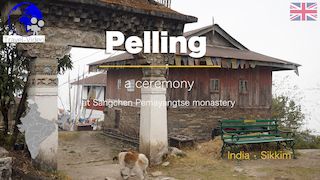
Sikkim, India • entrance to Sangchen Pemayangtse Monastery
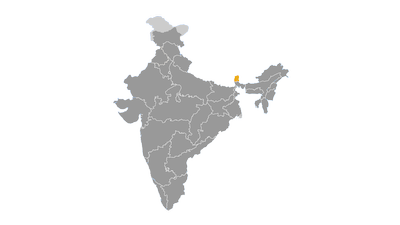
Sikkim Through the Centuries: From Himalayan Kingdom to Indian State
A Mountain Realm Between Tibet, Nepal and India
Sikkim occupies a unique place in the history of the Indian subcontinent. Nestled in the eastern Himalayas between Tibet, Nepal, Bhutan and the plains of Bengal, the region developed along historical trajectories that differed significantly from those of most Indian territories. Unlike many northern Indian regions, Sikkim was never incorporated into the Delhi Sultanate, the Mughal Empire or the Maratha sphere of influence. Instead, it evolved as a Himalayan Buddhist kingdom whose political, cultural and religious ties were closely connected to Tibet and the wider Himalayan world.
Its strategic location on the trade routes linking the Tibetan Plateau with South Asia made Sikkim an important frontier region despite its small size and difficult terrain.
Early Inhabitants and the Formation of Local Cultures
The earliest history of Sikkim remains only partially understood due to the scarcity of archaeological evidence in the mountainous environment. The first known inhabitants of the region were the Lepchas, who are generally regarded as the indigenous people of Sikkim.
The Lepchas developed a society closely connected to forests, rivers and mountains. Their traditional beliefs centred on nature worship and the spiritual significance of particular landscapes and peaks. Many of these traditions survived the arrival of later religious influences and continue to shape aspects of local culture.
From the medieval period onward, groups of Tibetan origin gradually migrated southward into Sikkim. These settlers, later known as Bhutias, introduced Tibetan forms of Buddhism and contributed to the emergence of more centralized political structures.
Unlike the plains of India, Sikkim did not develop large urban settlements or monumental archaeological sites during antiquity. Its history was instead shaped by dispersed mountain communities and monastic institutions.
The Foundation of the Kingdom of Sikkim
The formal history of the Sikkimese state began in 1642 with the coronation of Phuntsog Namgyal at Yuksom.
He became the first Chogyal, or religious king, establishing the Namgyal dynasty that would rule Sikkim for more than three centuries. The legitimacy of the monarchy rested not only on political authority but also on religious sanction provided by Tibetan Buddhist leaders.
The kingdom maintained close cultural and spiritual ties with Tibet. Monasteries became important centres of administration, education and religious life, while Tibetan Buddhism spread throughout the region.
The rugged terrain of the Himalayas limited central control and encouraged a relatively decentralized political structure in which local communities retained considerable autonomy.
Relations with Tibet and the Spread of Buddhism
The ruling dynasty of Sikkim belonged to the Tibetan Buddhist tradition and actively promoted monastic institutions. Monasteries such as those later established at Rumtek, Pemayangtse and Tashiding became important centres of religious scholarship and pilgrimage.
Buddhism profoundly shaped the political culture of the kingdom. The Chogyal was viewed not only as a temporal ruler but also as a protector of the Buddhist faith and the sacred landscape of the Himalayas.
Religious ceremonies and institutions played a major role in maintaining political cohesion among the diverse populations inhabiting the mountain valleys.
Conflicts with Bhutan and Nepal
During the eighteenth century, Sikkim faced growing pressure from neighbouring Himalayan states.
Bhutan intervened repeatedly in Sikkimese affairs and temporarily occupied parts of eastern Sikkim. More serious, however, was the expansion of the Kingdom of Nepal under the Shah dynasty.
The Gorkha rulers of Nepal pursued an aggressive policy of territorial expansion throughout the Himalayas. Large areas previously controlled by Sikkim were gradually annexed by Nepalese forces, significantly reducing the kingdom's territory.
These conflicts altered the demographic composition of Sikkim. Nepalese settlers increasingly migrated into the region, particularly into fertile valleys suitable for agriculture. Over time, this migration transformed the ethnic balance of the kingdom and would later become a central factor in its political evolution.
British Intervention in the Eastern Himalayas
The expansion of Nepal eventually brought it into conflict with British interests in northern India. The Anglo-Nepalese War of 1814 to 1816 resulted in Nepal's defeat by the East India Company.
The subsequent Treaty of Titalia in 1817 restored some territories to Sikkim and established formal relations between the kingdom and the British authorities.
British strategic interests focused increasingly on the Himalayan passes linking India and Tibet. Sikkim therefore acquired considerable geopolitical importance despite its small population.
In 1835, the Sikkimese monarchy ceded the area of Darjeeling to the British. The settlement soon developed into an important hill station and tea-producing region.
Relations between the Sikkimese court and the British administration periodically deteriorated during the nineteenth century, leading to increasing British intervention in local affairs.
The British Protectorate Period
By the late nineteenth century, Sikkim had effectively become a British protectorate. The British administration assumed responsibility for external affairs and exercised growing influence over internal governance.
The strategic significance of Sikkim increased further during the British expedition to Tibet in 1903 and 1904, when the kingdom served as an important logistical base for military operations crossing the Himalayas.
During this period, migration from Nepal accelerated significantly. Encouraged by British authorities seeking agricultural expansion and economic development, Nepalese communities eventually became the largest demographic group within Sikkim.
Agriculture remained the foundation of the economy, with rice, maize, millet and cardamom constituting the principal crops. Trade with Tibet also remained economically important until the mid-twentieth century.
Sikkim and Indian Independence
When British India gained independence in 1947, Sikkim did not immediately join the Indian Union.
Instead, the kingdom retained its monarchy under the Chogyal while maintaining close relations with independent India. In 1950, a treaty formalized Sikkim's status as an Indian protectorate.
Under this arrangement, India assumed responsibility for defence, external relations and communications, while the monarchy retained substantial autonomy over domestic affairs.
This special status reflected Sikkim's strategic importance at a time of major geopolitical changes in the Himalayas, particularly following China's incorporation of Tibet during the 1950s.
Political Change and the Decline of the Monarchy
During the 1960s and early 1970s, demographic changes increasingly influenced political life in Sikkim.
The Nepalese-speaking majority demanded greater political representation and democratic reforms, while the monarchy remained closely associated with the traditional Bhutia and Lepcha elites.
At the same time, Sikkim's strategic value increased after the Sino-Indian War of 1962. India strengthened its military presence in the region, particularly around the important Himalayan pass of Nathu La.
Political tensions intensified throughout the early 1970s as opposition groups called for constitutional reform and a reduction of royal authority.
Integration into India
The political crisis reached its climax in 1975.
Following widespread unrest and intervention by Indian authorities, a referendum was held regarding the future status of the kingdom. The vote produced overwhelming support for abolishing the monarchy and integrating Sikkim fully into India.
In May 1975, Sikkim officially became the twenty-second state of the Indian Union.
The last Chogyal, Palden Thondup Namgyal, lost his royal status, bringing an end to more than three centuries of Namgyal rule.
The integration of Sikkim represented one of the final stages in the territorial consolidation of modern India.
Sikkim Since Statehood
Since becoming an Indian state, Sikkim has undergone profound social and economic transformation.
Road construction, educational expansion and improved healthcare services have reduced the isolation that historically characterized the Himalayan kingdom. Tourism has emerged as a major economic sector, while hydroelectric development and specialized agriculture have diversified the economy.
The state has also gained international recognition for environmental policies and organic farming initiatives.
Despite modernization, Sikkim retains a distinctive cultural identity shaped by Lepcha traditions, Tibetan Buddhism and Nepalese heritage. This coexistence of multiple cultural traditions remains one of the defining characteristics of contemporary Sikkim.
The history of Sikkim therefore represents the story of a small Himalayan kingdom that successfully navigated centuries of geopolitical change before becoming an integral part of the Republic of India while preserving many elements of its unique historical identity.


Contemporary Sikkim: Himalayan Landscapes, Cultural Diversity and Sustainable Development in Northeastern India
A Strategic Himalayan State
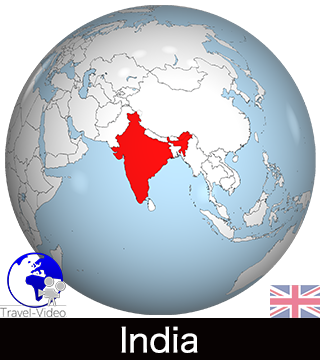
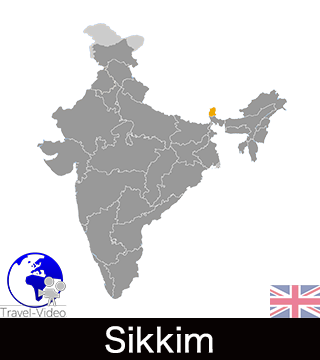
Sikkim is one of India's smallest and least populous states, yet it occupies a position of exceptional geographical and strategic importance. Located in the eastern Himalayas, it lies between Nepal to the west, Bhutan to the east, the Tibet Autonomous Region of China to the north and northeast, and the Indian state of West Bengal to the south.
Its location places Sikkim at the crossroads of South Asia and the Tibetan Plateau. The state lies close to the narrow Siliguri Corridor, often referred to as India's "Chicken's Neck", which connects the northeastern states with the rest of the country. This gives Sikkim considerable geopolitical significance in India's border management and regional security policies.
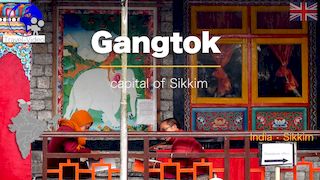
The capital city, Gangtok, serves as the administrative, economic and cultural centre of the state and contains a substantial proportion of its urban population.
A Landscape Dominated by the Himalayas
Sikkim possesses one of the most dramatic topographies in India. Altitudes range from approximately 300 metres in the southern river valleys to more than 8,500 metres in the northern Himalayan peaks.
The dominant geographical feature is Mount Kangchenjunga, rising to 8,586 metres above sea level and ranking as the third-highest mountain in the world. The mountain holds immense cultural and religious importance for the people of Sikkim and is regarded as sacred by several local communities.
The state is characterised by steep valleys, glaciers, alpine meadows and dense mountain forests. The Teesta River forms the principal river system, flowing from the glaciers of northern Sikkim southward into West Bengal. Its major tributary, the Rangit River, also plays an important role in water supply and hydroelectric generation.
This remarkable variation in altitude creates an extraordinary range of ecosystems within a relatively small territory.
Biodiversity and Environmental Significance
Sikkim forms part of the Eastern Himalayan biodiversity hotspot, one of the most biologically rich regions on Earth. Its ecosystems range from subtropical forests in the south to alpine tundra and permanent snowfields in the north.
The state hosts thousands of plant species, including an exceptional diversity of orchids, rhododendrons and medicinal plants. Numerous rare and endangered animals inhabit the forests and high-altitude environments, including the red panda, snow leopard, Himalayan black bear and Himalayan tahr.
A large proportion of the state's territory falls under environmental protection. The Khangchendzonga National Park is both a national park and a UNESCO World Heritage Site, recognised for its exceptional ecological and cultural value.
Environmental conservation plays a central role in public policy, reflecting the dependence of local communities on fragile mountain ecosystems.
Climate and Natural Conditions
The climate of Sikkim varies greatly according to altitude. Southern districts experience a humid subtropical climate with warm summers and mild winters, while higher elevations enjoy temperate mountain conditions.
The northern highlands are characterised by alpine and glacial climates with long winters and heavy snowfall.
Monsoon rains arrive between June and September and bring abundant precipitation, particularly to the southern and eastern slopes of the Himalayas. Annual rainfall in some areas exceeds several thousand millimetres.
The combination of steep terrain and heavy rainfall makes landslides and soil erosion recurring natural hazards. Climate change has also become an important concern because of glacial retreat and increasing weather variability.
Population and Ethnic Diversity
Sikkim has a population of slightly over 600,000 inhabitants, making it one of India's least populated states. Population density is relatively low, and settlements are concentrated mainly in valleys and urban centres.
The state's society is highly diverse and reflects centuries of migration and cultural interaction. Nepalese communities constitute the demographic majority, while the Bhutias and Lepchas remain closely associated with the historical and cultural identity of the former kingdom of Sikkim.
Several languages enjoy official recognition. Nepali is the most widely spoken language, while Sikkimese, Lepcha, Limbu and English also hold official status in various administrative and educational contexts.
Hinduism is the largest religion, primarily among Nepalese communities, while Tibetan Buddhism remains highly influential because of the historical role of Bhutia culture and monastic institutions. Christianity and smaller religious communities are also represented.
Gangtok and the Urban Network
Gangtok dominates the urban structure of Sikkim. Located on a mountain ridge at an elevation of approximately 1,650 metres, it serves as the seat of government, the principal commercial centre and the state's educational hub.
Namchi has emerged as an important administrative and tourism centre in southern Sikkim, while Gyalshing plays a similar role in the western districts.
Mangan functions as the main urban centre of northern Sikkim and has strategic importance because of its proximity to border regions and mountain passes.
Urban expansion remains constrained by topography, and many settlements continue to occupy narrow terraces along mountain slopes.
Administration and Governance
Sikkim operates within India's federal constitutional framework and is governed by an elected Legislative Assembly and a state government headed by a Chief Minister.
Administratively, the state is divided into districts responsible for local administration and development programmes.
The mountainous geography creates significant challenges for governance and infrastructure planning. Delivering healthcare, education and public services to remote communities requires considerable logistical effort and investment.
Transportation and Connectivity
Historically, Sikkim's mountainous terrain limited communication with the rest of India. For much of the twentieth century, road transport represented the state's only reliable connection with neighbouring regions.
The highway linking Gangtok with Siliguri in West Bengal remains the principal transportation corridor for both passengers and goods.
A major milestone in improving connectivity was the opening of Pakyong Airport in 2018. Although weather conditions occasionally affect operations, the airport significantly reduced travel times to other Indian cities.
Sikkim currently lacks a railway network, although railway extensions from West Bengal are under construction and are expected to improve accessibility in the future.
Because of the mountainous terrain, inland water transport plays no significant role.
Economy and Agricultural Production
The economy of Sikkim is dominated by services, tourism and specialised agriculture.
Agricultural activities are concentrated in valley regions and include rice, maize, millet, vegetables and fruit cultivation. However, the state's most important agricultural product is large cardamom, for which Sikkim ranks among the world's leading producers.
One of Sikkim's most distinctive achievements has been its transition to fully certified organic agriculture. It became the first Indian state to convert all agricultural land to organic farming methods, earning international recognition for sustainable agricultural practices.
Hydroelectric power generation represents another important economic sector due to the state's fast-flowing mountain rivers.
Tourism as a Driver of Growth
Tourism has become one of the principal engines of Sikkim's economy. The state's Himalayan scenery, monasteries and trekking opportunities attract increasing numbers of domestic and international visitors.
Buddhist monasteries such as Rumtek, Pemayangtse and Tashiding are major cultural and religious destinations. High-altitude lakes and mountain viewpoints also attract considerable tourism activity.
The reopening of the Nathu La Pass for limited cross-border trade with Tibet has further enhanced the region's economic and symbolic significance.
Eco-tourism and adventure tourism have become important components of the state's development strategy.
Cultural Life and Traditions
Sikkim's culture reflects the interaction of Lepcha, Bhutia and Nepalese traditions. This diversity is visible in language, architecture, clothing, cuisine and religious practices.
Buddhist festivals such as Losar and Pang Lhabsol coexist alongside Hindu celebrations including Dashain and Tihar. Religious diversity generally coexists with a strong sense of regional identity.
Traditional handicrafts include carpet weaving, wood carving, metalwork and the production of Buddhist ritual objects. Monastic arts continue to play an important role in preserving cultural heritage.
Education, Research and Future Challenges
Sikkim has invested significantly in education and public services since joining the Indian Union in 1975. Educational institutions in Gangtok and other towns have expanded access to higher learning and professional training.
Despite these achievements, the state faces several challenges. Maintaining a balance between economic development and environmental conservation remains a central concern. Tourism growth, infrastructure construction and hydroelectric projects must be managed carefully to avoid damaging fragile mountain ecosystems.
Natural hazards such as earthquakes, landslides and glacial lake outburst floods also require continuous monitoring and disaster preparedness.
Contemporary Sikkim therefore represents a distinctive model of Himalayan development, combining economic modernisation with environmental protection and cultural preservation. Its experience demonstrates how a small mountain state can integrate into a rapidly changing national economy while maintaining a strong regional identity rooted in its unique history and geography.