

 Français (France)
  Nederlands (nl-NL)
 The Sangchen Pemayangtse Monastery is one of the oldest and most significant Buddhist monasteries in the Indian state of Sikkim. Located in Pelling, it plays a central role in the religious and cultural life of the region. Founded in the 17th century, this monastery is a key center of the Nyingma tradition of Tibetan Buddhism and houses numerous sacred relics and artworks. It is also a pilgrimage site for Buddhist practitioners and a focal point for local festivities. The monastery attracts visitors for its spiritual and cultural importance in the landscape of Sikkim.
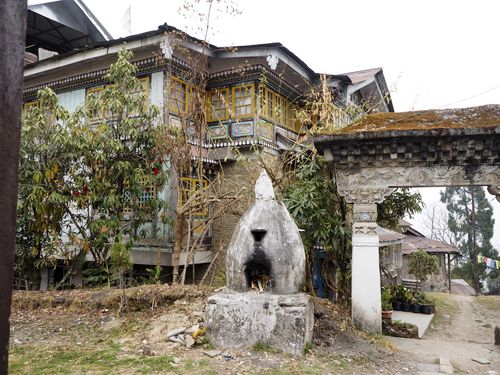
Pelling • Sangchen Pemayangtse Monastery
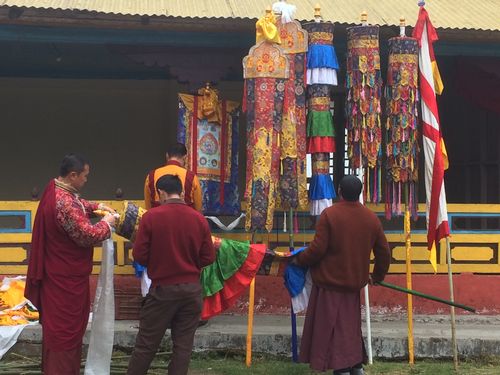
Pelling • Sangchen Pemayangtse Monastery
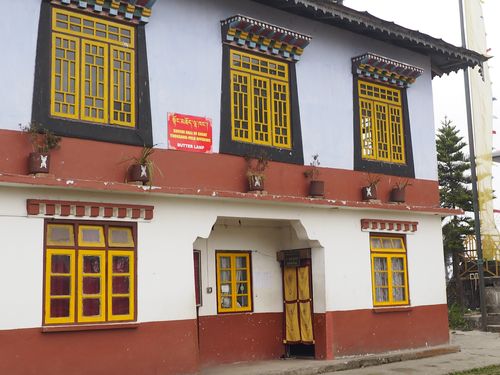
Pelling • Sangchen Pemayangtse Monastery
Monument profile
Sangchen Pemayangtse Monastery
Monument category: Monastery
Monument family: Monastery
Monument genre: Religious
Cultural heritage: Buddhist
Geographic location: Pelling • Sikkim • India
Construction period: 17th century AD
• Links to •
• Dynasties that contributed to the construction of the monument •

• List of videos about Pelling on this site •
Pelling • A Buddhist ceremony at the monastery • Sikkim, India
Political and Social Motivations Behind the Construction of Sangchen Pemayangtse Monastery
Historical Context and Construction Timeline
Sangchen Pemayangtse Monastery, located in Pelling, Sikkim, India, was constructed in 1705 under the reign of the third Chogyal (king) of Sikkim, Chakdor Namgyal. The construction of this monastery was deeply rooted in the political and social fabric of the time. Politically, it served as a means to consolidate the power and legitimacy of the Chogyal dynasty, reinforcing the Buddhist identity of the region amidst the growing influence of neighboring states. The establishment of the monastery was also a strategic move to strengthen the religious and cultural ties with Tibet, which was a significant spiritual and political ally. Socially, the monastery played a crucial role in unifying the local population under the spiritual guidance of the Nyingma tradition, the oldest school of Tibetan Buddhism, thus promoting social cohesion and religious harmony in the region.
Major Historical Events and Their Impact on the Region
Throughout the centuries, Sangchen Pemayangtse Monastery has been at the center of numerous historical events that have shaped the political and social landscape of Sikkim. In the 18th century, the monastery solidified its role as a spiritual and educational hub, producing influential lamas who played significant roles in the governance and religious life of the kingdom. The monastery also served as a bastion of resistance against invasions from Bhutan and Nepal, providing sanctuary and coordinating the defense efforts of the Sikkimese people.
One of the most significant periods in the monastery's history was during the British colonial era in the 19th century. As the British gradually integrated Sikkim into their expanding empire, the monastery’s influence on the region's political and religious life became more pronounced. Although the political power of the Chogyals was diminished under British rule, the monastery remained a vital institution, preserving the spiritual and cultural identity of the Sikkimese people.
Global Context in the 17th and 18th Centuries
During the time of the monastery's founding, the world was undergoing significant political and religious transformations. In Europe, the 17th century was marked by the Thirty Years' War, a series of conflicts driven by religious and political disputes, and the rise of absolute monarchies. In Asia, the Mughal Empire in India was at its peak, while the Qing dynasty was consolidating its power in China. Tibet, Sikkim's northern neighbor, was also experiencing periods of religious consolidation under the Gelug school of Tibetan Buddhism, which influenced the political dynamics of the region.
In this global context, Sikkim was a small kingdom striving to maintain its autonomy and assert its religious and political identity amidst powerful neighbors. The construction of Sangchen Pemayangtse Monastery was a key element of this strategy, serving as both a spiritual stronghold and a symbol of the Chogyal dynasty’s authority.
Transformations Over the Centuries
Over the centuries, Sangchen Pemayangtse Monastery has undergone several transformations, reflecting changes in power and external cultural influences. In the early 20th century, restoration efforts were undertaken to preserve the monastery after damage caused by earthquakes. These renovations incorporated contemporary architectural elements while respecting traditional Tibetan styles, ensuring the structure's resilience and continuity.
External influences, particularly during the British colonial period, also left their mark on the region, but the monastery successfully retained its traditional Buddhist character. The enduring significance of the monastery as a spiritual center demonstrates its ability to adapt to changing circumstances while maintaining its cultural and religious roots.
Cultural Importance and Current State of Conservation
Today, Sangchen Pemayangtse Monastery remains a vital symbol of Sikkim's cultural and religious heritage. It continues to attract pilgrims and tourists from around the world, contributing to the preservation of Tibetan Buddhist culture in the region. The monastery is also the site of annual festivals that play a crucial role in community life and the transmission of religious traditions.
The current state of conservation of the monastery is relatively good, thanks to ongoing restoration efforts. However, the preservation of its historical integrity faces modern challenges, including seismic risks, the impacts of climate change, and the pressures of increased tourism. These factors require continuous attention and effective management strategies to ensure that this historical monument can be preserved for future generations.
Modern Preservation Challenges
The preservation of Sangchen Pemayangtse Monastery requires constant vigilance due to threats posed by extreme weather conditions, frequent earthquakes in the Himalayan region, and the growing impact of tourism. Conservation efforts must focus on balancing the protection of historical structures with accommodating visitors while respecting ongoing religious practices.
In conclusion, Sangchen Pemayangtse Monastery is not only a major spiritual center in Sikkim but also a testament to the region's political and social history. Its continued preservation is essential to maintaining the cultural heritage of Sikkim and providing future generations with a living link to their past.
Architectural Significance and Technological Innovation of Sangchen Pemayangtse Monastery
Technological Advancements and Construction Techniques of the Chogyal Era
Sangchen Pemayangtse Monastery, located in Pelling, Sikkim, stands as a testament to the architectural and technological advancements achieved during the Chogyal era in the early 18th century. Constructed in 1705 under the reign of Chakdor Namgyal, the third Chogyal of Sikkim, the monastery exemplifies the innovative use of local materials and traditional construction techniques that were both resilient and aesthetically refined.
The primary materials used in the construction of the monastery included wood, stone, and stucco. The extensive use of wood, especially in the interiors, allowed for intricate carvings and detailed ornamentation, reflecting the craftsmanship of the time. The wooden beams and columns, joined without the use of nails through techniques like mortise and tenon, demonstrated both the structural integrity and the adaptability of the local artisans. The walls of the monastery were constructed using a combination of stone and mud plaster, which not only provided insulation against the harsh Himalayan weather but also contributed to the longevity of the structure.
A Unique Blend of Regional Traditions and Foreign Influences
The architecture of Sangchen Pemayangtse Monastery represents a harmonious blend of regional Sikkimese artistic traditions and external Tibetan influences. The design of the monastery follows the traditional Tibetan Buddhist monastic layout, featuring a central prayer hall (dukhang) surrounded by monk quarters and a top floor dedicated to the sanctum (gokhang), where sacred relics and statues are housed.
The monastery’s interiors are adorned with elaborate murals and thangkas, which are traditional Tibetan Buddhist paintings on cotton or silk appliqué, depicting various deities, mandalas, and scenes from the life of Buddha. These artistic elements are deeply rooted in the Nyingma tradition of Tibetan Buddhism, which has been the spiritual backbone of the region since the monastery’s founding.
However, what makes the Sangchen Pemayangtse Monastery particularly unique is the incorporation of local Sikkimese motifs and styles into these traditional Tibetan designs. The use of vibrant colors, floral patterns, and stylized representations of natural elements in the murals reflects a synthesis of local and foreign artistic influences, creating a distinctive visual and spiritual experience that is unique to this region.
Notable Structure and Architectural Layout
One of the most remarkable aspects of the Sangchen Pemayangtse Monastery is its compact yet symbolically rich architectural layout. The monastery is designed with a three-tier structure, with the main prayer hall occupying the ground floor, a second level that houses the residential quarters for the monks, and the third floor dedicated to the sacred relics and statues. This vertical arrangement is not only functional but also symbolic, representing the ascent from the mundane to the spiritual.
A significant architectural feature of the monastery is the "Zangdok Palri," a detailed wooden replica of Guru Padmasambhava's celestial abode, which is displayed on the top floor. This intricate model, crafted with exceptional precision, serves as both a spiritual focal point and an artistic masterpiece, showcasing the high level of skill and devotion of the artisans of the time.
An interesting anecdote regarding the monastery's construction involves the personal supervision by Chakdor Namgyal, who ensured that the monastery adhered to the strict spiritual and aesthetic guidelines of the Nyingma tradition. This direct involvement of the Chogyal highlights the importance of the monastery as not just a religious institution, but also as a symbol of the dynasty's spiritual and political authority.
Recognition and Preservation Challenges
Although Sangchen Pemayangtse Monastery is not currently listed as a UNESCO World Heritage site, it is internationally recognized for its cultural and spiritual significance. The monastery remains a major pilgrimage site and a center for the preservation of Tibetan Buddhist practices in the region. Its unique architectural and artistic heritage has attracted scholars, pilgrims, and tourists from around the world, contributing to its enduring legacy.
The preservation of the monastery faces several modern challenges, including the impact of environmental factors such as seismic activity, which is common in the Himalayan region, and the effects of climate change. Additionally, the increasing influx of tourists poses a risk to the delicate murals and wooden structures. Conservation efforts are focused on maintaining the structural integrity of the monastery while preserving its rich artistic and spiritual heritage.
Conclusion
Sangchen Pemayangtse Monastery stands as a remarkable example of the architectural innovation and technological advancements of the Chogyal era. Its construction reflects a deep understanding of local materials and techniques, while its design incorporates a unique blend of regional and foreign artistic influences. The monastery's architectural features, including its intricate carvings, vibrant murals, and symbolic layout, contribute to its recognition as a significant cultural and spiritual monument. Although it faces challenges in preservation, the ongoing efforts to maintain and protect this heritage site ensure that its legacy will continue to inspire future generations.