Français (France)
  Nederlands (nl-NL)
 00:00 • intro | 00:31 • Gangtok, the city | 02:03 • Gangtok, the market | 06:10 • Enchey monastery | 08:05 • Rumtek monastery
Personal creation from visual material collected during my trip Buddhist India • Sikkim • Bihar • West Bengal (2017)
Map of places or practices in Gangtok on this site
• Use the markers to explore the content •
Gangtok: a Himalayan capital between urban life and Buddhist tradition
A mountain city shaped by geography and culture
Perched on the slopes of the eastern Himalayas, Gangtok occupies a distinctive position within the Indian landscape. As the capital of the state of Sikkim, it developed in an environment defined by steep terrain and layered relief, where urban expansion follows the contours of the mountains. The city unfolds across terraces, winding roads, and elevated viewpoints, creating a spatial organization that differs markedly from that of plains-based settlements.
Gangtok is not only an administrative center. It also reflects a cultural and religious identity strongly influenced by Tibetan Buddhism, while remaining integrated within the broader diversity of India. The video captures this dual character by combining views of the urban fabric, everyday life, and religious sites, offering a balanced perspective on the city.
Urban spaces, market activity, and monastic landmarks
The sequences devoted to the city reveal a dense but structured environment. Buildings adapt to the slope, forming stepped arrangements that define both circulation and visibility. Movement through Gangtok involves constant transitions between levels, shaping the way inhabitants interact with their surroundings.
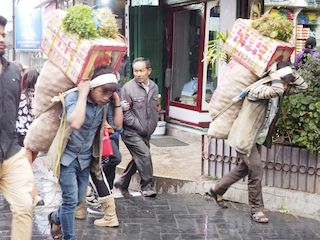
The market represents a central component of this urban life. It functions not only as a place of trade but also as a social space where daily interactions take place. The variety of goods and the constant flow of people reflect the diversity of the region, illustrating how local traditions coexist with broader economic exchanges.
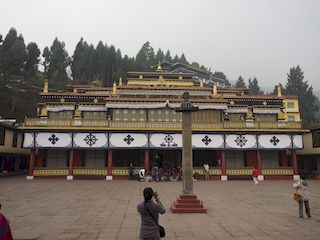
The Enchey and Rumtek monasteries introduce a different dimension. The Enchey Monastery, located close to the city, occupies a quieter setting, offering a contrast to the urban environment. Rumtek Monastery, larger and more formally organized, stands as one of the most important centers of Tibetan Buddhist practice in the region. Together, these sites illustrate different scales and roles within monastic architecture, while reinforcing the religious character of Gangtok.
A historical context linked to the Kingdom of Sikkim
Gangtok’s development is closely tied to the history of Sikkim, which functioned as an independent Himalayan kingdom before its integration into India in the twentieth century. This transition transformed the city into a political center while preserving many aspects of its cultural identity.
The prominence of Tibetan Buddhism in Gangtok reflects longstanding connections with neighboring Himalayan regions, including Tibet. Monasteries play a central role not only in religious practice but also in the transmission of knowledge and cultural continuity. They act as both spiritual institutions and visual landmarks within the landscape.
Architecturally, the adaptation to mountainous terrain is a defining feature. Buildings are often compact and arranged in terraces, responding to the constraints of slope and limited space. This relationship between built form and natural environment contributes significantly to the city’s overall character.
A clearer understanding through visual progression
The videos on this site are largely composed of carefully selected and animated photographs, allowing complex environments to be explored in a gradual and structured way. In the case of Gangtok, this approach is particularly effective in clarifying the spatial organization of a city shaped by relief.
The sequence of images highlights transitions between urban areas, market spaces, and monastic sites. By moving between close details and wider views, the video makes it possible to understand how these elements relate to one another within the broader setting.
This visual method also helps convey scale and proportion. The height differences, the arrangement of buildings, and the placement of monasteries become more accessible when observed through successive perspectives. The result is a coherent reading of the city as a layered and interconnected environment.
A capital defined by balance and continuity
Gangtok illustrates a balance between everyday urban activity and sustained religious practice. The coexistence of active markets and functioning monasteries reflects a social organization in which economic life and spiritual traditions are closely linked.
Exploring the city through its spaces and institutions provides insight into the dynamics of a Himalayan capital, shaped by geography, history, and cultural continuity. For a deeper understanding of the sites presented, the detailed pages associated with the monasteries and local traditions offer additional context and information.
Links to related pages

Audio Commentary Transcript
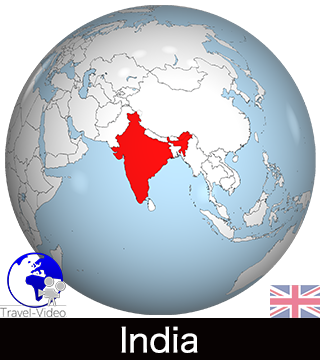
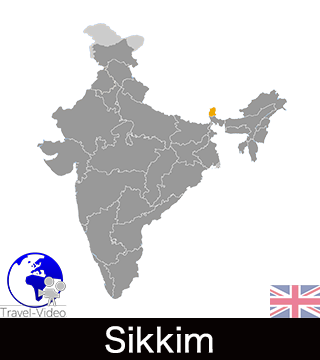
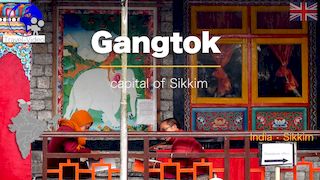
Gangtok is a small, well, small on an Indian scale, a city in the Himalayas which has several Buddhist temples of prime importance. Gangtok is the capital and largest city of Sikkim, a small Indian state in the eastern Himalayas.
The city is located at an altitude of 1600 meters and has some of the most famous Buddhist temples, such as the Enchey monastery, which was also at the origin of the rise of the city. Its population is approximately 100,000.

Music:
- (Inde) - Musique Rituelle Tibétaine - Cérémonie a Yamantaka, Ocora (OCR 49)
- (Inde) - Festivals of the Himalayas - Volume 2 - Mohna, Nonesuch (H-72079)
- - YouTube video library - People Watching
Disclaimer: Despite its appropriateness, copyright issues prevent the use of indian traditional music in "Gangtok, the capital • Sikkim, India ", hence the use of royalty-free music. Despite our careful selection, some might regret this decision, which is necessary to avoid potential lawsuits. Although difficult, this decision is the only viable solution.