

 Français (France)
  Nederlands (nl-NL)
 Sanga Choeling Monastery is a Buddhist monastic establishment located near Pelling in the Indian state of Sikkim, in the eastern Himalayas. It forms part of the network of monasteries that organize religious and cultural life in this region. The site houses monks and functions as a place for prayer, teaching and community gatherings. As with many monasteries in Sikkim, it is associated with the traditions of Tibetan Buddhism and contributes to the observance of rituals and religious festivals throughout the year. The monastery is also known as a point of interest for visitors seeking to understand the spiritual traditions and monastic institutions that shape the cultural landscape of Sikkim.

Pelling • Sanga Choeling Monastery

Pelling • Sanga Choeling Monastery
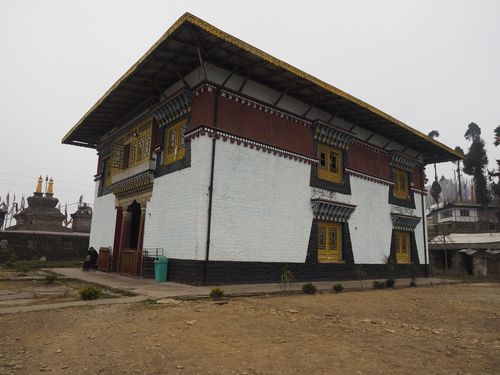
Pelling • Sanga Choeling Monastery
Monument profile
Sanga Choeling Monastery
Monument category: Monastery
Monument family: Monastery
Monument genre: Religious
Cultural heritage: Buddhist
Geographic location: Pelling • Sikkim • India
Construction period: 17th century AD
• Links to •
• List of videos about Pelling on this site •
Pelling • A Buddhist ceremony at the monastery • Sikkim, India
History of Sanga Choeling Monastery
Political and Religious Context of the Foundation
Sanga Choeling Monastery is among the earliest Buddhist monastic institutions established in the western region of present-day Sikkim. Located near the town of Pelling in the district of Gyalshing, the monastery was founded during the late seventeenth century, a period that coincided with the consolidation of the Kingdom of Sikkim and the growing influence of Tibetan Buddhism in the eastern Himalayas. Its establishment was closely connected to the political ambitions of the Namgyal dynasty and the broader effort to structure the newly formed kingdom through religious institutions.
The Kingdom of Sikkim was formally created in 1642 with the enthronement of Phuntsog Namgyal as the first Chogyal, or sacred monarch. His coronation was conducted by prominent Tibetan lamas, symbolizing the close relationship between spiritual authority and political governance. In this system, monasteries played a strategic role in reinforcing the legitimacy of royal power. By supporting the foundation of religious institutions across the kingdom, the ruling dynasty sought to establish a cohesive ideological framework that could unify diverse ethnic communities living within the mountainous territory.
Sanga Choeling Monastery was traditionally founded by Lama Lhatsün Namkha Jigme, an influential religious figure associated with the Nyingma school of Tibetan Buddhism. The creation of the monastery served both spiritual and political objectives. It functioned as a center for the practice and transmission of Buddhist teachings while simultaneously strengthening the presence of the monarchy in the western part of the kingdom. Monasteries also served as cultural anchors for local populations, contributing to the formation of a shared religious identity that supported the authority of the Chogyal.
Expansion of Monastic Networks in the Eastern Himalayas
The foundation of Sanga Choeling must also be understood within the broader development of monastic networks across the Himalayan region. During the seventeenth and eighteenth centuries, Tibetan Buddhist traditions expanded into neighboring territories including Bhutan, Nepal, and Sikkim. Monasteries established in these areas became centers of scholarship, ritual practice, and cultural exchange.
These institutions played a crucial role in the circulation of monks, manuscripts, and artistic traditions. Religious teachers trained in Tibet often traveled throughout the Himalayan world to establish new monastic communities. Through these networks, regions such as Sikkim became integrated into a wider religious sphere that extended across the Tibetan plateau and the Himalayan foothills.
Within Sikkim itself, monasteries were strategically distributed across the territory in order to serve different regions of the kingdom. Sanga Choeling contributed to this religious landscape by acting as a spiritual center for communities in western Sikkim. Through ritual activities, education, and the preservation of sacred texts, the monastery participated in the formation of a distinctive regional Buddhist culture.
Regional Rivalries and Political Instability
The eighteenth century introduced significant geopolitical challenges for the Kingdom of Sikkim. Rivalries with neighboring states, particularly Bhutan and Nepal, generated periods of political instability that affected the entire region. Territorial disputes occasionally escalated into armed conflict, altering the balance of power across the eastern Himalayas.
One of the most significant developments occurred during the expansion of the Gorkha kingdom of Nepal in the late eighteenth century. The Gorkha armies sought to extend their influence into areas traditionally controlled by Sikkim. These campaigns weakened the authority of the Chogyal and led to temporary occupation of certain territories. Although historical records provide limited information about the direct impact on Sanga Choeling Monastery, monastic institutions throughout the region often faced disruption during periods of warfare.
In the early nineteenth century, a new political factor emerged with the expansion of British influence in the Himalayan frontier. British administrators sought to establish diplomatic relations with regional states in order to secure trade routes linking India with Tibet. Sikkim’s strategic position made it an important partner in these negotiations. British involvement gradually reshaped the political structure of the kingdom, introducing new administrative frameworks while allowing many religious institutions to continue operating.
Global Historical Context
The foundation of Sanga Choeling occurred during a period of global transformation in religious and political institutions. Across many regions of the world, the seventeenth century witnessed the construction and consolidation of major religious establishments that served both spiritual and political functions.
In Europe, the Counter-Reformation encouraged the creation of new monasteries, churches, and educational institutions designed to reinforce Catholic influence. In East Asia, Buddhist temples continued to receive patronage from imperial governments and local elites. Although these developments occurred in different cultural environments, they reflect a broader pattern in which religious institutions became central to the organization of societies and the legitimization of political authority.
Within the Himalayan world, monasteries like Sanga Choeling formed part of this larger historical movement. They represented both centers of religious devotion and institutional structures that helped stabilize emerging political entities such as the Kingdom of Sikkim.
Transformations and Periods of Restoration
Throughout its history, Sanga Choeling Monastery experienced various phases of transformation. Environmental conditions in the Himalayan region often affected the physical structures of monastic buildings. Heavy rainfall, landslides, and seismic activity periodically caused damage that required restoration.
At the same time, shifts in political patronage influenced the monastery’s development. During periods when the royal court actively supported monastic institutions, resources were available for the maintenance and expansion of religious complexes. In other periods, local communities played a greater role in sustaining monastic life through donations and participation in religious events.
Several restoration campaigns were undertaken to preserve the monastery’s buildings and ritual spaces. These efforts generally aimed to maintain the traditional architectural character of the complex while ensuring its continued use as a functioning religious institution.
Integration into the Indian State
The twentieth century marked a major turning point in the political history of Sikkim. After a long period of British influence, the kingdom entered into a special political relationship with independent India following the end of colonial rule in 1947. Political tensions and internal developments eventually led to a referendum in 1975, after which Sikkim formally became a state of the Republic of India.
This transformation introduced new administrative structures and development policies that affected the region’s cultural institutions. Despite these changes, monasteries such as Sanga Choeling continued to operate as important centers of religious practice. Governmental recognition of the historical and cultural value of these sites helped encourage preservation efforts.
Contemporary Cultural Role
In the present day, Sanga Choeling Monastery remains an active center of Buddhist spiritual life in western Sikkim. Monks residing at the monastery conduct daily rituals, prayers, and teachings based on Tibetan Buddhist traditions. The monastery also hosts annual festivals that attract participants from surrounding communities.
These celebrations include ritual performances, ceremonial dances, and communal gatherings that strengthen local cultural identity. Through these activities, the monastery continues to function not only as a place of worship but also as a focal point of social and cultural life in the region.
The growth of tourism around Pelling has brought increased attention to historic monasteries. Visitors interested in Himalayan culture and Buddhist heritage frequently include Sanga Choeling among the sites they explore. While this visibility has helped highlight the historical importance of the monastery, it also requires careful management to protect the integrity of the site.
Preservation and Modern Challenges
The conservation of Sanga Choeling Monastery involves addressing several environmental and social challenges. The Himalayan climate exposes buildings to moisture, temperature variations, and occasional seismic events that can weaken traditional construction materials. Regular maintenance is therefore necessary to preserve the monastery’s structures and artistic decorations.
Tourism development in the region also presents challenges. Increased visitor numbers can place pressure on fragile architectural elements and surrounding landscapes. Efforts to manage tourism while protecting cultural heritage require cooperation between monastic authorities, local communities, and government agencies.
Although the monastery is not currently included on the UNESCO World Heritage List, it is widely recognized as a significant component of Sikkim’s religious and historical heritage. Conservation programs focus on maintaining both the physical structures of the monastery and the living traditions associated with its rituals and teachings.
Through its long historical evolution, Sanga Choeling Monastery illustrates the enduring relationship between religion, political authority, and cultural identity in the eastern Himalayas. The institution continues to serve as a place of spiritual practice while preserving the historical legacy of the Sikkimese kingdom.
Architecture of Sanga Choeling Monastery
Geographic Setting and Architectural Context
Sanga Choeling Monastery stands in the mountainous landscape of western Sikkim, near the town of Pelling. Its architectural form reflects the long-established traditions of Himalayan Buddhist monastic construction, where religious buildings are carefully adapted to steep terrain, heavy rainfall, and seismic conditions. The complex occupies a ridge overlooking surrounding valleys, a location typical for monasteries in the eastern Himalayas. Such sites provide both symbolic prominence and practical advantages, including improved drainage, defensive visibility, and exposure to sunlight.
The monastery was constructed during the late seventeenth century, when Tibetan Buddhist architectural models were spreading across the Himalayan region. Although modest in scale compared with large monastic centers in Tibet, Sanga Choeling illustrates how Tibetan religious architecture was adapted to the environmental and cultural conditions of Sikkim. The complex consists of a main assembly hall surrounded by smaller structures used for monastic residence, ritual practice, and storage of sacred objects.
Construction Materials and Structural Techniques
The construction of Sanga Choeling relies primarily on locally available materials suited to the Himalayan climate. Stone forms the foundation and lower sections of most buildings. These masonry bases provide stability on steep slopes and help protect structures from moisture penetration. Stone walls also offer considerable resistance to the intense seasonal rainfall typical of the region.
Timber constitutes the principal structural framework of the upper sections of the monastery buildings. Wooden beams support floors and roofs, while wooden columns are used to define interior spaces. Timber construction has long been favored in Himalayan architecture because of its flexibility and resilience. In regions prone to earthquakes, wooden structural systems can absorb vibrations more effectively than rigid masonry structures.
Traditional carpentry techniques were employed in assembling these elements. Builders used interlocking joints rather than extensive metal fasteners. Such joinery allowed components to shift slightly during seismic movement without breaking. This approach demonstrates a sophisticated understanding of structural dynamics developed through centuries of architectural practice in mountainous environments.
Roof structures consist of wooden frameworks designed to support protective coverings that resist heavy precipitation. Wide projecting eaves extend beyond the walls, shielding façades and windows from rain. These deep overhangs also help regulate interior temperatures by creating shaded zones along the outer walls.
Adaptation to Climate and Environmental Conditions
Architectural planning at Sanga Choeling incorporates several strategies designed to address the climatic conditions of the eastern Himalayas. Thick masonry walls provide thermal mass, enabling buildings to retain warmth during colder periods while maintaining relatively stable interior temperatures throughout the year.
Window openings are comparatively small and carefully positioned. This reduces heat loss and protects interior spaces from strong winds and driving rain during monsoon seasons. Window frames are usually constructed from carved wood, combining structural reinforcement with decorative expression.
Ventilation is achieved through openings located beneath roof structures and along upper walls. These allow air circulation within interior spaces, preventing the accumulation of humidity that could damage wooden beams and painted surfaces. Proper ventilation is particularly important in monastic buildings where ritual smoke from incense and lamps may otherwise accumulate.
The terraced layout of the complex also plays a crucial role in environmental management. Platforms carved into the hillside stabilize the ground while directing rainwater away from building foundations. Drainage channels guide runoff downhill, reducing the risk of erosion or water infiltration into structural elements.
Spatial Organization of the Monastery
The spatial organization of Sanga Choeling follows patterns typical of Tibetan Buddhist monastic architecture. At the center of the complex stands the main prayer hall, or assembly hall, which functions as the spiritual core of the monastery. This building houses the principal altars, statues of Buddhist deities, and ritual objects used during daily ceremonies.
Inside the assembly hall, the interior space is arranged along a central axis leading toward the main altar. Rows of low platforms provide seating for monks during prayers and liturgical recitations. The altar area contains sacred images representing the Buddha and other figures revered within Tibetan Buddhist traditions. Ritual instruments such as drums, horns, and ceremonial objects are stored within the hall and used during festivals and daily rituals.
Residential quarters for monks are located near the main hall. These structures contain living rooms, study spaces, and small meditation chambers. The arrangement of these buildings reflects the hierarchical organization of monastic life, with senior monks often occupying rooms closer to the central ritual spaces.
Open courtyards and terraces link the various structures of the complex. These spaces serve as gathering areas during religious festivals and ceremonial events. They also function as transitional zones between public areas accessible to visitors and more secluded sections reserved for monastic activities.
Artistic Decoration and Symbolic Ornamentation
The architectural identity of Sanga Choeling is strongly influenced by the visual traditions of Tibetan Buddhism. Exterior surfaces are often painted in symbolic colors such as red, white, yellow, and blue. These colors correspond to cosmological elements within Buddhist symbolism and are widely used in Himalayan religious architecture.
Decorative wooden elements play an important role in shaping the appearance of the monastery. Doorways and window frames frequently feature carved motifs representing floral patterns, stylized clouds, or mythical animals. Such carvings demonstrate the craftsmanship of local artisans and contribute to the aesthetic richness of the buildings.
Interior decoration is particularly elaborate in the prayer hall. Wall paintings depict Buddhist deities, protective spirits, and historical teachers associated with the monastic lineage. These murals serve both devotional and educational functions, illustrating religious narratives for monks and visitors alike.
Prayer flags, ritual banners, and painted inscriptions are also integrated into the architectural environment. These elements reinforce the spiritual atmosphere of the monastery and reflect the integration of architecture with religious practice.
Architectural Influences and Regional Adaptations
The architectural form of Sanga Choeling illustrates the transmission of Tibetan monastic design into the cultural context of Sikkim. The overall layout, the design of the prayer hall, and the use of painted ornamentation all derive from Tibetan Buddhist architectural traditions.
However, the monastery also incorporates regional adaptations shaped by local materials and climatic conditions. The extensive use of stone foundations reflects the need for structural stability on steep slopes, while the selection of timber from Himalayan forests demonstrates the integration of local resources into the construction process.
The combination of these elements produces an architectural language that blends imported religious forms with indigenous building practices. This synthesis is characteristic of many monasteries in the eastern Himalayas, where cultural exchange between Tibet, Bhutan, Nepal, and the Himalayan foothills shaped architectural development.
Structural Features and Symbolic Elements
Although Sanga Choeling is not among the largest monastic complexes in the region, several architectural features distinguish the site. Small stupas and votive structures are often located near the monastery buildings. These elements represent key aspects of Buddhist cosmology and serve as objects of devotional practice for monks and visitors.
Prayer wheels installed along pathways or near entrances allow worshippers to perform ritual circumambulation. Rotating these wheels while reciting prayers forms an important aspect of devotional activity in Tibetan Buddhism. Their placement within the architectural layout reinforces the integration of spiritual practice with the physical environment of the monastery.
Stone steps and narrow pathways connect different levels of the terraced complex. These circulation routes follow the contours of the hillside and guide visitors through a sequence of spaces leading toward the central prayer hall.
Conservation and Architectural Preservation
The preservation of Sanga Choeling Monastery presents several challenges related to environmental conditions and increased visitor activity. The Himalayan climate subjects buildings to heavy rainfall, humidity, and seasonal temperature variations that can gradually weaken traditional construction materials.
Earthquakes represent another potential threat to historic structures in the region. Conservation efforts therefore focus on reinforcing wooden frameworks and maintaining stone foundations without altering the traditional architectural character of the buildings.
Restoration work generally seeks to preserve original materials whenever possible. When replacements are necessary, craftsmen often employ traditional carpentry and masonry techniques to ensure compatibility with existing structures.
The growing popularity of Pelling as a tourist destination has increased public interest in the monastery. While tourism contributes to awareness of cultural heritage, it also requires careful management to protect fragile architectural features and sacred spaces.
Despite these challenges, Sanga Choeling Monastery remains an important example of Himalayan monastic architecture. Its design illustrates how Tibetan Buddhist architectural traditions were adapted to the environmental conditions and cultural landscape of Sikkim. The complex continues to function as both a religious institution and a historical monument reflecting the architectural heritage of the eastern Himalayas.