

 Français (France)
  Nederlands (nl-NL)
 Rabdentse, located near Pelling in the Indian state of Sikkim, was once the second capital of the Sikkimese kingdom. Now in ruins, the site holds significant historical importance and attracts many visitors due to its connection to the royal history of the region. The remains of Rabdentse stand as a testament to the kingdom's former grandeur and offer panoramic views of the surrounding mountains, making it a must-visit destination for those interested in the history and culture of Sikkim.
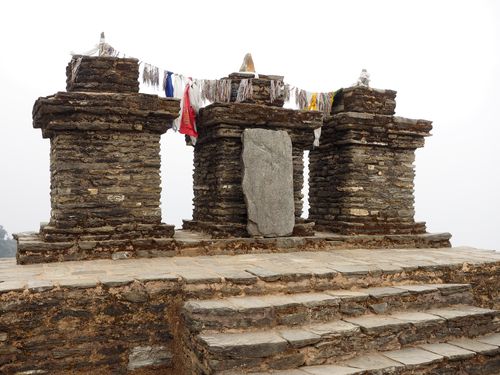
Pelling • Rabdentse
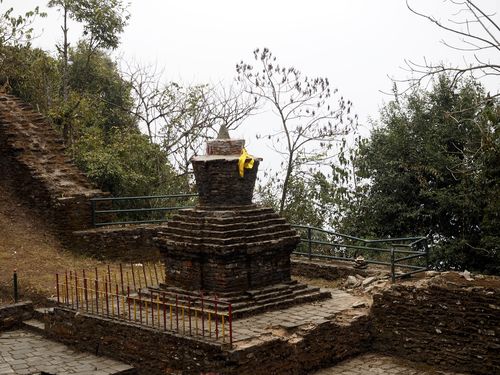
Pelling • Rabdentse
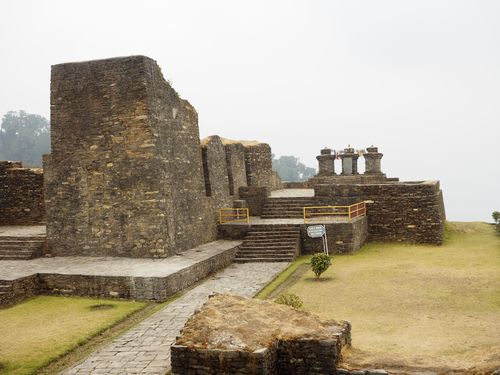
Pelling • Rabdentse
Monument profile
Rabdentse
Monument category: Archaeological
Monument family: Archaeological
Monument genre: Archaeological site
Geographic location: Pelling • Sikkim • India
Construction period: 17th century AD
• Links to •
• Dynasties that contributed to the construction of the monument •

• List of videos about Pelling on this site •
Pelling • A Buddhist ceremony at the monastery • Sikkim, India
Rabdentse: Political and Social Motivations Behind its Construction and its Historical Significance
Rabdentse, located near Pelling in the Indian state of Sikkim, was the second capital of the Kingdom of Sikkim, built in the 17th century under the reign of Tensung Namgyal, the second Chogyal (king) of the Namgyal dynasty. This site, now in ruins, served as the political and religious heart of the kingdom until its destruction in the 19th century. This article explores the political and social motivations behind Rabdentse’s construction, the key historical events that shaped its legacy, and the challenges it faces today in terms of preservation.
Political and Social Motivations for Construction
The construction of Rabdentse in the 17th century was driven by both political and strategic considerations. At the time, Sikkim was a small but powerful kingdom in the Eastern Himalayas, and establishing Rabdentse as the new capital helped consolidate the Namgyal dynasty’s authority over the region. The site was chosen for its strategic location, offering both natural protection due to its elevated terrain and a panoramic view of the surrounding area, which helped defend against potential invaders, particularly from Tibet and Bhutan.
Socially, Rabdentse also played a critical role in centralizing the administration of the kingdom and fostering a unified religious identity under Tibetan Buddhism. The construction of monasteries and stupas within the capital reinforced the spiritual legitimacy of the Chogyal, who was not only a political ruler but also seen as a divine protector of Buddhism. The capital became a hub for religious and administrative affairs, symbolizing the merging of political power and spiritual authority.
Historical Events and Their Influence on Regional Development
Several key events marked Rabdentse and shaped the political and social landscape of Sikkim. Perhaps the most significant of these was the invasion by the Gurkhas in the late 18th century, which ultimately led to the destruction of Rabdentse in 1814. This invasion forced the royal family to abandon the capital and relocate to Tumlong, signaling a decline in the kingdom’s political stability.
The fall of Rabdentse marked the beginning of a shift in Sikkim's political landscape. The kingdom became more dependent on British support in the 19th century as it sought protection against external threats from neighboring powers like Nepal and Bhutan. This growing British influence led to changes in Sikkim’s foreign relations and internal governance, setting the stage for the kingdom’s eventual incorporation into the Indian Union in 1975.
Global Context and Comparison
The construction of Rabdentse in the 17th century occurred during a period of global state-building, where many regions around the world were consolidating power through the construction of new capitals and fortifications. In Europe, during this time, monarchs such as Louis XIV were centralizing their power through the construction of monumental structures like the Palace of Versailles. Similarly, in China, the Qing Dynasty was expanding its reach, using architectural and military advancements to strengthen its borders and influence.
Rabdentse’s construction can be viewed within this broader global context of kingdoms and empires using architectural projects to legitimize their rule, protect their borders, and promote cultural and religious unity. While Sikkim was a relatively small kingdom compared to global powers like France, China, or the Mughals in India, the motivations behind Rabdentse’s construction followed a similar pattern of using architecture to assert dominance and identity.
Architectural Transformations and Cultural Influences
Over the centuries, Rabdentse underwent several architectural transformations, reflecting changes in power and external cultural influences. The original design of the city included fortified walls, royal residences, and monasteries—a layout that combined both military defense and religious sanctity. The design of the palaces and religious structures within the capital showcased influences from Tibetan architecture, particularly in the stupas and monastic designs, which highlighted the importance of Buddhism in the kingdom.
As the capital evolved, it incorporated elements of Bhutanese and Nepali architecture, a reflection of Sikkim’s diplomatic and cultural ties with these neighboring regions. This blend of regional styles made Rabdentse a unique site, where artistic and architectural influences from across the Himalayan region converged. Despite its destruction, the ruins of Rabdentse still reveal these cross-cultural exchanges through the surviving decorative elements and stone structures.
Cultural Importance and Current State of Conservation
Today, the ruins of Rabdentse remain a symbol of Sikkim’s royal heritage and cultural identity. Although the capital was abandoned after its destruction in the early 19th century, the site has maintained its historical significance and continues to attract visitors, historians, and researchers. The Archaeological Survey of India (ASI) has designated Rabdentse as a protected monument, and conservation efforts have been made to preserve its remaining structures.
However, the current state of conservation presents significant challenges. The ruins are exposed to the elements, and natural erosion over time has taken a toll on the stone structures. Efforts to protect the site from further degradation are ongoing, but limited resources and the remote location of Rabdentse have made it difficult to implement comprehensive restoration plans. The site’s vulnerability to environmental damage and the growing number of tourists visiting the ruins present additional threats to its preservation.
Challenges of Preservation and Modern Threats
Rabdentse faces numerous challenges related to its historical preservation. The site’s exposure to harsh weather conditions, including heavy rainfall and strong winds, accelerates the degradation of the stone walls and foundations. In addition, the increasing number of tourists visiting Rabdentse adds to the wear and tear on the site, particularly in areas where foot traffic is concentrated.
Efforts by local authorities and the ASI have focused on stabilizing the existing ruins and improving visitor management to reduce the impact on the site. However, there remains a need for more sustainable conservation measures, including protective structures and enhanced monitoring of the site’s condition. Additionally, raising awareness about the historical significance of Rabdentse among locals and visitors is essential for fostering a collective effort to protect the ruins.
Conclusion
The construction of Rabdentse in the 17th century was a strategic and symbolic effort by the Chogyal dynasty to consolidate power and promote religious unity in Sikkim. Over the centuries, the site has witnessed significant historical events, including invasions and political shifts, which have shaped both the region and the kingdom’s cultural identity. While the ruins of Rabdentse serve as a reminder of Sikkim’s royal past, they face modern challenges related to preservation and environmental threats.
As efforts continue to protect and restore Rabdentse, its historical and cultural importance remains vital to the story of Sikkim. The site’s recognition as a protected monument highlights its significance, but further measures are needed to ensure that this important symbol of Sikkim’s heritage is preserved for future generations.
Architectural Innovation and Technological Advancement of Rabdentse: A Reflection of the Chogyal Era
Rabdentse, located near Pelling in the Indian state of Sikkim, served as the second capital of the Kingdom of Sikkim during the reign of the Chogyal dynasty. Built in the 17th century, this historic site was a key political and religious center, embodying the technological and architectural advancements of its time. The materials, construction techniques, and artistic influences seen in Rabdentse's ruins reflect the grandeur and cultural fusion that marked the Chogyal era.
Technological Innovations and Construction Materials
The architecture of Rabdentse is a testimony to the technological advancements of the Chogyal period, particularly in terms of fortification and sustainable construction in a mountainous terrain. The use of local stone—primarily schist and sandstone—allowed builders to craft structures that were not only sturdy but also naturally resistant to the region’s harsh weather conditions. The thick stone walls of Rabdentse’s fortifications, palaces, and monasteries were built with precise stone-cutting techniques, showing advanced knowledge of masonry and engineering.
The builders also made extensive use of wood, which was used in the construction of roofs and interior structures. The wood was treated to withstand the humid climate, particularly during the monsoon season. These wooden elements, combined with stone foundations, created a resilient architectural style that could endure Sikkim’s challenging environment. The intricate woodwork found in palace interiors and monastic buildings also highlighted the craftsmanship of the local artisans, adding both aesthetic beauty and structural integrity to the buildings.
Fusion of Regional and Foreign Artistic Influences
Rabdentse’s architecture illustrates a unique blend of regional Sikkimese traditions and external influences, particularly from Tibet, Bhutan, and Nepal. The city’s fortified layout—with defensive walls surrounding the royal and religious structures—demonstrates influences from Tibetan fortresses (dzongs), which were designed for both protection and governance. The monastic architecture within Rabdentse, particularly the stupas and chortens, follows Tibetan Buddhist design, reflecting the central role of Tibetan Buddhism in the Chogyal dynasty’s rule.
In terms of decorative elements, Rabdentse incorporated floral and geometric motifs often found in Nepali and Bhutanese art. These motifs were carved into stone and wood, enhancing the aesthetic appeal of the royal residences and religious structures. The use of religious symbolism in these designs further underscored the deep spiritual connection that the Chogyal kings sought to reinforce between the monarchy and Buddhism, promoting the idea of the king as both a temporal ruler and a spiritual leader.
Notable Structures and Layout of Rabdentse
Rabdentse’s city layout is remarkable for its integration of both military and religious functions. The city was strategically located on a ridge, offering a commanding view of the surrounding area, which was essential for defense. The citadel at Rabdentse was divided into distinct zones: the royal palace, the council chambers, and the monasteries. This hierarchical arrangement of buildings reflected the dual role of the Chogyal as both a king and a spiritual guide.
The royal palace, positioned at the highest point within the citadel, was designed to symbolize the central authority of the Chogyal. This elevated position not only provided security but also emphasized the king’s divine connection. Surrounding the palace were stupas and chortens, which further reinforced the intertwining of governance and religion. The layout of Rabdentse also took advantage of the natural landscape, with buildings constructed on terraces to adapt to the hilly terrain, demonstrating a deep understanding of the region’s geography.
Historical Anecdotes and Statistics
An interesting anecdote related to Rabdentse’s construction is the involvement of artisans from Tibet and Nepal in the design and decoration of the city. These skilled craftsmen introduced advanced techniques in stone carving and woodwork, which were later adopted by local artisans and became part of Sikkimese architectural tradition.
In terms of scale, Rabdentse was one of the largest capitals in the Eastern Himalayas during its time, and the fortified city could house not only the royal family and religious leaders but also a significant military presence. The thickness of the defensive walls, which measured over two meters in some areas, illustrates the importance of fortification during the period, as Sikkim was often engaged in territorial conflicts with neighboring Bhutan and Nepal.
Contribution to International Recognition and UNESCO Significance
Although Rabdentse has not yet been recognized as a UNESCO World Heritage Site, its historical and architectural importance continues to attract both researchers and tourists. The fusion of Himalayan Buddhist architecture with local and foreign influences places Rabdentse on par with other historical sites in the region, such as the dzongs of Bhutan and the monasteries of Tibet. Its unique architectural features and its role in Sikkim’s history make it a candidate for international recognition.
An eventual inclusion in the UNESCO list would likely enhance efforts to preserve and protect Rabdentse from environmental degradation and human impact. Such recognition would bring attention to the site’s cultural significance and provide access to international funding for restoration and conservation projects. This would also boost tourism, potentially leading to an economic revival in the surrounding region, but it would require careful management to ensure that increased visitation does not lead to further damage to the ruins.
Challenges in Preservation and Modern Threats
The conservation of Rabdentse faces several challenges, primarily due to its exposure to natural elements. The stone structures are vulnerable to erosion, particularly during the monsoon season, while the wooden elements have deteriorated over time due to moisture and insect damage. Preservation efforts by the Archaeological Survey of India (ASI) have focused on stabilizing the ruins, but more comprehensive restoration is needed to protect the remaining structures from further decay.
Another modern threat to Rabdentse is the impact of increased tourism. While the site’s historical significance draws visitors, inadequate infrastructure and uncontrolled foot traffic have contributed to the gradual erosion of pathways and structures. There is a pressing need for better visitor management and the creation of a sustainable tourism plan that balances the site’s accessibility with its preservation.
Conclusion
The architecture of Rabdentse stands as a testament to the technological and artistic achievements of the Chogyal era. The innovative use of local materials, combined with advanced construction techniques and the fusion of regional and foreign artistic traditions, created a capital that was both functional and symbolic. Over the centuries, Rabdentse has become a vital part of Sikkim’s cultural heritage, and while it faces significant preservation challenges, its historical importance remains undiminished.
The potential recognition of Rabdentse as a UNESCO World Heritage Site would underscore its international value and help ensure that this iconic monument is protected for future generations. In the meantime, ongoing conservation efforts and a renewed focus on sustainable tourism will be key to maintaining the legacy of this remarkable site.