

 Français (France)
  Nederlands (nl-NL)
 • Use the markers to explore the content •

Rajasthan, India • the Palace of Winds, Hawa Mahal, Jaipur

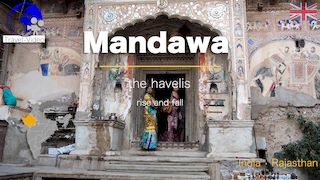
Rajasthan, India • Haveli in Mandawa

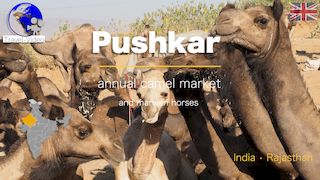
Rajasthan, India • camel fair in Pushkar
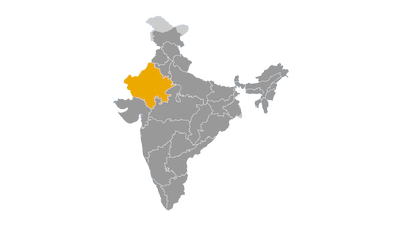
Rajasthan Through the Centuries: From Indus Settlements to the Formation of Modern India’s Largest State
A Historical Crossroads Between Desert and Plains
Rajasthan occupies a unique position in the history of the Indian subcontinent. Located in northwestern India, the region has long served as a bridge between the fertile plains of northern India, the Indus basin and the trade routes leading toward Central Asia and the Arabian Sea. Its varied landscapes, ranging from the Thar Desert to the Aravalli Mountains, influenced patterns of settlement, warfare and political organization throughout its history.
Much of the territory of present-day Rajasthan corresponds to the historical region known during the colonial period as Rajputana, a name derived from the Rajput dynasties that dominated much of the area for nearly a millennium.
Prehistoric Communities and the Indus Civilization
Human occupation of Rajasthan dates back to prehistoric times. Archaeological evidence from river valleys and rock shelters indicates the presence of hunter-gatherer communities during the Paleolithic and Mesolithic periods.
By the third millennium BCE, parts of northern Rajasthan had become integrated into the wider urban network of the Indus Valley Civilization. One of the most important archaeological sites from this period is Kalibangan, situated near the ancient course of the Ghaggar River.
Excavations at Kalibangan have revealed carefully planned streets, sophisticated drainage systems and evidence of organized agriculture. The site is particularly notable for preserving some of the earliest known traces of ploughed agricultural fields in South Asia.
Following the gradual decline of the Indus civilization around 1900 BCE, settlements became smaller and more dispersed. Communities adapted to increasingly arid environmental conditions through a combination of agriculture, pastoralism and trade.
Early Kingdoms and Imperial Rule
During the first millennium BCE, Rajasthan was divided among numerous tribal confederations and regional kingdoms mentioned in ancient Indian literature and epics.
Parts of the region eventually came under the influence of the Mauryan Empire under Chandragupta Maurya and later Ashoka.
The Mauryan administration encouraged trade and communication networks that linked Rajasthan with other parts of the subcontinent. Buddhism spread into some areas, although Hindu traditions remained dominant throughout most of the region.
After the decline of the Mauryan Empire, Rajasthan experienced successive periods of rule by Indo-Scythian, Kushan and Gupta dynasties. During the period of the Gupta Empire, relative political stability encouraged economic growth and cultural development.
The Rise of the Rajput Kingdoms
Beginning around the sixth century CE, Rajasthan emerged as the principal homeland of the Rajputs, warrior aristocratic clans who would shape the region's political and cultural identity for centuries.
Several major Rajput dynasties established powerful kingdoms throughout the region. Among the most influential were the Sisodias of Mewar, the Chauhans of Ajmer, the Rathores of Marwar, the Kachwahas of Amber and the Bhatis of Jaisalmer.
Rajput political culture emphasized military honour, dynastic loyalty and the defence of fortified territories. This period witnessed the construction of many of Rajasthan's most famous forts and strongholds.
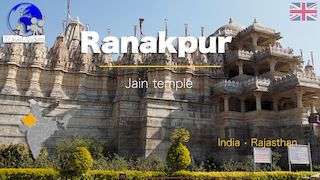
Fortresses such as Chittorgarh Fort, Kumbhalgarh Fort, Jaisalmer Fort and Mehrangarh Fort became symbols of Rajput authority and remain among India's most important historical monuments.
The strategic location of Rajasthan along caravan routes linking India with Central Asia and western Asia also stimulated the growth of commerce and urban centres.
Muslim Invasions and the Delhi Sultanate
From the eleventh century onward, Rajasthan faced repeated military incursions from Central Asian and Afghan powers seeking to expand into northern India.
One of the defining events of this period was the defeat of the Rajput ruler Prithviraj Chauhan by Muhammad Ghori at the Second Battle of Tarain in 1192. This battle opened the way for Muslim expansion into northern India and the eventual establishment of the Delhi Sultanate.
Despite these developments, many Rajput kingdoms retained considerable autonomy due to their strong military traditions and fortified capitals. Conflicts and alliances between Rajput rulers and the Delhi Sultans continued for several centuries.
The period also facilitated exchanges in architecture, administration and artistic traditions between Islamic and Rajput cultures.
Rajasthan under the Mughal Empire
The establishment of the Mughal Empire in the sixteenth century transformed the political landscape of Rajasthan.
Emperor Akbar adopted a pragmatic policy toward the Rajput rulers. Rather than pursuing continuous warfare, he sought alliances through diplomacy, military cooperation and dynastic marriages.
Several Rajput dynasties, particularly the Kachwahas of Amber, became important allies of the Mughal court and occupied senior administrative and military positions within the empire.
The kingdom of Mewar remained the most notable exception. Under the leadership of Maharana Pratap, it resisted Mughal expansion despite suffering defeat at the Battle of Haldighati in 1576.
The Mughal period brought political stability and economic prosperity to much of Rajasthan. Trade flourished, cities expanded and the fusion of Rajput and Mughal artistic traditions produced some of the region's finest palaces and architectural complexes.
The Decline of Mughal Authority and Maratha Expansion
During the eighteenth century, the gradual weakening of Mughal authority created new opportunities and challenges for Rajasthan's princely states.
Rajput rulers regained greater independence but increasingly faced pressure from the expanding Maratha Confederacy.
Many Rajput kingdoms were compelled to pay tribute to Maratha leaders in exchange for military protection or political autonomy. These financial burdens weakened several states and intensified rivalries between local rulers.
At the same time, the growing influence of European trading companies introduced new political dynamics into northern India.
British Rule and the Princely States of Rajputana
During the early nineteenth century, most Rajput rulers entered into treaties with the East India Company.
The British organized the region under the name Rajputana and governed it indirectly through a system of princely states. Local rulers retained authority over internal affairs while Britain assumed responsibility for defence and foreign relations.
This arrangement allowed the princely dynasties to preserve their political status while becoming integrated into the broader colonial structure of British India.
Railways, roads and administrative reforms gradually connected Rajputana more closely with the rest of the subcontinent. Cities such as Jaipur, Jodhpur and Udaipur developed into important administrative and commercial centres.
Nationalism and Independence
Compared with directly administered British provinces, nationalist movements developed more slowly within the princely states of Rajasthan because of the continued influence of local monarchies.
Nevertheless, political reform movements emerged during the early twentieth century, demanding representative institutions and greater participation in governance.
The broader Indian independence movement increasingly influenced educated elites and urban populations throughout Rajputana. Political organizations advocating democratic reforms gained momentum during the final decades of British rule.
Following Indian independence in 1947, the rulers of the princely states negotiated their accession to the newly independent Indian Union.
The Formation of Modern Rajasthan
The creation of modern Rajasthan occurred through a gradual process of political integration rather than a single administrative act.
Between 1948 and 1950, numerous princely states were progressively merged into larger administrative units. This complex process culminated in the formation of the modern state of Rajasthan on 30 March 1949, a date still commemorated annually as Rajasthan Day.
Subsequent territorial adjustments and administrative reorganizations helped define the state's present boundaries and governance structures.
Rajasthan Since Independence
Since becoming part of the Republic of India, Rajasthan has undergone profound social and economic transformation.
Large-scale irrigation projects, particularly the Indira Gandhi Canal, have enabled agricultural expansion into parts of the Thar Desert and significantly altered settlement patterns in western districts.
Industrialization, urbanization and improvements in infrastructure have diversified the state's economy beyond agriculture and traditional crafts. Tourism has emerged as one of the major economic sectors, supported by Rajasthan's extraordinary concentration of forts, palaces and historical cities.
Despite modernization, the legacy of the Rajput kingdoms remains deeply embedded in Rajasthan's cultural identity. Former princely capitals, royal traditions and architectural heritage continue to shape both the state's image and its role within contemporary India.
Modern Rajasthan therefore represents the outcome of thousands of years of adaptation to environmental constraints, political change and cultural interaction. Its history reflects not only the story of Rajput rulers and imperial powers, but also the resilience of societies that developed within one of the most distinctive landscapes of the Indian subcontinent.


Contemporary Rajasthan: Desert Landscapes, Historic Cities and Economic Transformation in Northwestern India
A Vast State at the Crossroads of Northern and Western India
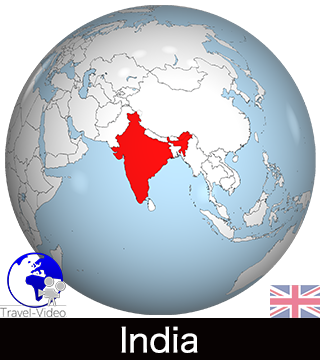
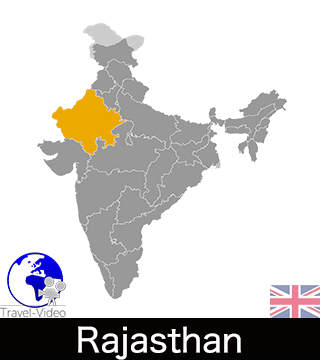
Rajasthan is the largest state in India by area and occupies a strategic position in the northwestern part of the country. Covering more than 342,000 square kilometres, it accounts for approximately one-tenth of India's total territory. Its geographical location places it at the intersection of the fertile plains of northern India, the arid regions bordering Pakistan and the commercial corridors linking western India with the rest of the subcontinent.
The state shares a long international border with Pakistan to the west and northwest. Within India, Rajasthan borders Punjab, Haryana, Uttar Pradesh, Madhya Pradesh and Gujarat. This location gives Rajasthan considerable strategic importance for national security, trade and transportation.
The capital city, Jaipur, is also the largest urban centre in the state and serves as its principal administrative, economic and cultural hub.
Geography and Natural Landscapes
Rajasthan is characterised by remarkable geographical diversity. The western half of the state is dominated by the Thar Desert, one of the largest arid regions in Asia. This landscape consists of sand dunes, scrublands and semi-arid plains that have supported pastoral communities and desert agriculture for centuries.
Running diagonally across the state from southwest to northeast is the Aravalli Range, one of the oldest mountain systems in the world. The Aravallis divide the state into two distinct environmental zones: the more arid western districts and the relatively more fertile eastern and southeastern regions.
Several important rivers flow through Rajasthan, although many are seasonal and heavily dependent on monsoon rainfall. The Chambal River is the largest perennial river in the state and plays an essential role in irrigation and hydroelectric generation. Other important rivers include the Banas, Luni, Mahi and Sabarmati.
Rajasthan also contains several important protected areas. Wildlife reserves such as Ranthambore National Park and Sariska Tiger Reserve are among India's most significant conservation areas, while Keoladeo National Park is internationally recognised for its bird populations and migratory species.
Climate and Environmental Conditions
Most of Rajasthan experiences an arid or semi-arid climate. Summers are extremely hot, particularly in the western districts, where temperatures frequently exceed 45°C during May and June.
The southwest monsoon brings rainfall between July and September, but precipitation varies considerably across the state. Western Rajasthan often receives less than 200 millimetres of rain annually, whereas southeastern districts receive substantially more moisture.
Winters are generally mild and dry, although temperatures can approach freezing during cold nights in desert regions and elevated areas.
Environmental challenges have become increasingly significant in recent decades. Water scarcity remains the state's most pressing environmental issue, while desertification, groundwater depletion and climate change are creating additional pressures on agriculture and urban development.
Population and Demographic Characteristics
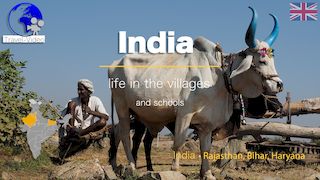
Rajasthan has a population exceeding seventy million inhabitants, making it one of India's most populous states. Although urbanisation has accelerated during recent decades, a majority of the population continues to live in rural areas.
The state's population consists predominantly of communities speaking various forms of the Rajasthani language group as well as Hindi, which serves as the official language of administration and education.
Major regional languages and dialects include Marwari, Mewari, Dhundhari, Shekhawati and Bagri. English plays an important role in higher education, business and government institutions.
Hinduism is the dominant religion throughout the state. Significant Muslim communities are present in urban centres and historical trading regions, while Jain communities continue to play an influential role in commerce and philanthropy. Smaller Sikh, Christian and Buddhist communities are also represented.
Rajasthan is home to several important tribal populations, particularly in the southern districts. The Bhils constitute the largest tribal community and maintain distinctive cultural traditions and social structures.
Major Cities and Urban Centres
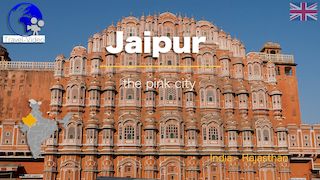
Jaipur serves as the political and economic capital of Rajasthan and is one of India's most important historical cities. The city combines government institutions, industrial activity, tourism and higher education facilities.
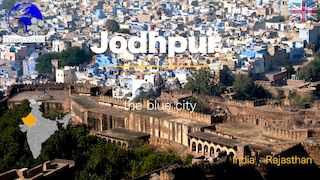
Jodhpur functions as the principal urban centre of western Rajasthan and plays a major role in regional trade, handicrafts and tourism. Its location near the Thar Desert also gives it logistical importance.
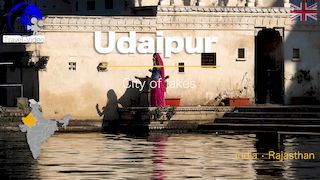
Udaipur is internationally recognised for its lakes, palaces and tourism industry, while Kota has become one of India's leading educational centres due to its large concentration of coaching institutions preparing students for engineering and medical entrance examinations.
Ajmer remains an important religious centre because of the shrine of Khwaja Moinuddin Chishti, one of the most significant Sufi pilgrimage sites in South Asia.
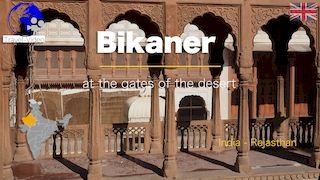
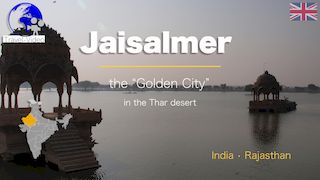
Bikaner and Jaisalmer occupy strategic positions near the Pakistani border and contribute both to tourism and to military logistics in the region.
Administrative Structure and Governance
Rajasthan functions within India's federal constitutional framework and is governed by an elected Legislative Assembly and a state government headed by a Chief Minister. The Governor represents the constitutional authority of the Union government.
Administratively, the state is divided into districts that oversee local governance, public administration and development programmes.
Managing such a large territory presents considerable administrative challenges because of variations in geography, population density and economic activity. Rural development programmes and local government institutions play an important role in delivering services across remote areas.
Transportation and Connectivity
Rajasthan possesses one of the largest road networks in India. National highways and expressways connect Jaipur, Jodhpur, Udaipur and other major cities with Delhi, Ahmedabad and Mumbai.
Rail transport remains crucial for both passenger travel and freight movement. The railway network supports the transportation of agricultural products, minerals and manufactured goods throughout the country.
Several airports serve the state, including facilities in Jaipur, Udaipur, Jodhpur, Bikaner and Jaisalmer. Jaipur International Airport acts as the principal gateway for international visitors and business travellers.
Because of the state's predominantly arid environment, inland water transport plays virtually no role in the transportation system.
Agriculture and Rural Economy
Agriculture continues to employ a large proportion of Rajasthan's population despite the climatic limitations imposed by aridity and irregular rainfall.
Major crops include wheat, millet, barley, mustard, pulses and cotton. Irrigated agriculture is concentrated in eastern districts and in areas supplied by canal systems.
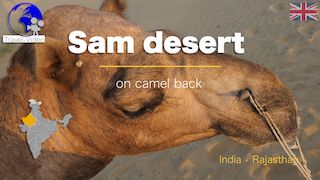
Animal husbandry is particularly important in arid regions. Camels, sheep and goats have long been adapted to desert conditions and remain economically significant. Dairy production also contributes substantially to rural livelihoods.
The Indira Gandhi Canal has transformed parts of western Rajasthan by introducing irrigation to areas that were previously unsuitable for large-scale agriculture.
Mineral Resources and Industrial Development
Rajasthan possesses some of India's richest mineral deposits and is a leading producer of numerous industrial minerals and construction materials.
The state is particularly important for the extraction of marble, sandstone, limestone, zinc, copper, gypsum and phosphate. The marble quarries of Makrana are internationally famous because their stone was used in the construction of the Taj Mahal.
Industrial development is concentrated around Jaipur, Alwar, Bhilwara and Kota and includes cement production, metallurgy, chemicals, textiles and engineering industries.
Information technology and service industries have also expanded, particularly in Jaipur and other urban centres.
Tourism as a Major Economic Sector
Tourism is one of Rajasthan's most important sources of revenue and employment. The state occupies a central position in India's domestic and international tourism industry because of its concentration of historical monuments and cultural attractions.
Palaces, forts and former royal residences attract millions of visitors every year. Cities such as Jaipur, Jodhpur, Udaipur and Jaisalmer form part of some of the country's most popular tourist circuits.
The tourism sector supports hotels, transportation, handicrafts, cultural performances and local businesses throughout the state.
Cultural Life and Artistic Traditions
Rajasthan possesses one of the strongest regional cultural identities in India. Much of its cultural heritage reflects the traditions of the Rajput courts as well as the contributions of desert communities and tribal populations.
Traditional music and dance remain important aspects of social and ceremonial life. Folk traditions associated with communities such as the Manganiyars and Langas continue to enjoy national and international recognition.
Festivals such as Gangaur, Teej and the Pushkar Camel Fair occupy prominent places in the cultural calendar and attract large numbers of visitors.
Rajasthan is also renowned for its handicrafts, including block-printed textiles, embroidery, silver jewellery, miniature painting, leather goods and traditional puppetry.
Education and Contemporary Challenges
The state hosts numerous universities, technical institutions and research centres. Jaipur, Jodhpur, Udaipur and Kota serve as major educational centres for higher learning and professional training.
Rajasthan nevertheless faces significant challenges. Water management remains the most critical long-term issue due to the state's arid environment and growing population demands.
Reducing disparities between urban and rural regions, improving educational access in remote districts and creating skilled employment opportunities are also major policy priorities.
Contemporary Rajasthan therefore represents a state undergoing rapid transformation while preserving a cultural heritage that remains among the most distinctive and influential in India. Its future development will depend largely on balancing economic growth with environmental sustainability and social inclusion.