Français (France)
  Nederlands (nl-NL)
 Khichan, located in Rajasthan, India, is renowned as a sanctuary for migratory birds, particularly demoiselle cranes. Each year, these birds travel from Eurasia to spend the winter months in this region. The local community plays a crucial role in their conservation by providing feeding areas and ensuring a safe environment for these seasonal visitors. This natural phenomenon attracts birdwatchers and wildlife enthusiasts who come to witness the harmonious movements and social behaviors of these birds. Khichan stands as a remarkable example of coexistence between wildlife and human communities.
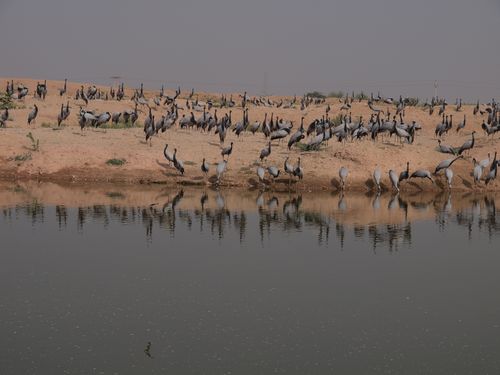
Khichan • Migratory birds in Rajasthan
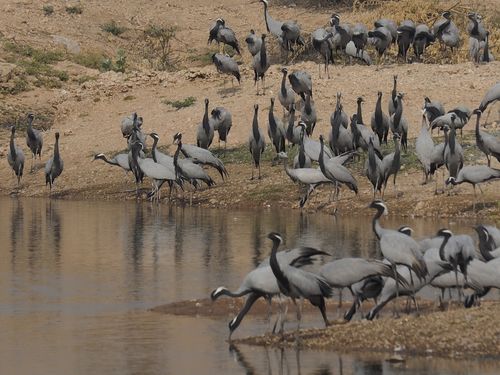
Khichan • Migratory birds in Rajasthan

Khichan • Migratory birds in Rajasthan
Natural site profile
Migratory birds in Rajasthan
Natural site categories: Resting zone
Natural site family: Migration zone
Natural site genre: Fauna
Geographic location: Khichan • Rajasthan • India
• Links to •
• List of videos about Khichan on this site •
The demoiselle cranes of Khichan • Rajasthan, India
Khichan Migratory Birds: A Model of Conservation and Ecological Harmony in Rajasthan
Political, Economic, and Cultural Motivations for Preservation
The preservation and recognition of the migratory bird site at Khichan in Rajasthan began in the 1970s, driven primarily by the local Jain community’s cultural and spiritual commitment to non-violence and respect for all living beings. Their initiative to feed and protect the visiting demoiselle cranes (Grus virgo) was rooted in their ethos of coexistence with nature.
Over time, these efforts gained economic significance. The annual arrival of thousands of cranes transformed Khichan into an eco-tourism destination, attracting ornithologists, photographers, and nature enthusiasts. This influx of visitors brought financial benefits to the community, incentivizing further conservation efforts.
Politically, while local authorities provided limited support initially, the growing prominence of the site has led to some recognition at regional levels. However, the preservation of Khichan remains largely a grassroots effort, sustained by the dedication of its residents.
Historical Events and Regional Impact
The large-scale migration of demoiselle cranes to Khichan has been a natural phenomenon for centuries, but it gained prominence when the local community began organizing feeding areas in the 1970s. This practice not only increased the number of cranes visiting annually but also helped stabilize their populations, as they found a safe haven during their arduous migration from Eurasia.
Globally, this period coincided with a rising awareness of environmental conservation. The Ramsar Convention on Wetlands (1971) and similar movements underscored the need to protect migratory bird habitats. Khichan became part of this broader narrative, showcasing how local actions could contribute to global biodiversity.
Comparable initiatives include:
The protection of Lake Nakuru in Kenya, a key habitat for flamingos, which became a national park to safeguard its ecosystem.
Conservation efforts for the Montezuma National Wildlife Refuge in the United States, which provides critical resting points for migratory waterfowl.
These parallels highlight Khichan’s role in a global network of ecological sanctuaries.
Transformations Over the Centuries
The site at Khichan has undergone several transformations, reflecting both environmental and socio-cultural changes:
- Community-driven conservation: Initially informal, the practice of feeding the cranes evolved into a structured effort, with designated feeding grounds and daily rituals to accommodate the growing number of birds.
- Tourism development: The influx of eco-tourists led to the creation of infrastructure such as observation points and accommodations, integrating the site into the region’s economy.
- Modernization pressures: Urban expansion and changing land use patterns have posed challenges to maintaining the balance between human activity and wildlife conservation.
These transformations illustrate the dynamic relationship between human communities and natural ecosystems, with Khichan standing as a testament to the adaptability and resilience of such interactions.
Ecological and Symbolic Importance
Khichan serves as a critical resting and feeding site for demoiselle cranes during their transcontinental migration. Its role in sustaining these birds highlights its ecological importance within the broader migratory network. Symbolically, the site represents harmony between humans and wildlife, demonstrating the potential of grassroots conservation efforts.
The annual congregation of cranes, often numbering over 20,000 individuals, has become a visual and cultural spectacle, attracting global attention and fostering pride among local residents.
Current State of Preservation and Challenges
Despite its success, Khichan faces several challenges:
- Urban encroachment: The expansion of the village threatens to reduce the availability of open spaces necessary for feeding and resting.
- Climate change: Shifts in rainfall patterns and temperature extremes impact the availability of resources for both the cranes and the surrounding ecosystem.
- Resource dependency: The preservation of the site relies heavily on local efforts, with minimal institutional or financial support from governmental bodies.
These challenges necessitate a strategic approach to ensure the long-term sustainability of the site.
Global Recognition and the Role of UNESCO
Although Khichan is not currently a UNESCO World Heritage Site, its inclusion could bring significant benefits:
- Enhanced conservation efforts: Recognition would attract funding and expertise for habitat preservation and management.
- Increased global visibility: A UNESCO designation would place Khichan among the world’s most important ecological sites, promoting awareness of its unique role in migratory patterns.
- Sustainable tourism development: Improved management strategies could balance visitor influx with ecological preservation.
Such recognition would not only benefit Khichan but also strengthen the global understanding of the interconnectedness of migratory bird habitats.
Conclusion
Khichan’s role as a sanctuary for migratory birds underscores the power of community-driven conservation. Its unique blend of ecological, cultural, and economic significance highlights the importance of protecting such sites in a rapidly changing world. By addressing current challenges and seeking global recognition, Khichan can continue to inspire as a model of harmony between humanity and nature, ensuring the preservation of its ecological legacy for future generations.
Architectural features
Khichan Migratory Birds: A Natural Marvel of Geological, Biological, and Ecological Processes
Geological, Biological, and Ecological Significance
Khichan, a village in Rajasthan, India, stands as a unique example of ecological harmony shaped by geological and biological processes. This site serves as a critical stopover for demoiselle cranes (Grus virgo) during their transcontinental migration, showcasing the intricate relationship between natural landscapes and migratory species.
The site’s semi-arid topography, characterized by sandy soils, rolling dunes, and seasonal water bodies, creates an environment that supports both the cranes’ dietary needs and their preference for open, secure resting spaces. The ability of these birds to adapt to the harsh conditions of the Thar Desert highlights the resilience of migratory species and their ecological reliance on key habitats along their routes.
Unique Features Reflecting the Site’s Grandeur
The natural characteristics of Khichan underscore its importance as a habitat:
- Topography: The region's flat, arid terrain, interspersed with small wetlands and temporary water sources, provides an ideal combination of feeding and roosting grounds for migratory birds.
- Biodiversity: While demoiselle cranes are the primary attraction, the area also supports a variety of other avian species, including local waterfowl and migratory passerines, enhancing its ecological richness.
- Seasonal dynamics: The temporary wetlands created during the monsoon season offer crucial hydration points, while the dry winter months allow cranes to forage easily in open spaces.
These features make Khichan a vital ecological node, emphasizing the balance between local conditions and global migration patterns.
Local and Global Environmental Interactions
Khichan epitomizes the interconnectedness of local environments with global ecological processes:
Local influences: The site’s ecological functionality is enhanced by human intervention, particularly the efforts of the local community, who organize systematic feeding programs. This integration of human activity with natural migration patterns has amplified the site’s importance as a reliable sanctuary.
Global impacts: Demoiselle cranes undertake one of the longest migrations among avian species, traveling over 5,000 kilometers from Eurasian steppes. Their reliance on stopover sites like Khichan demonstrates the critical role such locations play in maintaining global biodiversity.
The interaction between these local adaptations and global patterns underscores the unique ecological significance of Khichan.
Notable Ecological Features and Anecdotes
One of the most remarkable aspects of Khichan is the scale and spectacle of the crane gatherings. At sunrise and sunset, thousands of cranes take flight or return in synchronized formations, creating a visual display that attracts bird enthusiasts and researchers alike.
Statistics:
Over 20,000 demoiselle cranes visit Khichan annually, making it one of the largest congregations of this species in South Asia.
The community feeds approximately 500 kilograms of millets daily during the peak season, a tradition that began in the 1970s and has since become a defining feature of the site.
An anecdote often recounted by locals involves the cranes' apparent recognition of the villagers, as they display trust and familiarity, a behavior rarely seen in other locations.
Recognition and UNESCO Impact
Khichan’s international recognition is growing, though it is not yet inscribed as a UNESCO World Heritage Site. Such a designation could significantly benefit its preservation:
- Enhanced conservation efforts: Global recognition would attract resources for maintaining the delicate balance of the habitat and addressing threats such as urban encroachment.
- Tourism and education: Inclusion in UNESCO’s list would promote eco-tourism and raise awareness about the importance of protecting migratory bird habitats.
- Global ecological importance: The site would be acknowledged as part of a network of critical stopovers essential for the survival of migratory birds worldwide.
Challenges to Preservation
Despite its ecological importance, Khichan faces several challenges:
- Environmental degradation: Urban expansion and the degradation of surrounding landscapes threaten the site’s natural balance.
- Climate change: Altered rainfall patterns and rising temperatures may impact the availability of food and water for the cranes.
- Dependency on local efforts: While community-driven conservation has been effective, the lack of institutional support poses a long-term risk.
Addressing these challenges requires a collaborative approach that combines local expertise with global conservation strategies.
Conclusion
Khichan is more than a migratory stopover; it is a testament to the intricate relationship between natural processes, migratory species, and human stewardship. Its geological and ecological features, combined with the efforts of the local community, make it a model for preserving migratory bird habitats. With continued focus on conservation and the potential for global recognition, Khichan can inspire similar initiatives worldwide, ensuring the protection of biodiversity for generations to come.
 Links to the main sections of the site