Français (France)
  Nederlands (nl-NL)
 Lake Issyk-Kul, located in the mountainous Tian Shan region of Kyrgyzstan, is one of the world’s largest alpine lakes and the second-largest saline lake after the Caspian Sea. Surrounded by snow-capped peaks, it remains ice-free throughout the year due to its mineral content and underground thermal springs. Historically, it served as a vital cultural and commercial crossroads along the Silk Road, shaping the region’s economic and symbolic identity. Today, Issyk-Kul is recognized as an ecological and touristic hub, hosting unique biodiversity while attracting visitors drawn by its striking landscapes, local traditions, and scientific interest.
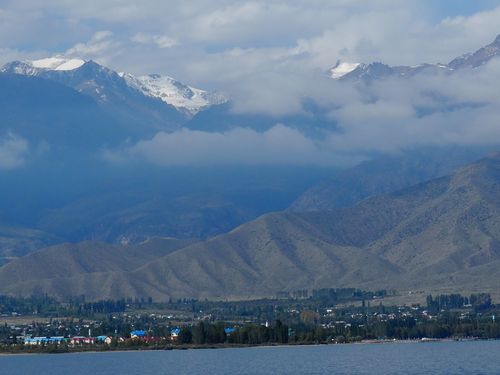
Issyk kul • Issyk-Kul Lake
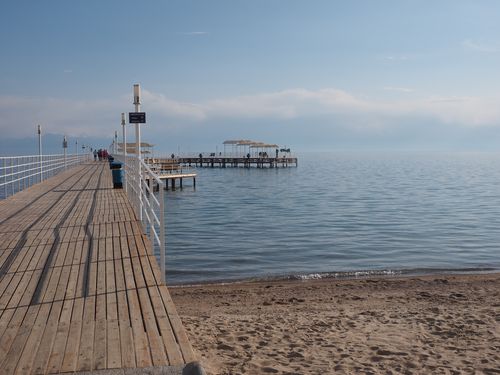
Issyk kul • Issyk-Kul Lake
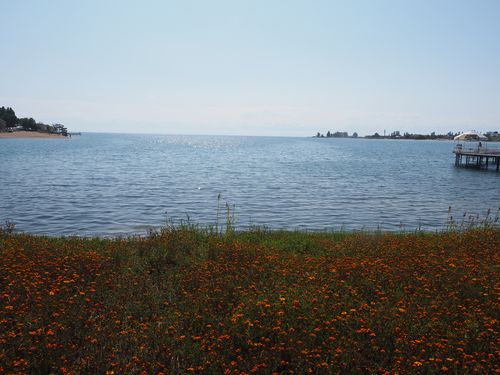
Issyk kul • Issyk-Kul Lake
Natural site profile
Issyk-Kul Lake
Natural site category: Lake
Natural site family: Seas, lakes and rivers
Natural site genre: Aquatic
Geographic location: Issyk Kul • Kyrgyzstan
This natural site in Issyk Kul is recognised by UNESCO as a Biosphere Reserve under the "Man and the Biosphere" (MAB) Programme : Biosphere Reserve since 2001.
• Links to •
• List of videos about Bishkek, Chuy Valley, Karakol, Issyk Kul lake on this site •
Kyrgyzstan • a republic in the heart of Central Asia
Issyk-Kul: Political, Economic, and Cultural Forces Behind the Preservation of a Central Asian Natural Heritage
Early Recognition and the Origins of Preservation
Located in the eastern Tian Shan Mountains, Issyk-Kul — often called the “warm lake” of Kyrgyzstan — has long been a site of ecological and cultural significance. The first efforts toward its protection emerged during the mid-20th century under the Soviet Union, when the region was recognized for its exceptional hydrological balance, high-altitude biodiversity, and climatic influence on Central Asia. Soviet policies combined utilitarian goals with scientific conservation: the lake was declared a State Nature Reserve in 1948, both to safeguard its ecosystems and to regulate its growing role as a recreational and therapeutic area.
The political motivations of this era were intertwined with ideological and administrative goals. The Soviet government sought to demonstrate its commitment to scientific progress and environmental management while using natural sites like Issyk-Kul as models of “rational exploitation.” The development of sanatoriums and holiday complexes around Cholpon-Ata and Balykchy reflected a vision of social modernity — health, leisure, and collective well-being — rooted in the controlled use of natural resources.
Economic Development and Environmental Awareness
From the 1960s to the 1980s, Issyk-Kul became one of the leading resorts of the Soviet Union, hosting thousands of visitors each year. Its mineral-rich waters and mild microclimate supported a flourishing health tourism industry, which played a significant role in the economic life of the region. At the same time, the authorities began to recognize the lake’s ecological fragility: its closed hydrological system, with no outlet to the sea, made it particularly sensitive to pollution and changes in water inflow.
By the 1970s, monitoring programs and restrictions on industrial activity had been introduced to limit degradation. These early conservation efforts foreshadowed the modern concept of sustainable development, combining environmental protection with socioeconomic planning.
Post-Soviet Reorientation and Global Integration
After Kyrgyzstan gained independence in 1991, Issyk-Kul’s management underwent a profound transformation. The collapse of the Soviet tourism infrastructure led to economic decline, while unregulated development along the lake’s northern shore caused localized pollution. However, this period also marked the emergence of new cultural and national motivations for preservation.
Issyk-Kul began to be reinterpreted as a symbol of Kyrgyz identity — a natural emblem linking the nomadic past to the independent state’s future. In 2001, the site was designated a UNESCO Biosphere Reserve under the Man and the Biosphere (MAB) Programme. This recognition represented a shift toward international environmental governance, emphasizing the participation of local communities and the integration of conservation with regional development. The lake’s protection thus entered a new phase, shaped by global ecological values and cross-border cooperation.
Historical and Global Context
The evolution of Issyk-Kul’s preservation parallels broader global trends in the management of inland lakes. During the same period, other endorheic basins such as the Aral Sea and the Dead Sea suffered catastrophic declines due to human intervention. In contrast, Issyk-Kul’s relative stability reflected a more balanced relationship between exploitation and protection. Its salinity, combined with subsurface geothermal inputs, ensured a resilient ecological system, while moderate human density around the basin limited irreversible damage.
In a global context, Issyk-Kul can be compared to high-altitude lakes like Lake Titicaca in South America or Lake Baikal in Siberia — both recognized for their biodiversity, cultural resonance, and vulnerability to modernization. Each of these sites became laboratories for international environmental policy, illustrating the tension between conservation and development. Issyk-Kul’s inclusion in international frameworks places it squarely within this movement, contributing to a broader understanding of ecological governance in transitional economies.
Environmental and Cultural Transformations
Over the centuries, Issyk-Kul has experienced fluctuations in water level and salinity caused by climatic cycles and anthropogenic activity. During the late 20th century, reduced river inflows and agricultural irrigation contributed to a gradual decline in lake volume, later followed by a partial recovery in the 1990s. These oscillations reflect the sensitivity of the lake’s ecosystem to both regional and global climate dynamics.
Culturally, the site has evolved from a sacred landscape in nomadic mythology to a socialist recreational hub and, finally, to a symbol of national pride. Legends describing sunken cities beneath its waters continue to shape local identity and collective memory. Festivals and sporting events, such as the World Nomad Games, are now held near the lake, reinforcing its status as a meeting point between nature, heritage, and modern culture.
Ecological Importance and Symbolic Role
Issyk-Kul serves as a vital ecological reservoir within the Tian Shan. It moderates regional temperatures, sustains migratory bird populations, and supports endemic species adapted to its saline environment. Its wetlands and deltas function as natural filters, contributing to the overall hydrological stability of the basin. These attributes make the lake not only a natural wonder but also an essential element of Central Asian climate regulation.
Symbolically, Issyk-Kul embodies the concept of resilience — a landscape that has withstood tectonic upheavals, political transitions, and environmental pressures while maintaining its identity. The coexistence of ecological integrity and human activity around its shores reflects a rare balance between tradition and modernization.
Current Preservation Status and Challenges
Despite its international recognition, Issyk-Kul faces significant contemporary challenges. The expansion of unregulated tourism, inadequate wastewater treatment, and the effects of climate change threaten its long-term equilibrium. Rapid urbanization around the northern shore has increased nutrient loads and disrupted coastal habitats. In addition, fluctuating water levels continue to alter wetlands that serve as critical nesting areas for migratory species.
In response, the Kyrgyz government and international partners have implemented programs aimed at upgrading sewage systems, promoting eco-tourism, and restoring degraded ecosystems. Public awareness campaigns emphasize the importance of responsible tourism and community participation in environmental management.
Broader Implications and Outlook
The story of Issyk-Kul reflects the broader evolution of environmental consciousness in Central Asia — from utilitarian exploitation to heritage-based conservation. Its protection embodies the convergence of political will, cultural identity, and scientific expertise. While not inscribed on the UNESCO World Heritage List, its status as a Biosphere Reserve grants it an equivalent level of global visibility and symbolic value.
Today, Issyk-Kul stands as both a natural laboratory and a cultural landmark, offering insights into the interaction between ecosystems and societies in a rapidly changing world. Its continued preservation depends on the delicate balance between local livelihoods, sustainable tourism, and the safeguarding of the ecological processes that make this vast alpine lake one of the most enduring treasures of Central Asia.
Issyk-Kul: A Natural Laboratory of Geology, Biology, and Ecology in Central Asia
Geological Origins and Topographic Uniqueness
Issyk-Kul, located in northeastern Kyrgyzstan within the towering Tian Shan Mountains, is one of the planet’s most remarkable natural formations. This immense endorheic (closed-basin) lake, covering approximately 6,200 km² and reaching depths of over 700 meters, lies at an altitude of 1,607 meters above sea level. Its formation results from tectonic subsidence linked to the active uplift of the Tian Shan range — a process still ongoing today. This combination of geological activity and high-altitude isolation gives Issyk-Kul its distinctive form: a vast depression encircled by peaks exceeding 4,000 meters, many snow-capped throughout the year.
The lake’s very name, meaning “Warm Lake” in Kyrgyz, reflects one of its most distinctive features — it never freezes, even in the harsh winters of Central Asia. This phenomenon is due to a balance between moderate salinity, geothermal springs at the lakebed, and constant water exchange from glacial rivers. Such stability makes Issyk-Kul a rare example of a thermally dynamic saline lake, capable of maintaining equilibrium over millennia despite its enclosed nature.
Geological and Ecological Processes
Issyk-Kul provides a living record of tectonic and climatic processes that have shaped Central Asia over millions of years. Sediment cores extracted from its basin reveal layers documenting glacial cycles, desertification phases, and monsoon fluctuations dating back at least 200,000 years. This archive allows scientists to reconstruct ancient climates, making the lake one of the key reference points for paleoclimatic research in Eurasia.
The surrounding landscape, composed of river deltas, alluvial fans, and terraced shores, demonstrates continuous interaction between erosion, sedimentation, and tectonic uplift. Active faults beneath the lake generate periodic seismic activity, while subsidence zones contribute to its exceptional depth. These processes illustrate the innovative geological balance between mountain-building forces and lacustrine stability — a dynamic rarely preserved so clearly in natural history.
Biodiversity and Endemic Species
From a biological perspective, Issyk-Kul functions as an isolated ecosystem supporting a mix of alpine, steppe, and aquatic species. The lake harbors around 20 species of fish, including several endemic varieties such as Schizothorax issyk-kulensis, which have evolved physiological adaptations to its brackish waters. Its wetlands and reed belts serve as vital stopovers for over 300 migratory bird species, including globally threatened species like the Dalmatian pelican (Pelecanus crispus) and the relict gull (Ichthyaetus relictus).
This coexistence of mountain and desert-adapted fauna within a single ecosystem illustrates an exceptional case of ecological convergence, where species from different biomes coexist due to unique hydrological and climatic conditions. The high levels of solar radiation and mineral-rich sediments also promote distinctive plankton communities, which play a central role in maintaining the lake’s oxygen balance.
Environmental Innovations and Natural Interactions
One of Issyk-Kul’s most innovative ecological characteristics is its self-regulating saline balance. Unlike most endorheic lakes, which tend to either desiccate (as in the case of the Aral Sea) or increase in salinity, Issyk-Kul has maintained a relatively stable chemical composition for thousands of years. This equilibrium is sustained through the interplay of glacial inflow, geothermal heating, and evaporative flux — a complex natural system that has intrigued limnologists for decades.
The interaction between the lake’s thermal currents and local climate also creates a unique microclimate: winters are milder and summers cooler around its shores than in the adjacent valleys. This phenomenon, known as the Issyk-Kul climatic effect, has made the region historically suitable for settlement, agriculture, and later tourism, transforming the lake into both an ecological and socioeconomic hub.
Geological Formations and Submerged Mysteries
Beneath its clear waters, Issyk-Kul conceals geological and archaeological features of great interest. Surveys have identified submerged structures near its northern shore, possibly remnants of ancient settlements engulfed by tectonic subsidence or rising water levels during the medieval period. These discoveries not only provide insight into the region’s geomorphological evolution but also enrich the cultural mythology surrounding the lake, including legends of sunken cities punished by divine wrath.
The lake’s mineral composition, with elevated levels of sodium, magnesium, and calcium, has long been exploited for therapeutic purposes. During the Soviet era, numerous sanatoriums and spas were built to take advantage of its curative waters, establishing Issyk-Kul as a center for health tourism — a role it continues to fulfill today.
Global Comparisons and Environmental Significance
In global terms, Issyk-Kul stands alongside other great inland water bodies such as Lake Baikal (Russia) and Lake Titicaca (Peru-Bolivia) as a model of natural resilience in high-altitude environments. While the Aral Sea became an emblem of ecological collapse due to overexploitation, Issyk-Kul demonstrates a more sustainable balance between human activity and environmental continuity. Its ability to maintain volume and salinity despite regional climatic variability is considered a rare ecological innovation.
The lake also contributes to regional and global climate systems. Acting as a vast thermal reservoir, it influences air circulation patterns over Central Asia and moderates extreme temperature shifts. On a planetary scale, it serves as a crucial site for studying climate change impacts in closed-basin ecosystems, providing lessons applicable to other fragile environments worldwide.
Recognition, Conservation, and Challenges
Issyk-Kul was designated a UNESCO Biosphere Reserve in 2001, acknowledging its outstanding geological, ecological, and cultural values. This recognition has encouraged long-term monitoring of water quality, biodiversity, and human impact. It also symbolizes a shift from state-controlled management toward participatory conservation involving local communities.
However, challenges persist. Urban expansion, unregulated tourism, and wastewater pollution threaten the lake’s fragile equilibrium. Climate change introduces new risks: melting glaciers alter inflow dynamics, while rising evaporation rates accelerate nutrient concentration. Despite these pressures, ongoing efforts — including restoration of wetlands, construction of eco-friendly infrastructure, and educational programs — aim to preserve Issyk-Kul as both a living ecosystem and a cultural landmark.
Symbolism and Global Legacy
Beyond its scientific importance, Issyk-Kul embodies the enduring connection between humans and nature in Central Asia. For the Kyrgyz people, it remains a sacred landscape, associated with purity, endurance, and harmony. This symbolism transcends national boundaries, presenting Issyk-Kul as a microcosm of the global challenge of balancing development and ecological integrity.
Its recognition by UNESCO has enhanced international awareness and scientific collaboration, positioning it as one of the world’s exemplary models of sustainable natural heritage. Through its geological complexity, biological diversity, and cultural resonance, Issyk-Kul continues to demonstrate how nature’s innovation and resilience can endure — even in a rapidly changing world.
 Links to the main sections of the site