Français (France)
  Nederlands (nl-NL)
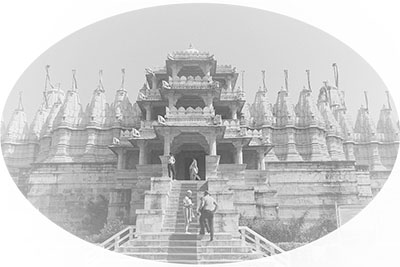
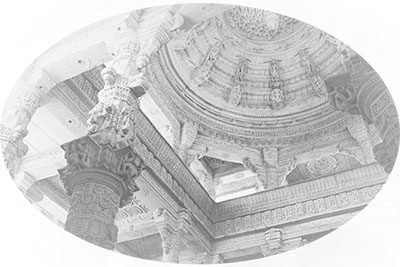
 The Jain Temple of Adinatha in Ranakpur, Rajasthan, India, stands as a remarkable example of Jain architecture. Constructed in the 15th century, the temple is dedicated to Adinatha, the first Jain Tirthankara. Famous for its 1,444 uniquely carved columns, the temple showcases exquisite Jain art and devotion. Its symmetry and intricate sculptures draw visitors and devotees from across the globe.

Ranakpur • Adinatha Jain Temple: facade

Ranakpur • Adinatha Jain Temple: columns
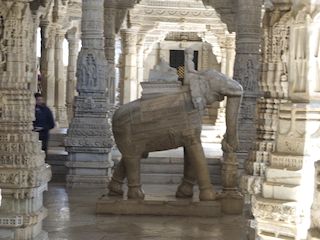
Ranakpur • Adinatha Jain Temple: elephant statue
Monument profile
Adinatha Jain Temple
Monument category: Jain temple
Monument family: Temple
Monument genre: Religious
Cultural heritage: Jain
Geographic location: Ranakpur • Rajasthan • India
Construction period: 15th century AD
• Links to •
• Dynasties that contributed to the construction of the monument •


• List of videos about Ranakpur on this site •
Ranakpur, Adinatha Jain Temple • Rajasthan, India
• References •
Wikipedia EN: Ranakpur Jain temple
The Jain Temple of Adinatha in Ranakpur: Historical Significance and Modern Challenges
Political and Social Motivations Behind Its Construction
The Jain Temple of Adinatha, also known as Chaturmukha Dharanavihara, was constructed in the 15th century during the reign of Rana Kumbha, a powerful Rajput ruler of the Mewar kingdom in Rajasthan, India. Initiated by Dharna Shah, a wealthy Jain merchant, the temple was dedicated to Adinatha, the first Tirthankara of Jainism.
The construction was driven by both political and social motives. Politically, it helped Rana Kumbha strengthen alliances with the affluent and influential Jain community, which played a vital role in regional commerce and trade. Socially, the temple served as a monumental expression of Jain faith, art, and identity, reinforcing their presence in a predominantly Hindu and Muslim region. The structure symbolized coexistence and cultural plurality, enhancing the kingdom's stature as a tolerant and prosperous realm.
Historical Events and Regional Impact
Over the centuries, the temple bore witness to significant historical events. During periods of conflict, such as the Rajput-Mughal wars and internal strife among local kingdoms, the temple served as a cultural refuge and a symbol of resilience. These events not only shaped the region’s political and social landscape but also highlighted the temple’s importance as a bastion of spiritual and cultural identity.
The Global Context of the 15th Century
The construction of the Ranakpur temple occurred during a period of significant architectural and cultural achievements worldwide. In Europe, the Renaissance was giving rise to iconic structures like the Florence Cathedral. In China, the Ming dynasty was advancing monumental projects like the Forbidden City and enhancing sections of the Great Wall. Similarly, in the Americas, the Aztecs were building their capital city, Tenochtitlán. The temple at Ranakpur aligns with these global trends as a reflection of human ingenuity, devotion, and the integration of art and technology.
Transformations Reflecting Power Shifts and Cultural Influences
Over time, the temple underwent major transformations, reflecting changing political powers and cultural interactions. While its core structure has remained intact, periodic restoration and enhancements were carried out to address damage caused by invasions or natural deterioration. For instance, influences from Mughal architecture, such as ornate floral designs, can be seen in later additions to the temple, demonstrating cultural exchange.
These changes underscore the temple’s adaptability and its continued relevance as a site of worship and cultural significance. The mix of Jain, Rajput, and external influences also highlights the dynamic nature of Indian architecture during this period.
Current Cultural Importance and Conservation Status
Today, the Temple of Adinatha stands as a testament to Jain artistic and spiritual heritage. It is internationally recognized for its intricate craftsmanship, particularly its 1,444 uniquely carved marble pillars, and is a prominent tourist and pilgrimage destination. While it is not officially listed as a UNESCO World Heritage Site, it is frequently celebrated as one of India's architectural marvels.
The conservation status of the temple is commendable, with ongoing efforts by the Jain community and government agencies to preserve its integrity. However, challenges remain.
Modern Challenges to Preservation
Key threats to the temple’s preservation include:
- Tourism Pressure: The increasing number of visitors poses risks of wear and tear to its delicate sculptures and interiors.
- Environmental Factors: Pollution, climate change, and fluctuating weather conditions accelerate the degradation of its marble surfaces.
- Resource Management: Balancing the need for modern facilities with the preservation of its historical authenticity is a constant challenge.
Innovative approaches, such as the use of modern conservation technologies and stricter visitor regulations, are being explored to mitigate these threats.
Conclusion
The Jain Temple of Adinatha at Ranakpur is more than a religious site; it is a symbol of political alliances, cultural resilience, and artistic brilliance. Its intricate design and historical legacy continue to captivate scholars, pilgrims, and tourists alike. While modern challenges to its preservation are significant, collective efforts ensure that this extraordinary monument remains a living testament to the enduring legacy of Jainism and Indian architecture.
The Architectural Marvel of the Jain Temple of Adinatha at Ranakpur: Innovation, Craftsmanship, and Global Significance
Technological Advances and Innovative Design
The Jain Temple of Adinatha at Ranakpur, built in the 15th century, is a stunning example of architectural innovation and technological achievement. Crafted primarily from white marble, the temple reflects the sophistication of its era. The use of marble not only ensured durability but also allowed for intricate carvings and a luminous quality under natural light.
The most notable technological advancement lies in the temple’s structural ingenuity. With 1,444 intricately carved pillars, no two are identical, demonstrating an unparalleled level of craftsmanship. The columns are strategically placed to support the vast domes and ceilings, ensuring both stability and aesthetic grandeur. The precision with which these columns were designed also allows for unobstructed views of the central idol of Adinatha from any point within the temple, a remarkable feat of engineering.
Materials and Construction Techniques
The temple's construction required advanced techniques, including:
- Polished Marble Sculpting: Each surface of the temple was hand-carved with precision, featuring floral motifs, celestial figures, and intricate geometrical patterns.
- Jointless Assembly: The interlocking of marble blocks without visible joints exemplifies sophisticated masonry skills.
- Natural Ventilation and Lighting: Openings in the walls and domes were deliberately designed to optimize airflow and light, creating a serene and meditative environment.
The marble was sourced locally, and thousands of artisans were employed over five decades to complete this masterpiece, showcasing the combined expertise of artists, engineers, and laborers of the time.
Architectural Features and Fusion of Artistic Traditions
The temple's Chaturmukha (Four-Faced) layout is its most distinctive feature. Symbolizing the omnipresence of Tirthankara Adinatha, the design allows for four entrances facing the cardinal directions. This symmetry reflects both spiritual and architectural ideals, emphasizing universality and balance.
The temple’s decorative motifs represent a harmonious blend of:
- Regional Traditions: Intricate carvings of deities, animals, and floral designs typical of Jain art.
- Influences from Mughal and Rajput Styles: Subtle adaptations of arches and floral patterns, likely introduced during later periods of restoration or cultural exchanges.
Notable Statistics and Anecdotes
The temple features 84 intricately carved mandapas (halls), each with a unique design.
It is said that no two columns are the same in design, a testament to the creativity and effort of the artisans.
According to local lore, the architect Dharna Shah envisioned the temple after a divine dream and was supported by Rana Kumbha, who granted land for the construction.
Global Recognition and UNESCO Impact
While the temple has not been officially listed as a UNESCO World Heritage Site, it is internationally celebrated for its architectural brilliance. Its unique design and spiritual significance attract visitors from across the world, contributing to its global reputation as a cultural and religious landmark.
International recognition has boosted efforts to preserve the temple, with conservation initiatives led by the Jain community and supported by governmental agencies. Restoration projects focus on maintaining the integrity of its carvings while protecting the structure from environmental threats.
Modern Challenges and Conservation Efforts
The temple faces several challenges, including:
- Tourism Impact: The increasing number of visitors poses risks of physical wear to its delicate carvings.
- Environmental Damage: Pollution and climate change affect the marble’s pristine condition, necessitating regular maintenance.
- Sustainability Concerns: Balancing heritage preservation with the infrastructure needs of modern tourism remains an ongoing task.
Conclusion
The Jain Temple of Adinatha at Ranakpur stands as a monumental testament to human ingenuity, faith, and artistry. Its architectural innovations and cultural fusion exemplify the peak of Jain craftsmanship during the 15th century. Despite modern challenges, the temple remains a source of awe and inspiration, emphasizing the importance of preserving such irreplaceable treasures for future generations.