Français (France)
  Nederlands (nl-NL)
 00:00 • intro | 00:38 • Gadisar lake | 02:06 • street musician, sarangi player | 05:58 • Jain temple | 08:58 • a young artist | 10:18 • Jaisalmer fort
Personal creation from visual material collected during my trip India • Rajasthan and Varanasi (2015)
Map of places or practices in Jaisalmer on this site
• Use the markers to explore the content •
Jaisalmer, the Golden City of Rajasthan
At the edge of the Thar Desert in western Rajasthan, Jaisalmer stands as one of the most distinctive historic cities of India. Often called the “Golden City” because of the warm yellow sandstone used throughout its architecture, Jaisalmer developed for centuries as an important caravan centre linking northern India with Central Asia and the desert regions further west. The video explores this former fortified city through its monuments, traditional performances and aspects of everyday life still visible around its historic quarters.
The images reveal a city where architecture, religious traditions and popular culture remain closely interconnected. Gadisar Lake, Jain temples, street musicians and acrobatic performances all reflect the diversity of activities that once animated this desert trading centre. Rising above the urban landscape, the massive fort of Jaisalmer recalls the military and political importance of the city during several centuries of Rajput rule.
The sequences devoted to the sarangi player and the young rope dancer also highlight the continuity of traditional artistic practices in Rajasthan. Folk music, itinerant performances and public entertainment still form part of the cultural identity of the region, even though these traditions have evolved considerably with tourism and modern economic changes.
Gadisar Lake, Jain Temples and the Fort of Jaisalmer
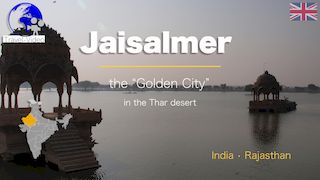
One of the first locations visible in the video is Gadisar Lake. Originally created as a water reservoir supplying the city, the lake played a vital role within the arid environment of the Thar Desert. Its ghats, pavilions and small shrines demonstrate how practical and religious functions were often closely connected in historic Indian cities. Gadisar also served as an important arrival point for merchants and travellers reaching Jaisalmer after long journeys across the desert.
The scenes featuring the street musician introduce another important aspect of Rajasthani culture. The sarangi, a bowed string instrument, occupies a special place in the musical traditions of northwestern India. Its sound, often compared to the human voice, has long accompanied folk songs, oral storytelling and ceremonial performances. In Jaisalmer, musicians playing traditional instruments continue to contribute to the atmosphere of the old city and its historic surroundings.
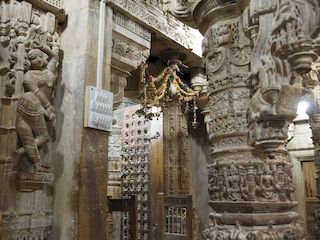
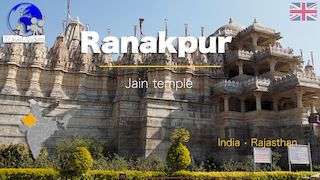
The video also presents a Jain temple, reflecting the major role played by Jain merchant communities in the development of Jaisalmer. Several richly decorated Jain temples were built in the city between the twelfth and sixteenth centuries. Their carved pillars, detailed ceilings and elaborate stone sculptures illustrate the refinement of Jain religious architecture in western Rajasthan.
The appearance of the young rope dancer adds a more social and popular dimension to the film. Tightrope performances and acrobatic displays belong to long-standing itinerant traditions still found in parts of India today. Such performances are often associated with travelling communities earning a living through public entertainment in streets, marketplaces and religious sites.
Dominating the entire city, the fort of Jaisalmer remains the central monument of the video. Founded during the twelfth century by Rawal Jaisal, the ruler who established the city, the fort is one of the few major living forts in India still permanently inhabited. Its massive walls, gateways, palaces and narrow lanes reflect the defensive urban organization developed in the desert regions of Rajasthan.
Caravan Trade and Desert Urbanism
The history of Jaisalmer is closely connected to the caravan routes crossing the Thar Desert. Because of its strategic position, the city prospered through trade linking northern India with Central Asia and western regions beyond the desert. Merchants, caravans and trading communities contributed greatly to the city’s wealth for many centuries.
The Rajput rulers of Jaisalmer progressively developed a fortified urban centre adapted to the harsh desert environment. The use of locally available yellow sandstone gave the city its characteristic colour, especially striking under the intense desert sunlight. This architectural consistency became one of the defining visual features of Jaisalmer.
Jain communities also played a major economic and cultural role in the city’s development. The financing of temples, havelis and religious institutions reflected the prosperity of merchant families established within the city. The sculpted decoration visible in temples and residential mansions illustrates the high level of craftsmanship associated with these communities.
For centuries, the fort of Jaisalmer maintained an essential military function. Its defensive walls and bastions protected the city from invasions and raids, while water reservoirs helped sustain the population during periods of siege. The fort was therefore both a royal residence and a strategic defensive centre.
Despite the transformations brought by tourism and modern expansion, Jaisalmer still preserves much of its historic urban structure and remains one of the most representative historic desert cities of Rajasthan.
A Progressive Reading of Architecture and Traditions
The videos presented on travel-video.info frequently combine animated photographs with carefully selected sequences allowing a slower and more detailed observation of historical places. This approach is particularly suitable for a city such as Jaisalmer, where architectural details and the relationships between monuments, streets and desert landscapes require attentive visual reading.
Slow movements within the images emphasize the textures of the yellow sandstone, the carved decoration of Jain temples and the perspectives created by the streets inside the fort. Animated photography also helps reveal the organization of terraces, defensive walls and urban spaces layered across the fortified hill.
The scenes devoted to musicians and street performers make gestures, instruments and traditional practices easier to observe. Visual pacing allows viewers to focus on details of the sarangi and the movements of the rope dancer while situating these performances within the broader urban environment.
This progressive visual construction ultimately helps explain the close relationship between architecture, everyday life and traditional culture in one of the most important historic cities of the Indian desert.
A Symbolic City of the Rajasthan Desert
Jaisalmer remains today one of the most emblematic cities of western Rajasthan. Combining medieval fortifications, Jain heritage, musical traditions and desert urban life, the city preserves a unique identity within the Indian cultural landscape. The video offers a detailed exploration of its monuments, traditions and historical spaces while providing a broader understanding of the social and architectural heritage that continues to shape this former caravan city of the Thar Desert.
Links to related pages
• Main dynasties that ruled the region •


Audio Commentary Transcript
Jaisalmer, a true pearl of the desert. It bears its nickname of the city of gold beautifully. The old town within the walls of the fortress reflects its glorious past with its facades chiselled by stone craftsmen.
Jaisalmer's nickname is "the Golden City" because of the color of its sand stones. The city was founded in 1156 and owes its name to King Rawal Jaisal. It is located in the heart of the great Indian desert (the Thar desert) and has approximately 80,000 inhabitants.
Its imposing fort and the Jain Chandraprabhu temple are among the most interesting monuments housed by the small town.

Music:
- - YouTube video library - Evil March, (© Evil March by Kevin MacLeod is licensed under a Creative Commons Attribution 4.0 license. https://creativecommons.org/licenses/by/4.0/
- Source: http://incompetech.com/music/royalty-free/index.html?isrc=USUAN1100727
- Artist: http://incompetech.com/)
- - YouTube video library - Exciting Trailer, (© Exciting Trailer by Kevin MacLeod is licensed under a Creative Commons Attribution 4.0 license. https://creativecommons.org/licenses/by/4.0/
- Source: http://incompetech.com/music/royalty-free/index.html?isrc=USUAN1100494
- Artist: http://incompetech.com/)
- - Ram Narayan; Suresh Talwalkar (Inde) - Ram Narayan en Concert - Rag Purya-Kalyan, 1re Partie: Alap, Jor, Jhala, Ocora (558624/25)
Disclaimer: Despite its appropriateness, copyright issues prevent the use of indian traditional music in "Jaisalmer, the Golden City • Rajasthan, India", hence the use of royalty-free music. Despite our careful selection, some might regret this decision, which is necessary to avoid potential lawsuits. Although difficult, this decision is the only viable solution.