

 Français (France)
  Nederlands (nl-NL)
 The City Palace of Udaipur, located in the Indian state of Rajasthan, is a sprawling palatial complex renowned for its grandeur and cultural significance. Built alongside Lake Pichola, it exemplifies Rajput architecture with a blend of Mughal and European influences. Today, it serves as a significant historical and tourist site, housing museums, courtyards, and galleries that showcase the region's rich heritage.
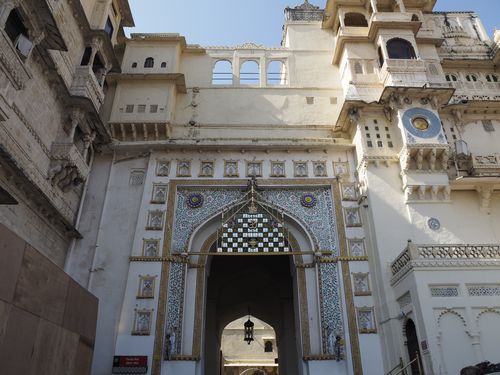
Udaipur • City Palace: one of the palace gates
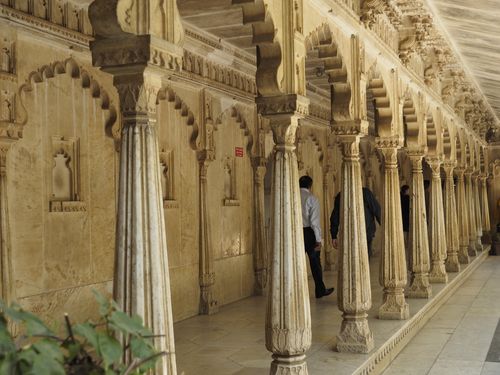
Udaipur • City Palace: one of the palace galleries
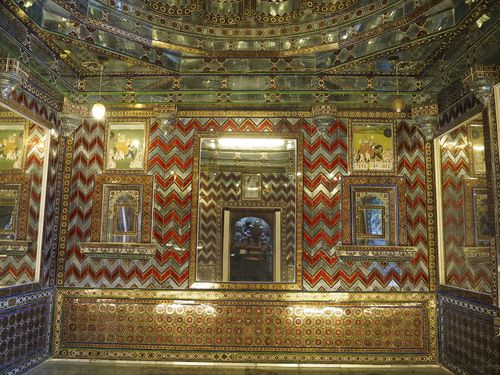
Udaipur • City Palace: one of the halls of the palace
Monument profile
City Palace
Monument category: Palace
Monument family: Palace and Annexes
Monument genre: Residential
Cultural heritage: Hindu
Geographic location: Udaipur • Rajasthan • India
Construction period: 16th century AD
• Links to •
• Dynasties that contributed to the construction of the monument •


• List of videos about Udaipur on this site •
Udaipur • City of the Lakes • Rajasthan, India
• References •
Wikipedia EN: City Palace, Udaipur
The City Palace of Udaipur: A Symbol of Power, Culture, and Evolution
The City Palace of Udaipur, built by the Sisodia dynasty in the 16th century, stands as a testament to the political ambitions, cultural identity, and architectural innovation of the Rajputs. This iconic monument reflects the socio-political dynamics of its time and remains a cornerstone of Udaipur’s historical and cultural heritage. This article explores the motivations behind its construction, its historical significance, transformations over centuries, and the challenges it faces today.
Political and Social Motivations for Construction
The City Palace was initiated in 1559 by Maharana Udai Singh II, the ruler of Mewar, as part of his decision to relocate the capital from Chittorgarh to Udaipur. This move was driven by several key factors:
- Political Strategy: The shift to Udaipur was a strategic response to repeated attacks on Chittorgarh, especially by the Mughal emperor Akbar. Udaipur's natural defenses, surrounded by hills and lakes, provided a more secure base for the kingdom.
- Symbol of Resilience: The palace was intended to embody the independence and resilience of the Sisodia dynasty, who prided themselves on their refusal to submit to Mughal rule.
- Cultural Hub: The construction of the palace was also a statement of cultural identity, serving as a center for Rajput traditions, religious practices, and the arts.
Historical Events and Their Influence on the Region
Mughal-Rajput Relations
During the Mughal era, the City Palace became a focal point of resistance and diplomacy. While the Mughals sought alliances with Rajput rulers, the Sisodias maintained a fiercely independent stance. This influenced the architectural style of the palace, which incorporated Mughal elements without compromising its Rajput identity.
Colonial Period
Under British rule, the City Palace evolved into a center of administration for Mewar. The Maharana adapted parts of the palace to accommodate modern needs, reflecting a blend of traditional and colonial influences.
Post-Independence
After India gained independence in 1947, the abolition of princely privileges forced a reimagining of the palace's role. Parts of the complex were converted into museums and luxury hotels, ensuring its preservation while making it accessible to the public.
Global Context and Comparisons
The construction of the City Palace coincided with a period of significant change globally:
India: The Mughal Empire was at its zenith, reshaping the political landscape of the subcontinent. The Sisodias’ decision to build a fortified palace in Udaipur reflects the need for regional powers to assert their autonomy.
Europe: This era saw the Renaissance and the rise of grand palaces like the Château de Chambord in France, showcasing centralized power and artistic patronage, much like the City Palace of Udaipur.
Both the City Palace and these European palaces exemplify how architecture was used as a tool to assert political dominance and cultural sophistication.
Transformations Over the Centuries
The City Palace underwent several transformations, reflecting changing political and cultural circumstances:
- Expansion by Successive Rulers: Each Maharana added structures to the palace, resulting in a sprawling complex with distinct architectural styles.
- Incorporation of Mughal and European Elements: The addition of arches, floral motifs, and colonial galleries highlighted the adaptability of Rajput architecture.
- Modernization: During the British period, sections of the palace were modified to include modern utilities while preserving its historical character.
Cultural Significance and Current State
Today, the City Palace is a prominent cultural symbol of Udaipur and a major tourist attraction. It houses museums showcasing Rajput heritage, art, and historical artifacts. Despite its age, the palace is remarkably well-preserved, thanks to efforts by the royal family and conservation authorities.
Challenges to Preservation
The preservation of the City Palace faces several modern challenges:
- Tourism Pressure: The influx of millions of visitors annually contributes to wear and tear on the structure.
- Environmental Threats: Proximity to Lake Pichola exposes the palace to humidity and water damage.
- Urbanization: Encroachment and development around Udaipur threaten the visual and historical integrity of the site.
Efforts to address these challenges include regular restoration projects, sustainable tourism initiatives, and collaborations with heritage organizations.
Conclusion
The City Palace of Udaipur is more than a monument; it is a living testament to the resilience and cultural vibrancy of the Sisodia dynasty. Through centuries of transformation, it has retained its status as a symbol of Rajput heritage and architectural brilliance. As it continues to inspire awe, preserving this historic landmark remains a critical task, ensuring its legacy for future generations.
Architectural Ingenuity of the City Palace in Udaipur: A Testament to Rajput Innovation
The City Palace of Udaipur, built by the Sisodia dynasty starting in 1559, stands as an architectural masterpiece showcasing the technological advancements and innovative spirit of the Rajput era. Its grandeur, intricate design, and harmonious fusion of cultural influences make it a significant historical and cultural landmark. This article explores the architectural brilliance of the City Palace, highlighting the materials, techniques, and stylistic elements that contribute to its global recognition.
Technological Advances and Construction Techniques
The construction of the City Palace reflects the advanced engineering and architectural skills of the Rajputs:
- Elevated Foundation: Strategically built on a ridge overlooking Lake Pichola, the palace's elevated foundation provided natural defense while enhancing its visual prominence.
- Fortification and Layout: The interconnected palaces, courtyards, and galleries demonstrate sophisticated urban planning. The layout not only accommodated royal needs but also facilitated security and efficient administration.
- Drainage and Water Management: Advanced systems were integrated to manage rainwater and protect the structure from erosion caused by proximity to the lake.
Materials and Techniques Used
The choice of materials and construction techniques reflects the grandeur and resourcefulness of the era:
- Local Marble and Granite: These durable materials were used extensively for walls, floors, and decorative elements.
- Lime Mortar: Essential for binding stones and ensuring structural integrity, this material was widely employed.
- Woodwork: Carved wooden ceilings and doors added to the aesthetic richness while providing insulation.
- Artisan Expertise: Skilled craftsmen employed techniques like stone carving, inlay work, and fresco painting, contributing to the intricate beauty of the palace.
Fusion of Regional and Foreign Artistic Traditions
The City Palace embodies a unique blend of Rajput traditions and external influences:
Rajput Features:
Jharokhas (ornamental balconies) and chhatris (domed pavilions) are quintessentially Rajput, combining functionality with elegance.
Frescoes depicting battles, festivals, and religious themes reflect local cultural narratives.
Mughal Influences:
The use of floral motifs, arched gateways, and decorative mirror work reveals the cultural exchange between the Rajputs and the Mughals.
European Elements:
During the British period, parts of the palace were modernized with European-style galleries and furnishings, highlighting adaptability and cross-cultural interaction.
Notable Structures and Layout
The City Palace is not a single structure but a sprawling complex composed of multiple interconnected buildings. Key highlights include:
- Badi Mahal (Garden Palace): Positioned atop a 90-foot-high natural rock formation, this palace features a hanging garden and a central courtyard.
- Mor Chowk (Peacock Courtyard): Renowned for its mosaics of peacocks created with glass and colored stones, it symbolizes royal grandeur.
- Zenana Mahal (Women’s Quarters): Designed for privacy, this section combines intricate carvings with practical spatial design.
- Sheesh Mahal (Palace of Mirrors): Decorated with glasswork, this area reflects Mughal artistic influence.
The layout’s complexity, with secret passages and strategic vantage points, exemplifies Rajput ingenuity in blending aesthetics with defense.
Statistics and Anecdotes
Construction of the City Palace began in 1559 under Maharana Udai Singh II and continued for over 400 years, with contributions from successive rulers.
The palace complex spans 2 hectares and is one of the largest in Rajasthan.
An anecdote highlights the dedication of artisans who spent decades perfecting the peacock mosaics in Mor Chowk, a hallmark of the palace’s artistic legacy.
Global Recognition and UNESCO Status
The City Palace, while not individually listed as a UNESCO World Heritage Site, is part of the collective recognition of Udaipur’s cultural heritage within the historic city. This international acknowledgment enhances its status and contributes to:
Tourism and Preservation: Increased global interest has brought resources and awareness to conservation efforts.
Cultural Exchange: The palace serves as a hub for showcasing Rajput heritage, fostering greater appreciation of Indian history and architecture.
Challenges and Conservation Efforts
Despite its grandeur, the City Palace faces several preservation challenges:
- Environmental Impact: The lake’s proximity subjects the palace to humidity and water damage.
- Tourism Strain: High footfall leads to wear and tear of delicate structures.
- Urban Encroachment: Modern developments around Udaipur threaten the historical ambiance of the site.
Efforts by the royal family of Udaipur, in collaboration with heritage organizations, focus on restoration, sustainable tourism, and educational initiatives.
Conclusion
The City Palace of Udaipur is a testament to the technological and artistic achievements of the Rajput era. Its innovative construction techniques, rich materials, and cultural fusion make it a unique landmark in Indian history. As it continues to inspire visitors worldwide, preserving this architectural marvel is crucial to ensuring its legacy endures for generations to come.