

 Français (France)
  Nederlands (nl-NL)
 Mehrangarh Fort stands in the city of Jodhpur in the Indian state of Rajasthan. Built on a rocky elevation overlooking the surrounding urban landscape, it is considered one of the most prominent fortified complexes in northern India. The site includes a series of courtyards, palatial buildings and ceremonial spaces that illustrate its long-standing role as a center of authority for the rulers of the region. Today the fort remains a defining landmark of Jodhpur and an important element of Rajasthan’s historical heritage. It functions as a major cultural site, housing museum collections and hosting public events that highlight the history and traditions associated with the region.
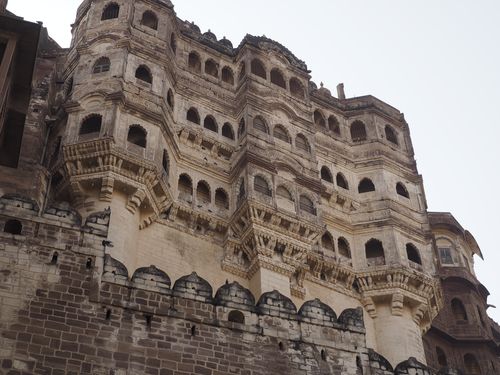
Jodhpur • Mehrangarh Fort: facade of the fort

Jodhpur • Mehrangarh Fort: the ceiling of one of the rooms of the fort
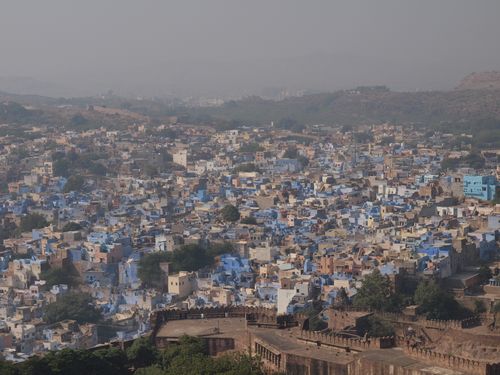
Jodhpur • Mehrangarh Fort: Jodhpur view from the fort
Monument profile
Mehrangarh Fort
Monument categories: Fort, Palace
Monument families: Fort, Fortifications or Citadel • Palace and Annexes
Monument genres: Military, Residential
Cultural heritage: Hindu
Geographic location: Jodhpur • Rajasthan • India
Construction period: 15th century AD
• Links to •
• Dynasties that contributed to the construction of the monument •


• List of videos about Jodhpur on this site •
Jodhpur • Mehrangarh Fort, Jaswant Thada and music
• Sources •
Online Sources
- Official Website of Mehrangarh Fort
- Encyclopædia Britannica - Mehrangarh Fort
- Lonely Planet - Mehrangarh Fort
Books and Publications
- Burton-Page, John. "Indian Islamic Architecture: Forms and Typologies, Sites and Monuments." Brill, 2008.
- Jain-Neubauer, Jutta. "The Stepwells of Gujarat: In Art-historical Perspective." Abhinav Publications, 1981.
- Brown, Percy. "Indian Architecture (Islamic Period)." Taraporevala Sons & Co. Pvt. Ltd., 1942.
- Khanna, Rina. "Forts and Palaces of Rajasthan." Roli Books, 2007.
History of Mehrangarh Fort in Jodhpur
Political and Social Context of Its Foundation
Mehrangarh Fort, overlooking the city of Jodhpur in the Indian state of Rajasthan, is one of the most significant historical fortresses in northwestern India. Its construction began in 1459 under the rule of Rao Jodha, the fifteenth ruler of the Rathore dynasty of Marwar. The decision to build the fort reflected both strategic and political considerations during a period marked by regional competition among Rajput kingdoms.
Before the construction of Mehrangarh, the capital of the Rathore rulers was located at Mandore, an older settlement situated a few kilometers north of present-day Jodhpur. Mandore, however, lacked the natural defensive advantages required to withstand sustained military pressure. As regional rivalries intensified, the need for a more secure political center became increasingly apparent.
Rao Jodha therefore selected a rocky hill known as Bhakurcheeria as the site for a new fortified capital. Rising dramatically above the surrounding plains, the hill provided a natural defensive position that could be transformed into a formidable fortress. The establishment of Mehrangarh served not only as a military precaution but also as a statement of dynastic ambition. By relocating his capital and constructing a monumental fortification, Rao Jodha aimed to consolidate the authority of the Rathore dynasty and establish a stable center of governance for the kingdom of Marwar.
The founding of Jodhpur at the foot of the fort further strengthened the political strategy behind the project. The city gradually developed into a major administrative and commercial center, closely linked to the fort’s protective presence.
Military Conflicts and Major Historical Events
Throughout its history, Mehrangarh Fort played a central role in the political and military struggles that shaped the region of Marwar. The Rathore rulers frequently faced challenges from neighboring powers, including rival Rajput kingdoms, the Delhi Sultanate, and later the Mughal Empire.
In the sixteenth century, the rise of the Mughal Empire significantly altered the political landscape of northern India. In 1564, the Mughal emperor Akbar conquered Marwar after a series of campaigns aimed at expanding imperial authority across the subcontinent. Although the fort came under Mughal control for a period, the Rathore rulers maintained a complex relationship with the imperial court. Members of the dynasty served as important allies and military commanders within the Mughal administrative system.
Despite this political integration, tensions occasionally resurfaced. A major crisis occurred in 1678 following the death of Maharaja Jaswant Singh of Marwar. The Mughal emperor Aurangzeb attempted to annex the kingdom directly into the imperial domain. This decision provoked a prolonged resistance movement led by Rajput nobles determined to preserve their autonomy. Mehrangarh Fort became a symbol of this resistance and a focal point for political opposition to Mughal authority.
During the eighteenth century, the gradual decline of Mughal power allowed regional kingdoms such as Marwar to regain a greater degree of independence. However, the region soon faced new pressures from the expanding Maratha Confederacy. Maratha incursions into Rajasthan created further instability and occasionally threatened the political authority of the Rathore rulers.
Despite these challenges, Mehrangarh remained the principal seat of power for the Marwar state and continued to function as both a military stronghold and a royal residence.
Global Context of Monumental Fortification
The construction and expansion of Mehrangarh Fort took place during a period when fortified capitals and monumental strongholds were being developed in many parts of the world. From the fifteenth to the eighteenth centuries, rulers across Asia, Europe, and the Middle East invested heavily in defensive architecture designed to protect political centers and project authority.
In India, several major fortifications emerged during this period, particularly in regions where political fragmentation and military competition were common. Rajasthan, with its network of Rajput kingdoms, became especially known for its hilltop forts and fortified cities. These complexes combined defensive structures with royal palaces, temples, administrative buildings, and residential quarters.
Globally, similar architectural developments were occurring in response to evolving military technologies and political transformations. In Europe, the construction of citadels and fortified urban centers accompanied the consolidation of early modern states. In the Ottoman and Persian worlds, imperial capitals were likewise protected by massive fortifications that symbolized political authority.
Mehrangarh fits within this broader pattern of monumental fortification. The structure served not only as a defensive installation but also as a ceremonial center that embodied the sovereignty of the Rathore rulers.
Transformations and Evolution Over the Centuries
Over the centuries, Mehrangarh Fort underwent numerous modifications and expansions. Each successive ruler contributed new buildings, courtyards, and ceremonial spaces, gradually transforming the fortress into a complex architectural ensemble.
While the earliest phases of the fort focused primarily on defensive functions, later additions emphasized residential and ceremonial architecture. Several palaces were constructed within the fortified walls, including richly decorated halls used for courtly rituals, diplomatic receptions, and administrative activities.
The development of the city of Jodhpur at the base of the fort further altered the role of the complex. As the urban center expanded, the fort became both a symbol of royal authority and a focal point in the visual identity of the city.
During the nineteenth century, the political structure of Marwar changed significantly as the region came under the influence of the British Raj. Although the Rathore rulers retained their titles and certain internal powers, their authority was exercised within a broader colonial framework. Mehrangarh continued to serve as the official residence of the rulers of Jodhpur, but its strategic military importance gradually diminished.
The Fort in the Modern Period
Following the independence of India in 1947, the princely states of the subcontinent were integrated into the newly formed republic. The kingdom of Marwar was incorporated into the state of Rajasthan, and the political authority of the ruling dynasty formally ended.
Mehrangarh Fort consequently lost its role as the administrative center of a sovereign state. However, it retained considerable symbolic significance as a historical monument associated with the heritage of the Rathore dynasty and the city of Jodhpur.
In the decades that followed independence, efforts were undertaken to preserve the site and reinterpret it as a cultural institution. The fort was gradually transformed into a museum complex displaying objects related to the history of the region, including arms, textiles, royal artifacts, and ceremonial equipment.
Today the fort also serves as a venue for cultural events and festivals that celebrate the artistic traditions of Rajasthan. These activities reinforce its role as a cultural landmark rather than a political stronghold.
Conservation and Contemporary Challenges
The preservation of Mehrangarh Fort requires ongoing conservation efforts. The structures, constructed largely from sandstone, are exposed to environmental stresses associated with the desert climate of Rajasthan. Wind erosion, temperature fluctuations, and occasional heavy rains can gradually affect the stone surfaces.
Urban growth in Jodhpur has also altered the surroundings of the fort. The expansion of the city increases pressure on the historic environment and requires careful management to preserve the visual and historical integrity of the site.
Tourism presents both opportunities and challenges. The fort attracts a large number of visitors each year, which contributes to the local economy and encourages heritage conservation. At the same time, increased visitor traffic requires careful planning to prevent damage to fragile architectural features.
Restoration programs implemented in recent decades have focused on stabilizing structures, maintaining historic materials, and improving visitor infrastructure. These initiatives aim to ensure that the fort remains accessible while preserving its historical character.
Although Mehrangarh Fort is not individually inscribed on the UNESCO World Heritage List, it is widely recognized as one of the most remarkable fortified complexes in Rajasthan. Its historical significance, monumental scale, and enduring cultural presence make it one of the defining landmarks of the region’s heritage.
Architecture of Mehrangarh Fort in Jodhpur
Architectural Strategy and Defensive Design
Mehrangarh Fort represents one of the most remarkable examples of Rajput military architecture in western India. Constructed on a rocky hill rising approximately 120 meters above the surrounding plains of Jodhpur, the fortress demonstrates a strategic integration between natural topography and engineered defensive structures. Rather than leveling the terrain, the builders incorporated the irregular contours of the rock into the design, creating a fortified complex that appears to emerge directly from the hill itself.
The fortification system is organized around a series of massive ramparts and defensive gateways that control access to the interior. The ascent toward the fort follows a winding path that passes through multiple gates, each positioned at angles designed to slow advancing troops. This layout reduced the effectiveness of large-scale assaults and allowed defenders to attack from elevated positions along the walls and battlements.
The height and thickness of the ramparts represent a major architectural achievement. Some defensive walls rise more than thirty meters and extend over a considerable length along the perimeter of the hill. Their construction demonstrates a sophisticated understanding of structural stability, particularly in relation to the irregular rock base. The walls not only protected the fort but also functioned as platforms for surveillance and defense.
Within this fortified envelope, the complex gradually evolved from a purely defensive structure into a royal citadel. Successive rulers added palaces, courtyards and ceremonial halls, transforming the fortress into both a military stronghold and a residence of political authority.
Materials and Construction Techniques
The construction of Mehrangarh relied primarily on locally quarried sandstone, a material abundant in the region surrounding Jodhpur. The stone’s durability and workability made it particularly suitable for both large structural elements and intricate decorative carving.
Large blocks of sandstone were carefully cut and assembled to form the massive defensive walls. In many sections the masonry demonstrates remarkable precision, with stones fitted tightly together to ensure structural cohesion. Mortars based on lime were used to strengthen the joints and increase resistance to climatic stress.
The use of sandstone had several architectural advantages. Structurally, it provided the strength necessary to support large ramparts and multistory palace structures. Aesthetically, the warm reddish and ochre tones of the stone harmonize with the surrounding desert landscape, reinforcing the visual unity between the fort and its environment.
In palace interiors, builders complemented the stone structure with additional decorative techniques. Finely carved panels, latticed windows and ornamental balconies were sculpted directly from sandstone blocks. These elements demonstrate the technical expertise of artisans working under the patronage of the Rathore rulers.
Wood was used more selectively, particularly for doors, ceiling beams and decorative fittings. Although less prominent than stone, these elements contributed to the structural framework of interior spaces.
The construction process involved teams of specialized craftsmen, including stone masons, sculptors and builders familiar with the complex techniques required for large-scale fortifications. Their work combined practical engineering knowledge with refined artistic craftsmanship.
Architectural Influences and Artistic Synthesis
The architectural language of Mehrangarh Fort reflects the traditions of Rajput court architecture while also incorporating influences from broader cultural exchanges within the Indian subcontinent.
The most visible stylistic framework derives from Rajput architectural traditions. These traditions emphasize elevated fortresses, monumental gateways and palace complexes organized around internal courtyards. The design of Mehrangarh follows this model, combining military strength with elaborate residential spaces.
One characteristic feature is the use of projecting balconies known as jharokhas. These structures extend outward from palace walls and are supported by carved stone brackets. They served both decorative and practical purposes, allowing inhabitants to observe activities in the courtyards while benefiting from shade and airflow.
Over time, architectural influences from the Mughal Empire also became visible in certain sections of the fort. The Mughal presence in northern India introduced new decorative motifs and spatial compositions. Some palace halls incorporate symmetrical layouts, refined arches and ornamental detailing associated with imperial Mughal architecture.
The decorative program of Mehrangarh integrates geometric patterns, floral carvings and sculpted surfaces that reflect both Rajput and Mughal artistic traditions. This synthesis illustrates the cultural interactions that shaped court architecture in early modern India.
In addition, elements of Persian and Central Asian artistic vocabulary appear in ornamental details, demonstrating the broader cultural networks that connected regional courts across Asia.
Spatial Organization and Internal Layout
The internal organization of Mehrangarh Fort reveals the gradual transformation of a defensive fortress into a complex royal residence. The spatial layout follows a hierarchical arrangement that distinguishes between military, administrative and residential zones.
Access to the fort is controlled by a sequence of monumental gates positioned along the ascending pathway. These gates mark successive thresholds leading from the outer defenses to the interior palace complexes.
Once inside the main enclosure, the visitor encounters a network of courtyards surrounded by palace buildings. These open spaces function as organizing elements that structure movement through the complex while providing light and ventilation.
Several important palaces were constructed within the fort over successive centuries. Among them are ceremonial halls, audience chambers and private royal apartments. Each structure reflects the architectural preferences of the ruler who commissioned it.
The Moti Mahal, or “Pearl Palace,” served as one of the principal audience halls where the ruler received courtiers and officials. Its interior spaces demonstrate careful planning designed to accommodate ceremonial gatherings while maintaining clear visual focus on the throne.
Another notable structure is the Phool Mahal, often associated with courtly entertainment and cultural events. The interior decoration of this hall reflects the luxurious aesthetic associated with royal residences of the Rajput courts.
The arrangement of these palaces around interconnected courtyards creates a layered spatial experience. Movement through the complex gradually reveals more private and prestigious areas, reinforcing the hierarchical structure of royal life.
Terraces and balconies positioned along the outer edges of the fort provide panoramic views of the surrounding landscape and the city below. These vantage points served both practical and symbolic functions, reinforcing the visual dominance of the fortress over its territory.
Dimensions and Notable Architectural Features
Mehrangarh Fort extends over a vast area along the ridge of the hill on which it stands. Its defensive walls follow the contours of the terrain and stretch for several kilometers around the perimeter of the complex.
The height of the walls varies according to the slope of the terrain, but in some sections they rise dramatically above the surrounding landscape. Their scale emphasizes the monumental character of the fortress and illustrates the engineering capabilities of the builders.
The gateways leading into the fort represent some of its most distinctive architectural features. These gates are massive structures often reinforced with iron spikes intended to resist the impact of war elephants used during sieges.
Within the palace complex, architectural refinement contrasts with the austerity of the outer defenses. Elaborately carved balconies, latticed stone windows and decorated ceilings demonstrate the artistic sophistication of Rajput palace design.
Light filtering through the stone lattice screens creates intricate patterns within the interior spaces, enhancing the aesthetic qualities of the architecture while also moderating the intensity of the desert sunlight.
Historical traditions associated with the construction of the fort mention ritual practices linked to its foundation. Such narratives illustrate the symbolic dimension that often accompanied major architectural projects in premodern India.
Architectural Significance and Conservation Challenges
Today Mehrangarh Fort is widely regarded as one of the most impressive fortresses in India and an outstanding example of Rajput military architecture. Its design illustrates the combination of strategic planning, engineering knowledge and artistic expression that characterized major architectural projects of the region.
The preservation of the monument presents several challenges. The sandstone structures are exposed to environmental factors typical of the desert climate, including wind erosion, temperature fluctuations and occasional heavy rainfall. These conditions can gradually affect the structural integrity of exposed surfaces.
Urban expansion in Jodhpur has also altered the surrounding environment of the fort. The growing city increases pressure on the historic site and requires careful management to protect its visual and architectural integrity.
Tourism represents another factor influencing conservation efforts. The fort attracts large numbers of visitors each year, which provides financial support for preservation initiatives but also necessitates careful monitoring to prevent damage to delicate architectural features.
Restoration and maintenance programs aim to stabilize walls, preserve carved stone elements and ensure the long-term survival of the palace interiors. These initiatives seek to balance public accessibility with the protection of one of Rajasthan’s most important architectural monuments.
Through its monumental scale, integration with the natural landscape and complex architectural composition, Mehrangarh Fort remains one of the defining achievements of historic architecture in western India and a powerful symbol of the political and cultural heritage of Jodhpur.