

 Français (France)
  Nederlands (nl-NL)
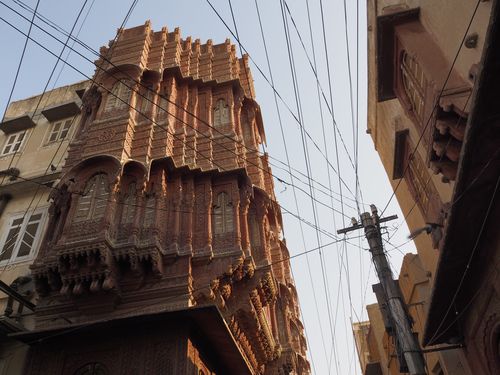
 The facades of the havelis in Bikaner, located in the Rajasthan state of India, are outstanding examples of traditional Rajput architecture. These large homes or urban palaces are renowned for their intricately decorated facades. Often constructed from local red sandstone, the havelis feature a warm distinctive color. Sculptural details include finely crafted windows, balconies, inner courtyards, and elaborate doors. Traditionally, these structures were residences for the wealthy merchant class, reflecting their social status and prosperity. Today, they continue to be symbols of the opulence and craftsmanship of their time.


Monument profile
Facades of Havelis
Monument category: Historic house
Monument family: Historic or traditional habitat
Monument genre: Residential
Cultural heritage: Hindu
Geographic location: Bikaner • Rajasthan • India
Construction period: 18th century AD
• Links to •
• Dynasties that contributed to the construction of the monument •

• List of videos about Bikaner on this site •
Bikaner, the red city • Rajasthan, India
Bikaner 2025
• References •
World Monuments Watch: Historic Havelis of Bikaner
The Havelis of Bikaner: Reflections of Political Ambition and Social Prestige in Rajasthan’s Architectural Heritage
Political and Social Motivations Behind the Construction
The havelis of Bikaner, primarily constructed between the 18th and 19th centuries, serve as symbols of wealth, status, and political influence. These grand merchant mansions, known as havelis, were built by the affluent merchant class and the aristocracy, who sought to display their economic power and loyalty to the ruling Rajput dynasty. The havelis not only represented personal affluence but were also statements of allegiance to the Rathore family, who ruled Bikaner. By building these impressive facades, merchants contributed to Bikaner’s image as a thriving center of trade, reinforcing its regional prominence and the political strength of its leaders.
Major Historical Events and Their Impact
Over the centuries, Bikaner witnessed numerous historical events that shaped its socio-political landscape. The influence of the Mughal Empire, followed by British colonial rule in the 19th century, left an indelible mark on the city and its architecture. Under Mughal influence, local styles incorporated Persian and Central Asian decorative elements. Later, during the British colonial period, European architectural features were introduced to some havelis, symbolizing the merging of Indian, Persian, and Western influences. This blend of styles was further influenced by the increasing number of travelers and traders from diverse cultures passing through the region, solidifying Bikaner’s role as a cultural and economic crossroad.
Global Context and Comparisons
Globally, the era of haveli construction in Bikaner coincided with the flourishing of merchant and aristocratic mansions in Europe and the Middle East during the 18th and 19th centuries. Just as European elites built grand estates to exhibit wealth and secure political influence, Bikaner’s merchant class used their havelis to convey social prestige. In both contexts, architecture became a means of expressing dominance, consolidating economic power, and displaying cultural sophistication, reflecting a world in which status and architectural grandeur were closely intertwined.
Major Transformations Over the Centuries
The havelis of Bikaner have undergone numerous transformations, shaped by changes in power, culture, and local economy. Under British rule, additional European elements, such as wrought iron balconies and neoclassical columns, were integrated into certain havelis. Over time, these mansions have been adapted to meet the evolving needs of their inhabitants, from storage areas to living quarters, without losing their unique architectural essence. Many havelis showcase a mix of Rajput, Mughal, and European influences, reflecting the region’s history as a meeting point for different cultures and empires.
Cultural Importance and Current State of Conservation
Today, Bikaner’s havelis are cherished cultural landmarks, emblematic of Rajasthan’s rich architectural heritage. They attract historians, architects, and travelers fascinated by their ornate facades and intricate craftsmanship. While many havelis remain in reasonably good condition, others suffer from deterioration due to lack of maintenance and the harsh desert climate. This contrast in preservation reflects varied ownership and resource availability, affecting the buildings' ability to retain their historical and cultural significance.
Challenges in Preserving Historical Integrity
Modern challenges in preserving the havelis of Bikaner include urban expansion, pollution, and increased tourism. Natural erosion, temperature fluctuations, and strong winds impact the sandstone structures and delicate frescoes. Furthermore, unregulated renovations and modern additions can compromise the authenticity of these buildings. Preservation efforts thus focus on balancing the havelis’ cultural integrity with contemporary needs, using traditional methods and materials to maintain their historical authenticity. Collaborative initiatives between local authorities and conservation experts are essential for addressing these issues, ensuring these architectural treasures endure for future generations.
Conclusion
The havelis of Bikaner stand as vibrant chronicles of the region’s socio-political history, showcasing the cultural fusion that has characterized Bikaner for centuries. These façades are more than just architectural marvels; they embody the stories, aspirations, and legacies of the people who built them. Their preservation remains crucial for future generations, offering a tangible link to Rajasthan’s past and a reminder of the significance of architectural heritage in a rapidly changing world.
The Architectural Marvel of Bikaner’s Havelis: Technological Advances and Cultural Fusion of the Rajput Era
Technological Innovation and Construction Techniques of the Rajput Era
The havelis of Bikaner, built primarily during the 18th and 19th centuries, are a testament to the technological advancement and architectural innovation of the Rajput era. These grand structures highlight the skill and expertise of artisans who mastered the challenges of building in the harsh desert environment. The havelis’ architecture demonstrates the Rajputs’ ability to harness local resources while adapting to evolving construction techniques. A hallmark of this era’s innovation is the extensive use of jali (stone latticework), which provided natural ventilation and diffused light while maintaining privacy and security—a clever solution for managing the intense heat of Rajasthan.
The primary material used in these havelis is locally sourced red sandstone, chosen for its durability and its warm, distinctive color that resonates with the desert landscape. Stone masonry techniques, particularly intricate stone carving, were employed to create elaborate façades adorned with sculptures and motifs. Additionally, lime plaster, which offers flexibility and durability, was used to enhance and preserve the exterior. This combination of materials and techniques underscores both the aesthetic appeal and structural resilience of the havelis.
Architectural Features: A Blend of Regional and Foreign Influences
The havelis of Bikaner are an architectural synthesis of Rajput, Mughal, and Persian styles, reflecting the cultural diversity of the region. Traditional Rajput motifs, such as floral patterns and geometric shapes, are interwoven with Mughal influences seen in arches and domes, as well as Persian-inspired designs. The façades are distinguished by elaborate balconies, carved windows, and decorative archways, each of which contributes to a harmonious aesthetic while serving practical purposes, such as ventilation and shade.
Inside the havelis, the walls and ceilings are often decorated with vibrant frescoes depicting scenes from mythology, daily life, and nature. These frescoes, created with natural pigments, offer insight into both the artistic techniques and cultural values of the time. The intricate carvings and ornamental designs not only showcase local craftsmanship but also underscore the influence of foreign trade and travelers, as elements from Persian and Central Asian designs were adapted into the Rajput aesthetic.
Notable Layout and Structural Plan
The layout of Bikaner’s havelis is distinctive and functional. Typically organized around one or more courtyards, these open spaces allowed air circulation and light to permeate the interiors, creating a cool, shaded environment ideal for the hot climate. Each courtyard is encircled by rooms and galleries, with the main family quarters strategically positioned for privacy. The multiple levels of some havelis—featuring up to four stories—demonstrate advanced structural planning, as artisans ingeniously balanced the weight of sandstone to maintain stability.
One interesting anecdote surrounding the havelis is the impressive number of balconies and windows that some structures boast—up to 100 in certain cases. This extensive use of openings was not only for ventilation but also to signify wealth and social standing, as each ornate feature represented the prosperity of the owner.
International Recognition and Impact of UNESCO Status
While Bikaner’s havelis have not yet achieved UNESCO World Heritage status, they enjoy international recognition for their architectural brilliance and historical significance. This renown has bolstered conservation efforts and increased awareness of the cultural value of these buildings. Scholars, architects, and art historians from around the world visit Bikaner to study and appreciate the havelis’ intricate designs and historical context. Although these havelis lack official UNESCO designation, ongoing preservation initiatives underscore their role as invaluable heritage sites and contribute to sustaining their legacy.
Challenges in Preserving Historical Integrity
Today, the preservation of Bikaner’s havelis faces multiple challenges. The region’s harsh desert climate, with extreme temperatures and occasional sandstorms, accelerates the wear on sandstone façades and frescoes. Additionally, modern pressures from tourism, urban development, and pollution threaten the integrity of these historic structures. Balancing the need for preservation with contemporary demands has become a priority for local authorities and conservation experts. Preservation efforts aim to retain the havelis’ authentic characteristics by using traditional materials and methods, ensuring that these historic buildings maintain their cultural and historical value.
Conclusion
The havelis of Bikaner stand as enduring symbols of the Rajput era’s architectural prowess, cultural inclusiveness, and technological advancements. With their intricate façades, sophisticated layouts, and fusion of artistic influences, they capture the spirit of a bygone era while highlighting the importance of architectural heritage in India. These grand structures continue to captivate and inspire, representing not just the wealth and status of their creators, but the cultural richness of Bikaner and Rajasthan as a whole.