

 Français (France)
  Nederlands (nl-NL)
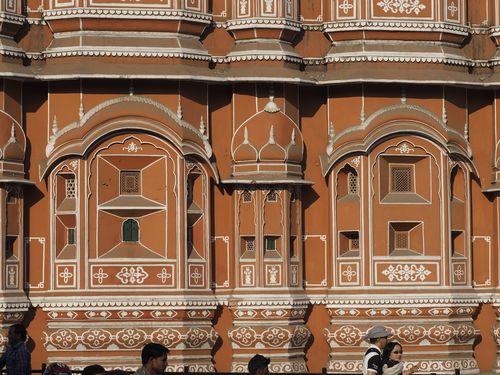
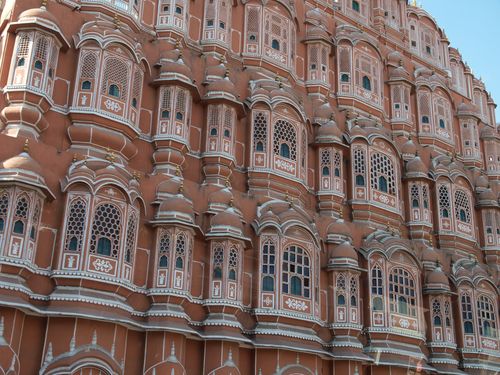
 Hawa Mahal is a well-known monument located in the city of Jaipur, the capital of the Indian state of Rajasthan. Built in the late eighteenth century during the period of the Jaipur kingdom, the structure has become one of the most recognizable landmarks of the historic city. Its distinctive façade, characterized by numerous small windows and openings, gives the building a unique visual identity within the urban landscape. Today the monument is among the most frequently visited sites in Jaipur and plays a significant role in the city’s cultural and tourism profile. It reflects the historical importance of Jaipur as a political and artistic center in northern India.

Monument profile
Hawa Mahal
Monument category: Palace
Monument family: Palace and Annexes
Monument genre: Residential
Cultural heritage: Hindu
Geographic location: Jaipur • Rajasthan • India
Construction period: 18th century AD
This monument in Jaipur is inscribed on the UNESCO World Heritage List since 2019 and is part of the serial property "Jaipur City, Rajasthan".See the UNESCO monuments featured on this site
• Links to •
• Dynasties that contributed to the construction of the monument •


• List of videos about Jaipur on this site •
Jaipur, the pink city • Rajasthan, India
• References •
UNESCO: Jaipur City, Rajasthan
History of the Hawa Mahal in Jaipur
The Hawa Mahal, located in the historic city of Jaipur in the Indian state of Rajasthan, is one of the most recognizable monuments associated with the royal architecture of the Rajput courts. Constructed in 1799 during the reign of Maharaja Sawai Pratap Singh of the Kachwaha dynasty, the building formed part of the larger City Palace complex and was integrated into the ceremonial urban layout of Jaipur. Its history reflects the political dynamics of late eighteenth-century northern India, the social organization of royal courts, and the gradual transformation of princely states under colonial rule and later within independent India.
Political and social context of the construction
The construction of the Hawa Mahal must be understood within the political and social circumstances of the Jaipur kingdom at the end of the eighteenth century. Jaipur had been founded in 1727 by Maharaja Sawai Jai Singh II, who designed the city as a planned capital intended to replace the earlier hill fortress of Amber. The new capital followed a carefully organized urban grid influenced by traditional Indian architectural treatises and by the administrative needs of a growing royal court.
By the time Sawai Pratap Singh ascended the throne in 1778, the political landscape of northern India had become increasingly complex. The Mughal Empire had declined significantly, while regional powers such as the Marathas expanded their influence across large areas of the subcontinent. At the same time, the British East India Company was consolidating its control in several regions through military alliances, trade agreements, and territorial expansion. Rajput states such as Jaipur sought to maintain their political autonomy by balancing alliances and demonstrating their prestige through ceremonial culture and monumental architecture.
Within this context, the construction of the Hawa Mahal served both practical and symbolic purposes. The structure was built as an extension of the royal palace complex, facing the main ceremonial street of the city. Jaipur’s rulers regularly organized religious festivals, royal processions, and civic celebrations that passed through these central avenues. According to the social customs of the Rajput court, women of the royal household lived within the secluded quarters of the palace and rarely appeared in public spaces. The Hawa Mahal allowed them to observe the activities of the city from behind a screen of windows and latticework without being seen from the outside. This architectural solution reflects the social norms governing royal households while also expressing the sophistication and ceremonial culture of the Jaipur court.
Historical events and political transitions
Unlike defensive fortresses or strategic military sites in Rajasthan, the Hawa Mahal was not directly involved in warfare or sieges. Nevertheless, its history has been shaped by the broader political transformations that affected Jaipur during the nineteenth century.
In 1818 the kingdom of Jaipur entered into a treaty with the British East India Company that established the state as a princely territory under British protection. This agreement significantly altered the political role of the Rajput rulers. Although they retained internal authority over their territories, their military autonomy and external diplomacy were restricted. During this period the royal palace complex, including the Hawa Mahal, continued to function as part of the ceremonial and administrative landscape of the princely state.
Throughout the nineteenth century the palace structures remained associated with royal rituals, courtly ceremonies, and public festivities. The streets surrounding the monument continued to host processions during religious festivals such as those dedicated to Hindu deities, reinforcing the relationship between the palace architecture and the civic life of the city.
Major political change occurred after India gained independence in 1947. The princely states of Rajasthan were gradually integrated into the Indian Union, and Jaipur ceased to function as the capital of an autonomous kingdom. As the role of the royal court diminished, several palace structures were adapted for new uses or opened to visitors as historical sites. The Hawa Mahal increasingly became a monument of cultural heritage rather than an active part of royal administration.
Global context at the time of construction
The late eighteenth century was a period of significant transformation across many regions of the world. Empires and regional states invested in monumental architecture as a means of expressing authority, stability, and cultural prestige. In Europe, royal courts and imperial capitals continued to expand their ceremonial architecture through palaces, government buildings, and urban squares designed to reinforce the legitimacy of ruling dynasties.
In parts of the Middle East and Central Asia, rulers also sponsored architectural projects that combined local traditions with external influences. Within the Indian subcontinent, regional courts developed their own distinctive architectural programs following the decline of centralized Mughal power. Rajput states such as Jaipur, Udaipur, and Jodhpur constructed palaces, temples, and urban ensembles that reflected both inherited Mughal influences and long-standing regional traditions.
The Hawa Mahal thus belongs to a broader global pattern in which rulers used monumental architecture to articulate identity and authority within changing political landscapes. Its construction demonstrates the continuing vitality of regional artistic traditions in northern India at a time when many political systems were undergoing profound transformation.
Transformations and changes over time
Over the course of the nineteenth and twentieth centuries, the function and perception of the Hawa Mahal gradually evolved. The building remained physically connected to the palace complex, but the decline of courtly life reduced its original role as a viewing structure for royal women. As Jaipur expanded beyond its original city walls and developed into a modern urban center, the surroundings of the monument changed significantly.
Urban growth transformed the streets in front of the Hawa Mahal into busy commercial corridors filled with markets, shops, and transportation routes. Despite these changes, the monument retained its visual prominence within the historic cityscape. Several conservation campaigns were undertaken during the twentieth century to stabilize the structure and maintain its distinctive façade.
Restoration efforts focused primarily on repairing stone surfaces, reinforcing structural elements, and preserving the decorative features that characterize the building. These initiatives aimed to ensure that the monument could continue to function as an accessible historical site while maintaining its original architectural identity.
Contemporary cultural significance
Today the Hawa Mahal is widely recognized as one of the principal symbols of Jaipur and of the architectural heritage of Rajasthan. Its distinctive façade has become closely associated with the image of the city and frequently appears in cultural representations, tourism campaigns, and historical publications.
The monument is visited by large numbers of travelers each year and forms an integral part of the historical landscape explored by visitors to Jaipur. Beyond tourism, the building continues to be connected to the ceremonial life of the city. Religious processions, traditional festivals, and civic celebrations still pass through the nearby streets, maintaining a historical continuity between the monument and the public life of Jaipur.
The Hawa Mahal also plays an important role in shaping local identity. Residents of Jaipur often regard it as a defining element of the city’s heritage and as a visual reminder of the region’s royal past. The monument therefore functions not only as a historic structure but also as a cultural symbol linking the modern city to its historical foundations.
Conservation and modern preservation challenges
Preserving the Hawa Mahal presents several challenges associated with its location in a densely populated urban environment. Pollution from traffic, fluctuations in temperature, and the effects of humidity and dust can gradually affect the sandstone surfaces of the building. The heavy flow of visitors also requires careful management to prevent structural damage and maintain safe access to the monument.
Government agencies responsible for cultural heritage in India oversee conservation work aimed at maintaining the stability and appearance of the structure. Restoration programs typically include cleaning of the façade, reinforcement of weakened stone elements, and monitoring of structural conditions.
The broader historic city of Jaipur was inscribed on the UNESCO World Heritage List in 2019, recognizing its planned urban layout and its architectural heritage. Although the Hawa Mahal is not individually listed as a separate World Heritage monument, it forms part of the historic urban ensemble that contributed to this designation. The international recognition of Jaipur’s heritage has strengthened efforts to preserve monuments such as the Hawa Mahal while promoting sustainable tourism and urban conservation.
More than two centuries after its construction, the Hawa Mahal remains an enduring witness to the political, social, and cultural history of Jaipur. Its transformation from a structure linked to royal court life into a widely recognized historical landmark reflects the broader historical evolution of Rajasthan and the continuing importance of architectural heritage in shaping the identity of modern Indian cities
Architecture of the Hawa Mahal in Jaipur
The Hawa Mahal, constructed in 1799 in the historic city of Jaipur in Rajasthan, represents one of the most distinctive examples of late eighteenth-century palace architecture in northern India. Designed as an extension of the City Palace complex under the patronage of Maharaja Sawai Pratap Singh, the structure combines ceremonial urban design with highly specialized architectural solutions adapted to the climate, social customs, and aesthetic traditions of the Rajput court. Its façade, composed of an extensive series of projecting windows and decorative screens, has become one of the most recognizable architectural forms associated with Jaipur. Beyond its visual prominence, the building illustrates the sophisticated construction techniques, artistic traditions, and environmental strategies that characterized court architecture in Rajasthan during this period.
Architectural and technological innovations
One of the most striking aspects of the Hawa Mahal lies in its environmental design. The building was conceived to take advantage of natural airflow through a dense network of small windows and screened openings known as jharokhas. These openings allow air to circulate freely through the façade, producing a cooling effect within the interior chambers. This system functions as a form of passive climate control, particularly effective in the hot and dry climate of Rajasthan.
The façade operates as a perforated architectural screen rather than a conventional exterior wall. The large number of small openings allows air pressure differences to generate continuous airflow, while the projecting balconies and latticework moderate sunlight and reduce heat gain. This approach reflects a sophisticated understanding of climate-responsive architecture long before the development of modern mechanical ventilation systems.
The vertical composition of the structure also contributes to its environmental performance. The building rises gradually in a stepped formation over five levels, with each upper level becoming slightly smaller and lighter than the one below. This arrangement reduces structural load and improves stability while maintaining visual harmony with the surrounding palace architecture.
Urban integration played a crucial role in the design of the monument. The Hawa Mahal faces one of the principal ceremonial streets of Jaipur’s historic walled city. The façade functions as a visual backdrop to processions and civic events, transforming the building into a monumental viewing platform integrated into the planned geometry of the city. This relationship between architecture and urban planning reflects the broader design philosophy behind Jaipur, which was conceived as one of the earliest systematically planned cities in the Indian subcontinent.
Materials and construction techniques
The Hawa Mahal is constructed primarily from red and pink sandstone, materials widely used in the architecture of Jaipur and throughout Rajasthan. These stones were selected for both practical and aesthetic reasons. Sandstone is relatively easy to carve while retaining sufficient durability to withstand the region’s climatic conditions, including high temperatures and seasonal variations in humidity.
The use of pink sandstone contributes to the visual identity of Jaipur, often described as the “Pink City.” The warm color of the stone reflects sunlight in different ways throughout the day, creating subtle variations in the appearance of the façade. This chromatic effect reinforces the decorative qualities of the building and enhances its presence within the urban landscape.
Traditional masonry techniques were employed in the construction of the structure. Walls were built using stone blocks bound with lime mortar, a material that provides flexibility and resilience. Lime-based mortars allow minor structural movement without cracking, an important property in environments subject to thermal expansion and contraction.
The façade elements required advanced stone-carving techniques. Each window frame, balcony projection, and decorative lattice was shaped with precision by specialized artisans working within the architectural workshops of the Jaipur court. These craftsmen produced intricate geometric and floral patterns that combine structural function with ornamental complexity.
Despite its elaborate appearance, the building relies on relatively light structural components. The façade acts as a thin screen supported by internal walls and chambers rather than as a massive load-bearing surface. This combination of lightness and structural organization allows the building to achieve an impressive vertical composition without requiring the massive foundations typical of fortifications or large palace halls.
Architectural and artistic influences
The architectural language of the Hawa Mahal reflects a synthesis of several traditions that shaped the cultural environment of northern India during the eighteenth century. The dominant influence is the Rajput architectural tradition, visible in the use of projecting balconies, decorative pavilions, and intricately carved stone screens.
The jharokha balconies, a defining feature of the façade, are widely associated with Rajput palace architecture. These projecting windows allowed occupants to observe events outside while maintaining privacy within the palace. Their repeated use across the façade creates a rhythmic pattern that contributes to the building’s distinctive visual character.
Mughal architectural influence is also evident in the use of arches, ornamental symmetry, and refined decorative motifs. Since the sixteenth century, Rajput courts had maintained political alliances and cultural exchanges with the Mughal Empire, leading to a blending of stylistic elements in many regional palaces and administrative buildings.
The ornamental patterns carved into the façade draw upon traditional Indian decorative vocabularies, including stylized floral forms, geometric arrangements, and lattice designs. These motifs not only enhance the visual richness of the building but also serve functional purposes by filtering light and air entering the interior spaces.
The overall silhouette of the façade has sometimes been interpreted as resembling a crown or ceremonial headdress. While this symbolic interpretation may not have been explicitly stated in historical records, it aligns with the broader aesthetic tradition of Rajput architecture, in which monumental buildings often expressed royal authority and divine association through visual symbolism.
Spatial organization and structural composition
Internally, the Hawa Mahal differs significantly from the complexity suggested by its façade. The building consists of a series of small chambers, corridors, and viewing spaces arranged across five levels. These rooms were designed primarily as observation points rather than as large residential halls.
Access between levels is provided mainly by gently sloping ramps rather than steep staircases. This design allowed members of the royal household to move comfortably between floors, particularly when wearing ceremonial garments. The ramp system also contributes to the structural continuity of the building by distributing loads evenly along the interior walls.
The façade contains approximately 950 small windows, each fitted with finely carved lattice screens. These openings are arranged in horizontal rows across the five levels, creating a repeating pattern that emphasizes verticality and visual rhythm. The density of these openings produces the impression of a honeycomb-like surface, a characteristic that distinguishes the Hawa Mahal from most other palace structures of the period.
The stepped arrangement of the upper levels reduces the structural mass of the building as it rises. This design improves stability and minimizes the load carried by the lower walls. The result is a structure that appears delicate yet remains structurally sound.
The façade also includes small domed canopies and projecting balconies supported by ornamental brackets. These architectural elements add depth to the surface of the building while casting shadows that enhance its three-dimensional appearance under changing light conditions.
Dimensions and notable architectural features
The Hawa Mahal extends approximately fifty meters across its main façade and rises to a height of about fifteen meters. Although the façade appears imposing from the street, the interior depth of the structure remains relatively limited. This shallow profile reinforces the concept of the building as a viewing screen rather than as a large palace wing.
The nearly one thousand windows incorporated into the façade represent one of the most distinctive features of the monument. Each opening contributes to the overall ventilation system while maintaining the privacy of the interior spaces.
Another notable characteristic is the absence of massive foundations typical of fortresses or large palatial halls. The stability of the building relies on the careful distribution of weight across the internal walls and the stepped arrangement of its levels. This structural strategy demonstrates the architectural ingenuity of the designers working within the Jaipur court.
Tradition attributes the design of the Hawa Mahal to the court architect Lal Chand Ustad. His work reflects the technical capabilities and artistic sophistication of the architectural workshops active in Jaipur during the late eighteenth century.
International recognition and conservation challenges
The architectural significance of the Hawa Mahal contributes directly to the global recognition of Jaipur’s historic urban landscape. The building forms an integral part of the city’s planned eighteenth-century layout, which combines palace complexes, ceremonial avenues, and commercial districts within a carefully organized grid.
Jaipur’s historic walled city was inscribed on the UNESCO World Heritage List in 2019, highlighting the importance of its architectural and urban heritage. Although the Hawa Mahal is not individually listed as a separate World Heritage monument, its architectural prominence makes it one of the most visible components of the historic ensemble.
Preserving the structure presents several challenges associated with its urban location. Pollution from traffic, dust accumulation, and weathering of the sandstone surfaces can gradually affect the façade. In addition, the large number of visitors entering the monument each year requires careful management to prevent structural damage and maintain safe access.
Conservation programs implemented by heritage authorities focus on cleaning the sandstone surfaces, stabilizing carved elements, and monitoring the condition of the structure. Restoration efforts aim to preserve the intricate latticework and decorative features while ensuring that the building remains structurally secure within the dense urban environment of Jaipur.
More than two centuries after its construction, the Hawa Mahal continues to represent an exceptional example of architectural adaptation to climate, social customs, and urban design. Its distinctive façade, refined decorative elements, and innovative ventilation system illustrate the advanced architectural knowledge developed within the Rajput courts of northern India. The monument remains a central reference point in the study of Indian palace architecture and an enduring symbol of Jaipur’s architectural heritage.