

 Français (France)
  Nederlands (nl-NL)
 • Use the markers to explore the content •

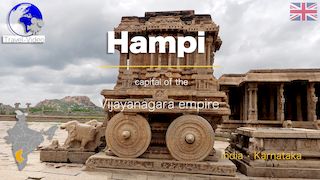
Karnataka, India • Vittala temple, Hampi

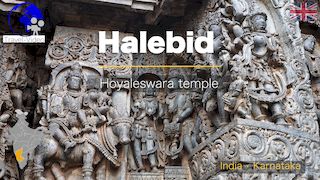
Karnataka, India • Hoysaleswara temple, Halebid

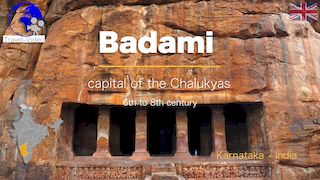
Karnataka, India • cave nr 2, Badami
Karnataka Through the Centuries: The Historical Development of a Major Cultural and Political Center in Southern India
An Ancient Land at the Heart of the Deccan
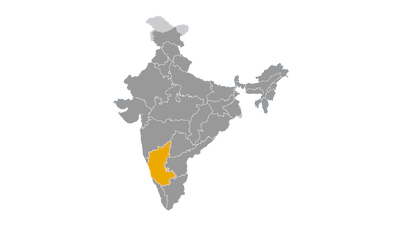
Located in southwestern India, Karnataka occupies a strategic position between the Arabian Sea, the Western Ghats and the Deccan Plateau. Its varied geography has shaped its history for thousands of years, fostering the emergence of powerful kingdoms, thriving trade networks and distinctive cultural traditions. Throughout its long history, Karnataka has played a central role in the political, economic and artistic development of southern India, while serving as a bridge between northern and peninsular civilizations.
The state's history is characterized by remarkable continuity. Although numerous dynasties rose and fell over the centuries, each contributed to the development of administrative institutions, architecture, literature and religious traditions that continue to influence Karnataka today.
Prehistoric Settlements and Early Civilizations
Karnataka possesses one of India's richest archaeological landscapes. Evidence of human occupation dates back to the Lower Paleolithic, with stone tools discovered at numerous sites across the state. These findings demonstrate that humans inhabited the region hundreds of thousands of years ago.
During the Neolithic period, roughly between the third and second millennia BCE, settled farming communities emerged across the Deccan Plateau. Agriculture, cattle breeding and the use of polished stone tools transformed local societies, leading to increasingly permanent villages.
The Iron Age brought the construction of numerous megalithic monuments, including dolmens, stone circles and burial chambers. These structures reveal complex societies with advanced metallurgical knowledge and well-developed funerary customs.
By the early centuries BCE, Karnataka had become integrated into extensive trade networks linking the Deccan with the western coast of India and overseas markets. Precious stones, spices, ivory, cotton and metals were among the products exchanged through these commercial routes.
The Emergence of Early Kingdoms
Following the decline of the Mauryan Empire during the second century BCE, much of Karnataka came under the rule of the Satavahana dynasty. Their administration strengthened regional trade, encouraged urban growth and connected the Deccan with both northern India and maritime commerce across the Arabian Sea.
From the fourth century CE onward, indigenous dynasties established stable regional kingdoms. Among the earliest were the Kadambas of Banavasi, who are particularly significant because they were among the first rulers to use Kannada extensively in official inscriptions. Their reign marked an important step in the emergence of a distinct Kannada political and cultural identity.
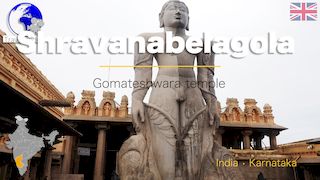
The Western Gangas ruled southern Karnataka for nearly seven centuries. They became renowned patrons of Jainism and sponsored numerous religious monuments. Their greatest legacy is the colossal monolithic statue of Gomateshwara at Shravanabelagola, inaugurated in 981 CE and still regarded as one of the masterpieces of Jain art.
The Rise of the Great Deccan Empires
Between the sixth and twelfth centuries, Karnataka became the political center of several powerful empires that dominated much of peninsular India.
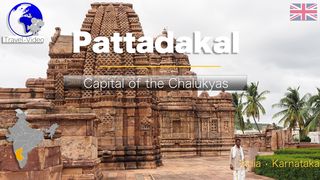
The Chalukyas of Badami established a vast empire during the sixth century. Their rule brought political stability, economic prosperity and remarkable artistic achievements. The temples of Badami, Aihole and Pattadakal illustrate the emergence of an innovative architectural style combining northern Nagara and southern Dravida traditions. These monuments profoundly influenced later Indian temple architecture.
In the eighth century, the Rashtrakutas replaced the Chalukyas as the dominant power in the Deccan. Their empire expanded across central India and maintained diplomatic and commercial contacts with regions extending into the Middle East. The Rashtrakutas became celebrated patrons of Sanskrit and Kannada literature while promoting religious tolerance among Hinduism, Jainism and Buddhism.
During the tenth century, the Western Chalukyas restored political stability from their capital at Kalyani. Their administration strengthened local governance and fostered further developments in architecture and sculpture, laying the foundations for one of Karnataka's greatest artistic periods.
The Hoysala Golden Age
Between the eleventh and fourteenth centuries, the Hoysala dynasty created one of the most sophisticated kingdoms in southern India. Initially serving as vassals of the Western Chalukyas, they gradually expanded their authority across much of present-day Karnataka.
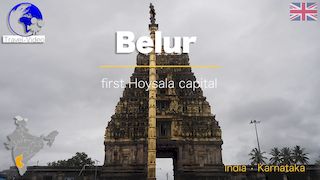
The Hoysala period is widely regarded as the artistic golden age of medieval Karnataka. Their temples, built at Belur, Halebidu and Somanathapura, display extraordinary craftsmanship characterized by star-shaped platforms, finely carved soapstone sculptures and intricate decorative programs. These monuments represent some of the finest achievements of medieval Indian architecture.
The Hoysalas also encouraged literature in both Kannada and Sanskrit while supporting Hinduism, Jainism and, to a lesser extent, Buddhism. Agricultural productivity increased through the construction of reservoirs, irrigation tanks and water management systems that benefited rural communities.
The Vijayanagara Empire and Resistance to the Sultanates
The expansion of the Delhi Sultanate into southern India during the fourteenth century transformed the political landscape of the Deccan. In response, the brothers Harihara and Bukka founded the Vijayanagara Empire in 1336 on the banks of the Tungabhadra River.
Karnataka became the political and economic heartland of one of medieval India's greatest empires. Its capital, Vijayanagara, now represented by the archaeological site of Hampi, grew into one of the largest cities in the world during the fifteenth century. International trade connected the empire with Persia, Arabia, Southeast Asia and Europe, bringing considerable wealth and stimulating artistic and architectural achievements.
Vijayanagara also served as the principal Hindu power resisting the expansion of the Deccan Sultanates. This prolonged rivalry culminated in the Battle of Talikota in 1565, when a coalition of Sultanates defeated the imperial army. The victorious forces sacked the capital, leading to the empire's rapid decline, although successor rulers continued to govern from alternative capitals for several decades.
The Deccan Sultanates, the Mughals and the Marathas
Following the collapse of Vijayanagara, northern Karnataka came under the influence of several Deccan Sultanates, particularly the Adil Shahi dynasty of Bijapur. This period witnessed the construction of impressive Indo-Islamic monuments, including the famous Gol Gumbaz, renowned for its immense dome and remarkable acoustics.
During the late seventeenth century, Emperor Aurangzeb incorporated parts of the Deccan into the Mughal Empire. However, Mughal authority remained relatively short-lived, as the expanding Maratha Confederacy soon established control over several northern districts of Karnataka during the eighteenth century.
These successive political changes introduced new administrative systems while enriching the region's architectural, linguistic and cultural diversity.
Mysore, Hyder Ali and Tipu Sultan
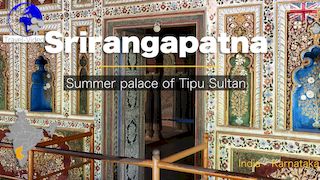
In southern Karnataka, the Kingdom of Mysore gradually emerged as a major regional power. Under Hyder Ali and later his son Tipu Sultan, Mysore developed into one of the strongest military states in India.
Tipu Sultan modernized the administration, promoted manufacturing, expanded international trade and introduced significant military innovations, including the effective use of iron-cased rockets in warfare. His determined resistance to the British East India Company led to the four Anglo-Mysore Wars.
Tipu Sultan was killed during the Siege of Seringapatam in 1799, marking a decisive turning point. The British assumed political control over Mysore while restoring the Wadiyar dynasty as nominal rulers under British supervision.
British Rule and the Independence Movement
Throughout the nineteenth century, the Princely State of Mysore became one of the most progressive states within British India. The Wadiyar rulers implemented extensive administrative reforms, expanded public education, developed railways and irrigation projects, and promoted industrialization.
Bangalore gradually evolved into an important military cantonment, educational center and industrial city. Hydroelectric power generation, engineering industries and scientific institutions laid the foundations for the city's later technological prominence.
Karnataka also contributed actively to the Indian independence movement. Political leaders, intellectuals and social reformers participated in campaigns led by the Indian National Congress, while nationalist ideas gained increasing support throughout both British-administered territories and the princely state of Mysore.
The Formation of Modern Karnataka
Following India's independence in 1947, the Princely State of Mysore acceded to the Indian Union. A major reorganization of Indian states based on linguistic identity took place in 1956. Kannada-speaking regions formerly belonging to the Bombay Presidency, Madras Presidency, Hyderabad State and Coorg were united with Mysore to create a larger administrative unit representing the majority of Kannada speakers.
In 1973, the state officially adopted the name Karnataka, replacing Mysore in recognition of its broader historical and geographical identity.
Since the second half of the twentieth century, Karnataka has undergone profound economic transformation. Bengaluru has become India's leading center for information technology, software development, biotechnology and aerospace research, earning international recognition as one of the world's major technology hubs.
Despite rapid modernization, Karnataka has successfully preserved an exceptional historical legacy reflected in its archaeological sites, temples, monuments, languages and artistic traditions. Today, the state combines a distinguished historical heritage with a dynamic economy, making it one of India's most influential political, cultural and scientific regions. Its long historical evolution, shaped by successive kingdoms, powerful empires and enduring cultural traditions, continues to define Karnataka's identity within contemporary India.
```


Contemporary Karnataka: Geography, Economy and Cultural Diversity in One of India's Most Dynamic States
A Leading State in Southern India
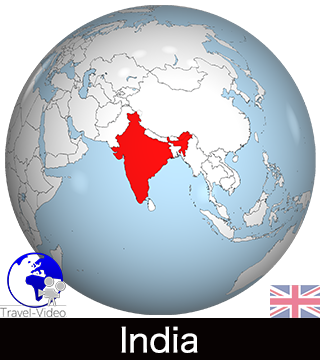
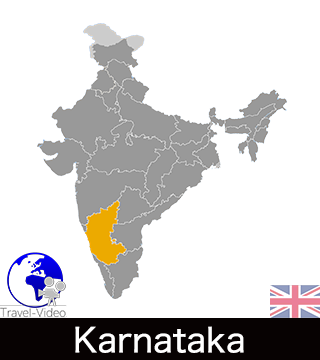
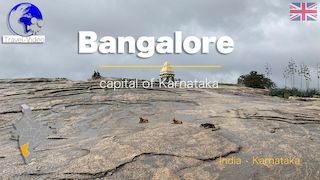
Karnataka is one of India's most influential and economically dynamic states. Located in the southwestern part of the country, it covers approximately 191,791 square kilometres, making it the sixth-largest Indian state by area. Its capital, Bengaluru, has earned international recognition as one of the world's leading technology hubs and plays a central role in India's digital economy.
Modern Karnataka combines exceptional geographical diversity, a rich cultural heritage and a highly diversified economy. From the rainforests of the Western Ghats to the fertile plains of the Deccan Plateau and the Arabian Sea coastline, the state's varied landscapes have shaped its development and continue to influence its economic activities, settlement patterns and cultural traditions.
Geography and Natural Environment
Karnataka is bordered by Goa to the northwest, Maharashtra to the north, Telangana to the northeast, Andhra Pradesh to the east, Tamil Nadu to the southeast, Kerala to the south and the Arabian Sea to the west. Its coastline extends for roughly 320 kilometres and includes several important ports.
The state is divided into three major geographical regions. Along the western edge rise the Western Ghats, a mountain range recognized as one of the world's biodiversity hotspots. These mountains receive heavy monsoon rainfall and are covered by dense tropical forests.
East of the Ghats lies the extensive Deccan Plateau, which occupies most of Karnataka. The plateau generally ranges between 500 and 900 metres above sea level and forms the state's principal agricultural and urban region.
The narrow coastal plain, known as Karavali, is characterized by sandy beaches, estuaries, lagoons, coconut groves and fishing communities. It represents one of India's most scenic coastal landscapes.
Several important rivers originate or flow through Karnataka. The Krishna River and its tributaries irrigate much of northern Karnataka, while the Kaveri, rising in the Western Ghats, provides essential water resources for southern districts. Other major rivers include the Tungabhadra, Sharavathi, Kali, Malaprabha and Ghataprabha, all of which play significant roles in irrigation, hydroelectric power generation and regional water supply.
Climate and Environmental Characteristics
Karnataka experiences considerable climatic variation due to differences in elevation and proximity to the sea. The coastal districts have a humid tropical climate with abundant rainfall during the southwest monsoon, typically from June to September. Some areas of the Western Ghats receive among the highest annual rainfall totals in India.
The interior plateau experiences a tropical savanna climate with lower rainfall and longer dry seasons. Northern districts are periodically affected by drought, making water management a major concern.
The state possesses exceptional ecological diversity. Protected areas such as Bandipur National Park, Nagarhole National Park, Kali Tiger Reserve and Kudremukh National Park safeguard important populations of Asian elephants, Bengal tigers, leopards, gaurs and numerous endemic bird, reptile and amphibian species. The conservation of the Western Ghats remains one of Karnataka's most important environmental priorities.
Population and Cultural Diversity
Karnataka has a population of more than 67 million people and continues to urbanize rapidly. The greatest concentration of inhabitants is found around Bengaluru, while other major urban centres include Mysuru, Hubballi-Dharwad, Mangaluru, Belagavi, Kalaburagi and Shivamogga.
Kannada is the state's official language and the mother tongue of the majority of its inhabitants. However, Karnataka is linguistically diverse. Tulu is widely spoken along the southwestern coast, Konkani remains important in coastal communities, while Urdu, Telugu, Tamil, Marathi, Malayalam and Hindi are also spoken by significant populations in different parts of the state.
Hinduism is the predominant religion. Islam forms the second-largest religious community, followed by Christianity, Jainism, Sikhism and Buddhism. This diversity reflects centuries of migration, trade and political change that have shaped Karnataka's society.
Major Cities and Administrative Organization
Bengaluru serves as Karnataka's political, administrative and economic capital. It hosts the state government, major public institutions and the headquarters of numerous national and international companies. The city has become India's foremost centre for software development, biotechnology, aerospace engineering, artificial intelligence and advanced research.
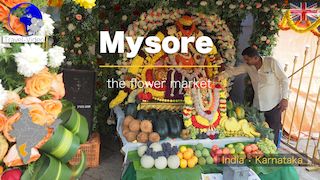
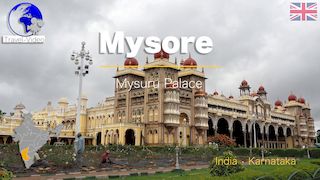
Mysuru remains one of southern India's leading cultural centres. The former capital of the Kingdom of Mysore is renowned for its royal palace, educational institutions, traditional crafts and the internationally famous Mysuru Dasara festival.
Mangaluru is Karnataka's principal seaport and an important centre for international trade, petrochemicals, fisheries and food processing industries.
Hubballi-Dharwad forms the largest urban and commercial centre in northern Karnataka, while Belagavi has developed into a significant industrial city. Kalaburagi serves as an important administrative, educational and commercial centre for the northeastern districts.
Administratively, Karnataka is divided into 31 districts, each further subdivided into taluks and local administrative bodies. The state government, headed by the Chief Minister, exercises authority over areas such as education, healthcare, agriculture, infrastructure, public administration and local governance.
Transportation and Infrastructure
Karnataka possesses one of India's most developed transportation networks. An extensive system of national highways and state highways connects the major cities and industrial regions, facilitating both domestic and international trade.
The railway network links Bengaluru with major metropolitan centres including Chennai, Hyderabad, Mumbai, Delhi, Kolkata, Kochi and Goa. Rail transport remains essential for both passenger movement and freight transportation.
Kempegowda International Airport in Bengaluru ranks among India's busiest airports, serving numerous domestic and international destinations. Additional airports at Mangaluru, Hubballi, Belagavi, Mysuru, Kalaburagi and Shivamogga provide regional connectivity.
The ports of New Mangalore and Karwar play important roles in maritime trade, handling petroleum products, fertilizers, minerals, agricultural commodities and manufactured goods.
A Highly Diversified Economy
Karnataka has one of India's strongest and most diversified economies. Although agriculture continues to support millions of people, the state has become a national leader in manufacturing, research, information technology and services.
Agriculture remains particularly important in rural districts. Major crops include rice, maize, millet, sorghum, sugarcane, cotton, groundnuts and pulses. Irrigation projects along the Krishna and Kaveri river systems support agricultural production in many regions.
Karnataka is India's largest producer of coffee. The plantations of Kodagu, Chikkamagaluru and Hassan districts account for a substantial proportion of the country's coffee exports. The state also produces important quantities of spices such as black pepper, cardamom and vanilla.
Sericulture has long been one of Karnataka's traditional strengths, making it one of India's leading silk-producing states. Sandalwood products, particularly those associated with Mysuru, continue to hold economic and cultural significance despite strict conservation measures regulating the harvesting of sandalwood trees.
Industrial development is concentrated around Bengaluru and several other urban centres. Electronics, aerospace engineering, pharmaceuticals, biotechnology, automobile manufacturing and machine tools represent major industrial sectors.
The service sector contributes the largest share of Karnataka's economy. Bengaluru's global reputation as India's "Silicon Valley" reflects the presence of numerous multinational corporations, technology startups, software exporters and research centres. Information technology and business process outsourcing have become major sources of employment and economic growth.
Contemporary Culture and Education
Karnataka maintains a vibrant cultural identity that combines ancient traditions with modern influences. Classical Carnatic music, Yakshagana dance-drama, Dollu Kunitha folk dance and various regional performing arts continue to attract large audiences throughout the state.
The Mysuru Dasara festival is among India's best-known cultural celebrations. Featuring royal processions, music, dance performances and religious ceremonies, it attracts visitors from across India and abroad.
Traditional crafts remain important in many regions. Mysuru silk, sandalwood carving, rosewood inlay work, bronze casting, stone sculpture and handloom weaving continue to support local economies while preserving centuries-old artistic traditions.
The state is also one of India's leading educational centres. Bengaluru hosts several prestigious universities, engineering colleges, medical institutions and scientific research organizations. Karnataka plays a major role in higher education, innovation and technological research, contributing significantly to India's scientific and industrial development.
Current Challenges and Future Prospects
Despite its economic success, Karnataka faces several important challenges. Rapid urban expansion, particularly in Bengaluru, has placed considerable pressure on housing, transportation, public infrastructure and water resources.
Significant regional disparities persist between the highly developed southern districts and parts of northern Karnataka, where agricultural dependence and lower industrialization continue to affect economic opportunities. Water management remains a critical issue, particularly during recurring droughts and in relation to interstate river-sharing disputes involving the Kaveri and Krishna river systems.
Environmental conservation represents another major priority. Protecting the biodiversity of the Western Ghats while accommodating economic growth requires careful planning and sustainable resource management.
At the same time, Karnataka continues to strengthen its position as one of India's principal centres of innovation, scientific research and advanced manufacturing. By combining a globally competitive technology sector with a rich historical legacy, strong educational institutions and diverse cultural traditions, the state has established itself as one of the country's leading engines of economic growth and social development.
```