

 Français (France)
  Nederlands (nl-NL)
 • Use the markers to explore the content •

Goa, India • a wall decorated with ceramics, reminiscent of Portugal

Goa, India • Our Lady of the Immaculate Conception

Goa, India • Fort Aguada
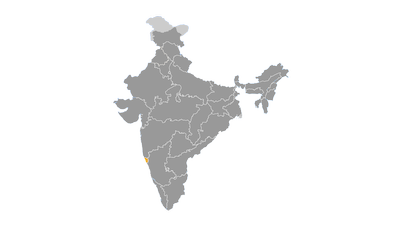
The Historical Development of Goa from Ancient Kingdoms to Modern India
Early Settlement and the Origins of Goa
Located on India's western coast along the Arabian Sea, Goa has a long and diverse history shaped by its strategic position between the Indian Ocean trade routes and the Deccan Plateau. Archaeological discoveries indicate that the region has been inhabited since prehistoric times. Stone tools, megalithic remains, and ancient settlement sites reveal continuous human occupation long before the emergence of organized kingdoms.
During the first millennium BCE, Goa gradually became integrated into the commercial networks linking the western coast of India with the interior of the Deccan. Its natural estuaries and sheltered harbors made it an ideal location for maritime trade. Merchants exchanged spices, rice, timber, precious stones, metals, and textiles with ports across the Arabian Peninsula, Persia, East Africa, and later Southeast Asia.
Ancient Sanskrit literature refers to the region by names such as Gomantaka and Govapuri, highlighting its religious and cultural significance. These early references suggest that Goa already occupied an important place in the historical geography of western India.
Early Dynasties and Regional Kingdoms
From the early centuries CE, Goa came under the influence of several major dynasties that controlled large parts of the Deccan. The Satavahanas, who ruled much of central and southern India between the first century BCE and the third century CE, probably exercised authority over the region and encouraged commercial activity along the coast.
Following the decline of the Satavahanas, political control shifted among various regional powers. The most significant early dynasty was the Kadambas of Goa, who ruled between the tenth and fourteenth centuries. Establishing their capitals at Chandrapura and later Gopakapattana, they created the first kingdom centered specifically on Goa.
Under the Kadambas, agriculture expanded through improved irrigation, maritime trade flourished, and Hindu temples were constructed throughout the region. Their reign strengthened Goa's political identity while reinforcing its role as an important commercial gateway between the Arabian Sea and the Deccan interior.
The prosperity achieved during this period laid many of the cultural and economic foundations that continued to influence the region long after the dynasty disappeared.
Vijayanagara and the Deccan Sultanates
During the fourteenth century, political power shifted across southern India as the Delhi Sultanate expanded into the Deccan. Goa briefly experienced northern influence before becoming associated with the rising Vijayanagara Empire.
For Vijayanagara, control of Goa was strategically important because of its access to international maritime trade. The empire relied heavily on imported horses from Arabia and Persia, and Goa became one of the principal ports through which these valuable animals entered southern India.
Toward the end of the fifteenth century, the Bahmani Sultanate fragmented into several successor states. Goa eventually came under the control of the Adil Shahi dynasty of Bijapur. The rulers of Bijapur reinforced the city's fortifications, expanded its commercial infrastructure, and maintained its importance as one of the leading ports on India's western coast.
Although the Adil Shahi administration lasted only a few decades, it played a crucial role in shaping the city that the Portuguese would later transform into the capital of their Asian empire.
Portuguese Conquest and Colonial Rule
One of the most significant turning points in Goa's history occurred in 1510, when the Portuguese commander Afonso de Albuquerque captured the territory from the Adil Shahi Sultanate after a series of military campaigns. Goa soon became the capital of the Portuguese Estado da Índia, serving as the administrative center of Portugal's possessions throughout the Indian Ocean.
During the sixteenth century, Old Goa developed into one of Asia's largest and most prosperous cities. It became an important political, commercial, religious, and cultural center connecting Europe with Africa, the Middle East, India, Southeast Asia, China, and Japan.
The Portuguese introduced new administrative institutions, European urban planning, and architectural styles that permanently transformed the region. Magnificent churches, convents, monasteries, hospitals, and government buildings were constructed, many of which still survive today. The Basilica of Bom Jesus and Se Cathedral remain among the finest examples of Portuguese colonial architecture in Asia.
Catholic missionary activity expanded rapidly during this period. Jesuit missionaries, including Saint Francis Xavier, played a central role in spreading Christianity throughout Goa and neighboring regions. Churches, schools, and seminaries became important centers of education and religious life.
Portuguese rule also brought significant religious tensions. The Goa Inquisition, established in the sixteenth century, sought to enforce Catholic orthodoxy and suppress practices considered incompatible with Christianity. Although its historical interpretation remains debated, the Inquisition profoundly influenced Goan society and religious relations for several centuries.
Decline of Portuguese Dominance
From the seventeenth century onward, Portugal's influence in the Indian Ocean gradually declined as Dutch, British, and French commercial companies expanded their presence throughout Asia. International trade increasingly shifted toward ports controlled by these competing European powers.
Meanwhile, the Marathas emerged as the dominant political force across western India. Their repeated military campaigns threatened Portuguese possessions, although Goa itself remained under Portuguese control thanks to its strong coastal defenses and naval support.
During the eighteenth century, Portugal expanded its authority inland by annexing territories known collectively as the Novas Conquistas, or New Conquests. These acquisitions gave Goa much of its present territorial shape.
Unlike most of the Indian subcontinent, which became part of British India, Goa remained under Portuguese sovereignty throughout the colonial period. Nevertheless, economic, cultural, and intellectual exchanges with neighboring British territories continued, allowing new political ideas to circulate among Goan society.
Nationalism and Integration into India
During the twentieth century, nationalist movements gained strength within Goa. Educated elites, journalists, students, and political activists increasingly demanded civil rights and the end of colonial rule.
When India achieved independence in 1947, the Government of India requested that Portugal transfer Goa and its remaining Indian territories peacefully. Portugal refused, arguing that Goa was not a colony but an integral overseas province of the Portuguese nation.
Throughout the 1950s, diplomatic negotiations failed while peaceful demonstrations and nationalist campaigns intensified. Volunteers from various parts of India participated in non-violent protests calling for Goa's liberation.
In December 1961, India launched Operation Vijay, a military campaign involving the army, navy, and air force. Portuguese resistance collapsed within two days, and Goa, together with Daman and Diu, was incorporated into the Indian Union.
The annexation ended more than 450 years of Portuguese rule and fundamentally altered the political future of the territory.
From Union Territory to Statehood
Following its incorporation into India, Goa became part of the Union Territory of Goa, Daman and Diu. Indian democratic institutions gradually replaced the colonial administration, although several aspects of Portuguese civil law continued to apply and remain in force in certain legal matters today.
A significant milestone occurred in 1967 with the Goa Opinion Poll, the only referendum ever held in independent India on the future of a state or territory. Voters rejected the proposal to merge Goa with neighboring Maharashtra, choosing instead to preserve Goa's distinct linguistic and cultural identity.
On 30 May 1987, Goa officially became India's twenty-fifth state, while Daman and Diu remained a separate Union Territory. Statehood recognized the unique historical, cultural, and linguistic heritage that had developed over centuries.
Goa in Contemporary India
Modern Goa is one of India's most distinctive states. Its historical experience has produced a society where Indian traditions coexist with a remarkable Portuguese cultural legacy.
Its architectural heritage, religious diversity, cuisine, music, festivals, and legal traditions reflect centuries of interaction between Asian and European civilizations. UNESCO World Heritage monuments in Old Goa preserve some of the finest surviving examples of Portuguese colonial architecture outside Europe.
Economically, Goa has evolved from a colonial trading center into one of India's most prosperous states. Tourism has become the principal driver of its economy, complemented by services, agriculture, fisheries, mining, and maritime activities.
Today, Goa's history continues to shape its identity. From prehistoric settlements and powerful Deccan dynasties to Portuguese colonial rule and eventual integration into independent India, the region illustrates the complex interactions between local traditions, international commerce, political transformation, and cultural exchange that have characterized the western coast of the Indian subcontinent for more than two millennia.


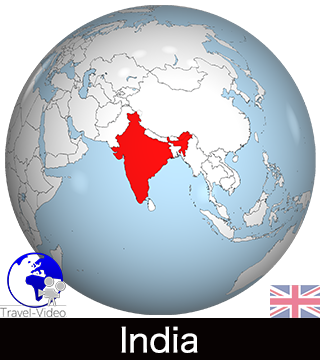
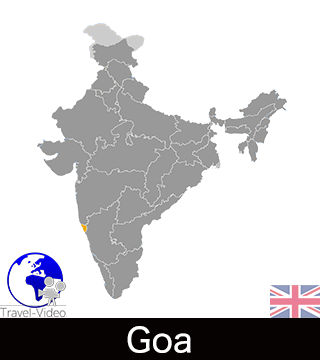
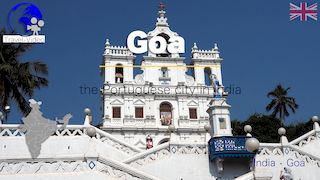
Goa Today: A Coastal State Shaped by Heritage, Tourism and Sustainable Development
A Small State with a Distinct Identity
Goa is India's smallest state by area, yet it occupies a unique position within the country because of its history, cultural diversity and economic vitality. Located on the western coast along the Arabian Sea, it is bordered by the state of Maharashtra to the north and Karnataka to the east and south. Covering approximately 3,702 square kilometres, Goa accounts for only a small fraction of India's territory, but its historical importance and international reputation make it one of the country's best-known destinations.
Formerly a Portuguese territory until 1961, Goa has preserved a distinctive blend of Indian and European influences. Today, it is recognised for its rich architectural heritage, vibrant tourism industry, high standard of living and multicultural society.
Geography and Natural Landscapes
Goa stretches for about 100 kilometres along the Konkan Coast, where sandy beaches alternate with rocky headlands, estuaries and river mouths. The state's western boundary is formed by the Arabian Sea, while its eastern districts rise gradually toward the Western Ghats, one of the world's most important biodiversity hotspots.
The terrain ranges from low coastal plains to densely forested hills exceeding 1,000 metres in elevation. These mountains play a crucial role in regulating rainfall and supplying the state's river systems.
The Mandovi and Zuari are Goa's two principal rivers. Other important waterways include the Terekhol, Chapora, Sal and Talpona rivers. Their estuaries support extensive mangrove ecosystems that provide habitats for numerous bird, fish and crustacean species while also serving local fishing communities.
Protected forests, wildlife sanctuaries and nature reserves preserve significant populations of mammals, reptiles and birds characteristic of the Western Ghats ecosystem.
Climate and Environmental Conditions
Goa experiences a tropical monsoon climate with three distinct seasons. The hot season generally extends from March to May, when temperatures frequently exceed 35°C.
The southwest monsoon, from June to September, brings abundant rainfall that replenishes rivers, reservoirs and groundwater while sustaining agriculture and forests. During this period, lush vegetation transforms much of the landscape.
From October to February, cooler and drier weather creates ideal conditions for tourism. Pleasant temperatures and relatively low humidity make this the busiest season for both domestic and international visitors.
Environmental conservation has become increasingly important as urban expansion, tourism and infrastructure development place growing pressure on coastal ecosystems, forests and freshwater resources.
Population, Languages and Religious Diversity
Goa has an estimated population of approximately 1.6 million inhabitants, making it one of India's least populous states. Despite its relatively small population, urbanisation is high, particularly along the coast.
Konkani is the official language and represents a central element of Goan identity. Marathi is also widely understood and used in some administrative and cultural contexts. Hindi and English are commonly spoken throughout the state, particularly in government, education, business and tourism. Portuguese, although no longer widely used in daily life, remains part of Goa's historical and cultural heritage.
The majority of the population practices Hinduism, while Christians—predominantly Roman Catholics—form a significant minority. Muslim, Jain and Sikh communities also contribute to the state's cultural diversity. This coexistence of different religious traditions has shaped Goa's festivals, architecture and social customs for centuries.
Cities and Administrative Organisation
Panaji, also known as Panjim, serves as the capital of Goa. Located on the banks of the Mandovi River, it is the administrative and political centre of the state and retains numerous colonial-era buildings.
Vasco da Gama is Goa's largest city and an important commercial and industrial centre due to its proximity to Mormugao Port and Dabolim Airport. Margao functions as the principal commercial hub of southern Goa and is one of the state's busiest railway junctions.
Mapusa is well known for its traditional markets, while Ponda has become an important centre for temples, agriculture and educational institutions.
Administratively, Goa is divided into two districts: North Goa and South Goa. These are further subdivided into talukas administered by local authorities working alongside the state government.
Transport and Infrastructure
Despite its modest size, Goa possesses well-developed transport infrastructure that supports both tourism and commerce.
An extensive road network connects major towns and provides efficient access to neighbouring states. National highways link Goa with Mumbai, Bengaluru, Mangaluru and other important urban centres.
Rail transport plays a vital role through the Konkan Railway, one of India's most significant railway corridors. The line provides efficient passenger and freight services while traversing spectacular coastal and mountain landscapes.
Air transport has expanded considerably in recent years. Goa is served by Dabolim Airport and the newer Manohar International Airport at Mopa, together handling a growing number of domestic and international flights.
Mormugao Port remains one of western India's important maritime facilities, supporting cargo traffic, cruise tourism and commercial shipping.
A Diverse and Service-Oriented Economy
Goa enjoys one of the highest per capita incomes among Indian states. Its economy has gradually shifted from dependence on natural resources toward services, tourism and modern industries.
Tourism is the state's largest economic sector. Millions of visitors are attracted each year by Goa's beaches, Portuguese colonial architecture, UNESCO World Heritage monuments, religious sites, wildlife sanctuaries and vibrant cultural life.
Agriculture continues to play an important role, although its contribution to the state economy has declined. Rice remains the principal food crop, while coconuts, cashew nuts, mangoes, bananas and spices are widely cultivated. Cashew cultivation is particularly significant, supporting the production of feni, the traditional distilled spirit that has become one of Goa's best-known regional products.
Fishing remains an important economic activity along the coast, supplying both domestic markets and seafood exports.
Mining, especially iron ore extraction, once represented a major source of revenue. However, environmental concerns and judicial restrictions have significantly reduced mining operations during the past decade, encouraging economic diversification.
Information technology, financial services, real estate, education and healthcare continue to expand, contributing to a more balanced economy.
Cultural Life and Living Heritage
Goa's culture reflects centuries of interaction between Indian traditions and Portuguese influence.
Religious festivals are celebrated throughout the year. Hindu festivals such as Diwali, Ganesh Chaturthi and Shigmo coexist with Christian celebrations including Christmas, Easter and the Feast of Saint Francis Xavier, which attracts thousands of pilgrims annually.
The Goa Carnival remains one of India's most distinctive cultural events. Originating during Portuguese rule, it combines colourful parades, music, dance and community celebrations.
Traditional music, folk dances and local crafts continue to flourish alongside contemporary artistic expression. Goan cuisine, renowned throughout India, combines seafood, coconut, spices and Portuguese culinary traditions to create a distinctive regional gastronomy.
The state also possesses a strong educational network. Goa University, located near Panaji, is the state's principal institution of higher education and conducts research in fields including environmental science, marine studies, humanities and technology.
Contemporary Challenges and Future Development
Like many rapidly developing regions, Goa faces several important challenges. Tourism, while economically essential, places increasing pressure on infrastructure, housing, waste management and coastal ecosystems.
Urban expansion has contributed to rising property prices and concerns about preserving the state's architectural heritage and traditional communities. Environmental issues such as coastal erosion, mangrove conservation and sustainable water management have become priorities for public authorities.
Climate change presents additional challenges through rising sea levels, changing monsoon patterns and increased risks to coastal environments.
To ensure long-term economic resilience, Goa is promoting sustainable tourism, digital industries, scientific research and innovation while seeking to protect its exceptional natural and cultural heritage.
Today, Goa stands out as one of India's most distinctive states. Its combination of historical legacy, economic dynamism, environmental diversity and multicultural identity has created a society that successfully balances tradition with modern development. Although small in size, Goa continues to play an important role in India's tourism, culture, maritime economy and international image.