Français (France)
  Nederlands (nl-NL)
 00:00 • intro | 00:41 • the Bragança Palace, Chandor | 02:15 • the churches | 09:07 • the houses
Personal creation from visual material collected during my trip India - Kumbh Mela • Madhya Pradesh • Maharashtra • Goa (2018)
Map of places or practices featured in the video
• Use the markers to explore the content •
Goa: Portuguese Heritage and Living Culture on India’s Western Coast
A Former Maritime Colony with a Distinct Identity
Goa holds a unique place in the history of India. Located on the western coast between the Arabian Sea, river estuaries and tropical hills, this small state was for several centuries one of the principal centres of Portuguese power in Asia. That long period left visible traces in urban form, religious architecture, domestic buildings, social customs and even aspects of language and cuisine. This video explores a territory where European and Indian histories became deeply intertwined.
The heritage value of Goa does not rest only on a few famous monuments. It also lies in a broader cultural landscape where churches, old houses, village squares, shaded roads and historic residences reflect centuries of exchange, missionary activity, maritime trade and local adaptation. Goa appears here not as a simple colonial relic, but as a region shaped by multiple influences that continue to coexist.
Noble Residences, Monumental Churches and Characterful Houses
The Braganza Palace in Chandor is one of the most remarkable civil buildings in Goa. This vast residence recalls the existence of local elites connected to Portuguese administration or influential landholding families. Its scale, reception halls, galleries and spatial organisation suggest a way of life that combined European models with adaptation to the tropical environment.
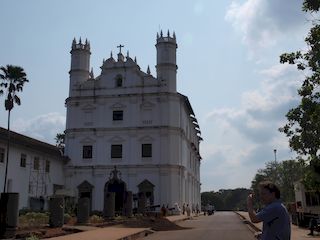
Churches form one of the best-known aspects of Goan heritage. Several monuments in Old Goa, the former capital, rank among the most important Christian buildings in Asia. Baroque and mannerist façades, monumental naves, sculpted altars and cloisters reflect both religious ambition and imperial prestige. These were not merely places of worship; they were also statements of authority and international reach.
Other churches located in towns and villages reveal a more local and integrated form of Catholic life. Whitewashed towers, broad stairways and open forecourts became familiar elements of the Goan landscape and remain important community landmarks.
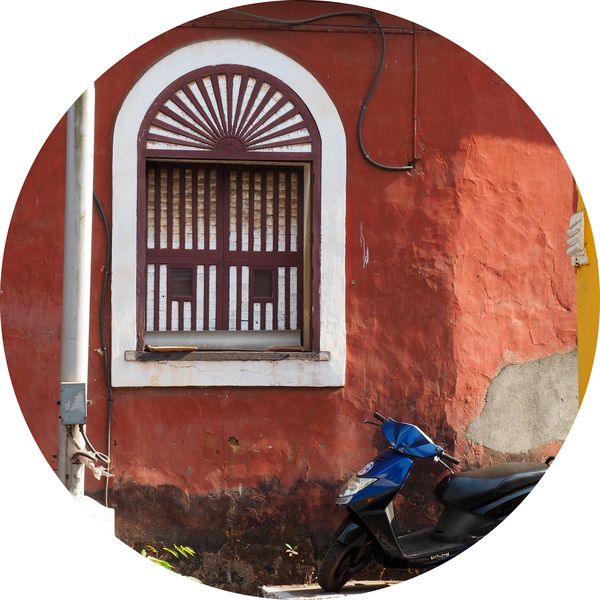
Traditional houses provide another essential theme. Often painted in vivid colours and equipped with balconies, verandas, decorative windows and sloping roofs, they represent a distinctive domestic architecture. These homes adapted European influences to local materials, heavy monsoon rains, humid heat and Indian family life.
From Portuguese Conquest to Modern India
The Portuguese established a lasting presence in Goa in the early sixteenth century. Thanks to its strategic maritime position, the territory became a major hub linking Europe, East Africa, the Persian Gulf and wider Asia. Goa was frequently described as the Portuguese capital of the East.
During this period, religious, military and administrative institutions were developed on a large scale. Missionaries, merchants, soldiers, craftsmen and local populations all played roles in transforming the region. Catholicism gained strong influence, while Hindu traditions remained present elsewhere or re-emerged more visibly in later periods.
The gradual decline of Portuguese power changed Goa’s regional importance but did not erase its special identity. In the twentieth century, the territory was incorporated into the Indian Union after the end of Portuguese rule. Today, Goa combines historical depth, active local life and strong tourism appeal.
Architecturally, this long history can be read in the coexistence of convents, churches, coastal forts, colonial houses, traditional settlements and contemporary development. Few places in India preserve such a dense concentration of Iberian-era remains.
What the Videos on This Site Make Especially Clear
A video created largely from carefully selected and animated photographs is particularly well suited to Goa. Slow movement across still images allows viewers to study church façades, sculpted pediments, stairways and interior proportions that can be difficult to appreciate during a rapid visit.
For historic houses, this method highlights colours, balconies, verandas and the relationship between architecture and tropical vegetation. The eye can follow the line of a street, the depth of a porch or the balance between built form and surrounding gardens.
At the Braganza Palace, animated images help convey the scale of the residence, the sequence of rooms and the social role once associated with such a building.
The progression from palace to churches to domestic streetscapes also creates a coherent understanding of Goa. Religious monuments, elite residences and ordinary houses become connected expressions of the same historical world.
A Distinctive Region of Many Influences
Goa brings together forms of heritage rarely combined so intensely in one place: long Portuguese presence, monumental Christianity, enduring local traditions and a tropical coastal setting. This video offers a clear and balanced introduction to that diversity. For those wishing to continue the exploration, the detailed pages devoted to churches, forts and historic residences provide valuable additional insight into one of India’s most distinctive cultural regions.


Audio Commentary Transcript
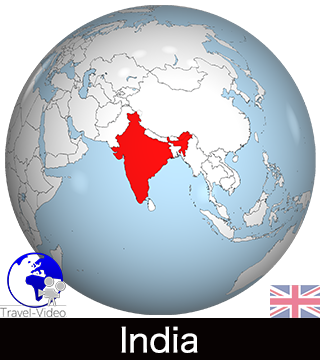
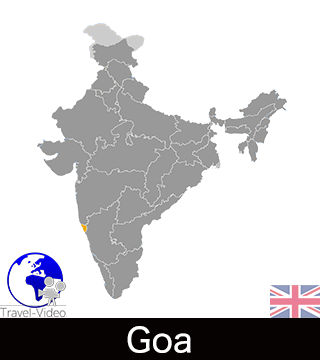
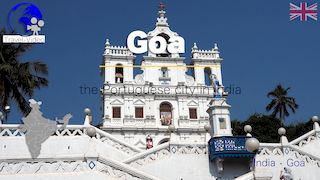
Goa is a state in India, strongly marked by the Portuguese colonizer. It is a small piece of Portugal in India with its typical houses and churches. Goa is the smallest of the states in India. Goa was a Portuguese possession and the Lisbon heritage is visible throughout the predominantly Catholic city. Many churches in the purest Portuguese style adorn this Indian city.
The Bragança family house was built over 350 years ago.
It is currently shared by two branches of the family. The east wing is occupied by the Pereira-Braganza while the west wing houses the Menezes-Bragança.
The following images were taken in the western part, and the guide is a descendant of Luis de Menezes-Bragança, a great journalist who played a very active role in the process of Goa's independence.
Music:
- - YouTube video library - Big Screen
- - YouTube video library - Carol of the Bells
- - YouTube video library - Evil March, (© Evil March by Kevin MacLeod is licensed under a Creative Commons Attribution 4.0 license. https://creativecommons.org/licenses/by/4.0/
- Source: http://incompetech.com/music/royalty-free/index.html?isrc=USUAN1100727
- Artist: http://incompetech.com/)
- - YouTube video library - People Watching
Disclaimer: Despite its appropriateness, copyright issues prevent the use of indian traditional music in "Goa • A piece of Portugal in India", hence the use of royalty-free music. Despite our careful selection, some might regret this decision, which is necessary to avoid potential lawsuits. Although difficult, this decision is the only viable solution.