

 Français (France)
  Nederlands (nl-NL)
 The Church of the Holy Spirit is a Catholic place of worship located in Goa, in the Indian state of Goa. It ranks among the notable historic churches of the region and continues to serve an active religious community. Regular liturgical services and Christian celebrations are held there throughout the year. The church reflects the long-standing presence of Catholicism in Goa and the broader historical influence of European traditions in the area. Today, it functions both as a parish church and as a cultural landmark, forming part of Goa’s religious and historical heritage.
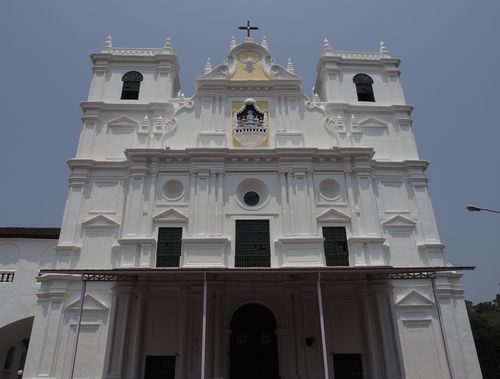
Goa • Church of the Holy Spiri
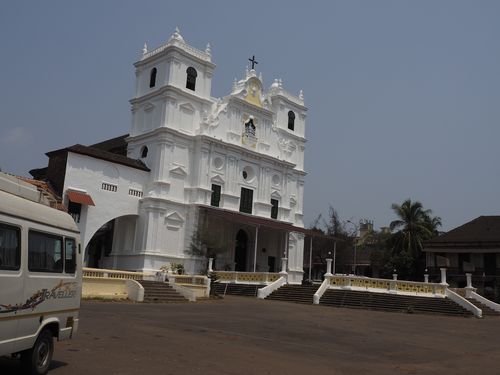
Goa • Church of the Holy Spiri

Goa • Church of the Holy Spiri
Monument profile
Church of the Holy Spiri
Monument category: Church
Monument family: Church, cathedral, basilica, chapel
Monument genre: Religious
Cultural heritage: Christian
Geographic location: Goa • Goa • India
Construction period: 16th century AD
This monument in Goa is inscribed on the UNESCO World Heritage List since 1986 and is part of the serial property "Churches and Convents of Goa".See the UNESCO monuments featured on this site
• Links to •
• List of videos about Old Goa City, Panaji, Chandor, Candolim on this site •
Goa • A piece of Portugal in India
History of the Church of the Holy Spirit, Goa
The Church of the Holy Spirit, located in Margao in the Indian state of Goa, stands as one of the principal parish churches of southern Goa and as a significant monument of the Portuguese colonial period. Its historical development reflects the consolidation of Portuguese authority, the institutional expansion of Catholicism in Asia, and the broader transformations that shaped Goa from the sixteenth century to the present. The church’s evolution is closely tied to missionary policies, social restructuring, and shifting political sovereignties.
Political and Social Context of Construction
Following the Portuguese conquest of Goa in 1510 under Afonso de Albuquerque, the colonial administration undertook a systematic effort to organize both civil governance and ecclesiastical structures. The region of Salcete, where Margao is situated, became a focal point of missionary activity. By the mid-sixteenth century, the establishment of parishes formed a central strategy for consolidating Portuguese authority and embedding Catholic doctrine within local communities.
The Church of the Holy Spirit originated in this environment of active evangelization. Its construction responded to the need for a substantial parish church capable of serving a growing Christian population. The Portuguese Crown, operating under the Padroado system that granted it patronage rights over ecclesiastical appointments in overseas territories, sought to demonstrate both religious commitment and imperial legitimacy through monumental church building.
The political stakes were significant. Margao emerged as an administrative and economic center in Salcete, and the presence of a large and architecturally imposing church signaled stability and permanence. The church functioned not only as a religious institution but also as a locus of community governance, education, and social organization. It played a role in integrating local elites into colonial society, reinforcing alliances between the Portuguese authorities and converted families.
The construction of a major parish church in Margao also reflected broader strategic concerns. Portuguese control in the Indian Ocean faced challenges from regional powers and, later, from rival European states. Monumental religious architecture contributed to the projection of imperial confidence in a contested maritime environment.
Major Historical Events and Institutional Changes
The early parish structures in Margao date to the sixteenth century. However, these initial buildings were vulnerable to fire and climatic degradation. Repeated fires in the late sixteenth and early seventeenth centuries led to successive reconstructions. The present structure largely reflects rebuilding efforts undertaken in the seventeenth century, when more durable materials and expanded spatial configurations were adopted.
Although Margao was not the site of major sieges comparable to those affecting other colonial centers, the broader insecurity of the seventeenth century, including Dutch naval aggression in the Indian Ocean, affected economic resources available for church maintenance. Despite these pressures, the parish retained its importance within the ecclesiastical hierarchy of Goa.
The suppression of the Jesuits in Portuguese territories in 1759 marked a turning point in colonial religious administration. Although the Church of the Holy Spirit was not exclusively a Jesuit foundation, the restructuring of clerical authority had indirect consequences for parish organization. Control passed increasingly to secular clergy under tighter Crown oversight, reflecting Enlightenment-era reforms within the Portuguese Empire.
The nineteenth century brought further institutional change. Liberal reforms in Portugal led to the secularization of various religious properties and to the redefinition of church-state relations. Nevertheless, the Church of the Holy Spirit continued to function as an active parish church. Its continuity demonstrates the resilience of local Catholic communities even during periods of administrative transformation.
In 1961, the annexation of Goa by the Republic of India ended Portuguese rule. The political transition required adaptation to Indian legal frameworks governing religious property. However, liturgical use remained uninterrupted, and the church continued to serve the local Catholic population within a secular, pluralistic state.
Global Context of Construction
The construction and expansion of the Church of the Holy Spirit must be viewed within the broader context of global Catholic expansion during the sixteenth and seventeenth centuries. Across Spanish America, Africa, and Asia, monumental parish and cathedral churches were erected as visible markers of missionary success and imperial presence. These projects were influenced by the decrees of the Council of Trent, which emphasized doctrinal clarity, sacramental centrality, and the didactic role of sacred space.
Goa functioned as a principal missionary hub in Asia. Clergy trained in the region departed for Japan, Southeast Asia, and China. Parish churches such as the Church of the Holy Spirit formed the infrastructural backbone of this missionary network. Their construction paralleled contemporary developments in Rome, Lisbon, and Mexico City, illustrating the integration of Goa into a transcontinental ecclesiastical system.
Transformations and Urban Evolution
Over the centuries, the Church of the Holy Spirit underwent multiple architectural modifications. Rebuilding campaigns following fires introduced more robust masonry and expanded interior volumes. Later alterations included the enhancement of altars and the addition of decorative elements reflecting evolving liturgical aesthetics.
The urban environment surrounding the church also changed substantially. Margao evolved from a semi-rural parish center into a significant urban node within Goa. As the city expanded, the church became a focal landmark within a denser urban fabric. Its forecourt and surrounding streets were gradually integrated into municipal planning, reinforcing its central civic role.
In the twentieth century, conservation efforts intensified. Structural stabilization, façade restoration, and maintenance of interior artworks became priorities. These initiatives aimed to balance continued religious use with the preservation of historical integrity.
Contemporary Role and Cultural Significance
Today, the Church of the Holy Spirit remains one of the most important parish churches in southern Goa. It hosts regular liturgical services, as well as major celebrations during Holy Week and the annual parish feast. These events draw participants from across the region, reinforcing the church’s social and spiritual significance.
The building also plays a symbolic role in Goan identity. Catholic communities in Goa trace their historical roots to the colonial period, and parish churches serve as repositories of collective memory. In contemporary India, where religious diversity is constitutionally protected, the church stands as a reminder of the region’s layered cultural heritage.
Beyond its strictly religious function, the church contributes to local tourism and heritage awareness. Although not included within the UNESCO-listed ensemble of Churches and Convents of Old Goa, it is widely recognized as a major historical monument within Margao.
Conservation Status and Modern Challenges
The preservation of the Church of the Holy Spirit faces several challenges. Environmental factors such as humidity, monsoon rainfall, and biological growth affect structural materials. Urbanization introduces additional pressures, including traffic vibrations and pollution. Increased visitor numbers during major religious festivals contribute to wear on floors and interior finishes.
Restoration policies implemented by ecclesiastical authorities, often in coordination with state heritage bodies, focus on structural reinforcement and the conservation of wooden altars and decorative elements. Traditional lime-based plasters and compatible repair materials are used to maintain architectural authenticity.
While the church does not benefit from UNESCO World Heritage designation, it remains subject to heritage protection at the regional level. Its continued conservation depends on sustained funding, technical expertise, and community engagement.
Conclusion
The history of the Church of the Holy Spirit in Margao encapsulates the political, religious, and social transformations of Goa over more than four centuries. Constructed within the framework of Portuguese imperial expansion and Catholic reform, it endured institutional upheaval, colonial decline, and postcolonial transition. Today, it functions simultaneously as an active parish church, a historical monument, and a symbol of Goan cultural continuity. Its trajectory reflects the complex interplay between architecture, empire, and community in the Indian Ocean world.
Architectural Analysis of the Church of the Holy Spirit, Goa
The Church of the Holy Spirit in Margao, Goa, represents one of the most substantial parish churches constructed during the Portuguese period in India. Its present form, largely shaped in the seventeenth century with later modifications, illustrates the translation of Iberian ecclesiastical architecture into a tropical colonial environment. The building combines structural pragmatism, liturgical clarity, and ornamental refinement, reflecting both European architectural theory and regional adaptation.
Technological and Architectural Innovations
The church adopts a longitudinal basilican plan characterized by a broad central nave flanked by lateral aisles and side chapels. This configuration aligns with post-Tridentine architectural principles that emphasized visibility of the altar, congregational unity, and acoustical efficiency. The expansive nave ensures uninterrupted sightlines toward the sanctuary, accommodating large congregations during major liturgical celebrations.
Structurally, the building relies on thick load-bearing masonry walls rather than external buttressing systems. The use of heavy masonry was a pragmatic solution suited to the technical capabilities and environmental conditions of Goa. Semi-circular arches span the nave and chapels, transferring loads laterally into the massive walls. Barrel vault elements and reinforced roof trusses distribute structural weight evenly, minimizing stress concentrations.
Climatic adaptation is evident in the building’s vertical proportions and fenestration strategy. High clerestory openings permit the escape of warm air, while large lateral windows facilitate cross-ventilation. The interior volume functions as a thermal buffer, moderating humidity and temperature fluctuations. The elevated plinth protects the structure from monsoon runoff and seasonal flooding.
The symmetrical twin-tower façade introduces vertical counterweight to the central mass. Beyond their symbolic significance, the towers contribute structural stability by anchoring the façade and housing the bell chambers within reinforced masonry shafts.
Materials and Construction Techniques
Laterite constitutes the primary construction material. This locally quarried stone, workable when freshly extracted and hardened through oxidation, allowed efficient shaping and assembly. Its durability under tropical conditions made it a logical choice for large-scale ecclesiastical architecture.
Harder stone such as basalt or granite was used for structural accents, including door and window surrounds, steps, and foundation reinforcements. Lime mortar provided flexibility and moisture permeability, reducing the risk of cracking in humid conditions. The exterior surfaces were typically finished with lime plaster and whitewash, serving both protective and aesthetic functions.
Interior fittings rely heavily on timber. The altarpieces, choir elements, and ornamental panels were crafted in wood and finished with gilding or polychromy. Joinery techniques employed mortise-and-tenon systems and wooden dowels capable of accommodating slight dimensional changes caused by humidity. The assembly of imported elements, particularly decorative components influenced by European workshops, required precise coordination between maritime trade routes and local artisans.
Construction likely occurred in phases, reflecting resource allocation and the availability of skilled labor. The scale and coherence of the final structure indicate centralized planning and familiarity with Iberian architectural conventions.
Stylistic Influences and Artistic Synthesis
The façade demonstrates Baroque compositional principles filtered through Portuguese colonial practice. A strong central axis frames the main entrance, while horizontal cornices divide the elevation into balanced tiers. Pilasters and decorative moldings articulate the surface without excessive projection.
The twin towers, capped with modestly ornamented belfries, contribute to the monument’s recognizable silhouette. The façade’s vertical articulation reinforces hierarchical emphasis on the central portal, symbolically guiding the faithful inward.
Internally, the decorative program intensifies. The principal retable behind the high altar rises in multiple registers, structured by columns and niches containing statuary. Twisted columns, gilded surfaces, and layered iconography echo Iberian Baroque traditions. However, ornamental motifs display subtle regional influences, including floral carvings and detailing executed by Goan craftsmen.
The church thus embodies a hybrid architectural language. Its structural grammar is European, yet the craftsmanship reflects local artistic sensibilities. This synthesis is particularly evident in wood carving techniques and surface ornamentation.
Spatial Organization and Structural Characteristics
The church measures approximately 55 to 60 meters in length, with a nave width sufficient to accommodate significant congregations. The aisles are integrated within the main structural envelope rather than projecting externally, preserving compact external geometry.
The sanctuary is elevated above the nave floor, emphasizing liturgical hierarchy. Side chapels embedded within the thick walls allow devotional practice without fragmenting spatial continuity. Arches connecting the chapels to the nave maintain visual openness.
The ceiling structure, supported by robust trusses, ensures stability while allowing sufficient height for ventilation. The absence of a central dome distinguishes the building from certain European Baroque churches and reflects a preference for structural simplicity in colonial contexts.
The twin towers, reaching substantial height relative to the nave, house the bells essential to parish life. Their internal staircases provide vertical access and reinforce the structural envelope.
Distinctive Structural Features
Compared with contemporaneous churches in Old Goa, the Church of the Holy Spirit stands out for its pronounced façade symmetry and the integration of urban presence within Margao’s townscape. The use of thick masonry rather than complex ribbed vaulting demonstrates adaptation to available resources and climatic realities.
The building’s raised foundation and integrated drainage channels represent practical responses to heavy seasonal rainfall. The simplicity of structural lines minimizes weak transitional zones, enhancing long-term resilience.
Dimensions and Notable Characteristics
The façade’s height and twin-tower composition grant the church a commanding presence in Margao. The scale of its altars ranks among the most significant parish installations in southern Goa. The expansive nave was designed to accommodate large gatherings during feast days, reflecting the parish’s demographic importance.
Local accounts recount earlier wooden structures destroyed by fire, prompting reconstruction in more durable materials. These episodes influenced architectural decisions favoring masonry and lime plaster finishes. Such reconstructions contributed to stylistic layering visible in certain interior elements.
Urban Context and Environmental Adaptation
As Margao developed into a major urban center in southern Goa, the church assumed a central civic role. The forecourt functions as a gathering space during religious processions and festivals. Its orientation aligns with principal streets, reinforcing its urban prominence.
Environmental pressures, including humidity and biological growth, have shaped maintenance strategies. Ventilation systems inherent in the original design remain crucial to preserving wooden retables and painted surfaces.
Conservation and Heritage Considerations
Although not included within the UNESCO-listed ensemble of Churches and Convents of Old Goa, the Church of the Holy Spirit is recognized as a significant heritage monument at the regional level. Conservation efforts focus on stabilizing masonry, restoring lime plaster surfaces, and preserving wooden altarpieces.
Urban expansion introduces challenges such as vibration from traffic and atmospheric pollution. Restoration campaigns aim to retain historical authenticity while reinforcing structural integrity. Preventive conservation measures address moisture infiltration and biological decay.
Architectural Significance
The Church of the Holy Spirit exemplifies the transplantation of Iberian ecclesiastical architecture into a tropical colonial setting. Its robust masonry construction, climate-responsive design, and integrated ornamental program demonstrate a pragmatic yet expressive architectural approach.
Through its symmetrical façade, expansive interior, and hybrid decorative vocabulary, the church articulates both imperial ambition and local craftsmanship. It remains a key architectural landmark in Goa, illustrating how European forms were adapted, reinterpreted, and sustained within the Indian Ocean world.