

 Français (France)
  Nederlands (nl-NL)
 The Bragança Palace, located in Goa in the Indian state of Goa, is a historic residence linked to the former Luso-Indian nobility. It reflects the Portuguese presence in the region and the role played by local elites within the colonial administrative framework. The palace is recognized for its heritage value and for preserving archives, furnishings, and collections that document several centuries of regional history. Today, it represents an important component of Goa’s cultural legacy and illustrates the continuity of aristocratic traditions in a postcolonial context.
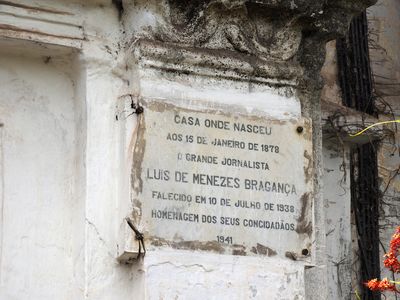
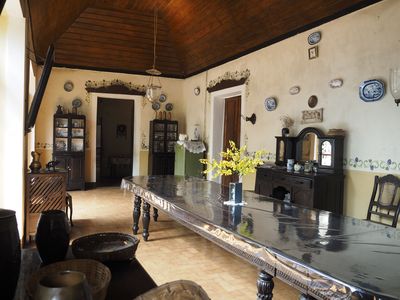
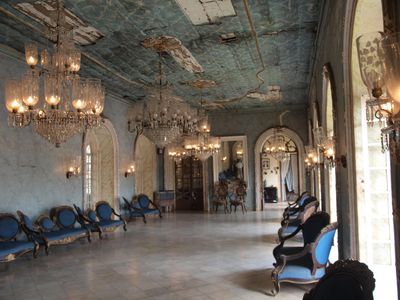
Monument profile
Bragança Palace
Monument category: Palace
Monument family: Palace and Annexes
Monument genre: Residential
Geographic location: Goa • Goa • India
Construction period: 17th century AD
• Links to •
• List of videos about Old Goa City, Panaji, Chandor, Candolim on this site •
Goa • A piece of Portugal in India
History of the Bragança Palace, Goa
The Bragança Palace, located in Chandor in the Indian state of Goa, stands as one of the most significant surviving aristocratic residences of the former Portuguese territories in Asia. Associated with the Bragança Pereira family, a prominent Luso-Indian lineage, the palace reflects the social, political, and cultural transformations that shaped Goa from the sixteenth century to the present. Its history illustrates the emergence of a local Catholic elite integrated into the Portuguese imperial framework while maintaining regional roots and influence.
Political and Social Context of Construction
Following the Portuguese conquest of Goa in 1510, the region became the capital of the Estado da Índia, the administrative center of Portugal’s Asian empire. To consolidate control over the territory, the Portuguese crown relied on alliances with local elites, particularly families who converted to Christianity and entered colonial service. These families often retained landholdings and social authority, becoming intermediaries between the colonial administration and the local population.
The Bragança family rose to prominence within this context. Over successive generations, its members occupied administrative, judicial, and political positions under Portuguese rule. The construction and expansion of the palace were closely linked to this ascent. As a residence, the palace functioned not only as a domestic space but also as a symbol of rank, loyalty to the crown, and participation in imperial governance.
The building of such a large and elaborate residence responded to social imperatives characteristic of early modern aristocratic culture. Display, hospitality, and the maintenance of patronage networks were essential components of elite status. In a society marked by religious diversity and evolving hierarchies, the palace embodied the consolidation of a Christianized Luso-Indian nobility within a colonial framework.
Rivalries among noble families and competition for royal favor shaped the social landscape of Goa. The palace’s development can therefore be understood as part of a broader strategy of representation and influence, reinforcing the family’s authority in a regional environment where lineage, service, and property were closely intertwined.
Major Historical Developments
During the seventeenth and eighteenth centuries, Goa experienced external threats from rival European powers, particularly the Dutch. Although Chandor itself was not the principal theater of military confrontation, the broader instability of maritime trade and colonial competition affected elite families whose fortunes were tied to imperial administration.
Political shifts in Portugal also had repercussions in Goa. The Iberian Union (1580–1640), which placed Portugal under Spanish rule, and the subsequent restoration of Portuguese independence altered imperial priorities and administrative practices. Families such as the Braganças adapted to these changes, maintaining their local influence while navigating shifts in metropolitan authority.
In the nineteenth century, liberal reforms in Portugal weakened traditional aristocratic privileges. Administrative restructuring and economic transformation affected Goa’s elite classes. Nevertheless, the Bragança Palace remained a center of family life and social interaction. It served as a venue for gatherings, negotiations, and ceremonial functions that reinforced the family’s prestige.
The integration of Goa into the Indian Union in 1961 marked a decisive political transformation. Portuguese sovereignty ended, and the region entered a new national framework. The palace, privately owned, retained its residential character but gradually acquired an additional role as a site of historical memory and heritage.
Global Context
The development of the Bragança Palace occurred within the broader context of European overseas expansion. Across the Portuguese, Spanish, Dutch, and British empires, colonial elites established residences that mirrored metropolitan models while adapting to local conditions. These houses symbolized continuity with Europe and affirmed social hierarchies in colonial societies.
The palace thus forms part of a global pattern of creole aristocracies emerging in early modern empires. Comparable to haciendas in Spanish America or manor houses in British colonies, it represents the localization of European aristocratic culture in an Asian setting. Its existence reflects the circulation of architectural forms, social customs, and administrative practices across continents.
Transformations Over Time
The palace did not emerge as a single unified structure. It expanded over generations, with distinct wings reflecting successive phases of construction. Each addition responded to demographic growth within the family and to changing expectations regarding representation and comfort.
Interior spaces were adapted to house imported furnishings, portraits, religious objects, and archival materials. Over time, parts of the palace assumed quasi-institutional functions, preserving documents and artifacts that testify to Goa’s colonial past.
Periods of economic decline or political uncertainty affected maintenance and use. Nonetheless, the continuity of family ownership ensured the preservation of the core structure. In the twentieth century, selective opening to visitors transformed parts of the residence into spaces of interpretation and guided exploration.
Urban development around Chandor altered the palace’s immediate environment. While it remains a dominant feature within its locality, shifts in infrastructure and tourism patterns have influenced accessibility and public perception.
Contemporary Role and Cultural Significance
Today, the Bragança Palace is recognized as a major example of aristocratic heritage in Goa. It functions simultaneously as a private residence and a cultural landmark. Visitors encounter collections of furniture, documents, and artworks that provide insight into the social world of the Luso-Indian elite.
The palace contributes to Goa’s plural identity, shaped by centuries of interaction between European and Indian traditions. Unlike ecclesiastical monuments, which often dominate historical narratives of the region, the palace highlights the domestic and political dimensions of colonial society.
Its influence extends to local memory and identity formation. The continued association of the site with a historical lineage underscores themes of continuity and adaptation across colonial and postcolonial periods.
Conservation and Preservation Challenges
The tropical climate of Goa presents ongoing challenges for preservation. High humidity, seasonal monsoon rains, and biological growth threaten masonry, timber, and decorative finishes. Regular maintenance and structural consolidation are essential to safeguard the building.
Tourism introduces additional pressures. While visitor interest enhances awareness and appreciation, it also requires management strategies that balance access with protection. The absence of individual UNESCO designation does not diminish the palace’s heritage value; rather, it situates the building within a broader cultural landscape that includes recognized colonial monuments.
Preservation policies depend largely on private stewardship, occasionally supplemented by cooperation with heritage institutions. Efforts focus on maintaining structural integrity, conserving collections, and preventing deterioration linked to environmental factors.
Conclusion
The Bragança Palace stands as a testament to the formation and endurance of a Luso-Indian aristocratic elite within the Portuguese empire. Constructed and expanded in response to political opportunity, social ambition, and imperial integration, it has survived wars, reforms, and regime changes. Today, it embodies a layered historical narrative that connects early modern colonial governance with contemporary cultural heritage in Goa.
Architecture of the Bragança Palace, Goa
The Bragança Palace in Chandor, Goa, represents one of the most extensive surviving examples of aristocratic domestic architecture in former Portuguese India. Developed over several generations by a prominent Luso-Indian family, the complex embodies the adaptation of Iberian residential models to the climatic, material, and social conditions of the Konkan coast. Its architectural configuration reflects a synthesis of European representational forms and regional construction practices, resulting in a structure that is both monumental in scale and pragmatically suited to its environment.
Architectural Conception and Technological Framework
The palace is not a single compact structure but an articulated ensemble composed of multiple wings arranged along longitudinal axes. The plan evolved incrementally, producing a complex spatial organization that integrates reception halls, private apartments, service areas, and transitional galleries. This additive growth strategy demonstrates a flexible architectural logic, allowing structural expansion without compromising coherence.
Load-bearing masonry walls form the structural core. Their substantial thickness ensures stability across extended façades and large interior spans. Regular bay divisions distribute loads evenly, reducing stress concentrations and enhancing durability. The use of repetitive structural modules reflects a rational approach to large-scale domestic construction.
A key technological adaptation lies in the system of covered verandas and galleries that line significant portions of the façades. These semi-open corridors serve as environmental buffers, shading interior walls from direct solar radiation and facilitating air movement. In the humid tropical climate of Goa, such transitional spaces are essential to thermal regulation and long-term structural preservation.
Materials and Construction Techniques
Laterite stone constitutes the principal building material. Readily available in Goa, laterite can be cut easily when quarried and hardens upon exposure to air. Its porous yet resilient character makes it suitable for thick masonry walls capable of withstanding monsoon conditions. The structural mass provided by laterite contributes to thermal inertia, moderating interior temperatures.
Exterior surfaces are typically coated with lime plaster. Lime-based finishes offer vapor permeability, enabling moisture evaporation and reducing the risk of internal damp accumulation. The white or pale coloration of limewash further reflects sunlight, decreasing surface heat absorption.
Timber plays a central role in the construction of roof trusses, floor beams, staircases, and window frames. The roofing system consists of pitched wooden frameworks covered with terracotta tiles. The pronounced slope ensures rapid rainwater runoff during heavy seasonal precipitation. This combination of masonry mass and timber flexibility results in a structurally balanced system capable of accommodating minor movement without significant cracking.
Floors may incorporate locally produced tiles or imported ceramic elements, reflecting commercial links between Goa and Europe. Iron fittings and decorative metalwork contribute both functional and aesthetic refinement.
Climatic Adaptation and Structural Stability
The architectural configuration demonstrates a sophisticated response to environmental conditions. High ceilings in reception rooms allow warm air to rise above occupied zones. Large, symmetrically aligned windows encourage cross-ventilation, while wooden shutters permit controlled airflow without excessive exposure to rain.
The palace stands slightly elevated above surrounding ground level, reducing vulnerability to water ingress. Drainage channels integrated into the site direct runoff away from the foundations. This elevated plinth system represents a pragmatic solution to monsoon-related risks.
Structural continuity between successive wings was achieved through careful alignment of load-bearing walls and consistent material application. The incremental expansion of the complex required technical precision to ensure that new sections integrated seamlessly with existing fabric.
Stylistic Influences and Artistic Expression
The façades display a restrained symmetry characteristic of Portuguese late Renaissance and early Baroque domestic architecture. Regularly spaced windows, often framed by modest moldings, create rhythmic elevation patterns. Balconies with balustrades and projecting elements introduce vertical articulation without excessive ornamentation.
European stylistic references are evident in the compositional logic, yet they are moderated by climatic adaptation. Wide verandas, deep eaves, and extended rooflines distinguish the palace from metropolitan Portuguese residences. This hybridization exemplifies the transformation of European aristocratic models within an Indian context.
Interior decoration reflects a convergence of imported and local traditions. Large reception halls contain European-style furniture, chandeliers, and portraits. Decorative motifs may combine Iberian baroque detailing with regional craftsmanship visible in carved wood elements. The aesthetic program emphasizes dignity and lineage rather than exuberant display.
Spatial Organization and Functional Hierarchy
The palace comprises two principal wings historically associated with different branches of the family. Each wing contains a sequence of formal reception rooms arranged en enfilade, enabling processional movement and hierarchical spatial experience. Private chambers are situated beyond or above the principal halls, ensuring separation between public and domestic domains.
Wide corridors and transitional galleries provide circulation routes protected from climatic extremes. Service spaces, including kitchens and storage rooms, are positioned to maintain functional efficiency while remaining structurally integrated with the main body.
Staircases serve as architectural focal points, often constructed in timber or stone with carefully proportioned steps and balustrades. Their placement reinforces axial organization and vertical connectivity between floors.
Dimensions and Notable Features
The Bragança Palace is frequently cited as one of the largest private residences in Goa. Its extensive floor area encompasses numerous rooms distributed across multiple levels. The principal reception hall is particularly notable for its generous dimensions, designed to accommodate ceremonial gatherings and official visits.
Long verandas extending along the façade represent a distinctive feature. Their repetitive columnar supports create visual continuity and reinforce structural rhythm. Ceilings in major rooms may feature coffered or paneled woodwork, enhancing acoustic and visual qualities.
Among the remarkable aspects of the complex is the preservation of historical furnishings and archival materials within their original spatial context. This continuity strengthens the architectural integrity of the ensemble by maintaining functional authenticity.
Urban Integration and Landscape Context
The palace occupies a prominent position within Chandor’s built fabric. Its orientation considers solar exposure and prevailing winds, optimizing environmental comfort. Surrounding gardens and open forecourts contribute to ventilation and spatial framing.
The complex is set back from adjacent structures, reinforcing its hierarchical status. This spatial autonomy underscores its historical role as the residence of a leading family within the regional social order.
Heritage Recognition and Conservation
Although not individually inscribed on the UNESCO World Heritage List, the Bragança Palace forms part of Goa’s broader colonial heritage landscape. Its architectural significance lies in its scale, integrity, and hybrid character, representing domestic aristocratic architecture rather than ecclesiastical monumentality.
Conservation challenges include moisture infiltration, biological growth on laterite surfaces, and the aging of timber elements. Preservation efforts focus on maintaining lime plaster finishes, stabilizing structural components, and safeguarding interior collections.
Tourism introduces additional pressures, necessitating controlled access and careful management of visitor circulation. The balance between continued residential use and heritage presentation requires ongoing stewardship.
Architectural Significance
The Bragança Palace exemplifies the translation of European aristocratic domestic architecture into a tropical colonial environment. Its structural rationality, climatic responsiveness, and stylistic moderation demonstrate technical competence and cultural synthesis. The ensemble stands as a rare surviving example of large-scale Luso-Indian residential architecture, embodying a layered architectural narrative shaped by adaptation, continuity, and social representation.