

 Français (France)
  Nederlands (nl-NL)
 The Churches of Goa, located in the historic city of Old Goa in the state of Goa, India, stand as remarkable examples of architectural and religious heritage. Built primarily in the 16th and 17th centuries, these churches reflect the Portuguese influence that shaped the region for centuries. Notable among them are the Basilica of Bom Jesus, famous for housing the relics of Saint Francis Xavier, and St. Cajetan’s Church, inspired by St. Peter's Basilica in Rome. This complex of churches and convents, listed as a UNESCO World Heritage site, draws numerous visitors and pilgrims, celebrating both Goa's Christian history and its rich multicultural identity.
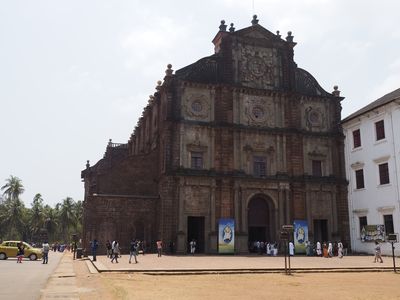
Old Goa City • Churches of Goa: Church of the Child Jesus
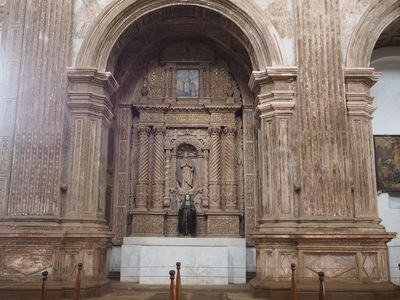
Old Goa City • Churches of Goa: Saint Francis of Assisi Church
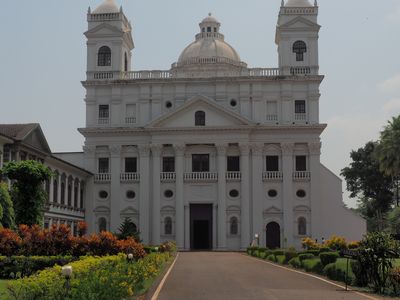
Old Goa City • Churches of Goa: Saint Catherine Cathedral
Monument profile
Churches of Goa
Monument categories: Church, Cathedral, Basilica
Monument family: Church, cathedral, basilica, chapel
Monument genre: Religious
Cultural heritage: Christian
Geographic location: Goa • Goa • India
Construction period: 16th century AD - 18th century AD
This monument in Goa is inscribed on the UNESCO World Heritage List since 1986 and is part of the serial property "Churches and Convents of Goa".See the UNESCO monuments featured on this site
• Links to •
• List of videos about Old Goa City, Panaji, Chandor, Candolim on this site •
Goa • A piece of Portugal in India
• References •
UNESCO: Churches and Convents of Goa
The Churches of Goa: Political Motivations, Historical Events, and Cultural Legacy
Political and Social Motivations Behind Their Construction
The Churches of Goa, built in Old Goa during the 16th and 17th centuries, were more than just religious structures; they were powerful symbols of Portuguese dominance and influence. As the Portuguese established their colony in Goa in 1510, they saw it as both a strategic maritime outpost and a fertile ground for spreading Christianity in Asia. Constructing these grand churches was central to their political agenda: it reinforced their colonial authority, served as a public display of power, and promoted Catholicism in a region predominantly Hindu and Muslim. The Portuguese aimed to create a lasting cultural transformation, with the churches acting as pillars of faith and identity within the newly converted Christian communities.
Key Historical Events Shaping Old Goa’s Churches
Several significant historical events marked the Churches of Goa and contributed to shaping the region’s political and social landscape. The arrival of Jesuit missionaries, particularly Saint Francis Xavier, in the early 16th century was pivotal. Saint Francis Xavier’s missionary work and the establishment of religious orders fostered a thriving Christian community. The Basilica of Bom Jesus, completed in 1605, became renowned as the resting place of Saint Francis Xavier, attracting countless pilgrims and establishing Old Goa as a prominent religious center.
Political changes over time also impacted Goa’s churches. By the 18th century, Portuguese power in India began to decline under British influence, with Goa facing reduced resources for maintenance and upkeep. The eventual annexation of Goa by India in 1961 marked a significant political transition, reframing the churches from symbols of colonial power to cherished elements of cultural heritage. This shift changed the perception of the churches, emphasizing their historical and spiritual value rather than their colonial origins.
The Global Context: Comparative Influence in Other Regions
During this era, European colonial powers were constructing similar religious structures in their respective colonies. Spanish colonialists, for instance, built grand churches and missions across Latin America, notably in Peru and Mexico, with similar goals of asserting dominance and spreading Christianity. In the Philippines, the Spanish constructed the famous baroque churches that symbolized their long-lasting cultural impact. Meanwhile, British colonizers in India adopted different architectural expressions in their colonial cities, blending local styles with Gothic and Victorian influences, often to serve administrative or social purposes rather than strictly religious ones.
These architectural projects share a common theme: European powers used monumental religious structures to strengthen colonial rule and legitimize their presence. However, the Churches of Goa remain distinct for their unique Indo-Portuguese style and role as enduring religious landmarks in India.
Transformations Reflecting Changes in Power and Cultural Influences
Over the centuries, the Churches of Goa have undergone various transformations, reflecting shifts in power, cultural interactions, and conservation efforts. The architectural style itself embodies a blend of Portuguese baroque, Indian decorative patterns, and elements of Renaissance art. Modifications were made to adapt to the tropical climate, such as employing local laterite stone and lime plaster. Some churches expanded to accommodate growing congregations, while others fell into partial disrepair due to limited resources during periods of Portuguese decline.
The Basilica of Bom Jesus, for example, maintained its structure and form, while other churches received minor alterations over time. In the 20th century, the heritage recognition of these churches prompted major restoration efforts, preserving their Indo-Portuguese design and ensuring that the blend of European and local art remained visible.
Cultural Significance and UNESCO Recognition
The churches’ recognition as a UNESCO World Heritage site in 1986 solidified their status as cultural treasures. This designation not only highlights their architectural significance but also acknowledges the role of the churches as symbols of faith and historical resilience. UNESCO status has increased global awareness and encouraged better conservation practices, establishing the churches as must-visit cultural landmarks in India.
Modern Preservation Challenges
Despite international recognition, the Churches of Goa face ongoing preservation challenges. The region’s humid, tropical climate accelerates wear on stone and wood materials, while increasing urbanization threatens the site’s authenticity. The influx of tourists, while beneficial economically, creates additional strain on these centuries-old structures. Conservation teams must continually balance preservation with access, ensuring that the historic features of the churches are maintained while accommodating visitors.
Today, the Churches of Goa remain a testament to Goa’s layered history, embodying both the legacy of Portuguese rule and the region’s enduring spiritual heritage. Their ongoing preservation reflects a dedication to honoring this heritage while adapting to modern challenges.
Architectural Marvels of the Churches of Goa: Technological Advancements, Cultural Fusion, and Global Recognition
Technological Innovation and Building Materials of the Time
The Churches of Goa, built during the Portuguese colonial era in the 16th and 17th centuries, represent significant advancements in architectural techniques and materials for their time. One of the key achievements was the ability to construct monumental religious structures that could withstand the tropical climate of Goa. The primary materials used included locally sourced laterite stone, known for its durability and resistance to weather, and lime plaster, which protected the stone from erosion. Wooden roofs were crafted from indigenous timber, specifically designed to withstand heavy monsoon rains and high humidity.
The architectural techniques displayed in these churches, such as the use of vaulted ceilings and thick stone walls, reflected advanced European engineering adapted for a tropical environment. The churches’ grand facades and soaring spires, notably in the Basilica of Bom Jesus, showcased an impressive scale, achieved by skilled stonemasonry and sophisticated planning. The Portuguese builders introduced barrel vaults and large, rounded arches, which were rare in India at the time, symbolizing both the engineering prowess and cultural ambition of the era.
Unique Fusion of Local and Foreign Artistic Traditions
The architecture of Goa’s churches demonstrates a fascinating blend of Portuguese baroque and renaissance styles with Indian decorative elements, resulting in a unique Indo-Portuguese aesthetic. Ornamental details reflect local artistry, incorporating motifs such as lotus flowers, animal figures, and intricate geometric patterns alongside traditional Christian iconography. This fusion is particularly evident in the altars and pulpits, where floral carvings and gilded woodwork create a rich visual experience.
For instance, the Church of St. Cajetan, inspired by St. Peter’s Basilica in Rome, features Corinthian columns and a large central dome, symbolizing the Portuguese influence. However, the interior is adorned with Indian-inspired motifs, highlighting a cultural synthesis that makes the architecture distinctly Goan. This integration of styles is one of the reasons these churches are celebrated internationally as examples of architectural adaptation and cultural convergence.
Notable Structural Plans and Architectural Layouts
The churches in Old Goa often follow a cruciform layout, typical of European church designs, with a spacious nave and large transepts. The Basilica of Bom Jesus, in particular, is notable for its open layout and emphasis on vertical space, drawing the eye upward to the intricately carved ceiling. This design not only provided ventilation but also symbolized spiritual elevation, guiding worshippers’ attention toward the heavens.
The Church of St. Cajetan’s dome, a rare feature in Indian church architecture, was an engineering feat that made the building visible from a great distance, serving as a beacon for travelers and a landmark within Goa’s religious landscape. These elements of grandiose design and spatial planning were relatively advanced for their time and demonstrated the Portuguese commitment to building permanent and imposing religious monuments in their colonies.
Anecdotes and Statistics
One notable aspect of the Basilica of Bom Jesus is that it houses the relics of St. Francis Xavier, a revered Catholic missionary whose body has remained remarkably well-preserved over centuries. Every ten years, his body is displayed to the public, an event that attracts millions of visitors and pilgrims, underscoring the church’s spiritual and historical significance. Another interesting fact is that the Basilica was one of the first baroque buildings in India, marking a turning point in the architectural style of the region.
Global Recognition and UNESCO Heritage Status
The unique architecture and historical value of the Churches of Goa led to their designation as a UNESCO World Heritage site in 1986. This recognition has elevated the churches to international prominence, highlighting them as a bridge between European and Indian architectural traditions. UNESCO status has also enabled conservation efforts, with resources allocated to restoring and maintaining these historical buildings.
This international acknowledgment has transformed the churches into significant cultural landmarks, drawing scholars, tourists, and worshippers from around the world. The preservation efforts have not only safeguarded the architectural integrity of the churches but also bolstered local pride in this unique heritage, securing their place in global cultural memory.
Modern Preservation Challenges
Despite their heritage status, the churches face significant preservation challenges. Goa’s humid and rainy climate accelerates the deterioration of materials, especially the wood and lime plaster used in the original construction. The increasing influx of tourists places further strain on the infrastructure, necessitating careful management to preserve the churches’ historical integrity while allowing access to visitors.
Urban expansion and environmental changes also threaten the site’s surroundings, potentially impacting the historic landscape. Efforts to address these issues involve a balance of traditional restoration techniques with modern conservation science, ensuring that the churches can endure as cultural and religious symbols for future generations.
In sum, the Churches of Goa stand as monumental achievements of their time, reflecting technological innovation, cross-cultural exchange, and a dedication to faith. Through international recognition and ongoing preservation efforts, these architectural treasures continue to hold a unique place on the world stage, embodying the rich historical legacy of Goa.