

 Français (France)
  Nederlands (nl-NL)
 Our Lady of Grace, located in Goa in the state of Goa, is a Catholic religious building forming part of the region’s historical and cultural heritage. It reflects the legacy of Portuguese presence on India’s western coast and the lasting establishment of Christianity in this part of the subcontinent. The church continues to function as an active place of worship and serves as an important reference point for the local community. It also contributes to Goa’s broader cultural identity, where Christian traditions coexist with other religious expressions shaped by a complex historical background.
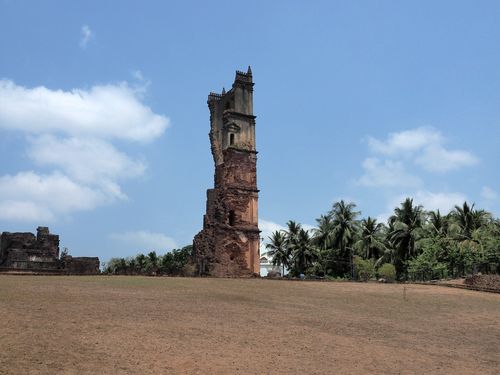
Goa • Our Lady of Grace
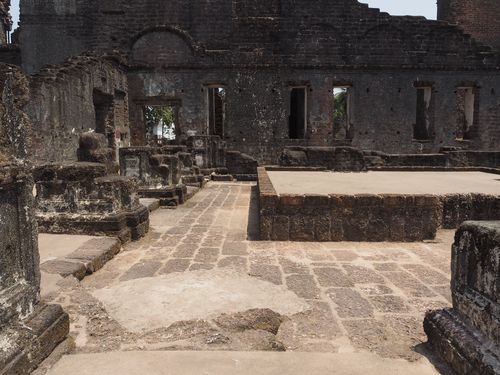
Goa • Our Lady of Grace
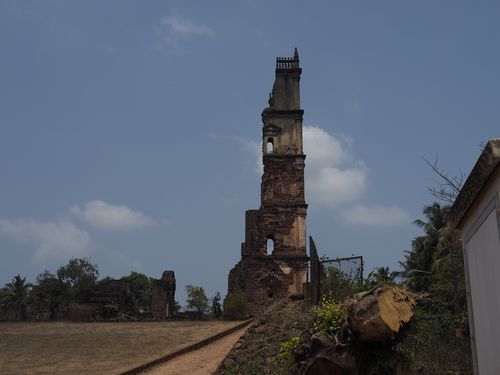
Goa • Our Lady of Grace
Monument profile
Our Lady of Grace
Monument category: Church
Monument family: Church, cathedral, basilica, chapel
Monument genre: Religious
Cultural heritage: Christian
Geographic location: Goa • Goa • India
Construction period: 16th century AD
This monument in Goa is inscribed on the UNESCO World Heritage List since 1986 and is part of the serial property "Churches and Convents of Goa".See the UNESCO monuments featured on this site
• Links to •
• List of videos about Old Goa City, Panaji, Chandor, Candolim on this site •
Goa • A piece of Portugal in India
History of Our Lady of Grace, Goa
The church of Our Lady of Grace, located in Goa in the present-day Indian state of Goa, forms part of the broader ecclesiastical landscape established under Portuguese rule from the sixteenth century onward. Its history reflects the political consolidation of Portuguese authority in western India, the missionary expansion of Catholicism, and the social transformations that shaped Goan society across several centuries. Although less monumental than some of the great basilicas of Old Goa, the church occupies a meaningful place within the regional network of parishes and religious institutions that structured colonial life.
Political and Social Context of Construction
The origins of Our Lady of Grace must be understood within the framework of Portuguese expansion following the conquest of Goa in 1510 by Afonso de Albuquerque. Goa quickly became the capital of the Estado da Índia, serving as an administrative, commercial, and ecclesiastical center for Portuguese interests in Asia. The establishment of parishes and churches was central to consolidating colonial authority and promoting Catholic orthodoxy.
The construction of parish churches such as Our Lady of Grace responded to several interrelated objectives. Religiously, they provided institutional structure for newly converted populations and for settlers of European origin. Politically, churches functioned as visible symbols of sovereignty, reinforcing the integration of the territory into the Portuguese imperial system. The Crown and ecclesiastical authorities shared an interest in embedding Catholic practice into the social fabric of Goa, thereby stabilizing colonial governance.
The building of such churches also reflected internal dynamics among religious orders and diocesan authorities. Goa became the seat of an archbishopric in 1557, elevating its ecclesiastical status within the global Catholic hierarchy. The expansion of parish infrastructure supported the ambitions of both royal and ecclesiastical institutions to demonstrate the vitality of Catholicism in Asia, particularly in the context of Protestant expansion in Europe and competition from other colonial powers.
Major Historical Developments
Over the centuries, Our Lady of Grace was shaped by the broader fortunes of Goa itself. In the seventeenth century, Goa faced external pressures from Dutch and other European rivals seeking to undermine Portuguese maritime dominance. Although parish churches were not primary military targets, the general climate of insecurity influenced urban planning and the consolidation of settlements.
The eighteenth century brought demographic decline in Old Goa due to epidemics, including malaria and cholera. As administrative functions shifted toward Panaji and other emerging centers, some ecclesiastical institutions experienced reduced patronage. Parish churches adapted to changing population patterns, maintaining local religious life even as the political heart of the colony evolved.
Under late Portuguese rule in the nineteenth and early twentieth centuries, the church continued to serve as a center of parish identity. Political transformations, including liberal reforms in Portugal and shifts in colonial administration, affected ecclesiastical governance but did not fundamentally alter the church’s religious function.
The annexation of Goa by India in 1961 marked a decisive political transition. Portuguese sovereignty ended, and Goa was incorporated into the Indian Union. Our Lady of Grace, like other Catholic institutions, entered a new legal and administrative context. While the colonial framework disappeared, the continuity of religious practice ensured the church’s survival as an active place of worship.
Global Context at the Time of Construction
The construction of Our Lady of Grace must also be situated within the global movement of Catholic expansion following the Council of Trent (1545–1563). The Counter-Reformation intensified efforts to strengthen parish structures, standardize liturgical practice, and reinforce clerical discipline. In overseas territories, the building of churches was integral to missionary strategy.
Simultaneously, European empires were consolidating networks of fortified ports, trading posts, and religious institutions across Asia, Africa, and the Americas. The erection of parish churches in colonial capitals mirrored similar developments in Spanish America and other Portuguese territories. These structures embodied the intertwined goals of evangelization and imperial consolidation.
Thus, Our Lady of Grace forms part of a transcontinental pattern of religious construction that accompanied early modern globalization. Its foundation reflects not only local devotional needs but also a wider ecclesiastical and imperial project.
Transformations Over Time
Throughout its history, the church underwent maintenance, repairs, and occasional modifications in response to environmental and demographic pressures. Goa’s tropical climate, characterized by heavy monsoon rains and high humidity, required periodic structural intervention. Such restorations were essential for preserving the integrity of masonry, roofing, and interior decoration.
Urban evolution also influenced the church’s surroundings. As Goa’s political and economic centers shifted, parish boundaries and community compositions changed. In some periods, churches assumed greater heritage significance, particularly as interest in colonial architecture grew during the twentieth century.
Following integration into India, heritage awareness increased. Conservation initiatives aimed to protect historic churches as part of Goa’s architectural legacy. While not every church received international designation, the broader recognition of Goan ecclesiastical monuments enhanced appreciation for sites such as Our Lady of Grace.
Contemporary Role and Cultural Significance
Today, Our Lady of Grace remains an active parish church serving the local Catholic community. Regular liturgical celebrations, Marian devotions, and parish festivals continue to define its role. Marian feasts in particular hold cultural importance in Goa, where Catholic traditions are interwoven with regional customs.
The church contributes to Goa’s identity as a region marked by religious plurality and historical layering. Catholic churches coexist with Hindu temples and Muslim mosques, reflecting centuries of interaction. Our Lady of Grace stands as a tangible reminder of this shared and sometimes contested past.
At the national level, the church participates in broader narratives concerning colonial heritage in India. Its preservation reflects evolving attitudes toward the architectural and religious legacies of European rule.
Conservation Status and Modern Challenges
The church benefits from protective measures under Indian heritage and ecclesiastical regulations, depending on its specific classification. Key challenges include structural deterioration caused by humidity, biological growth on masonry, and the cumulative effects of seasonal rainfall.
Urbanization and tourism may introduce additional pressures, particularly in areas of high visitor traffic. Conservation policies typically emphasize routine maintenance, careful restoration of damaged elements, and collaboration between church authorities and heritage bodies.
Although Our Lady of Grace may not be individually inscribed on the UNESCO World Heritage List, it forms part of a regional ensemble of Christian monuments that has achieved international recognition. This broader context underscores the importance of safeguarding such structures for future generations.
Conclusion
The history of Our Lady of Grace reflects the convergence of imperial ambition, missionary zeal, and local adaptation in early modern Goa. Founded within a framework of Portuguese colonial expansion and Catholic reform, the church endured political transitions, demographic shifts, and environmental challenges. Its continued function as a place of worship and its role within Goa’s cultural landscape attest to its historical resilience. As both religious institution and historical monument, Our Lady of Grace embodies the layered legacy of Goa’s past.
Architecture of Our Lady of Grace, Goa
The church of Our Lady of Grace in Goa represents a significant example of parish architecture developed under Portuguese rule on the western coast of India. Its architectural configuration reflects the transfer of Iberian Renaissance and Baroque ecclesiastical models to an Asian colonial environment, while simultaneously incorporating local materials, climatic adaptations, and artisanal practices. The building illustrates how European liturgical requirements were translated into spatial and structural solutions suited to the specific environmental and social conditions of Goa.
Architectural Conception and Structural Principles
The church follows the longitudinal plan commonly adopted in Portuguese colonial territories from the sixteenth century onward. The layout typically consists of a single nave leading to a chancel or sanctuary, emphasizing axial alignment and visual focus on the main altar. This arrangement corresponds to post-Tridentine liturgical principles that sought clarity of sightlines and hierarchical spatial organization.
The structural system is based on load-bearing masonry walls of considerable thickness. These walls support the roof structure and provide stability against lateral forces such as monsoon winds. In some cases, lateral buttressing elements reinforce the nave walls, distributing structural loads and ensuring long-term durability.
The elevation of the interior space, with relatively high ceilings, serves both symbolic and functional purposes. Symbolically, verticality underscores the sacred character of the space. Functionally, it enhances air circulation, mitigating heat accumulation in the tropical climate.
Materials and Construction Techniques
Laterite stone constitutes the primary construction material. Abundant in the Goan region, laterite is easily quarried and shaped when freshly cut, hardening upon exposure to air. Its use reflects practical considerations of availability and climatic suitability. Thick laterite walls provide structural mass and thermal inertia, moderating internal temperature fluctuations.
The masonry is bonded with lime mortar, a material widely employed in Portuguese colonial architecture. Lime mortar offers permeability, allowing moisture to evaporate and reducing the risk of structural cracking in humid conditions. External surfaces are often finished with lime plaster or whitewash, creating a protective layer against rain and salt-laden air while enhancing visual contrast.
The roofing system typically consists of a timber truss framework supporting terracotta tiles. The pitched roof, designed with sufficient slope, facilitates efficient rainwater runoff during the monsoon season. Wooden structural elements are carefully integrated to balance strength and flexibility.
Technological Adaptation to Climate
The architectural design of Our Lady of Grace incorporates climatic responsiveness. Windows are strategically positioned to encourage cross-ventilation while minimizing direct exposure to heavy rainfall. Openings may include wooden shutters rather than extensive glazing, reflecting adaptation to environmental conditions.
The elevated plinth on which the church stands protects the structure from water infiltration during intense seasonal precipitation. Drainage systems integrated into the surrounding grounds channel runoff away from foundations, preserving structural integrity.
Façade Composition and Stylistic Influences
The façade embodies the transposition of Iberian ecclesiastical design principles. It is generally organized symmetrically, structured in horizontal registers and articulated by pilasters or engaged columns. A central portal, often framed by molded stonework, anchors the composition. Above it, a pediment or entablature provides formal emphasis.
Baroque influence may be discernible in the articulation of cornices, volutes, and sculptural niches. Yet the decorative program remains moderate in scale compared to major basilicas of Old Goa. The restrained ornamentation reflects the parish character of the building while maintaining stylistic coherence with broader colonial ecclesiastical trends.
The bell tower, either integrated into the façade or positioned laterally, forms an essential architectural component. Its vertical element contrasts with the horizontal emphasis of the nave, contributing to the church’s external silhouette and auditory presence in the surrounding settlement.
Interior Organization and Artistic Elements
Internally, the spatial hierarchy directs attention toward the main altar. The sanctuary is typically elevated by a few steps, reinforcing liturgical differentiation. The nave may contain side chapels recessed into the thickness of the walls, providing additional devotional spaces without altering the fundamental longitudinal layout.
Retables constitute a central artistic feature. Influenced by Iberian Baroque traditions, these altarpieces frequently incorporate carved woodwork, gilding, and polychrome sculpture. Marian iconography occupies a prominent position, consistent with the dedication to Our Lady of Grace.
The decorative vocabulary may display regional craftsmanship in floral motifs or geometric patterns. While the architectural framework derives from European precedents, the execution often reveals local artisanal techniques, illustrating a process of cultural adaptation rather than simple replication.
Dimensions and Proportions
As a parish church, Our Lady of Grace presents moderate but carefully balanced proportions. The nave’s length and width accommodate congregational needs without approaching the monumental scale of cathedral complexes. The ratio between wall thickness and interior span reflects structural prudence in a seismically stable but climatically demanding region.
The height of the façade and bell tower ensures visibility within the surrounding urban or semi-urban fabric. These proportions reinforce the church’s role as a focal point within the community.
Urban Integration
The church is typically oriented along a liturgical axis, though adaptation to existing street patterns or topographical constraints may influence its precise alignment. A forecourt or open space in front of the façade often functions as a gathering area for processions and parish events.
This spatial relationship between church and public domain underscores the building’s centrality in social life. The architectural prominence of the façade serves both symbolic and practical purposes, marking the church as a communal landmark.
Structural Particularities
Distinctive structural features may include barrel vaulting or timber ceilings in the nave, depending on the period of construction or renovation. In some instances, the use of simple trabeated systems coexists with arched openings, reflecting hybridization between European and local building traditions.
The integration of laterite masonry with lime plaster ensures both durability and adaptability. Maintenance cycles historically addressed weathering through periodic replastering and repainting, practices essential for long-term preservation.
Conservation and Heritage Context
Our Lady of Grace forms part of the broader ensemble of Christian monuments that define Goa’s architectural heritage. Even where individual churches are not separately inscribed on international heritage lists, their architectural coherence contributes to the region’s recognized historical value.
Conservation challenges include moisture infiltration, biological growth on masonry, and the cumulative effects of environmental exposure. Restoration efforts typically involve structural consolidation, renewal of lime plaster, and careful conservation of interior artworks.
Balancing active liturgical use with preservation objectives remains a central concern. The continuity of religious function ensures regular maintenance but also necessitates careful management to protect historic fabric.
Architectural Significance
The architecture of Our Lady of Grace exemplifies the adaptation of European ecclesiastical models within a tropical colonial context. It synthesizes Renaissance and Baroque formal vocabulary with local materials and climatic responsiveness. The building stands as a coherent expression of parish architecture shaped by imperial ambition, missionary zeal, and regional craftsmanship.
Through its structural solidity, spatial clarity, and stylistic integration, the church contributes to the architectural identity of Goa. It embodies a historical encounter between continents, translated into masonry, timber, and liturgical space, and remains a durable testament to the architectural legacy of early modern global exchange.