Français (France)
  Nederlands (nl-NL)
 Of Hindu tradition, the Nayak of Vellore dynasty ruled for approximately 126 years, ± between 1526 and 1652 over all or part of South India, during the Medieval Period.
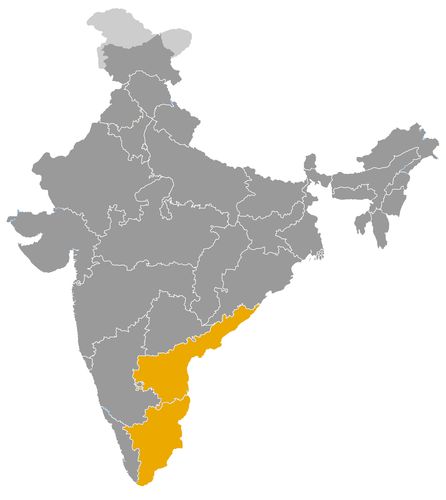
This map illustrates the maximum territory that the Nayak of Vellore Dynasty had reached at its height, covering the current regions of Andhra Pradesh and Tamil Nadu in India. Its main purpose is to provide a visual aid to understand the geographical extent of this dynasty. However, it's important to note that the contemporary borders of these regions may not necessarily coincide with the historical territories.
The Vellore Nayaks and Their Role in the Political Transition of South India
A Local Power Between Imperial Authority and Regional Autonomy
The Vellore Nayaks occupy a distinctive place in the history of South India because they were not a major ruling dynasty in the same sense as the Nayaks of Madurai, Thanjavur or Gingee. They are better understood as a line of local chiefs, military governors or regional commanders associated with Vellore, its fort and its surrounding territory. Their authority developed within the political framework of the Vijayanagara Empire and later became linked to the final phase of that empire under the Aravidu rulers.
This intermediate position gives Vellore particular historical importance. It was not simply a local stronghold, nor was it an independent kingdom of wide territorial expansion. It functioned as a strategic military centre, an administrative relay and, in the seventeenth century, one of the key residences of the weakened Vijayanagara state. The Vellore Nayaks therefore illustrate the gradual transformation of imperial power into a landscape of regional and local authorities.
Vellore as a Strategic Stronghold in Northern Tamil Nadu
The political role of the Vellore Nayaks was closely connected with the city’s location. Vellore stood in northern Tamil Nadu, near routes linking the Tamil plains with Andhra regions and the older zones of Vijayanagara influence. This position made it a valuable point of control between different linguistic, military and commercial spheres.
The fort of Vellore became the most visible expression of this strategic function. Associated in tradition with Nayak chiefs such as Chinna Bommi Nayak, the fort was not merely a defensive structure. In the political conditions of sixteenth-century South India, a fortress could serve as a residence, military depot, administrative centre and symbol of authority. Control of Vellore meant control over roads, dependent villages, revenue sources and local military organisation.
A Political Function Shaped by the Decline of Vijayanagara
The Vellore Nayaks must be placed within the wider history of Vijayanagara’s weakening after the sixteenth century. The empire did not disappear immediately after its military setbacks, but its ability to govern directly became increasingly fragile. Regional commanders, provincial chiefs and Nayak houses gained greater autonomy, while still often preserving forms of loyalty to the imperial order.
In this context, Vellore played a more complex role than many local centres. Madurai, Thanjavur and Gingee developed into clearer regional Nayak kingdoms. Vellore, by contrast, remained closely tied to the last institutional phase of Vijayanagara. The city later became an important residence of the Aravidu emperors, the final ruling line of the empire. This means that the history of the Vellore Nayaks cannot be separated from the survival of Vijayanagara authority in reduced form.
Their political importance therefore lies less in dynastic expansion than in continuity. They helped maintain a fortified administrative zone at a time when imperial structures were being reshaped by local power holders and military competition.
Cultural Influence Centred on Fortification and Local Religious Institutions
The cultural impact of the Vellore Nayaks was more limited than that of the great Nayak courts of Thanjavur and Madurai, which are closely associated with literature, music, temple architecture and courtly arts. Vellore’s legacy is more strongly connected with military architecture, urban organisation and the preservation of local religious institutions.
The fort of Vellore is the central element of this heritage. It reflects the defensive priorities of a period marked by rivalry among regional powers, shifting alliances and the weakening of older imperial authority. Its walls, moat, internal spaces and associated buildings express a political culture in which fortified centres were essential instruments of rule.
Religious institutions also contributed to local legitimacy. As elsewhere in South India, temples and sacred establishments were not separate from political life. Patronage, protection and ritual association helped rulers and chiefs connect themselves to local communities. Even if the Vellore Nayaks did not leave a cultural record comparable to the major Nayak courts, they belonged to the same wider South Indian pattern in which power, religion and territory were closely linked.
Economic Importance Based on Routes, Revenue and Military Control
The economic role of Vellore differed from that of Thanjavur, whose strength rested on the exceptionally fertile Kaveri delta. Vellore’s importance came more from its strategic position on routes of movement and communication. It served as a point from which roads, markets, military movements and local revenue flows could be monitored.
The resources available to the Vellore Nayaks probably came from agricultural lands, village revenues, local markets and the control of dependent territories around the fort. In the Vijayanagara system, a regional chief was expected to collect revenue, support troops and defend assigned lands. Economic power was therefore closely tied to military responsibility.
This relationship between revenue and defence explains the importance of the fort. It protected the territory, but it also made possible the fiscal control necessary to sustain local authority. Vellore was valuable not because it governed an enormous area, but because it controlled a strategic and economically useful node.
Relations with Neighbouring Nayak States and Aravidu Rulers
The position of Vellore influenced its relations with neighbouring powers. The Nayaks of Gingee, Madurai and Thanjavur operated in the same post-Vijayanagara political world, but their territories and ambitions differed. Gingee, closer to northern Tamil regions and eastern routes, was especially relevant to Vellore’s regional environment. Madurai and Thanjavur, farther south, shaped the broader balance of Nayak politics in the Tamil country.
Vellore’s relationship with the Aravidu rulers of Vijayanagara was particularly important. As the old imperial centre declined, Vellore became one of the places where imperial authority attempted to survive. This gave the city a significance that exceeded the scale of the local Nayak chiefs themselves. It became a point of contact between local military power and the last claims of Vijayanagara sovereignty.
A Modest Dynasty with Historical Significance
The Vellore Nayaks did not create a large kingdom or a celebrated cultural court comparable to those of other Nayak dynasties. Their importance lies in what they reveal about South Indian history. They show how fortified local centres supported the transition from imperial rule to regional fragmentation, how military chiefs became increasingly autonomous, and how Vijayanagara authority persisted in altered form.
In the history of India, the Vellore Nayaks represent a regional power of transition. Their legacy is visible in the strategic role of Vellore, in the importance of its fort and in its connection with the final phase of Vijayanagara. They demonstrate that smaller political centres, though less famous than imperial capitals, could play a decisive role in maintaining military, administrative and economic structures during periods of major change.
The Geographic Extent of the Vellore Nayaks in Northern Tamil Nadu
A Fortified Local Power Rather Than a Wide Territorial Kingdom
The Vellore Nayaks should be understood as a regional power centred on a fortified city rather than as a dynasty that ruled a large and clearly defined kingdom. Their main base was Vellore, in northern present day Tamil Nadu, a strategic area situated between the Tamil plains, the routes toward Andhra, and the older zones of influence of the Vijayanagara Empire. This position gave Vellore an importance that exceeded the apparent size of the territory directly controlled by its local chiefs.
Unlike the Nayak kingdoms of Madurai, Thanjavur or Gingee, the Vellore Nayaks do not appear as rulers of a vast or strongly institutionalised state. Their authority was more closely connected with military command, revenue collection, defence and local administration within the Vijayanagara political order. The territory under their control probably included Vellore itself, the fort, surrounding villages, agricultural lands, local markets and routes that depended on the fortified centre.
A Territory Shaped by the Vijayanagara Provincial System
The geographic position of the Vellore Nayaks was a product of the Vijayanagara imperial system. Vijayanagara relied on military governors and provincial chiefs, often known as Nayaks or Nayakas, to defend strategic regions and administer revenue. These officers were expected to maintain troops, collect taxes, protect roads and preserve imperial authority in distant provinces.
Vellore fitted this structure because it stood at a key point between different regions of South India. It connected northern Tamil areas with routes leading toward Telugu speaking territories and older Vijayanagara centres. The Vellore Nayaks were therefore not merely isolated local chiefs. Their position linked them to a broader military and administrative geography that covered parts of the Tamil and Andhra worlds.
Vellore Fort as the Core of Territorial Authority
The fort of Vellore was the central element in the territorial organisation of the Nayaks. In sixteenth century South India, a fort was not only a defensive structure. It could also function as a residence, administrative headquarters, military depot, revenue centre and visible symbol of political authority. Whoever held the fort could influence the villages, roads and resources around it.
For this reason, the geographic extent of the Vellore Nayaks is best understood as a zone of influence centred on the fortress. This zone probably included cultivated lands, dependent settlements, local chiefs, merchants and communities connected to the fort’s protection and administration. Its limits were not necessarily fixed. They could expand or contract according to military pressure, imperial intervention, alliances and the loyalty of subordinate groups.
Flexible Frontiers in a Fragmented Political Landscape
The political geography of the Vellore Nayaks cannot be described by modern borders. In precolonial South India, authority often depended on layered forms of control. A ruler or chief might directly administer some areas, receive revenue from others, command local dependants, or acknowledge a higher imperial authority. This situation became more complex as Vijayanagara weakened after the sixteenth century.
Vellore was located in a zone where imperial authority still mattered, but where regional commanders increasingly acted with greater independence. The Nayaks of Vellore therefore controlled a territory whose core was relatively clear, but whose margins were uncertain. Their power was tied to the fort and surrounding districts, while neighbouring lands could become contested by other Nayak houses, local chiefs or the later Aravidu rulers of Vijayanagara.
Relations with Gingee and the Northern Tamil Region
Vellore’s proximity to Gingee strongly influenced its regional relations. Gingee was another major fortified centre in northern and eastern Tamil Nadu, and its Nayak rulers developed a more clearly defined regional kingdom. Both Vellore and Gingee belonged to the post Vijayanagara political world, but they did not have identical functions.
Gingee was more visibly dynastic and territorial, while Vellore was more closely associated with military control and later with the last phase of Vijayanagara authority. Their spheres of influence could overlap through frontier zones, military routes and local alliances. The relationship between them depended on changing political circumstances, including succession disputes, imperial decisions, conflicts among chiefs and pressure from other regional powers.
Connections with Madurai, Thanjavur and Late Vijayanagara
The Nayak kingdoms of Madurai and Thanjavur lay farther south, but they formed part of the same wider regional balance. Madurai controlled a large part of the southern Tamil country, while Thanjavur governed the fertile Kaveri delta. Vellore was not comparable to these kingdoms in territorial size, but its location made it strategically important in the network of Nayak and Vijayanagara powers.
From the seventeenth century, Vellore became particularly important in the late history of Vijayanagara. The city served as a major residence or centre for the Aravidu rulers, the last imperial line of Vijayanagara. This changed the character of local authority. Vellore was no longer only the base of Nayak chiefs; it also became one of the places where the reduced Vijayanagara state attempted to preserve its political existence.
This explains why the chronology of Vellore can extend into the mid seventeenth century, even though that later period should not be interpreted as the continuous rule of an independent Nayak dynasty. The territory of Vellore became part of a broader imperial survival strategy.
Economic Value Based on Routes, Revenue and Local Control
The economic importance of Vellore came less from exceptional agricultural fertility than from its location. Unlike Thanjavur, which controlled the rich Kaveri delta, Vellore derived much of its value from its position on inland routes. These routes allowed the movement of soldiers, merchants, officials and goods between the Tamil plains and regions farther north.
The territory controlled from Vellore probably included agricultural lands, markets, villages and points of passage that produced revenue for the local chiefs. In a military administrative system, economic power and strategic control were closely linked. The ability to defend roads and collect income from surrounding lands made the fort a practical centre of authority.
A Limited Territory with Strategic Importance
The geographic extent of the Vellore Nayaks was limited, but historically meaningful. Their power was concentrated around Vellore, its fort and the dependent areas of northern Tamil Nadu. They did not build a large kingdom comparable to Madurai, Thanjavur or Gingee, but they controlled a strategic node between the Tamil region, the Telugu country and the declining Vijayanagara order.
Their restricted territorial base helps explain both their importance and their vulnerability. Vellore was valuable because it commanded routes, revenue and military access, but it was also exposed to pressure from stronger neighbours and from the changing ambitions of Vijayanagara’s last rulers. The Vellore Nayaks therefore illustrate how a compact fortified territory could play a significant role in the political geography of South India.
The chronology of Vellore brings together two distinct phases: first, the local Nayak chiefs associated with Vellore and its fort, and then the late phase of the Vijayanagara Empire, when Vellore became a major residence of the Aravidu rulers. The dates are indicative and should not be understood as a continuous succession of independent Nayak rulers until 1652.
Vellore Nayaks
- Chinna Bommi Nayak (c. 1526–1595) • Nayak chief associated with Vellore, he is traditionally linked with the construction or development of Vellore Fort in the sixteenth century.
- Thimma Reddy Nayak (c. mid-sixteenth century) • Chief or commander associated with Chinna Bommi Nayak in the tradition of Vellore Fort; his exact status remains uncertain.
- Lingama Nayak (c. 1595–1601) • Nayak chief of Vellore active at the end of the sixteenth century, he appears in the context of tensions with Vijayanagara authority.
Late Vijayanagara phase at Vellore
- Venkata II (c. 1586–1614; Vellore as an important residence from the early seventeenth century) • Aravidu emperor of Vijayanagara, he strengthened the importance of Vellore during the late imperial phase.
- Sriranga II (1614) • Aravidu emperor with a very brief reign, he was killed during a succession crisis.
- Rama Deva Raya (c. 1614–1632) • Aravidu emperor restored after the dynastic crisis, he maintained Vijayanagara authority in a fragmented regional context.
- Venkata III (c. 1632–1642) • Aravidu emperor associated with Chandragiri and Vellore, he ruled during a period of growing pressure from neighbouring powers.
- Sriranga III (c. 1642–1652) • Last effective ruler of Vijayanagara, he retained Vellore as a centre of power before the final loss of the fortress.
 Links to the main sections of the site