

 Français (France)
  Nederlands (nl-NL)
 • Use the markers to explore the content •

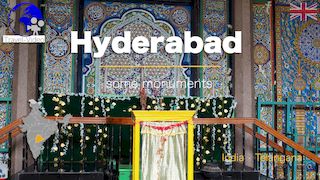
Telangana, India • Badshahi Ashoorkhana in Hyderabad, gathering place for the mourning ceremonies of Imam Hussein

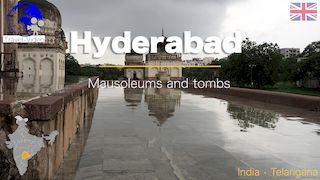
Telangana, India • Charminar, memorial monument in Hyderabad

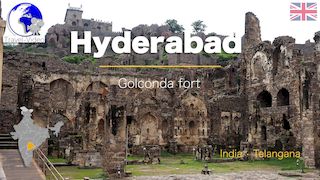
Telangana, India • inner courtyard of Golconda Fort in Hyderabad
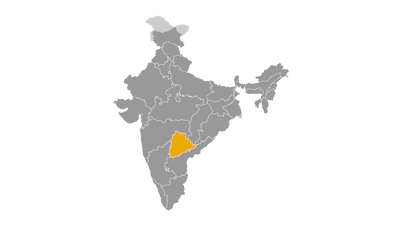
Telangana Through the Centuries: From Deccan Kingdoms to India's Youngest Major State
A Historic Region at the Heart of the Deccan Plateau
Telangana occupies a central position within the Deccan Plateau and has historically served as a bridge between northern and southern India. Its location between the Indo-Gangetic plains and the southern peninsula exposed the region to diverse political influences, trade networks and cultural traditions. Over the centuries, Telangana became a meeting point for Dravidian cultures, Persian influences and the political powers that shaped the Deccan.
Human occupation in the region dates back to prehistoric times. Archaeological discoveries of Paleolithic and Neolithic tools in the valleys of the Godavari and Krishna rivers demonstrate the presence of early communities long before the emergence of organised states.
During the Megalithic period, which extended roughly from the first millennium BCE into the early centuries of the Common Era, numerous burial sites, stone circles and dolmens were constructed throughout the region. These remains indicate the existence of relatively advanced agricultural societies that formed the foundations of later political development.
The Satavahana Empire and the Early Deccan States
Telangana entered recorded history with the rise of the Satavahana dynasty, which dominated much of the Deccan between the second century BCE and the third century CE.
The Satavahanas emerged as one of the first major regional powers in southern India following the decline of the Mauryan Empire. Their territories controlled important trade routes connecting northern India with ports along the eastern coast of the subcontinent.
Commercial links with the Mediterranean world, Central Asia and Southeast Asia contributed to economic prosperity and cultural exchange.
The period also witnessed the spread of Buddhism throughout the Deccan. Monasteries and religious centres flourished along river valleys and trade routes, making the region an important centre of Buddhist learning and patronage.
Following the decline of the Satavahanas, several regional dynasties ruled parts of present-day Telangana, including the Ikshvakus, Vishnukundinas and Chalukyas.
Chalukya and Rashtrakuta Influence
From the sixth century onward, Telangana increasingly came under the influence of the Chalukyas of Badami and later the Western Chalukyas.
These dynasties integrated the Deccan into larger political systems that extended across southern India. Cultural exchanges with neighbouring Karnataka intensified, while Hindu religious institutions expanded through temple construction and royal patronage.
Between the eighth and tenth centuries, the Rashtrakutas emerged as one of the dominant powers of the Deccan. Their rule encouraged commercial prosperity, artistic development and political stability across much of central and southern India.
Telangana's position between northern and southern trade routes ensured its continued strategic significance throughout this period.
The Golden Age of the Kakatiyas
The history of Telangana is particularly associated with the rise of the Kakatiya dynasty between the twelfth and fourteenth centuries.
From their capital at Warangal, the Kakatiyas built a powerful kingdom that controlled much of present-day Telangana and neighbouring regions. They developed efficient administrative structures, promoted agriculture and encouraged regional trade.
One of their most important achievements was the construction of extensive irrigation systems based on reservoirs and artificial lakes. Many of these water management structures remain in use today and continue to support agriculture in the region.
The Kakatiyas also became major patrons of architecture and the arts. Temples, gateways and fortifications built during their rule reflect a distinctive architectural style combining Dravidian traditions with local innovations.
The reign of Queen Rudrama Devi during the thirteenth century remains one of the most remarkable episodes in Indian history, as female sovereigns exercising direct political authority were relatively uncommon during the medieval period.
The Delhi Sultanate and Northern Expansion
In the early fourteenth century, armies of the Delhi Sultanate launched military campaigns into southern India.
The expeditions led by Malik Kafur and subsequent invasions gradually weakened the Kakatiya kingdom. In 1323, Warangal finally fell to the forces of Delhi, bringing an end to Kakatiya independence.
The incorporation of Telangana into the Delhi Sultanate marked the beginning of significant political and cultural transformation. Persian administrative traditions and Islamic influences began to spread throughout the Deccan, reshaping elite culture and governance.
The Bahmani Sultanate and the Deccan Sultanates
From the middle of the fourteenth century, Telangana became part of the Bahmani Sultanate, the first major independent Muslim state of the Deccan.
Its central location made the region an important component of the sultanate's political and economic system. Trade expanded, and cultural exchanges intensified as Persian, Turkish and local traditions interacted.
After the fragmentation of the Bahmani Sultanate in the late fifteenth century, Telangana came under the control of the Golconda Sultanate ruled by the Qutb Shahi dynasty.
Golconda and the Rise of Hyderabad
The Qutb Shahi period represents one of the most significant chapters in the history of Telangana.
The rulers of Golconda transformed their kingdom into an important economic power largely through international trade in diamonds extracted from the mines of the Deccan. The diamonds of Golconda achieved worldwide fame, and several of history's most celebrated gemstones originated from this region.
In 1591, Sultan Muhammad Quli Qutb Shah founded the city of Hyderabad as a new capital to replace Golconda.
Hyderabad rapidly developed into one of the largest and most cosmopolitan cities of the subcontinent. Persian, Turkish, Arab and Indian influences combined to create a distinctive urban culture that remains visible today in architecture, cuisine and language.
Mughal Rule and the Emergence of the Nizams
During the late seventeenth century, the Mughal emperor Aurangzeb undertook the conquest of the Deccan Sultanates.
Golconda was annexed by the Mughal Empire in 1687 after a prolonged siege, and Telangana became incorporated into the imperial administrative system.
The distance from Delhi, however, encouraged the emergence of autonomous local authorities. During the early eighteenth century, the Mughal governors of the Deccan gradually established their independence and founded the princely state of Hyderabad under the Nizam dynasty.
For nearly two centuries, the Nizams ruled one of the wealthiest and largest princely states in India. Hyderabad became an important centre of commerce, culture and education where Hindu, Muslim and merchant communities coexisted.
Telangana under British Paramountcy
Unlike many other regions of India, Telangana never came under direct British administration. Instead, it remained part of the princely state of Hyderabad, which maintained internal autonomy while recognising British supremacy in external affairs.
This arrangement allowed Hyderabad to preserve distinctive administrative, legal and linguistic traditions.
During the late nineteenth and early twentieth centuries, the region experienced increasing modernisation through railway construction, educational reforms and urban development, particularly around Hyderabad.
Integration into Independent India
At the time of Indian independence in 1947, the Nizam of Hyderabad initially sought to remain independent rather than join either India or Pakistan.
This situation led to military intervention by the Government of India in 1948 in an operation known as Operation Polo. Hyderabad was subsequently integrated into the Indian Union.
Telangana became part of the former Hyderabad State before being merged with the Telugu-speaking regions of Andhra State in 1956 to create Andhra Pradesh following the linguistic reorganisation of Indian states.
The Telangana Movement and Statehood
Despite the merger, many residents of Telangana believed that their economic and political interests were inadequately represented within Andhra Pradesh.
Movements demanding a separate state emerged during the 1960s and continued intermittently over the following decades. Concerns centred on employment opportunities, water resources, political representation and regional development.
The movement gained renewed momentum during the early twenty-first century and eventually received support from national political parties.
On 2 June 2014, Telangana officially became the twenty-ninth state of the Indian Union.
Hyderabad became the capital of the new state while temporarily serving as the joint capital of Andhra Pradesh during a transitional period.
A Distinct Historical Identity
The history of Telangana is characterised by the interaction of Dravidian traditions, Deccan political cultures and Indo-Persian influences.
This historical diversity explains the region's distinctive identity within modern India. Contemporary Telangana represents the heir to the Kakatiya kingdom, the Deccan Sultanates, the Nizams of Hyderabad and the political transformations of independent India.
The creation of the state in 2014 was therefore not merely an administrative reorganisation but the institutional recognition of a regional identity that had developed over many centuries of shared historical experience.


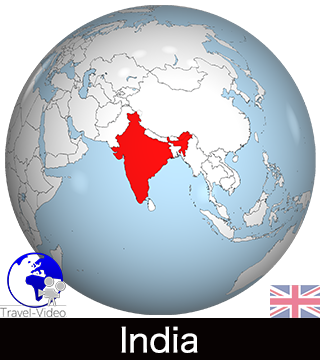
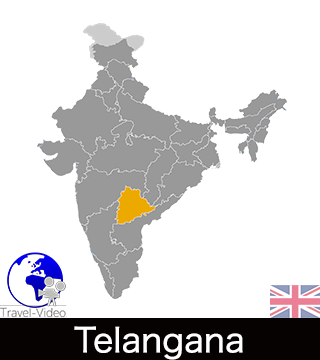
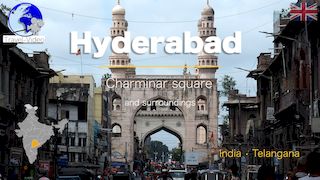
Contemporary Telangana: Technological Growth, Deccan Heritage and Regional Development in Southern India
A Young State at the Heart of the Deccan
Telangana is one of India's newest states, having been officially created on 2 June 2014 following the division of the former state of Andhra Pradesh. Located in the central part of the Deccan Plateau, it has rapidly emerged as one of the most dynamic regions of southern India, combining historical heritage with rapid economic growth and technological innovation.
The state shares borders with Maharashtra to the north and northwest, Chhattisgarh to the northeast, Karnataka to the west and Andhra Pradesh to the south and east. Its central location gives Telangana an important role as a link between northern and southern India.
Hyderabad, the capital city, serves as the administrative, economic, scientific and cultural centre of the state and is one of India's largest metropolitan regions.
Geography and Physical Landscape
Telangana consists primarily of a large section of the Deccan Plateau, with elevations generally ranging between 300 and 700 metres above sea level.
The landscape is characterised by gently undulating terrain interrupted by granite hills and rocky outcrops that have become one of the defining features of the region. These geological formations have influenced settlement patterns and defensive architecture throughout history.
Two major river systems dominate the state: the Godavari in the north and the Krishna in the south. Their numerous tributaries provide essential water resources for agriculture, urban consumption and hydroelectric production.
Unlike neighbouring coastal states, Telangana has no access to the sea. This geographical characteristic historically encouraged the development of inland trade networks rather than maritime commerce.
Climate and Environmental Conditions
Telangana experiences a tropical semi-arid climate marked by extremely hot summers and rainfall concentrated during the southwest monsoon season.
Temperatures frequently exceed 40 degrees Celsius during April and May, while winters remain relatively mild and dry.
Agriculture depends heavily on monsoon rainfall and irrigation systems supplied by reservoirs and dams constructed along the Krishna and Godavari river systems.
Forest cover is concentrated mainly in the northern and eastern districts, where dry deciduous forests support wildlife including tigers, leopards, deer and numerous bird species.
Water management has become one of the state's most significant environmental challenges due to increasing urban demand, agricultural requirements and climate variability.
Population and Demographic Diversity
Telangana has a population exceeding thirty-five million inhabitants and continues to experience rapid demographic growth, particularly in urban areas.
Although a substantial proportion of the population remains rural, urbanisation has accelerated considerably because of economic opportunities in Hyderabad and surrounding districts.
Telugu serves as the principal language and one of the official languages of the state. Urdu also enjoys official status and remains widely spoken, particularly in Hyderabad and areas historically associated with the Nizams.
Hindi and English are commonly used in administration, higher education and business activities.
Hinduism is the majority religion, while Islam represents a significant minority, especially in Hyderabad and several urban centres. Christian, Jain and Sikh communities also contribute to the religious diversity of the state.
Hyderabad as an Economic Engine
Hyderabad overwhelmingly dominates Telangana's urban and economic landscape. The city has become one of India's leading centres for technology, innovation and advanced services.
The metropolitan region hosts numerous national and international companies operating in information technology, biotechnology, pharmaceuticals and financial services.
The development of HITEC City transformed Hyderabad into one of India's principal technology hubs, attracting major domestic and foreign investment.
Beyond Hyderabad, cities such as Warangal, Nizamabad, Karimnagar, Khammam and Mahabubnagar play important regional roles in administration, commerce and agricultural processing.
Warangal in particular remains an important educational and cultural centre due to its historical significance and growing industrial base.
Administrative Structure and Governance
Since its creation in 2014, Telangana has developed its own administrative institutions and governance structures within India's federal system.
The state is governed by an elected Legislative Assembly, a Chief Minister and a Governor representing the Union government.
Administratively, Telangana is divided into districts designed to facilitate local governance, rural development and public service delivery.
The creation of the state also led to major administrative reforms intended to decentralise governance and improve access to public institutions in rural areas.
Transportation and Connectivity
Telangana benefits from relatively advanced infrastructure, largely due to Hyderabad's national importance.
A network of national highways connects the capital with major Indian cities and neighbouring states, facilitating industrial and commercial activity.
The railway network, inherited partly from the former Hyderabad State, provides important links with Mumbai, Chennai, Bengaluru, Delhi and Kolkata.
Rajiv Gandhi International Airport is one of India's busiest airports and serves as a major gateway for international business travel and trade.
The expansion of urban transport systems, including metro rail services in Hyderabad, reflects the state's efforts to manage rapid urban growth.
Economic Development and Industrial Expansion
Telangana has become one of India's fastest-growing state economies.
The service sector dominates economic activity, particularly through information technology, business services and financial operations. Hyderabad has emerged as one of India's major technology centres alongside Bengaluru, Chennai and Pune.
The pharmaceutical industry is another major pillar of the economy. The region produces a substantial proportion of India's generic medicines and pharmaceutical exports, earning Hyderabad the reputation of being one of the country's pharmaceutical capitals.
Biotechnology, aerospace, electronics and defence manufacturing have also experienced rapid expansion in recent years.
Government initiatives aimed at attracting investment have contributed significantly to industrial diversification and economic growth.
Agriculture and Natural Resources
Despite the growing importance of services and manufacturing, agriculture remains essential for large sections of the population.
Major crops include rice, cotton, maize, chilli peppers, sorghum, pulses and oilseeds.
Cotton and red chilli peppers are among Telangana's most distinctive agricultural products and contribute significantly to rural incomes and exports.
Large irrigation projects have been launched to reduce dependence on unpredictable monsoon rainfall and improve agricultural productivity.
The state also possesses important mineral resources, including coal deposits in the Godavari Valley that support energy production and industrial activity.
Cultural Traditions and Contemporary Identity
The culture of Telangana reflects centuries of interaction between Telugu traditions, Deccan Sultanate influences and the heritage of the Nizams of Hyderabad.
This diversity is visible in architecture, cuisine, language and artistic expression.
Among the state's most important festivals are Bathukamma, a floral festival unique to Telangana, and Bonalu, a major religious celebration particularly associated with Hyderabad and surrounding districts.
Traditional crafts include weaving, metalwork and textile production, particularly the famous Ikat fabrics produced in several parts of the state.
Cuisine reflects both South Indian and Indo-Persian influences, creating distinctive regional culinary traditions.
Education, Research and Innovation
Telangana hosts several of India's leading universities, research institutions and centres of higher education.
Hyderabad has become particularly important for scientific research, information technology and pharmaceutical innovation.
The concentration of educational institutions and skilled labour has strengthened the state's position as a knowledge-based economy and contributed to its attractiveness for international investment.
Challenges and Future Prospects
Despite rapid economic growth, Telangana faces several important challenges.
Significant disparities remain between Hyderabad and many rural districts, creating concerns about balanced regional development.
Urban expansion has increased pressure on housing, transportation infrastructure and water supplies, while industrial growth has generated environmental concerns.
Water management, pollution control and climate adaptation remain central policy priorities for the state government.
Contemporary Telangana therefore represents a striking example of rapid transformation within modern India, combining the historical legacy of the Deccan with ambitious technological development and economic modernisation. Its experience illustrates both the opportunities and challenges faced by emerging regional economies in twenty-first-century India.