

 Français (France)
  Nederlands (nl-NL)
 Of Hindu tradition, (with additional Buddhist influence), the Eastern Chalukyas of Vengi dynasty ruled for approximately 506 years, ± between 624 and 1130 over all or part of South India, during the Classical Period.
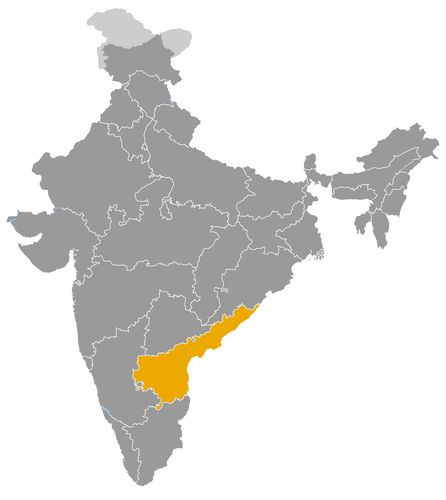
This map illustrates the maximum territory that the Eastern Chalukyas of Vengi Dynasty had reached at its height, covering the current regions of Andhra Pradesh in India. Its main purpose is to provide a visual aid to understand the geographical extent of this dynasty. However, it's important to note that the contemporary borders of these regions may not necessarily coincide with the historical territories.
The Chalukya Dynasty of Vengi and the Formation of Medieval Andhra
An eastern Chalukya branch rooted in the politics of the Deccan
The Chalukya dynasty of Vengi, also known as the Eastern Chalukyas, played a significant role in the history of medieval India from the seventh to the eleventh century. The dynasty originated as an eastern branch of the Chalukyas of Badami. Its founder, Kubja Vishnuvardhana I, was a brother of Pulakeshin II, the powerful ruler of Badami, and was initially placed in control of the Vengi region as part of Chalukya expansion toward the eastern Deccan.
Over time, this provincial authority developed into an autonomous kingdom centred in the coastal Andhra region. The dynasty’s importance lies in its position between the interior Deccan, the eastern coast, the Tamil country and the wider political networks of South India. Unlike the Chalukyas of Badami or Kalyani, whose power was primarily rooted in the western Deccan, the Chalukyas of Vengi became closely associated with the cultural and political development of Andhra.
A strategic kingdom between the Deccan and the eastern coast
The region of Vengi occupied a highly strategic position between the Krishna and Godavari river systems. Its fertile plains, access to inland routes and proximity to the Bay of Bengal gave it considerable political and economic value. This location made the kingdom both influential and vulnerable. It linked the Deccan plateau with the coastal world of eastern India, while also attracting the attention of larger neighbouring powers.
Politically, Vengi often functioned as a buffer between the powers of the western Deccan and the dynasties of southern India. In the early period, the Eastern Chalukyas had to define their position in relation to the Badami Chalukyas and later to the Rashtrakutas. From the tenth and eleventh centuries, the region became a major point of competition between the Cholas of Tamil Nadu and the Chalukyas of Kalyani.
The rulers of Vengi used dynastic marriages, military alliances and shifting political loyalties to preserve their authority. Their autonomy varied over time, but the dynasty survived for several centuries because it occupied a region that no neighbouring power could ignore.
The Chola connection and the transformation of South Indian politics
The relationship between the Chalukyas of Vengi and the Cholas became one of the defining features of South Indian politics in the later phase of the dynasty. Marriage alliances connected the royal houses of Vengi and Tanjavur, allowing the Cholas to intervene more directly in the affairs of Andhra. At the same time, these alliances could strengthen individual Eastern Chalukya rulers against internal rivals.
The reign of Rajaraja Narendra was especially important in this context. Vengi remained politically linked to the Chola sphere, yet it retained a distinct regional identity. The dynastic connection eventually had major consequences for the Chola Empire itself. Kulottunga I, who descended from the Vengi Chalukya line through his father and from the Chola line through his mother, later became Chola ruler. Through this development, the Chalukyas of Vengi directly influenced the imperial history of South India.
This relationship shows that Vengi was not merely a subordinate frontier kingdom. It was a dynastic bridge between Andhra and Tamil political worlds, and its royal house shaped the succession and direction of one of the great powers of medieval India.
A major contribution to Telugu literary culture
The cultural role of the Chalukyas of Vengi was especially important in the history of the Telugu language. Their period coincided with the gradual rise of Telugu as a language of inscription, courtly expression and literary prestige. Sanskrit continued to hold a major place in religious and scholarly life, but Telugu gained increasing importance as a regional cultural language.
Rajaraja Narendra is traditionally associated with the literary work of Nannaya, who began the Telugu rendering of the Mahabharata and is often regarded as one of the earliest great poets of Telugu literature. This association gives the Chalukyas of Vengi a special place in the formation of Telugu literary identity. Their courtly and religious environment helped create the conditions in which a durable Telugu literary tradition could emerge.
This cultural development was not isolated from politics. The use of Telugu strengthened regional identity, supported elite communication and helped distinguish the Andhra region within the broader political world of South India.
Religious patronage and the integration of local society
The Chalukyas of Vengi supported Hindu religious institutions, while ruling in a region marked by diverse religious traditions and local cults. Temples, land grants and inscriptions were central to their political order. As in many medieval Indian kingdoms, religious patronage was closely linked to royal legitimacy.
By granting land and privileges to temples and Brahmanical institutions, the rulers strengthened their authority among local elites. Temples acted as centres of worship, landholding, redistribution and social organization. They helped connect the royal court with villages, agricultural communities, artisans and ritual specialists.
This system allowed the dynasty to embed its rule in the social and sacred geography of Andhra. Royal authority was therefore expressed not only through warfare and succession, but also through temple patronage and the management of agrarian resources.
Agricultural wealth and coastal connections as economic foundations
The economy of Vengi rested largely on the fertile plains of the Krishna and Godavari river systems. Agricultural production supported taxation, temple grants, military activity and courtly life. Control over irrigated land was a key source of wealth and political stability.
The region’s proximity to the eastern coast also gave it access to commercial networks connected with the Bay of Bengal. Although the Chalukyas of Vengi were not always a major maritime power in the same sense as the Cholas, their territory benefited from coastal trade, river routes and links between inland and maritime economies. This economic position increased the strategic value of Vengi and explains why neighbouring powers repeatedly sought influence there.
A dynasty of mediation between Andhra, Deccan and Tamil worlds
The Chalukya dynasty of Vengi gradually lost autonomy as Chola influence deepened and the rivalry with the Chalukyas of Kalyani intensified. Yet its historical role remained substantial. It preserved a Chalukya political tradition in the eastern Deccan, shaped the medieval history of Andhra, and contributed decisively to the rise of Telugu culture.
Its importance lies less in imperial conquest than in mediation. The dynasty connected the Deccan interior with the eastern coast, linked Andhra with the Tamil south, and transformed a strategically located regional kingdom into a major cultural and political actor. The Chalukyas of Vengi therefore occupy a distinctive place in Indian history as a dynasty that shaped both regional identity and wider South Indian power politics.
The Geographic Expansion of the Chalukya Dynasty of Vengi in Medieval India
A kingdom rooted in the coastal Andhra region
The Chalukya dynasty of Vengi, also known as the Eastern Chalukyas, ruled mainly from the seventh to the eleventh century in the eastern Deccan. Its territorial base lay in the Vengi region, situated in present-day Andhra Pradesh, between the river systems of the Godavari and the Krishna. This area was one of the most fertile zones of the eastern coast, with agricultural plains, river routes and access to the Bay of Bengal.
The dynasty originated from the expansion of the Badami Chalukyas. Kubja Vishnuvardhana I, brother of Pulakeshin II, was placed in charge of Vengi as part of Chalukya authority in the eastern Deccan. Over time, this provincial position became the foundation of an autonomous kingdom. The geographic history of the Eastern Chalukyas is therefore closely linked to the transformation of Vengi from an eastern frontier of the western Deccan into a durable regional kingdom of coastal Andhra.
The core territory between the Godavari and Krishna rivers
The heartland of the Chalukyas of Vengi was the fertile zone between the Godavari and Krishna rivers. These river valleys supported agriculture, settlement, temple endowments and regional administration. Control of this area gave the dynasty a strong economic base and allowed it to maintain a court, military forces and alliances with local elites.
This territory was not isolated. It opened westward toward the interior Deccan and eastward toward the coast. Its position allowed the rulers of Vengi to benefit from both agrarian wealth and trade connections. At the same time, the openness of the region made it vulnerable to intervention. Unlike the more defensible plateau centres of the western Deccan, Vengi lay in a zone easily approached from the north, south, west and coast.
Variable frontiers and fluctuating royal authority
The geographic extent of the Vengi kingdom changed considerably over time. During stronger reigns, the Eastern Chalukyas controlled much of coastal Andhra and exercised influence over inland areas. During periods of dynastic instability, their authority contracted, and local chiefs or neighbouring powers gained influence.
Several reigns were short or contested, especially between the ninth and tenth centuries. These succession disputes affected the territorial coherence of the kingdom. Rival claimants often sought support from external powers, turning Vengi into a field of intervention for the Rashtrakutas, the Cholas and the Chalukyas of Kalyani.
The kingdom’s expansion was therefore not that of a continuously growing empire. It was a regional authority whose strength depended on the ruler’s ability to control the fertile core, secure the loyalty of local elites and manage relations with stronger neighbours.
Pressure from the Rashtrakutas and the western Deccan
From the eighth century onward, the rise of the Rashtrakutas changed the political geography of the Deccan. After replacing the Badami Chalukyas as the dominant power of the western Deccan, the Rashtrakutas sought influence over Vengi. For them, the eastern Andhra region was strategically important because it connected the interior plateau with the eastern coast.
The Chalukyas of Vengi had to navigate this pressure carefully. At times they asserted independence; at other times they were forced to accept intervention or indirect domination. The Rashtrakuta presence made Vengi a frontier between western Deccan power and the coastal Andhra world. It also encouraged internal factions within the Vengi royal family to seek outside support.
This situation strengthened the role of diplomacy and dynastic politics. Control over Vengi was rarely a purely local matter. It was tied to the larger balance of power across the Deccan.
Vengi as a contested zone between Cholas and Western Chalukyas
From the tenth and especially the eleventh century, Vengi became one of the most important contested regions in South Indian politics. The Cholas of Tamil Nadu and the Chalukyas of Kalyani both viewed the area as strategically essential. For the Cholas, influence over Vengi extended their power northward along the eastern coast. For the Chalukyas of Kalyani, preventing Chola control of Vengi was necessary to protect the eastern flank of their Deccan kingdom.
This rivalry shaped the later history of the Eastern Chalukyas. Marriage alliances linked the Vengi royal house with the Cholas, while military interventions and disputed successions repeatedly altered the balance of power. The kingdom became both a buffer state and a dynastic bridge between Andhra and Tamil political spheres.
When Chola influence was strong, Vengi became closely integrated into the political world of the Tamil south. When the Western Chalukyas intervened, the region became a battleground for control of the eastern Deccan. This strategic position explains why the Chalukyas of Vengi retained importance even when their autonomy was weakened.
Agricultural resources, temple networks and regional control
The expansion and stability of the Vengi kingdom depended heavily on the resources of coastal Andhra. The Krishna and Godavari plains provided agricultural surplus, which supported taxation, land grants and religious institutions. Temples played a central role in territorial organization. They received land, managed resources and linked royal authority with local society.
By granting lands to Brahmanical and temple institutions, the rulers of Vengi strengthened their control over rural areas. These grants helped integrate villages, landholders, religious specialists and regional elites into the political order. Geographic authority was therefore expressed not only through military control, but also through sacred endowments and agrarian administration.
The proximity of the coast also contributed to the kingdom’s value. Although the Eastern Chalukyas were not primarily known as a maritime empire, their territory benefited from trade routes connected with the Bay of Bengal. This economic importance increased the interest of neighbouring dynasties in controlling or influencing Vengi.
A territorial legacy absorbed into the Chola order
By the eleventh century, the autonomy of the Chalukyas of Vengi was increasingly reduced by Chola influence. The dynastic connection culminated in the rise of Kulottunga I, who united the Vengi Chalukya line with the Chola imperial succession. This development did not simply erase the importance of Vengi. Instead, it showed how central the region had become to the wider politics of South India.
The geographic expansion of the Chalukya dynasty of Vengi was therefore different from that of a large conquering empire. Its strength lay in the control of a strategic, fertile and culturally important region between the Deccan interior and the eastern coast. Its territory shaped relations with the Rashtrakutas, the Cholas and the Chalukyas of Kalyani. Through this position, Vengi became one of the key political landscapes of medieval Andhra and South India.
This chronology concerns the Chalukyas of Vengi, also known as the Eastern Chalukyas, a branch that originated from the Badami Chalukyas. The rulers are generally described as kings in modern historiography, although inscriptions also use royal honorific titles such as Maharaja. The dates are indicative, since several reigns were very brief, contested or interrupted by the intervention of the Rashtrakutas, the Cholas and the Chalukyas of Kalyani.
- Kubja Vishnuvardhana I (c. 624–641 CE) • Brother of Pulakeshin II, he first governed Vengi as viceroy before establishing an autonomous line.
- Jayasimha I (c. 641–673 CE) • He consolidated the kingdom of Vengi during a relatively stable period.
- Indra Bhattaraka (c. 673 CE) • His very brief reign is usually placed between Jayasimha I and Vishnuvardhana II.
- Vishnuvardhana II (c. 673–682 CE) • He maintained dynastic continuity during a still poorly documented phase.
- Mangi Yuvaraja (c. 682–706 CE) • He ruled while Vengi faced growing regional pressures.
- Jayasimha II (c. 706–718 CE) • He governed in a context of internal rivalry and tensions with neighbouring powers.
- Kokkili Vikramaditya (c. 718 CE) • He briefly seized the throne before being displaced by Vishnuvardhana III.
- Vishnuvardhana III (c. 719–755 CE) • He restored dynastic continuity after a succession crisis.
- Vijayaditya I (c. 755–772 CE) • He ruled when the Rashtrakutas replaced the Badami Chalukyas as the major power of the western Deccan.
- Vishnuvardhana IV (c. 772–808 CE) • His reign unfolded under increasing Rashtrakuta pressure.
- Vijayaditya II (c. 808–847 CE) • He maintained Chalukya authority despite interventions by Deccan powers.
- Kali Vishnuvardhana V (c. 847–849 CE) • His reign was short and preceded the rise of Vijayaditya III.
- Vijayaditya III Gunaga (c. 849–892 CE) • He restored the prestige of Vengi and asserted stronger Chalukya independence against the Rashtrakutas.
- Yuddhamalla I (c. 892 CE) • He briefly occupied the throne during a dynastic transition.
- Chalukya Bhima I (c. 892–921 CE) • He strengthened the kingdom after succession troubles and became one of the important rulers of Vengi.
- Vijayaditya IV (c. 921 CE) • His very brief reign marked another phase of dynastic instability.
- Amma I (c. 921–927 CE) • Also known as Vijayaditya V, he was overthrown amid internal struggles within the royal family.
- Tala I (c. 927 CE) • He briefly seized power before being overthrown in turn.
- Vikramaditya II (c. 927–928 CE) • He ruled for less than a year after eliminating Tala I.
- Bhima II (c. 928 CE) • His authority was very brief and belonged to a violent succession sequence.
- Yuddhamalla II (c. 928–935 CE) • He ruled after a series of dynastic coups.
- Chalukya Bhima II (c. 935–947 CE) • He restored a degree of stability after several disputed reigns.
- Amma II (c. 947–970 CE) • His reign was long but marked by challenges and temporary depositions.
- Tala II (c. 970 CE) • He briefly held the throne after displacing Amma II.
- Danarnava (c. 970–973 CE) • Brother of Amma II, he ruled briefly before being killed by Jata Choda Bhima.
- Jata Choda Bhima (c. 973–999 CE) • A Telugu Choda chief, he controlled Vengi after displacing the direct Chalukya line.
- Shaktivarman I (c. 999–1011 CE) • Son of Danarnava, he was restored with Chola support and re-established the Chalukya line of Vengi.
- Vimaladitya (c. 1011–1018 CE) • He strengthened ties with the Cholas through marriage alliance.
- Rajaraja Narendra (c. 1018–1061 CE) • His reign marked the height of relations between Vengi and the Cholas and encouraged the rise of Telugu culture.
- Shaktivarman II (c. 1061–1062 CE) • His brief reign belongs to the period of strong Chola and Western Chalukya pressure.
- Vijayaditya VII (c. 1062–1075 CE, probably interrupted) • His authority was contested and interrupted amid rivalry between the Cholas and the Chalukyas of Kalyani.
- Rajaraja (c. 1075–1079 CE, probably nominal or subordinate authority) • He is sometimes listed among the last Chalukya rulers of Vengi under Chola influence.
- Vishnuvardhana VII (c. 1079–1102 CE, probably nominal or subordinate authority) • Often cited as the last Chalukya ruler of Vengi, he belongs to a phase when the kingdom was largely absorbed into the Chola order.