Français (France)
  Nederlands (nl-NL)
 West India – Geographic and Historical Overview
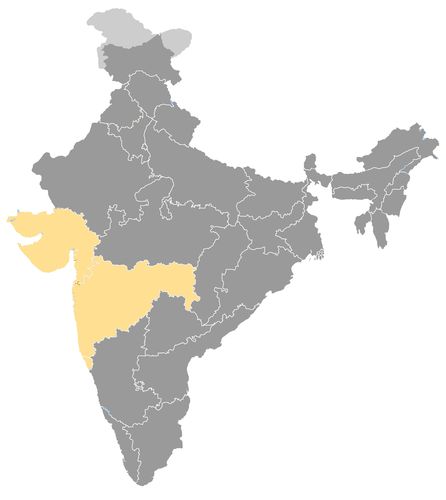
West India includes the states of Gujarat, Maharashtra, and Goa. This region stretches from the Arabian Sea to the Western Ghats and the Deccan plateau. Its landscape is diverse, comprising coastlines, alluvial plains, arid zones, and steep hills. Major rivers include the Narmada, Tapi, and Godavari.
Historically, West India played a key role in maritime and commercial exchanges with the Middle East, East Africa, and Southeast Asia. It saw the rise of prosperous ports, regional religious centers, and vibrant urban culture. Known for its linguistic and religious diversity, the region served as a bridge between the Indian subcontinent and the wider world.
Power and Religion in Western India
In the history of Western India, religion was often used as a means of legitimization and cohesion by ruling dynasties. They generally adopted the dominant faith—Hinduism, Jainism, Buddhism, or Islam—to reinforce their authority and unify territories marked by cultural and linguistic diversity. Official recognition of this religion allowed rulers to rely on religious institutions and their networks to organize society and consolidate political power.
However, support for a dominant religion did not exclude patronage of other faiths. Rulers could back non-official traditions to attract merchant communities, maintain peace with influential minorities, or enrich the cultural life of their courts. Hindu rulers in Gujarat, for example, financed Jain temples, while Muslim leaders preserved certain Hindu shrines.
Unlike medieval Europe, India did not experience large-scale religious wars. Nevertheless, tensions arose when certain practices were deemed politically dangerous or doctrinally unacceptable. Such situations could lead to the closure, destruction, or conversion of shrines, most often in the context of political rivalries rather than purely theological disputes. This interplay between power and religion reflects the cultural and political complexity of Western India.
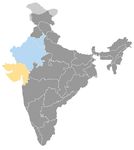
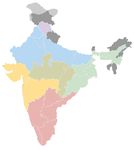
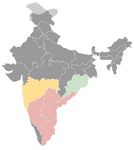
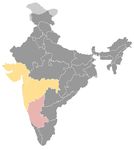
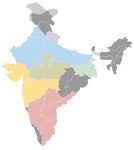
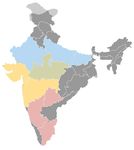
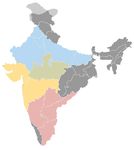
This page organises the dynasties of West India, according to a chronological structure based on millennia and centuries. The associated maps indicate the present-day location of the relevant states and link to the detailed pages.
4th millennium BCE
33rd century BCE
1st millennium BCE
4th century BCE
Dominant religions, depending on the period: Hinduism, Buddhism
Supported or encouraged religion: Jainism.
( Assam, Bihar, Delhi (NTC), Goa, Gujarat, Himachal Pradesh, Karnataka, Kerala, Madhya Pradesh, Maharashtra, Odisha, Punjab, Rajasthan, Tamil Nadu, Telangana, Uttar Pradesh, Andhra Pradesh, Chhattisgarh, Haryana, Jharkand, Manipur, Meghalaya and Uttarakhand )
3rd century BCE
Dominant religion: Hinduism
Supported or encouraged religion: Buddhism.
( Goa, Karnataka, Maharashtra, Odisha, Tamil Nadu, Telangana and Andhra Pradesh )
1st millennium
3rd century
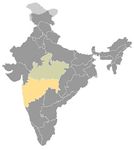
Dominant religion: Hinduism
Supported or encouraged religion: Buddhism.
( Madhya Pradesh and Maharashtra )
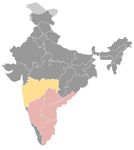
Dominant religion: Hinduism
Supported or encouraged religion: Jainism.
( Karnataka, Maharashtra, Tamil Nadu, Telangana and Andhra Pradesh )
4th century
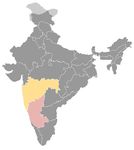
5th century
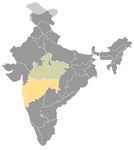
Dominant religion: Hinduism
Supported or encouraged religion: Buddhism.
( Madhya Pradesh and Maharashtra )
6th century
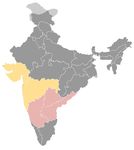
7th century
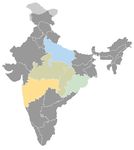
Dominant religion: Hinduism
Supported or encouraged religions, depending on the period: Buddhism, Jainism.
( Madhya Pradesh, Maharashtra, Odisha, Uttar Pradesh and Chhattisgarh )
8th century
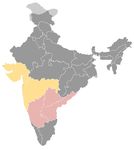
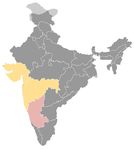
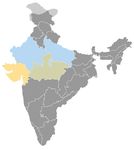
Dominant religion: Hinduism
Supported or encouraged religions, depending on the period: Buddhism, Jainism.
( Gujarat, Madhya Pradesh, Rajasthan and Uttar Pradesh )
9th century
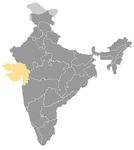
10th century
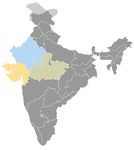
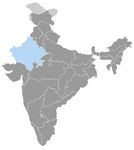
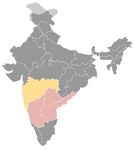
Dominant religion: Hinduism
Supported or encouraged religions, depending on the period: Buddhism, Jainism.
( Goa, Karnataka, Madhya Pradesh, Maharashtra, Telangana and Andhra Pradesh )
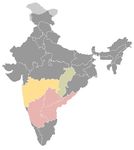
Dominant religion: Hinduism
Supported or encouraged religions, depending on the period: Buddhism, Jainism.
( Karnataka, Madhya Pradesh, Maharashtra, Telangana, Andhra Pradesh and Chhattisgarh )
2nd millennium
11th century
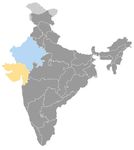
12th century
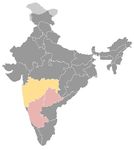
Dominant religion: Hinduism
Supported or encouraged religion: Jainism.
( Karnataka, Maharashtra and Telangana )
13th century
Dominant religion: Islam
Supported or encouraged religions, depending on the period: Hinduism, Buddhism, Jainism.
( Bihar, Delhi (NTC), Gujarat, Karnataka, Madhya Pradesh, Maharashtra, Punjab, Rajasthan, Tamil Nadu, Telangana, Uttar Pradesh, West Bengal, Haryana, Jharkand and Uttarakhand )
Dominant religion: Hinduism
( Bihar, Delhi (NTC), Gujarat, Karnataka, Madhya Pradesh, Maharashtra, Rajasthan, Tamil Nadu, Telangana and Uttar Pradesh )
14th century
Dominant religion: Islam
( Bihar, Delhi (NTC), Goa, Gujarat, Karnataka, Madhya Pradesh, Maharashtra, Odisha, Punjab, Rajasthan, Tamil Nadu, Telangana, Uttar Pradesh, West Bengal, Andhra Pradesh, Chhattisgarh and Haryana )
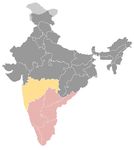
Dominant religion: Hinduism
( Goa, Karnataka, Kerala, Maharashtra, Tamil Nadu and Andhra Pradesh )
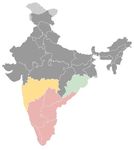
Dominant religion: Hinduism
Supported or encouraged religion: Jainism.
( Goa, Karnataka, Kerala, Maharashtra, Odisha, Tamil Nadu, Telangana and Andhra Pradesh )
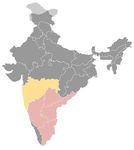
Dominant religion: Islam
Supported or encouraged religion: Hinduism.
( Goa, Karnataka, Maharashtra, Tamil Nadu, Telangana and Andhra Pradesh )
15th century
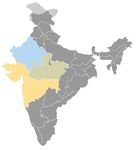
Dominant religion: Islam
Supported or encouraged religion: Hinduism.
( Gujarat, Madhya Pradesh, Maharashtra and Rajasthan )
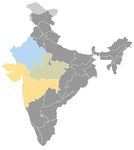
Dominant religion: Islam
Supported or encouraged religions, depending on the period: Hinduism, Jainism.
( Gujarat, Madhya Pradesh, Maharashtra and Rajasthan )
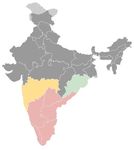
Dominant religion: Hinduism
Supported or encouraged religion: Jainism.
( Goa, Karnataka, Kerala, Maharashtra, Odisha, Tamil Nadu, Telangana and Andhra Pradesh )
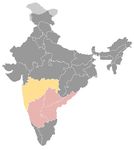
Dominant religion: Islam
( Goa, Karnataka, Maharashtra, Telangana and Andhra Pradesh )
16th century
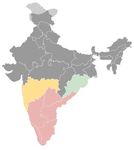
Dominant religion: Hinduism
Supported or encouraged religion: Jainism.
( Goa, Karnataka, Kerala, Maharashtra, Odisha, Tamil Nadu, Telangana and Andhra Pradesh )
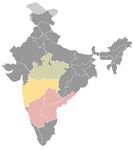
Dominant religion: Islam
( Karnataka, Madhya Pradesh, Maharashtra, Telangana and Andhra Pradesh )
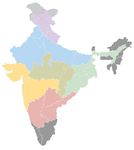
Dominant religion: Islam
Supported or encouraged religions, depending on the period: Hinduism, Jainism, Christianity, zoroastrianism.
( Assam, Bihar, Delhi (NTC), Gujarat, Himachal Pradesh, Karnataka, Ladakh, Madhya Pradesh, Maharashtra, Odisha, Punjab, Rajasthan, Telangana, Uttar Pradesh, West Bengal, Andhra Pradesh, Chhattisgarh, Haryana, Jammu & Kashmir, Jharkand and Uttarakhand )
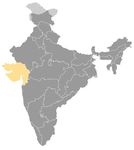
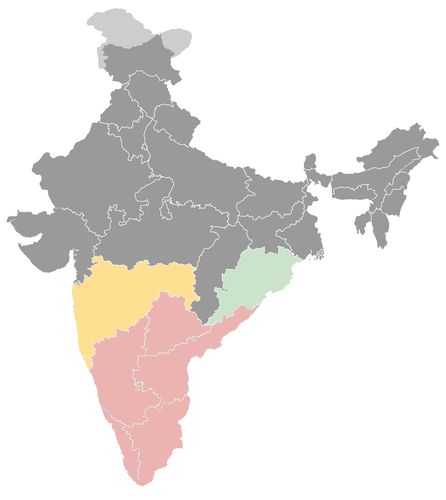
Dominant religion: Hinduism
Supported or encouraged religion: Jainism.
( Goa, Karnataka, Kerala, Maharashtra, Odisha, Tamil Nadu, Telangana and Andhra Pradesh )
17th century
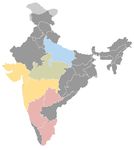
Dominant religion: Hinduism
Supported or encouraged religion: Islam.
( Gujarat, Karnataka, Madhya Pradesh, Maharashtra, Tamil Nadu, Telangana and Uttar Pradesh )
18th century
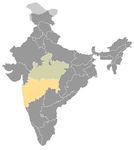
Dominant religions, depending on the period: Hinduism, Islam
( Madhya Pradesh and Maharashtra )
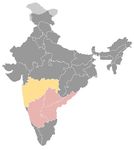
Dominant religion: Islam
Supported or encouraged religion: Hinduism.
( Karnataka, Madhya Pradesh, Maharashtra, Telangana and Andhra Pradesh )
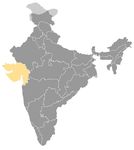
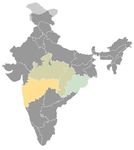
Dominant religion: Hinduism
Supported or encouraged religion: Islam.
( Maharashtra, Odisha and Chhattisgarh )
19th century

( Assam, Bihar, Delhi (NTC), Gujarat, Himachal Pradesh, Karnataka, Kerala, Madhya Pradesh, Maharashtra, Odisha, Punjab, Rajasthan, Tamil Nadu, Telangana, Uttar Pradesh, West Bengal, Andhra Pradesh, Chhattisgarh, Haryana, Jharkand, Meghalaya, Mizoram, Nagaland, Tripura and Uttarakhand )
20th century
( Assam, Bihar, Delhi (NTC), Goa, Gujarat, Himachal Pradesh, Karnataka, Kerala, Madhya Pradesh, Maharashtra, Odisha, Punjab, Rajasthan, Sikkim, Tamil Nadu, Telangana, Uttar Pradesh, West Bengal, Andhra Pradesh, Chhattisgarh, Haryana, Jharkand, Meghalaya, Mizoram, Tripura and Uttarakhand )
 Links to the main sections of the site