

 Français (France)
  Nederlands (nl-NL)
 Of Hindu tradition, (with additional Buddhist influence), the Ikshvaku dynasty ruled for approximately 100 years, ± between 225 and 325 over all or part of South India, during the Ancient Period.
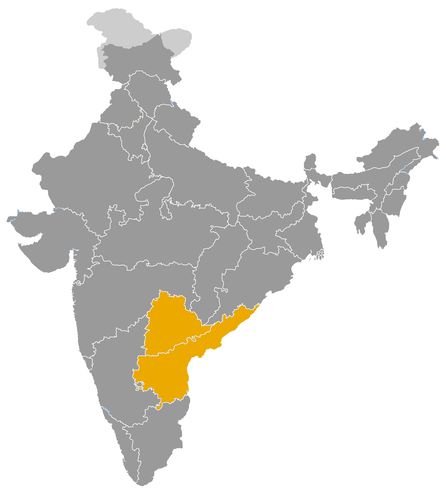
This map illustrates the maximum territory that the Ikshvaku Dynasty had reached at its height, covering the current regions of Andhra Pradesh and Telangana in India. Its main purpose is to provide a visual aid to understand the geographical extent of this dynasty. However, it's important to note that the contemporary borders of these regions may not necessarily coincide with the historical territories.
The Ikshvaku Dynasty of Andhra and Its Role in Ancient Indian History
A regional dynasty in the post Satavahana Deccan
The Ikshvaku dynasty of Andhra holds an important but geographically limited place in the history of ancient India. It should be clearly distinguished from the legendary Ikshvaku lineage associated with Ayodhya and epic tradition. The historical Ikshvakus ruled in the eastern Deccan, mainly in the region of present day Andhra Pradesh, during the third and early fourth centuries CE. Their rise followed the decline of the Satavahanas, whose authority had previously shaped much of the Deccan.
The Ikshvakus did not build a vast empire comparable to the Mauryas, Guptas or Satavahanas. Their significance lies instead in their role as a regional power that preserved political order, supported religious institutions and helped maintain cultural continuity in the eastern Deccan. Their rule shows how post imperial India was often organised through medium sized kingdoms that controlled strategic river valleys, agricultural districts and religious centres.
Vijayapuri and Nagarjunakonda as centres of power
The political centre of the Ikshvaku kingdom was Vijayapuri, generally identified with the site of Nagarjunakonda in the Krishna valley. This location was crucial to the dynasty’s strength. The Krishna River connected inland regions with the eastern plains and facilitated agriculture, communication and religious movement.
Nagarjunakonda was not only a religious site. It was also a royal centre where political authority, elite patronage and institutional life were concentrated. Inscriptions from the region show that the Ikshvaku court was organised, active and closely connected with religious foundations. The rulers and members of the royal family made donations, supported buildings and participated in the public display of dynastic legitimacy.
The Ikshvaku kingdom was therefore centred on a compact but significant territory. Its rulers controlled a zone that combined agricultural resources, riverine communication and access to wider cultural networks. This made their state influential beyond what its limited size might suggest.
Political continuity after the Satavahanas
The political role of the Ikshvakus is best understood in relation to the decline of Satavahana power. The Satavahanas had ruled large parts of the Deccan for several centuries. When their authority weakened, local and regional dynasties emerged in different parts of their former sphere. The Ikshvakus were one of these successor powers in the eastern Deccan.
Vasishthiputra Chamtamula is generally regarded as the founder of Ikshvaku power in Andhra. His successors, especially Mathariputra Virapurushadatta and Ehuvula Chamtamula, maintained royal authority around Vijayapuri and supported the institutional development of the region. Their rule provided political stability at a time when older imperial structures had broken down.
The dynasty’s political importance was not based on extensive conquest. It rested on regional consolidation, control of local elites, strategic patronage and the ability to present itself as a legitimate successor to earlier Deccan traditions. This type of kingship was typical of the period between large imperial formations.
Buddhist patronage and the sacred landscape of Nagarjunakonda
The most visible cultural contribution of the Ikshvakus was their support for Buddhism. Nagarjunakonda became one of the major Buddhist centres of ancient India. Monasteries, stupas, railings, shrines and other religious structures were built or endowed during the Ikshvaku period.
Royal women played a particularly important role in this patronage. Queens, princesses and other female members of the court appear in inscriptions as donors to Buddhist establishments. This is significant because it shows that religious patronage was not limited to the king. It involved the wider royal household and elite society.
The Buddhist institutions of Nagarjunakonda were connected with different monastic traditions, suggesting a diverse and intellectually active religious environment. The site formed part of broader networks linking the Deccan, the Andhra coast and possibly maritime routes across the Bay of Bengal. Through this patronage, the Ikshvakus contributed to the religious and artistic history of South Asia.
Brahmanical legitimacy and religious plurality
Although the Ikshvakus are strongly associated with Buddhist monuments, their rule was not exclusively Buddhist. Their royal names, titles and ritual references also show connections with Brahmanical culture. Some rulers are associated with Vedic sacrifices and donations to Brahmins, reflecting the political importance of Brahmanical legitimacy.
This coexistence of Buddhist and Brahmanical patronage was typical of many ancient Indian dynasties. A ruler could use Brahmanical rituals to affirm sovereignty while royal women and other members of the court supported Buddhist institutions. Rather than representing contradiction, this pattern reflects a plural religious environment in which different traditions contributed to royal authority.
The Ikshvakus therefore played a role in maintaining a mixed religious landscape in the eastern Deccan. Their patronage linked kingship, ritual authority, monastic institutions and local society.
Economic foundations in agriculture, donations and exchange
The economy of the Ikshvaku kingdom depended mainly on agriculture, land revenue and local redistribution. The Krishna valley provided fertile land and supported settled communities, villages and religious establishments. Land grants and donations were central to the functioning of the kingdom.
Religious institutions had an economic role as well as a spiritual one. Monasteries and temples received resources, administered property, attracted donors and supported artisans and workers. Monumental construction at Nagarjunakonda required skilled labour, materials and organised patronage.
The kingdom’s position also connected inland Andhra with coastal trade networks. Although the Ikshvakus were not primarily a maritime power, their territory belonged to a wider zone of movement in which merchants, monks, artisans and ideas circulated. This helped give their cultural production a broader regional significance.
A short lived dynasty with a durable regional legacy
The Ikshvaku dynasty declined in the fourth century, probably replaced or absorbed by other emerging powers in Andhra and the Deccan. Its period of rule was brief, but its historical impact was substantial.
Politically, the Ikshvakus represent the regional reorganisation of the eastern Deccan after the Satavahanas. Culturally, they are closely linked with the Buddhist monuments and inscriptions of Nagarjunakonda. Economically, they illustrate the relationship between agriculture, donations, religious institutions and regional kingship.
Their place in Indian history is therefore not measured by the size of their kingdom, but by the density of their cultural and religious patronage. The Ikshvakus made Nagarjunakonda one of the most important centres of ancient Andhra and left a legacy that remains essential for understanding the political and religious history of the Deccan.
The Geographical Extent of the Ikshvaku Dynasty in the Eastern Deccan
A regional kingdom centred on ancient Andhra
The historical Ikshvaku dynasty of Andhra ruled a relatively compact but strategically important territory in the eastern Deccan. It must be distinguished from the legendary Ikshvaku lineage associated with Ayodhya in epic and Puranic traditions. The Andhra Ikshvakus belonged to a much later historical context, mainly the third and early fourth centuries CE, after the decline of the Satavahana dynasty.
Their kingdom was centred in the region of present day Andhra Pradesh, especially around Vijayapuri, generally identified with the archaeological site of Nagarjunakonda. This area lay in the Krishna River valley, one of the most important geographical corridors of the eastern Deccan. Although the Ikshvakus did not rule a vast empire, their position allowed them to control a zone of agricultural production, religious patronage, inland communication and contact with the eastern coastal regions.
Vijayapuri and Nagarjunakonda as the territorial core
The political heart of Ikshvaku power was Vijayapuri. The site of Nagarjunakonda, associated with this capital, shows the concentration of royal, religious and economic activity in the Krishna valley. The surrounding territory provided fertile lands, access to water, settlement networks and routes linking the interior Deccan with the Andhra plains.
The Ikshvaku state appears to have controlled parts of inland Andhra rather than the entire Telugu speaking region. Its authority was strongest in the area around the middle Krishna valley, where inscriptions, monasteries, stupas and royal foundations are concentrated. This suggests a kingdom whose direct control was regional but well organised.
The capital was more than a royal residence. It was a centre where political authority, religious donations and social prestige were displayed. The large number of Buddhist and Brahmanical associations in the region indicates that the Ikshvaku rulers used their territorial base to support institutions that strengthened their legitimacy.
The Satavahana legacy and the limits of Ikshvaku expansion
The geographical expansion of the Ikshvakus was shaped by the collapse of Satavahana power. The Satavahanas had controlled wide areas of the Deccan and parts of western and central India. When their authority declined, regional dynasties emerged in different parts of their former domain. The Ikshvakus were one such successor power in the eastern Deccan.
They did not inherit the whole Satavahana realm. Their kingdom represented a more localised political formation, centred on Andhra rather than on the larger Deccan world. This limited expansion reflects the broader political fragmentation of the period. Power was no longer concentrated in a single large imperial structure, but divided among several regional houses.
This situation influenced Ikshvaku relations with neighbouring dynasties. Their rulers had to maintain authority in a competitive environment, where legitimacy depended not only on military control but also on marriage alliances, religious patronage, land grants and recognition by local elites.
Connections with the Andhra coast and riverine networks
Although the Ikshvaku capital was inland, the Krishna River linked their territory to the eastern coast. This connection was important for trade, pilgrimage and religious communication. The Andhra coastal region had long been connected with maritime exchange across the Bay of Bengal and with inland routes passing through the Deccan.
The Ikshvakus were not primarily a naval or maritime dynasty, but their location placed them within a wider network of movement. Monks, merchants, artisans and donors could move between inland centres such as Nagarjunakonda and coastal settlements. The presence of major Buddhist establishments in their territory suggests that their kingdom participated in religious networks extending beyond its direct political borders.
This geographical position helped explain the cultural importance of the dynasty. Even if their military expansion was limited, their territory stood at a crossroads between river valleys, inland agrarian zones and coastal circulation.
Relations with neighbouring powers of the Deccan
The neighbouring political landscape of the Ikshvakus was fragmented. To the west and northwest were other post Satavahana powers and local chiefs in the Deccan. To the south lay regions that would later be associated with early Pallava influence and other southern polities. To the east, the coastal Andhra region offered commercial and religious opportunities, but also potential competition.
The Ikshvakus seem to have relied less on large scale conquest than on regional consolidation. Their inscriptions suggest the importance of royal women, alliances and donations, which may reflect wider political links with neighbouring elites. Marriage ties and religious patronage were practical instruments for maintaining influence in a world of medium sized kingdoms.
Their relations with neighbours were probably shaped by cautious balance rather than permanent domination. The relatively short duration of the dynasty suggests that its authority depended on a specific regional configuration that later changed as new powers emerged in Andhra and the southern Deccan.
Religious patronage as a form of territorial influence
The geographical influence of the Ikshvakus extended beyond formal political boundaries through religious patronage. Nagarjunakonda became one of the major Buddhist centres of ancient India. The dynasty and its elite donors supported monasteries, stupas and shrines, making the capital region a destination for religious communities and pilgrims.
This patronage gave the Ikshvaku state a cultural reach greater than its territorial size. Buddhist institutions connected the Krishna valley with wider networks across the Deccan, the Andhra coast and possibly maritime routes. At the same time, Brahmanical rituals and donations helped the kings present themselves as legitimate rulers within established political and religious traditions.
A compact territory with wider historical significance
The geographical extent of the Ikshvaku dynasty was limited compared with the great imperial formations of Indian history. Its durable core lay around Vijayapuri, Nagarjunakonda and the Krishna valley in present day Andhra Pradesh. Its influence reached toward the coastal plains and neighbouring Deccan regions through river routes, religious networks and political alliances.
This regional geography shaped the dynasty’s relations with neighbouring powers. The Ikshvakus had to preserve autonomy in a fragmented post Satavahana world, while using patronage and local consolidation to secure their position. Their kingdom was not large, but its location made it historically significant. By controlling a strategic part of the eastern Deccan, the Ikshvakus helped maintain political continuity and cultural vitality in ancient Andhra.
This chronology concerns the Ikshvakus of Andhra, a historical dynasty of the eastern Deccan, and not the legendary Ikshvaku lineage associated with the epic traditions of Ayodhya. The rulers are known mainly from inscriptions at Vijayapuri and Nagarjunakonda; the regnal dates remain approximate and may vary according to historical reconstructions.
- Vasishthiputra Chamtamula (c. 225–245) • Founding king of Ikshvaku power in Andhra, he established his authority after the decline of the Satavahanas.
- Mathariputra Virapurushadatta (c. 245–265) • Ikshvaku king, he consolidated the kingdom around Vijayapuri and patronised Buddhist and Brahmanical institutions.
- Vasishthiputra Ehuvula Chamtamula (c. 265–290) • Ikshvaku king, he continued religious patronage and maintained the political importance of Nagarjunakonda.
- Rudrapurushadatta (c. 290–325) • Last clearly attested Ikshvaku king, he ruled during the final phase of the dynasty before its regional power disappeared.