

 Français (France)
 Nederlands (nl-NL)
Map of videos including a monument related to the theme featured on this page
• Use the markers to explore the content •
From Egypt to the sanctuaries of India and Southeast Asia, giant statues give physical presence to divine figures, rulers and religious ideals. Their scale transforms the relationship between the sculpted image, its setting and those approaching it. Seated, standing or reclining, isolated or arranged in groups, they organise places of worship, frame passageways or mark the landscape.
This grouping brings the royal colossi of Abu Simbel, the Colossi of Memnon and the Great Sphinx of Giza together with representations of the Buddha, Bahubali and Hanuman. It also includes the sculpted faces and figures of Angkor Thom’s South Gate. Some works stand outdoors; others occupy monastery halls or remain attached to temple façades. Ancient sculptures appear alongside contemporary creations, reflecting different traditions and techniques.
What unites them is the use of dimensions exceeding human scale to make a figure immediately visible and shape its surroundings. Grouped within the monumental sculpture family and the giant statues category, these works provide a basis for comparing the religious, royal and symbolic uses of colossal representation across different settings.
Colossi and Sculptural Groups: Sacred Images and Royal Power at Monumental Scale
The monuments gathered under this theme use enlarged bodies, faces and animal forms to establish a presence and organise space. Their connections do not depend on a shared period or a single artistic tradition. Instead, they demonstrate how monumental sculpture operates within sanctuaries, royal complexes and urban entrances. Egyptian colossi, Asian religious images and the sculptural groups of Angkor combine figurative representation with architectural settings. Their differences reveal that exceptional size can serve distinct purposes, from expressing kingship to supporting worship and defining ceremonial approaches.
Royal Authority and Religious Presence
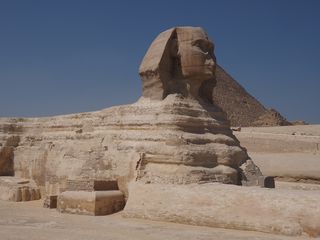
In Egypt, colossal royal images belonged to specific religious programmes. The Colossi of Memnon stood at the entrance to Amenhotep III’s mortuary temple, while the statues of Abu Simbel formed part of temple façades representing Ramesses II and Nefertari. The Great Sphinx combined a lion’s body with a royal head within a pyramid complex. Their scale placed the sovereign within a sacred setting, linking royal identity to divine protection, funerary worship or the enduring authority of kingship.
The Buddhist, Jain and Hindu examples employ comparable enlargement without expressing identical beliefs. Bahubali at Shravanabelagola embodies ascetic detachment, while Hanuman at Jakhoo represents a deity associated with devotion and strength. Buddhist images present different identities, gestures and bodily positions. These sculptures can support offerings, meditation, pilgrimage and communal ceremonies. Their common classification as giant statues therefore describes a material characteristic rather than a shared theology.
Posture, Repetition and Collective Composition
Posture determines how a monumental body occupies its surroundings. Bahubali’s upright stillness differs from the compact composition of seated Buddhist figures and the extended bodies of reclining Buddhas at Bago and Bangkok. Standing images establish vertical landmarks; seated figures concentrate attention around the torso, hands and face. Reclining bodies require a longitudinal approach, with viewers following their length. Gestures, clothing and attributes provide further distinctions that size alone cannot communicate.
Repetition changes the relationship between individual image and ensemble. At Kyaig Pun, four Buddhas face different directions around a central structure. At Abu Simbel, repeated royal figures frame entrances and establish a frontal composition. Along the approach to Angkor Thom’s South Gate, rows of sculpted figures accompany movement towards a gateway surmounted by monumental faces. Such arrangements may surround a central point, reinforce symmetry or turn a passage into a sequence of encounters with images.
Historical Patronage and Modern Commissions
These works demonstrate the persistence of colossal sculpture without implying direct transmission between every culture represented. Pharaonic commissions, medieval foundations and recent religious projects emerged from different systems of patronage. Royal sponsors shaped several ancient programmes, whereas religious organisations, communities and donors have supported numerous modern examples. All required coordinated resources and specialised labour, but their institutional settings and stated purposes varied. Monumental scale could express a ruler’s authority, a community’s religious commitment or the ambitions of a particular foundation.
The images at Bodhgaya, Ravangla, Stok and Monywa show that giant statues remain an active form of religious construction. Contemporary projects retain established identities and visual conventions while adopting modern engineering and new arrangements for visitors. In Ladakh, the large images associated with Shey, Thiksey and Stok occupy different relationships with monastery buildings and outdoor worship spaces. Continuity lies in religious imagery and practice, rather than in an unchanged method of production.
Carved Masses and Constructed Bodies
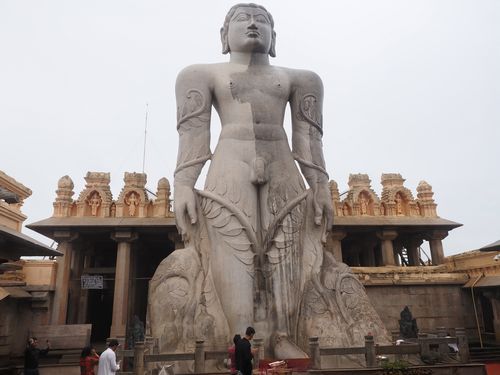
Technical differences distinguish sculptures that may appear equally solid from outside. Bahubali was carved from a single granite mass, while Abu Simbel’s colossi were cut directly from the sandstone cliff. The Great Sphinx was also shaped from bedrock, with masonry interventions forming part of its surviving fabric. In these works, the available stone influenced dimensions, retained connections and vulnerable projections. Geological layers and fractures could constrain carving and subsequently affect preservation.
Other colossal bodies depend on assembly, internal structures and surface modelling. Bangkok’s reclining Buddha has a brick and stucco body finished with lacquer and gilding; the Great Buddha at Bodhgaya incorporates assembled stone elements. External appearance consequently provides an incomplete account of construction. Paint, gilding and protective finishes can unify surfaces composed of different materials, while concealed supports and joints maintain structural continuity. Monumentality may result from removing material or from progressively building it up.
Architecture, Setting and Movement
The selected sculptures interact with architecture through attachment, enclosure or relative independence. At Abu Simbel, the figures belong to the façades themselves. At Shey and Thiksey, large images occupy interiors that restrict viewing distance and frame the body. Bangkok’s reclining Buddha determines the proportions and circulation of its enclosing hall. Outdoor figures at Jakhoo and Monywa instead establish visual relationships across a wider setting, becoming visible before their details can be distinguished.
Physical height is therefore only one measure of spatial effect. An enclosed statue can dominate the viewer’s field of vision without appearing above surrounding buildings. An outdoor image is encountered progressively, from distant silhouette to identifiable features. At Angkor Thom, movement between sculpted groups and beneath the gateway faces makes bodily passage part of the composition. Scale operates through viewing distance, enclosure and sequence as much as through numerical dimensions.
Preservation and Continuing Use
Conservation requirements vary with construction and exposure. Outdoor stone figures face weathering, while constructed images require attention to surface finishes and internal supports. Sheltered statues also depend on the maintenance of their enclosing buildings. Abu Simbel’s relocation introduced joints and modern supporting structures into sculptures originally continuous with the cliff. At Shravanabelagola, ceremonial anointing preserves an active ritual relationship with Bahubali’s body, requiring arrangements that accommodate religious access while protecting the sculpture’s material surfaces.


Giant Statues and Sculptural Ensembles across Egypt and Asia
Cambodia
Angkor • South Gate of Angkor Thom
Built under Jayavarman VII around the late twelfth or early thirteenth century, this entrance combines fortification with religious sculpture. Four monumental faces crown its tower. Along the causeway crossing the moat, two rows of figures hold a serpent. Together, these sculptures transform the approach into a passage through a coordinated ensemble rather than an encounter with a single isolated statue.
Egypt
Abu Simbel • Royal Colossi
Carved during the thirteenth century BCE, these figures belong to the façades of Ramesses II’s two rock-cut temples. Four seated statues represent the king outside the Great Temple; six standing figures depict Ramesses and Nefertari at the Small Temple. Cut from sandstone, they connect royal imagery with religious worship. They were relocated with the sanctuaries to escape flooding by Lake Nasser.
Giza • Great Sphinx of Giza
The Sphinx stands beside the pyramid complex generally associated with Khafre, a Fourth Dynasty ruler. Its reclining lion’s body and royal human head were principally carved from the limestone bedrock. This hybrid figure represents a form of colossal sculpture in which animal strength and royal identity are combined. Its setting connects the image with the surrounding temples and royal funerary landscape.
Luxor • Colossi of Memnon
On the Nile’s western bank, two seated statues of Amenhotep III marked the entrance to his mortuary temple in the fourteenth century BCE. Smaller female figures accompany the king beside his legs. Their present name derives from a later Greek interpretation. The pair illustrates how repeated royal images established a monumental threshold between the surrounding plain and a religious complex.
India
Bihar, Bodhgaya • Great Buddha
Inaugurated in 1989, this monument depicts the Buddha seated in meditation on a lotus pedestal. Commissioned through the Japanese Buddhist organisation Daijokyo, it stands in a garden with ten figures representing principal disciples. Assembled stone elements create its monumental body. The ensemble is separate from the Mahabodhi sanctuary and expresses a contemporary international Buddhist presence in the city associated with enlightenment.
Himachal Pradesh, Shimla • Shri Hanuman Mandir Jakhoo
The Jakhoo sanctuary is dedicated to Hanuman, a deity associated with the Ramayana. A contemporary colossal statue stands near the temple on the hill above Shimla. Its upright posture and orange colouring make it visible across the surrounding area. Within this selection, it represents Hindu monumental imagery and demonstrates how a religious figure can also become a distant landscape marker.
Karnataka, Shravanabelagola • Gomateshwara Temple
This sanctuary contains the tenth-century statue of Bahubali, also known as Gomateshwara, commissioned under Chamundaraya’s patronage. Carved from a single granite mass, the unclothed figure stands motionless with arms slightly separated from the body. Vines around the legs express prolonged ascetic stillness. The sculpture brings together monolithic construction, Jain religious imagery and pilgrimage practices involving ceremonial anointing of the monumental body.
Ladakh, Shey • Shey Gompa
Associated with Shey’s former royal residence, this monastery houses a large seated Buddha made during the seventeenth century. Its gilded metal covering and enclosed setting distinguish it from outdoor colossi. The figure occupies a substantial portion of its shrine, making sculpture central to the building’s spatial organisation. It exemplifies monumental scale experienced through proximity and enclosure rather than visibility across an extensive landscape.
Ladakh, Stok • Buddha Statue
Near Stok village, this contemporary statue represents Maitreya, the future Buddha. The seated figure rises above its pedestal in an open setting overlooking the Indus Valley. Its gilded surfaces and scale establish a visible landmark among the surrounding mountains. Used for religious gatherings, it illustrates the continuing creation of monumental Buddhist images outside the enclosed spaces of older monasteries.
Ladakh, Thiksey • Thiksey Gompa
This monastery of the Gelug tradition contains a monumental Maitreya statue within a temple arranged around it. The seated figure extends through more than one building level. Its crowned head, ornaments and hand gestures identify its religious character. The relationship between the image and its enclosing architecture demonstrates how a giant statue can determine interior proportions within an active monastic complex.
Sikkim, Ravangla • Tathagata Tsal
Also known as Buddha Park, this contemporary complex centres on a large seated figure inaugurated in 2013. Gardens, paths and religious spaces surround the statue. Its elevated position gives the grounds a clear visual focus. The ensemble connects monumental Buddhist imagery with an accessible landscape designed for worship, walking and visitation, reflecting the religion’s continuing presence in modern Sikkim.
Myanmar
Bago • Kyaig Pun Pagoda
Four seated Buddhas face the cardinal directions around a central square structure. Associated with King Dhammazedi’s fifteenth-century patronage, the group represents Gautama and three preceding Buddhas. The figures stand outdoors, allowing movement around the entire composition. Their arrangement makes repetition and directional orientation defining features, with each side presenting another monumental image rather than a secondary rear elevation.
Bago • Shwe Tha Lyaung
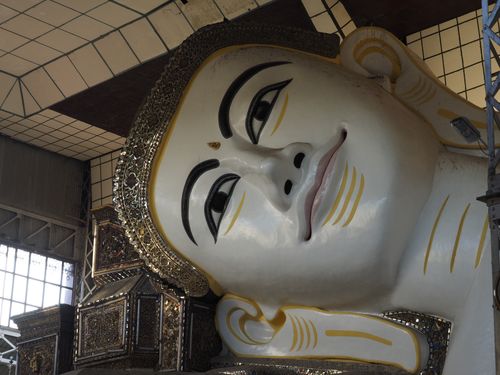
This reclining Buddha belongs to Bago’s Mon religious tradition. Its foundation is traditionally assigned to the tenth century, although later restorations shaped its present appearance. Approximately fifty-five metres long, the figure lies on its right side with the head supported by one hand. A protective shelter allows close observation of the face, garment and feet along an extended viewing route.
Monywa • Maha Bodhi Ta Htaung
Near Monywa, this Buddhist complex combines the standing Laykyun Sekkya Buddha with a monumental reclining figure and numerous seated images associated with Bodhi trees. Developed in the contemporary period, the grounds connect these elements through paths and religious spaces. The site brings individual colossal bodies and repeated smaller figures into a shared devotional landscape, contrasting different postures and scales.
Thailand
Bangkok • Grand Reclining Buddha
Created at Wat Pho under Rama III in the nineteenth century, this figure measures approximately forty-six metres long. Its brick and stucco body is lacquered and gilded, while mother-of-pearl inlays decorate the soles. The enclosing hall follows its longitudinal form. Sculpture and architecture consequently operate together, with the colossal body determining both the building’s proportions and circulation around the image.