

 Français (France)
  Nederlands (nl-NL)
 The Colossi of Memnon, located in Luxor, Egypt, are two monumental statues depicting Pharaoh Amenhotep III. Constructed during the 18th Dynasty, these towering sculptures, nearly 18 meters tall, once guarded the entrance to the mortuary temple of Amenhotep III, now mostly destroyed. Renowned for their symbolic significance in ancient Egyptian history and the acoustic phenomenon linked to one of the statues in antiquity, they are a UNESCO World Heritage Site and a key attraction for visitors and scholars alike.
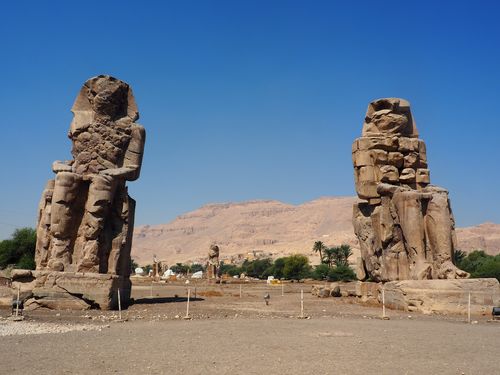
Luxor • Colossi of Memnon
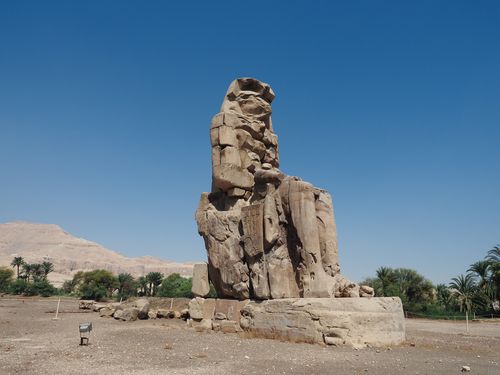
Luxor • Colossi of Memnon
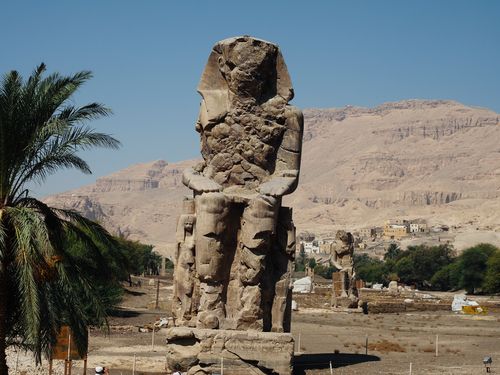
Luxor • Colossi of Memnon
Monument profile
Colossi of Memnon
Monument categories: Giant Statues, Archaelogic site
Monument families: Archaeological • Giant statues or set of statues
Monument genres: Archaeological site, Religious
Cultural heritage: Ancient Egypt
Geographic location: Luxor • Egypt
Construction period: before the 6th century BC
This monument in Luxor is inscribed on the UNESCO World Heritage List since 1979 and is part of the serial property "Ancient Thebes with its Necropolis".See the UNESCO monuments featured on this site
• Links to •
• Dynasties that contributed to the construction of the monument •

• List of videos about Luxor on this site •
Luxor • Valley of the Kings: Treasures of the Pharaohs
Luxor • Temple of Hatshepsut and Colossi of Memnon
Luxor • The Majestic Temple of Amun, Egypt
Luxor • Wonders of the Karnak Temple
The Colossi of Memnon: Political Significance and Cultural Transformation
The Colossi of Memnon, located on the west bank of the Nile in Luxor, Egypt, are monumental statues that stand as a testament to the political vision and artistic ingenuity of the 18th Dynasty. Constructed around 1350 BCE, these statues reflect the grandeur of Pharaoh Amenhotep III's reign and have undergone significant transformations over the centuries, each contributing to their enduring cultural and historical significance.
Political and Social Motivations
The Colossi of Memnon were constructed as part of the mortuary temple complex of Amenhotep III, which was intended to immortalize the pharaoh and affirm his divine status. These towering statues, each standing approximately 18 meters tall, depicted the pharaoh seated on his throne, symbolizing his role as a mediator between the gods and the people.
Political Motivations
- Assertion of Power: The colossal size and grandeur of the statues symbolized the centralized authority and divine nature of the pharaoh’s rule.
- Unification of Egypt: Decorative motifs on the statues’ thrones depicted the plants of Upper and Lower Egypt, emphasizing the pharaoh’s role in uniting the two regions under one kingdom.
Social Motivations
- Religious Significance: The mortuary temple served as a site for rituals to ensure the pharaoh’s continued influence in the afterlife.
- Public Representation: The grandeur of the statues reinforced the social order and highlighted the centrality of the pharaoh in the lives of ordinary Egyptians.
Historical Events and Regional Impact
- Construction and Prosperity: Built around 1350 BCE, the Colossi flanked the entrance to Amenhotep III’s vast mortuary temple, which was one of the largest temple complexes of its time. The temple celebrated the wealth, stability, and artistic achievements of the New Kingdom.
- Earthquake Damage: A major earthquake in 27 BCE severely damaged one of the statues, causing it to emit sounds at sunrise due to cracks in the stone. This phenomenon, known as the "Vocal Memnon," became a source of fascination and myth, attracting visitors from across the Greco-Roman world.
- Roman Repairs: In the 3rd century CE, the Roman Emperor Septimius Severus ordered repairs to the damaged statue, ending the sound phenomenon but cementing the Colossi’s place as a significant site of cultural and historical interest.
- Modern Rediscovery: The 19th and 20th centuries saw renewed archaeological interest in the Colossi, leading to detailed documentation and conservation efforts that brought global attention to their significance.
Global Context During the 18th Dynasty
At the time of their construction, Egypt was a dominant cultural and political force in the ancient world, enjoying economic prosperity and extensive trade networks. In other parts of the world:
- Mesopotamia: The Kassite Dynasty ruled Babylonia, promoting cultural and administrative advancements.
- China: The Shang Dynasty was establishing the foundations of Chinese civilization through advancements in bronze metallurgy and statecraft.
- Europe: Societies in the Bronze Age were developing trade routes and complex social hierarchies.
- Indus Valley: The Harappan civilization was transitioning to smaller, localized settlements.
- Egypt’s ability to produce monumental structures like the Colossi of Memnon set it apart as a beacon of centralized power and artistic achievement.
Transformations Over Time
The Colossi have undergone numerous transformations that reflect shifts in political power and cultural influences:
- Natural Erosion: Earthquakes and environmental factors have gradually worn down the statues and destroyed much of the associated temple complex.
- Cultural Reinterpretation: The "Vocal Memnon" phenomenon imbued the statues with a mythical quality, making them a pilgrimage site during the Greco-Roman period.
- Restoration Efforts: Roman repairs, while altering the statues, highlighted their enduring significance to successive empires.
- Archaeological Discoveries: Modern excavations have revealed new insights into the original temple complex and the craftsmanship of the statues.
Current State and Challenges to Conservation
The Colossi of Memnon remain iconic landmarks in Luxor but face several preservation challenges:
- Environmental Degradation: Erosion from wind, sand, and temperature fluctuations continues to threaten the structural integrity of the statues.
- Rising Groundwater: Increased water levels in the Luxor region pose risks to the foundations of the statues.
- Tourism Pressure: Heavy foot traffic and visitor interaction contribute to the physical wear of the site.
- Urban Encroachment: Modern developments near the site add to the environmental and structural pressures.
Conservation efforts include advanced technologies such as 3D scanning and material analysis to document and stabilize the statues. International collaborations play a crucial role in preserving this heritage for future generations.
UNESCO Recognition and Cultural Impact
Designated as part of the "Ancient Thebes with its Necropolis" UNESCO World Heritage Site in 1979, the Colossi of Memnon enjoy global recognition as symbols of ancient Egypt’s enduring legacy. This designation has provided resources and awareness for their preservation.
Cultural Significance
- The Colossi continue to attract millions of visitors annually, contributing to the cultural and economic vitality of the region.
- Their enduring presence serves as a reminder of Egypt’s pivotal role in shaping human history and civilization.
Conclusion
The Colossi of Memnon are architectural and cultural marvels that embody the innovation, artistry, and political vision of ancient Egypt. Despite centuries of natural and human-induced challenges, they remain a testament to the grandeur of the 18th Dynasty and its enduring influence on world heritage. As efforts to preserve and study the Colossi continue, they stand as timeless symbols of the ingenuity and resilience of one of history’s greatest civilizations.
The Colossi of Memnon: Architectural Innovation and 18th Dynasty Mastery
The Colossi of Memnon, located on the west bank of the Nile in Luxor, Egypt, stand as monumental testaments to the technological advancements and artistic innovation of the 18th Dynasty. Constructed around 1350 BCE during the reign of Pharaoh Amenhotep III, these statues were part of his mortuary temple complex and exemplify the grandeur of ancient Egyptian architecture and engineering.
Materials and Construction Techniques
The construction of the Colossi of Memnon demonstrates the sophisticated understanding of materials and techniques by the architects and craftsmen of the New Kingdom.
Materials Used
- Quartzite: The statues were carved from quartzite sandstone sourced from quarries at El-Gabal el-Ahmar, near modern-day Cairo, over 600 kilometers away from their final location in Luxor.
- Transportation: The massive stone blocks, each weighing around 720 tons, were transported via the Nile River during the flood season, showcasing logistical expertise.
Employed Techniques
- Extraction and Transport: The quartzite blocks were extracted using copper tools, then transported on wooden sleds, likely via waterways, an impressive logistical feat for the time.
- On-site Assembly: The statues were carved directly on-site, a method that ensured precision in proportions and details.
- Carving Techniques: The carving techniques demonstrate the exceptional mastery of the craftsmen, especially in the rendering of decorative details such as floral patterns and inscriptions.
Architectural Features and Decorative Motifs
The Colossi of Memnon were designed to depict Pharaoh Amenhotep III seated on his throne, with hands resting on his knees and his gaze directed eastward towards the rising sun.
Key Features
- Throne Decorations: The thrones are adorned with reliefs representing the unification of Upper and Lower Egypt, symbolized by the intertwined papyrus and lotus plants.
- Ornamental Details: Subtle decorative patterns and inscriptions emphasize the pharaoh’s divine status and the prosperity of his reign.
- Integration into the Mortuary Temple: The statues flanked the grand entrance to Amenhotep III’s mortuary temple, which was among the largest religious complexes of its time but is now largely in ruins.
Regional and Foreign Influences
The Colossi also highlight a blend of artistic traditions:
- Egyptian Symbolism: Traditional motifs emphasize the pharaoh’s divine and earthly authority.
- Cultural Exchange: The later interpretation of the statues during the Greco-Roman era, particularly the "Vocal Memnon" phenomenon, reflects their evolving cultural significance.
Notable Statistics and Anecdotes
Scale and Weight: Each statue weighs an estimated 720 tons, making them among the largest monolithic statues in the ancient world.
The Vocal Memnon: After being damaged by an earthquake in 27 BCE, one of the statues began to emit a sound at sunrise due to the heating and cooling of the stone. This phenomenon attracted visitors from across the Roman Empire, including Emperor Hadrian.
Roman Repairs: In the 3rd century CE, Emperor Septimius Severus attempted to restore the damaged statue, ending the sound phenomenon but preserving the site’s allure.
UNESCO Recognition and Global Significance
The Colossi of Memnon are part of the "Ancient Thebes with its Necropolis", a UNESCO World Heritage Site designated in 1979. This recognition underscores their importance as cultural and historical treasures.
Impact of UNESCO Listing
- Conservation Efforts: UNESCO designation has spurred international initiatives to document and preserve the statues.
- Tourism and Research: The Colossi remain a focal point for visitors and scholars, highlighting their enduring relevance to global heritage.
Challenges and Preservation Efforts
Despite their iconic status, the Colossi face several challenges:
- Environmental Erosion: Wind, sand, and temperature fluctuations accelerate the degradation of the stone.
- Rising Groundwater: Increased water levels in the region threaten the structural stability of the statues.
- Tourism Impact: Foot traffic and interaction with the site can lead to further wear.
Modern preservation techniques, such as 3D scanning and material analysis, are employed to mitigate these risks and ensure the longevity of the Colossi for future generations.
Conclusion
The Colossi of Memnon exemplify the technological and artistic achievements of ancient Egypt, reflecting the grandeur and ambition of the 18th Dynasty. Their architectural and cultural significance has transcended millennia, earning them a place as icons of global heritage. As a UNESCO World Heritage Site, the Colossi continue to inspire awe and remind us of the ingenuity and legacy of one of history’s most remarkable civilizations.