

 Français (France)
  Nederlands (nl-NL)
 The Temple of Amun in Luxor is a significant site of ancient Egypt, located in the city of Luxor. Dedicated to the worship of the god Amun, it reflects the religious and cultural prominence of this deity in ancient Egyptian society. Constructed and expanded over centuries by various rulers, the temple stands as a remarkable testament to the architectural and historical wealth of the region. Recognized as a UNESCO World Heritage site, it attracts numerous visitors and scholars eager to explore its monuments and understand its role in the traditions of ancient Egypt.
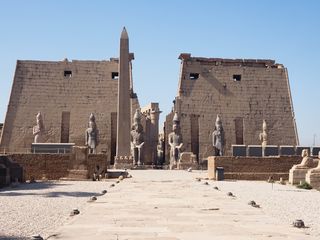

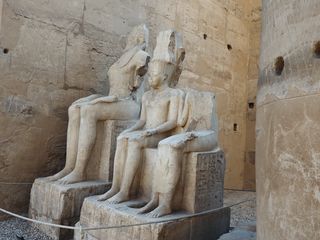
Monument profile
Temple of Amun
Monument category: Egyptian temple
Monument family: Temple
Monument genre: Religious
Cultural heritage: Ancient Egypt
Geographic location: Luxor • Egypt
Construction period: before the 6th century BC
This monument in Luxor is inscribed on the UNESCO World Heritage List since 1979 and is part of the serial property "Ancient Thebes with its Necropolis".See the UNESCO monuments featured on this site
• Links to •
• Dynasties that contributed to the construction of the monument •

• List of videos about Luxor on this site •
Luxor • Valley of the Kings: Treasures of the Pharaohs
Luxor • Temple of Hatshepsut and Colossi of Memnon
Luxor • The Majestic Temple of Amun, Egypt
Luxor • Wonders of the Karnak Temple
The Temple of Amun at Luxor: Political and Social Motivations, Historical Transformations, and Preservation Challenges
The Temple of Amun at Luxor, located in the modern city of Luxor, Egypt, stands as a significant testament to the grandeur of ancient Egyptian civilization. Its construction, initiated during the reign of Amenhotep III (circa 1391–1353 BCE) during the 18th Dynasty, reflects the political and social ambitions of the New Kingdom rulers. This temple played a central role in the religious and political life of the region, serving as a focal point for the worship of Amun, one of the most powerful deities in the Egyptian pantheon.
Political and Social Motivations Behind the Construction
The temple's construction was driven by multiple political and social factors. Politically, it was designed to affirm the divine authority of the pharaohs, positioning them as intermediaries between Amun and the people. The temple functioned as a powerful propaganda tool, reinforcing the legitimacy of the rulers by associating them with the supreme deity of Thebes.
Socially, the temple served as an economic and cultural hub, providing employment to artisans, priests, and laborers. The annual Opet Festival, which involved the ceremonial procession of Amun's statue from Karnak to Luxor, fostered a strong sense of unity among the population and contributed to the economic prosperity of the region by attracting pilgrims and traders.
Major Historical Events and Their Impact on the Region
Throughout history, the Temple of Amun at Luxor has witnessed several pivotal events that shaped the political and social landscape of the region:
- The New Kingdom (16th–11th century BCE): During this era, the temple was expanded and embellished by successive pharaohs, including Ramses II, who added colossal statues and monumental pylons. The temple's role in the Opet Festival cemented its significance in state rituals.
- The Late Period and Persian Conquests (7th–4th century BCE): The temple experienced a decline as foreign rulers introduced new administrative structures and religious policies that diminished the influence of the priesthood of Amun.
- The Greco-Roman Period (332 BCE–395 CE): Under Ptolemaic and later Roman rule, the temple was partially repurposed, incorporating Greek and Roman architectural elements. The Romans used parts of the complex as a military stronghold, showcasing its strategic importance.
- The Islamic Period (7th century CE onwards): The arrival of Islam led to the transformation of some temple areas into residential and religious structures, with parts of the complex being incorporated into local communities.
Global Context and Comparisons
During the construction and expansion of the Temple of Amun at Luxor, other civilizations around the world were also embarking on grand architectural projects.
- In Mesopotamia, the Neo-Assyrian Empire was erecting massive ziggurats as centers of worship and administration.
- In China, the Shang Dynasty was developing elaborate palaces and tombs that reflected their hierarchical social order.
- In the Americas, the Olmec civilization was creating monumental stone sculptures, highlighting their cultural sophistication.
Comparatively, the Temple of Amun at Luxor stands out for its integration of both religious and political functions, serving as a nexus of power that influenced the entire region for centuries.
Architectural Transformations Over the Centuries
Over time, the temple underwent significant architectural transformations that reflected changes in power and cultural influences.
- The original 18th Dynasty design featured an axial layout, leading from the grand entrance pylons through a series of courtyards and hypostyle halls to the inner sanctum.
- Under Ramses II, monumental statues and obelisks were added to showcase his military victories and divine favor.
- The Romans adapted parts of the temple for administrative and military purposes, leaving behind inscriptions and structural modifications.
Cultural Significance and Current State of Preservation
Today, the Temple of Amun at Luxor remains one of the most visited and studied monuments in Egypt. Inscribed as a UNESCO World Heritage Site in 1979 as part of "Ancient Thebes with its Necropolis," the temple attracts thousands of tourists and researchers annually. Its cultural significance lies in its continuous role as a symbol of Theban religious power and its architectural grandeur, which offers valuable insights into ancient Egyptian craftsmanship and spiritual practices.
Challenges to Preservation
Despite its well-preserved state, the temple faces several threats that endanger its long-term survival:
- Environmental Factors:Rising groundwater levels and salt infiltration pose a significant risk to the temple's foundation and intricate carvings.
- Tourism Pressure: Heavy foot traffic results in wear and tear on the stone surfaces, necessitating careful crowd management strategies.
- Urban Encroachment: The expansion of modern Luxor poses risks of pollution and structural damage due to nearby construction activities.
- Climate Change: Increased temperatures and humidity fluctuations accelerate the deterioration of sandstone reliefs and columns.
Conclusion
The Temple of Amun at Luxor stands as a testament to the architectural, political, and religious prowess of ancient Egypt. Its historical transformations, from its construction in the New Kingdom to its adaptation in later periods, reflect the dynamic nature of Egyptian civilization. Ongoing conservation efforts, supported by international organizations and the Egyptian government, are crucial to safeguarding this iconic monument for future generations, ensuring its legacy endures as a beacon of Egypt's cultural heritage.
The Temple of Amun at Luxor: Architectural Innovations and Technological Advancements During the 20th Dynasty
The Temple of Amun at Luxor, located in the modern city of Luxor, Egypt, stands as a remarkable example of architectural and technological advancements achieved during the 20th Dynasty (circa 1186–1069 BCE). This period, marked by the rule of pharaohs such as Ramses III, witnessed significant developments in construction techniques and materials, reflecting the grandeur and power of the New Kingdom.
Technological Advancements and Construction Techniques
The construction of the Temple of Amun at Luxor during the 20th Dynasty showcased impressive engineering innovations and craftsmanship. The builders employed several advanced techniques to achieve monumental scale and precision, including:
- Stone Quarrying and Transportation: Massive sandstone blocks, sourced primarily from the quarries of Gebel el-Silsila, were meticulously cut and transported along the Nile using sophisticated raft systems and labor management strategies.
- Mortise and Tenon Joints: The blocks were interlocked using mortise and tenon joints, ensuring structural stability and longevity. This technique allowed for the precise alignment of colossal elements without the use of modern adhesives.
- Mudbrick Ramps: To facilitate the construction of towering pylons and massive columns, large mudbrick ramps were built, enabling workers to hoist stones to great heights.
- Relief Carving Techniques: Artists and craftsmen developed intricate relief carving methods, utilizing copper and bronze chisels to depict detailed battle scenes, religious iconography, and inscriptions glorifying the reign of the pharaohs.
Materials Used and Their Symbolism
The temple was primarily constructed using sandstone, known for its durability and ease of carving. Other significant materials included:
- Granite: Used for obelisks and statues, symbolizing strength and permanence.
- Gold and Precious Stones: Applied to decorative elements, reflecting the divine nature of the temple and its significance in the worship of Amun.
- Painted Stucco: Used to enhance the visual impact of relief carvings, with pigments sourced from natural minerals such as ochre and malachite.
These materials not only provided structural integrity but also served to convey the symbolic and religious meaning of the temple, reinforcing its role as a center of worship and power.
Architectural Features and Cultural Influences
The architectural design of the Temple of Amun at Luxor is notable for its fusion of regional traditions and external influences, highlighting Egypt's interactions with neighboring cultures. Key features include:
- Hypostyle Hall: A vast hall supported by colossal columns adorned with papyrus and lotus capitals, reflecting the symbolic unity of Upper and Lower Egypt.
- Axial Alignment: The temple follows a precise axial plan, aligning with the Karnak Temple via the Avenue of Sphinxes, emphasizing the ritual connection between the two complexes.
- Pylon Entrances: Massive pylons decorated with reliefs depicting military victories and divine blessings, a hallmark of the 20th Dynasty's propaganda efforts.
- External influences, particularly from Nubia and the Levant, are evident in artistic elements such as foreign tribute scenes and architectural details borrowed from Near Eastern cultures, demonstrating the extent of Egypt's trade and diplomatic connections.
Notable Structural and Historical Aspects
The temple's layout features a unique blend of religious and administrative functions, with:
A sanctuary dedicated to the Theban Triad (Amun, Mut, and Khonsu), emphasizing the theological significance of the site.
The Opet Festival Court, where annual processions took place, strengthening the bond between the pharaoh and the people.
Colossal statues of Ramses III, symbolizing his divine authority and military prowess.
Statistics and Anecdotes
The temple spans an impressive length of 260 meters, with pylons rising to heights of 24 meters, illustrating the grandeur intended by its builders.
Inscriptions reveal that over 2,500 workers and artisans were involved in its construction at its peak.
An anecdote suggests that the temple once housed a large cache of gold artifacts, hidden during the decline of the New Kingdom, some of which were discovered in the 19th century.
International Recognition and UNESCO World Heritage Status
The Temple of Amun at Luxor has been recognized globally for its architectural and cultural significance. It was inscribed as a UNESCO World Heritage Site in 1979, as part of the "Ancient Thebes with its Necropolis" site. This designation has enhanced efforts to preserve and promote the temple, increasing awareness of its historical importance and attracting thousands of visitors annually.
Challenges to Preservation
Despite its grandeur, the temple faces several challenges that threaten its structural integrity and cultural value:
- Environmental Threats: Rising groundwater levels and salinization pose significant risks to the temple's foundations and carvings.
- Tourism Impact: The high volume of visitors contributes to wear and tear, necessitating stringent conservation measures.
- Urban Encroachment: The expansion of modern infrastructure around Luxor poses challenges to maintaining the temple's historical context.
- Climate Change: Increasing temperatures and humidity fluctuations accelerate the erosion of sandstone surfaces.
Efforts by the Egyptian authorities and international organizations aim to implement sustainable conservation practices, including groundwater management systems and controlled visitor access to ensure the temple's longevity.
Conclusion
The Temple of Amun at Luxor remains a profound testament to the architectural ingenuity and cultural richness of the 20th Dynasty. Its grandeur, innovative construction techniques, and symbolic significance continue to inspire scholars and visitors alike. Through ongoing preservation efforts and international recognition, this iconic monument will remain a vital link to Egypt's glorious past for future generations.