Français (France)
  Nederlands (nl-NL)
 00:00 • intro | 00:11 • the Valley of the Kings | 01:38 • the tomb of Ramses IV | 06:20 • the tomb of Ramses IX | 10:20 • the tomb of Merenptah
Personal creation from visual material collected during my trip Egypt (2024)
Map of places or practices in Luxor on this site
• Use the markers to explore the content •
Luxor and the Valley of the Kings, Treasures of the Pharaohs
A royal necropolis on the western bank of the Nile
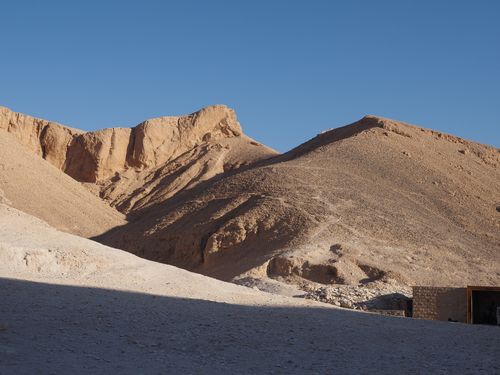
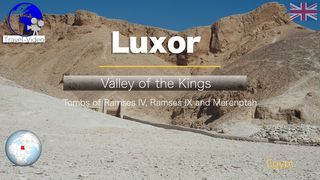
Across the Nile from modern Luxor lies one of the most celebrated archaeological landscapes in the world: the Valley of the Kings. Hidden among limestone cliffs and dry desert ravines, this royal cemetery became the burial place of many rulers of the New Kingdom. Instead of building pyramids visible from afar, the pharaohs chose tombs cut deep into the mountain, protected by terrain and secrecy.
This video explores the valley itself together with three important royal tombs: those of Ramses IV, Ramses IX and Merenptah. It presents a site where landscape, religion and political authority were closely connected. Behind the stark exterior of the desert are corridors, chambers, painted walls and symbolic texts intended to guide the king into eternal life.
The principal tombs featured in the video
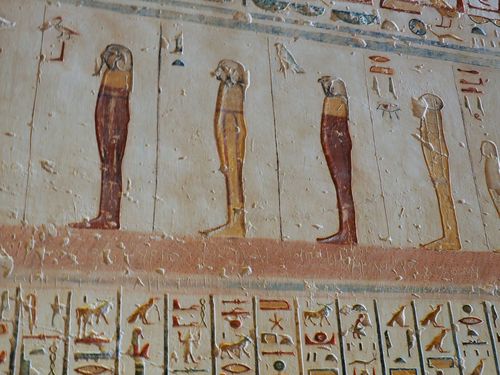
The tomb of Ramses IV is among the most impressive and visually coherent monuments in the valley. Its long descending axis leads visitors through a sequence of corridors toward the burial chamber. The walls preserve extensive decorative programs based on royal funerary books. Divine figures, ritual scenes and celestial ceilings illustrate the king’s passage through the underworld and his hoped-for rebirth.
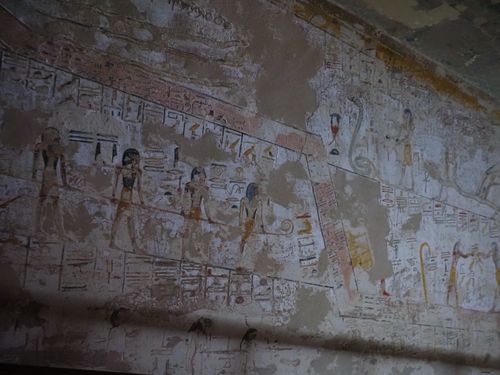
The tomb of Ramses IX is especially valued for the quality of its wall decoration and the clarity of its painted surfaces. It belongs to the later Ramesside period and shows the continuity of funerary traditions while also reflecting stylistic changes of the time. The vivid colors that survive in several chambers make this tomb particularly instructive for understanding ancient Egyptian interior decoration.
The tomb of Merenptah, son and successor of Ramses II, is larger and architecturally more complex. It extends deeply into the rock and includes multiple halls and chambers. It is also known for its massive stone sarcophagus, a reminder of the importance placed on protecting the royal body and ensuring the permanence of the burial.
Historical, religious and architectural context
The Valley of the Kings was used mainly between the sixteenth and eleventh centuries BCE, during the Eighteenth, Nineteenth and Twentieth Dynasties. By this period, royal burial customs had changed significantly. Monumental pyramids gave way to hidden tombs in western Thebes, the region associated with sunset and death. This western landscape became the sacred realm of royal afterlife.
Each tomb was designed as more than a grave. It functioned as a ritual passage through the underworld. Corridors, stairways, pillared halls and burial chambers were carefully aligned and decorated with texts such as the Amduat or the Book of Gates. These compositions described the nocturnal journey of the sun god and symbolically linked the deceased king with cosmic renewal.
The tombs were created by highly skilled craftsmen, many of whom lived in the nearby workers’ village of Deir el-Medina. Their expertise in excavation, plastering, carving and painting produced interiors of remarkable precision. Even where ancient looting or later damage occurred, the artistic quality remains evident.
The surrounding mountain also contributed to the symbolism of the site. The peak known as el-Qurn rises above the valley in a naturally pyramidal form, perhaps reinforcing the sacred associations once expressed through pyramid architecture.
What the videos on this site make especially clear
A site composed of underground monuments is particularly suited to presentation through carefully selected and animated photography. This format allows viewers to follow the linear plans of tombs, understand the sequence of spaces and appreciate depth that can be difficult to perceive during a brief visit.
Slow transitions highlight carved hieroglyphs, painted ceilings, figures of gods and subtle surface details often missed in crowded conditions. Changes of scale help explain the contrast between the silent desert exterior and the richly decorated chambers hidden within the cliffs.
By moving from one tomb to another, the video also makes comparison easier. Differences in layout, decoration, proportions and preservation become progressively understandable, offering a clearer reading of the valley as a whole.
An essential legacy of ancient Egypt
The Valley of the Kings remains one of the most powerful testimonies to ancient Egyptian beliefs about death, kingship and eternity. Through the tombs of Ramses IV, Ramses IX and Merenptah, this video offers a structured introduction to one of humanity’s great funerary landscapes and invites further exploration through the detailed pages linked to each monument.
Music:
- - YouTube video library - Elogy - Asher Fulero
- - YouTube video library - Fugue Lullaby - Sir Cubworth
- - YouTube video library - No.4 Piano Journey - Esther Abrami
- - YouTube video library - No.5 The Day I Met Her - Esther Abrami
Disclaimer: Despite its appropriateness, copyright issues prevent the use of egyptian traditional music in "Luxor • Valley of the Kings: Treasures of the Pharaohs", hence the use of royalty-free music. Despite our careful selection, some might regret this decision, which is necessary to avoid potential lawsuits. Although difficult, this decision is the only viable solution.

Audio Commentary Transcript
The Valley of the Kings
The Valley of the Kings, located on the west bank of the Nile in Luxor, was the royal necropolis of ancient Egypt during the New Kingdom, a period spanning the 18th to the 20th Dynasty (approximately 1550 to 1070 BCE). This iconic site was chosen for its proximity to Thebes, the religious and political capital of the time, as well as for the natural protection offered by the surrounding mountains, which helped reduce the risk of tomb robberies.
The tombs in the Valley of the Kings were far more than simple burial sites. In ancient Egyptian religion, they represented a passage to the afterlife and housed the items necessary for the deceased's journey through the underworld. These funerary monuments were richly adorned with texts and scenes from sacred books, such as the Book of the Dead, guiding the pharaoh’s soul through trials to attain eternal life among the gods.
The Valley of the Kings currently contains 65 excavated tombs, although archaeologists estimate that there may be up to a hundred in total, still buried under sediment or rubble. These tombs, carved into the mountainside, have benefited from the region's arid climate, a key factor in the exceptional preservation of many artifacts and human remains. However, the same climate, combined with recent fluctuations in temperature and humidity caused by tourism or modern climatic phenomena, can weaken pigments, wall paintings, and even mummies themselves, highlighting the urgency of their preservation.
the tomb of Ramses IV
Ramses IV, a pharaoh of the 20th Dynasty, left a notable legacy despite his short reign. His tomb, KV2, located in the Valley of the Kings, follows a simple rectilinear plan but stands out for its rich decorations inspired by sacred texts, such as the Book of the Dead. His imposing red quartzite sarcophagus reflects the grandeur of his era. Accessible and well-preserved, this tomb is a valuable testament to the beliefs and funerary art of ancient Egypt.
the tomb of Ramses IX
Ramses IX, ruler of the 20th Dynasty, reigned for approximately 18 years during a period marked by economic and social turmoil in ancient Egypt. Despite challenges such as corruption and tomb robberies, his reign maintained a degree of stability and left behind a significant architectural legacy.
Though relatively modest, his tomb stands out with scenes from Egyptian funerary texts, such as the Book of Caverns and the Book of the Amduat, illustrating beliefs about the afterlife. The vividly colored frescoes showcase the artistic mastery of the time, despite the increasing constraints of his reign.
Although the reigns of Ramses IX and Ramses IV were close in time, their tombs exhibit significant differences, both stylistically and symbolically. Ramses IX favored simplified motifs, elongated proportions, and an emphasis on astral scenes and deities associated with the afterlife, sometimes featuring surprising or unusual representations that reflect complex symbolism. In contrast, the tomb of Ramses IV is richly decorated, combining several sacred texts such as the Book of the Dead, the Book of Caverns, and excerpts from the Book of Gates, often represented in a more condensed manner. Conversely, the tomb of Ramses IX places greater emphasis on the Book of Gates, with more elaborate scenes and complex symbolism. These contrasts highlight not only distinct artistic choices but also shifts in religious priorities and the resources available at the time.
the tomb of Merenptah
Merenptah, son of Ramses II, is remembered as the 13th pharaoh of the 19th Dynasty. Despite his reign lasting only a decade, he is renowned for his military victories, particularly against the Sea Peoples. His tomb, located in the Valley of the Kings (KV8), is one of the longest in the necropolis, measuring approximately 160 meters. It features vast corridors adorned with intricate decorations and ceilings painted with celestial scenes. Though it was looted in antiquity, the granite sarcophagus, crafted to house the pharaoh in the afterlife, remains a masterpiece of Egyptian funerary art. This remarkable monument reflects both the grandeur of his reign and the importance of the afterlife in ancient Egyptian culture.