

 Français (France)
  Nederlands (nl-NL)
 The Tomb of Ramses IV is a prominent site located in the renowned Valley of the Kings in Luxor, Egypt. This funerary monument, built for the third pharaoh of the 20th dynasty, underscores the significance of burial rituals in ancient Egyptian culture. Positioned in a desert landscape, the tomb highlights the region's role in religious practices of the time. It remains a key destination for those exploring the legacy of the pharaohs.
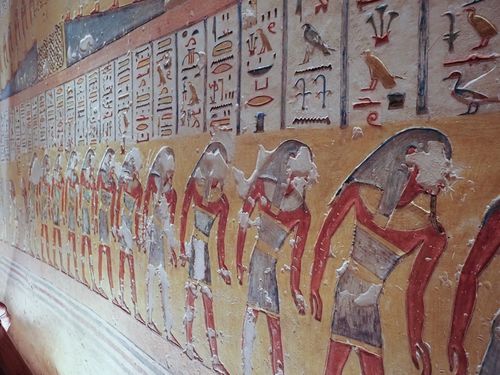
Luxor • Tomb of Ramses IV

Luxor • Tomb of Ramses IV
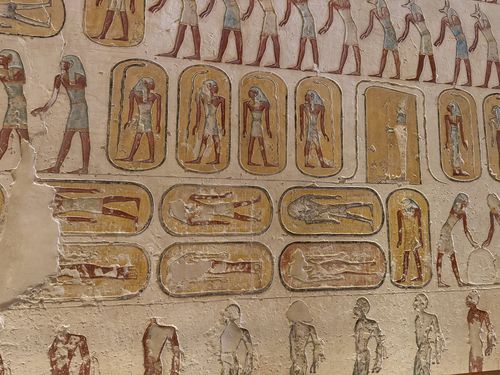
Luxor • Tomb of Ramses IV
Monument profile
Tomb of Ramses IV
Monument categories: Tomb, Rock Sanctuary
Monument families: Tomb, Necropolis, Mausoleum or Cenotaph • Rock Sanctuary and Monumental Bas-reliefs
Monument genres: Funerary, Religious
Cultural heritage: Ancient Egypt
Geographic location: Luxor • Egypt
Construction period: before the 6th century BC
This monument in Luxor is inscribed on the UNESCO World Heritage List since 1979 and is part of the serial property "Ancient Thebes with its Necropolis".See the UNESCO monuments featured on this site
• Links to •
• Dynasties that contributed to the construction of the monument •

• List of videos about Luxor on this site •
Luxor • Valley of the Kings: Treasures of the Pharaohs
Luxor • Temple of Hatshepsut and Colossi of Memnon
Luxor • The Majestic Temple of Amun, Egypt
Luxor • Wonders of the Karnak Temple
The Tomb of Ramses IV: Political, Social, and Cultural Reflections Through the Ages
Political and Social Motivations Behind Its Construction
The tomb of Ramses IV, known as KV2, was constructed during his reign from 1155 to 1149 BCE, in the early 20th Dynasty of ancient Egypt. This period was marked by significant political and social challenges, including economic instability, increasing influence of the priesthood of Amun, and internal unrest, as evidenced by the labor strikes at Deir el-Medina. The construction of the tomb served dual purposes: affirming the divine authority of Ramses IV and ensuring a secure transition to the afterlife. By situating his burial in the Valley of the Kings, Ramses IV aligned himself with the illustrious lineage of pharaohs who preceded him, consolidating his legitimacy in turbulent times.
The tomb’s symbolic and practical purpose extended beyond its immediate political context. It reflected the broader Egyptian worldview, where the pharaoh was the intermediary between gods and humans. The grandeur of the tomb demonstrated the enduring strength of the monarchy, even as internal and external pressures mounted.
Historical Context and Global Comparisons
The construction of the tomb coincided with a transformative era in global history. In the Mediterranean, the collapse of Bronze Age civilizations, such as the Mycenaeans and the Hittites, created widespread social and economic disruptions. The invasion of the Sea Peoples further destabilized the region. Meanwhile, in Mesopotamia, the Neo-Assyrian Empire was rising, laying the foundation for its future dominance. In East Asia, the Shang Dynasty was flourishing, developing advanced bronze-casting techniques and centralized governance.
Compared to other regions, Egypt under Ramses IV maintained relative stability despite internal challenges. The construction of KV2 was emblematic of Egypt’s attempts to preserve its cultural identity and political structure amidst a shifting global landscape.
Transformations Over the Centuries
The tomb of Ramses IV has undergone significant changes since its construction. During antiquity, it was plundered like many others in the Valley of the Kings. In later periods, particularly during the Ptolemaic and Roman eras, the tomb was repurposed, serving as a shelter or temporary refuge. This adaptive reuse, while preserving the basic structure, led to the loss of many original artifacts and inscriptions.
The rediscovery of the tomb in the 18th and 19th centuries brought it into the focus of modern archaeological study. European explorers documented its frescoes and carvings, highlighting its artistic and historical significance. Despite these efforts, natural erosion and human interference have caused deterioration over time.
Cultural Importance and Current State of Preservation
The tomb of Ramses IV remains a crucial link to the past, offering insights into the beliefs, rituals, and political dynamics of ancient Egypt. Its elaborate wall paintings, including celestial representations of the goddess Nut, and inscriptions from texts such as the Book of the Dead, emphasize the spiritual dimensions of pharaonic rule.
Currently, the tomb is open to the public and forms part of the UNESCO World Heritage Site "Ancient Thebes with its Necropolis." This designation has bolstered efforts to conserve the monument, using advanced technologies like 3D scanning and climate control to mitigate damage caused by tourism and environmental factors.
Modern Preservation Challenges
Preserving the tomb’s historical integrity faces several challenges. High visitor numbers contribute to increased humidity, which accelerates the degradation of frescoes and carvings. Climate change poses additional threats, as rising temperatures and occasional flooding impact the structural stability of the site. Urbanization near Luxor also places pressure on the surrounding environment.
To address these issues, heritage authorities have implemented strict visitor limits and enhanced monitoring systems. However, balancing public access with preservation remains a delicate task.
Conclusion
The tomb of Ramses IV is more than a burial site; it is a testament to the resilience of ancient Egyptian civilization during a period of significant upheaval. Its transformations over time reflect shifts in power, cultural influences, and evolving attitudes toward heritage conservation. Today, it stands as a symbol of global historical significance, underscoring the importance of protecting such treasures for future generations.
The Tomb of Ramses IV: Architectural Innovation and Cultural Synthesis of the 20th Dynasty
Technological and Architectural Advances of the 20th Dynasty
The Tomb of Ramses IV, designated as KV2 in the Valley of the Kings in Luxor, reflects the technological and architectural prowess of ancient Egypt during the 20th Dynasty (1155–1149 BCE). Constructed in a relatively short time due to the brief reign of Ramses IV, the tomb showcases the skilled craftsmanship and resource management of the period.
The builders utilized the natural limestone of the Theban hills, a material favored for its durability and workability. They employed copper and bronze tools to carve the tomb’s corridors and chambers, achieving precision and symmetry in its design. The use of pigments derived from minerals, such as ochre and lapis lazuli, highlights the advanced techniques in decorative arts. Despite the constraints of time, the tomb’s construction demonstrates a commitment to quality and grandeur.
Structural Layout and Notable Features
The architectural layout of KV2 is straightforward, with a rectilinear design typical of later tombs in the Valley of the Kings. The tomb features a long descending corridor leading to an antechamber and the burial chamber. This linear plan was likely chosen for efficiency, yet it retains symbolic elements that align with Egyptian cosmology.
The burial chamber is particularly notable for its elaborate ceiling, adorned with depictions of the goddess Nut and astronomical scenes. These motifs, drawn from the Book of the Day and the Book of the Night, symbolize the pharaoh’s journey through the heavens. The sarcophagus, originally crafted from red quartzite, was designed to emphasize the pharaoh’s divine status and eternal connection to the gods.
A Fusion of Regional Traditions and External Influences
The artistic and decorative elements of Ramses IV’s tomb reflect a blend of traditional Egyptian styles and subtle influences from neighboring cultures. While the iconography adheres to established conventions, certain stylistic elements, such as geometric patterns and color palettes, hint at interactions with Mediterranean and Near Eastern regions. These influences underscore Egypt’s role as a hub of cultural exchange during the Late Bronze Age.
The incorporation of celestial themes and intricate hieroglyphic inscriptions highlights the advanced understanding of religious and cosmic concepts. This synthesis of art and spirituality positions the tomb as both a functional burial site and a cultural masterpiece.
Anecdotes and Construction Highlights
KV2 is among the most accessible and well-documented tombs in the Valley of the Kings. It spans approximately 88 meters in length and features some of the best-preserved wall paintings from the period. Historical records suggest that Ramses IV allocated significant resources to its construction, possibly diverting attention from other state projects to ensure its completion before his death.
Interestingly, the tomb was reused during later periods, serving as a shelter for early Christian communities and as a site of interest for explorers during the 18th and 19th centuries. These successive layers of use have contributed to its historical significance.
International Recognition and UNESCO World Heritage Status
As part of the "Ancient Thebes with its Necropolis" UNESCO World Heritage Site, the tomb of Ramses IV has gained international recognition as a symbol of Egypt’s cultural legacy. This designation has facilitated efforts to conserve its delicate frescoes and architectural features. Advanced technologies, such as 3D imaging and environmental monitoring, have been implemented to counteract the effects of tourism and natural degradation.
Preservation Challenges and Global Impact
Modern preservation efforts face challenges, including managing visitor impact and addressing environmental threats such as humidity and temperature fluctuations. Urban development near Luxor also poses potential risks to the surrounding landscape. Despite these challenges, the tomb remains a focal point for understanding ancient Egyptian architecture and its global influence.
Conclusion
The tomb of Ramses IV stands as a testament to the architectural innovation and cultural richness of the 20th Dynasty. Its design, materials, and decorative motifs reflect a sophisticated blend of tradition and innovation, while its enduring legacy underscores the universal appeal of ancient Egyptian heritage. Through continued conservation and global recognition, the monument remains a vital link to one of humanity’s most extraordinary civilizations.