

 Français (France)
  Nederlands (nl-NL)
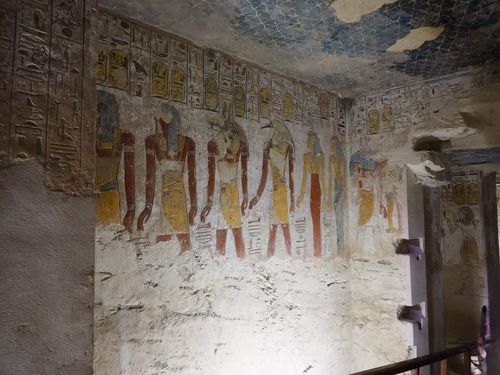
 The Tomb of Merenptah, located in the Valley of the Kings in Luxor, Egypt, is a royal funerary monument from the 19th Dynasty. Built for Pharaoh Merenptah, son of Ramses II, it highlights the significance of burial practices in ancient Egyptian culture. Though looted over time, it retains key elements of its design and decoration, showcasing the craftsmanship of the period and the cultural importance of funerary rituals.

Monument profile
Tomb of Merenptah
Monument categories: Tomb, Rock Sanctuary
Monument families: Tomb, Necropolis, Mausoleum or Cenotaph • Rock Sanctuary and Monumental Bas-reliefs
Monument genres: Funerary, Religious
Cultural heritage: Ancient Egypt
Geographic location: Luxor • Egypt
Construction period: before the 6th century BC
This monument in Luxor is inscribed on the UNESCO World Heritage List since 1979 and is part of the serial property "Ancient Thebes with its Necropolis".See the UNESCO monuments featured on this site
• Links to •
• Dynasties that contributed to the construction of the monument •

• List of videos about Luxor on this site •
Luxor • Valley of the Kings: Treasures of the Pharaohs
Luxor • Temple of Hatshepsut and Colossi of Memnon
Luxor • The Majestic Temple of Amun, Egypt
Luxor • Wonders of the Karnak Temple
The Tomb of Merenptah: Political Motivations, Historical Context, and Cultural Legacy
Political and Social Motivations Behind Its Construction
The Tomb of Merenptah, known as KV8, is located in the Valley of the Kings in Luxor, Egypt, and was constructed during the reign of Pharaoh Merenptah (1213–1203 BCE) in the 19th Dynasty. Merenptah, the thirteenth son of Ramses II, inherited a kingdom that was both powerful and increasingly challenged by internal and external pressures.
The construction of his tomb served dual purposes. On one hand, it was a spiritual and religious necessity, ensuring the pharaoh’s journey to the afterlife and affirming his divine status. On the other hand, it acted as a political statement, symbolizing stability and continuity in a period of heightened external threats and domestic unrest. By constructing a grand tomb in the royal necropolis, Merenptah sought to align himself with his illustrious predecessors, projecting strength and legitimacy.
Historical Events and Global Context
Merenptah’s reign occurred during a tumultuous period marked by military campaigns and economic strain. One of the defining events of his rule was his victory over the Libyan tribes and the Sea Peoples, who threatened Egypt’s western borders. This military success, commemorated in inscriptions, underscored Egypt’s resilience but also reflected the growing challenges faced by the kingdom.
Globally, this era coincided with the collapse of several Bronze Age civilizations in the Mediterranean and Near East, including the Mycenaean and Hittite kingdoms. Mesopotamia was witnessing the rise of the Neo-Assyrian Empire, while in China, the Zhou Dynasty had begun to replace the Shang, initiating a transformative period of cultural and political change. Compared to these regions, Egypt under Merenptah remained a major power, striving to preserve its legacy amid these broader shifts.
Transformations of the Monument Over Centuries
Like many royal tombs in the Valley of the Kings, KV8 experienced significant transformations over time. Following the pharaonic period, the tomb was looted, and much of its original contents were lost. During the Greco-Roman era, the Valley’s function as a royal necropolis diminished, and tombs like KV8 were repurposed as shelters or storage spaces.
In the 19th century, KV8 was rediscovered by European explorers, reigniting interest in the site and its historical significance. Despite centuries of looting and natural degradation, the tomb’s structure and remaining inscriptions offer valuable insights into the funerary practices and artistic traditions of the 19th Dynasty.
Cultural Significance and Current Condition
The Tomb of Merenptah holds considerable cultural and historical importance. Its design and decorations reflect the sophisticated funerary traditions of ancient Egypt, with scenes from the Book of the Dead and other religious texts emphasizing the pharaoh’s spiritual journey.
As part of the UNESCO World Heritage Site "Ancient Thebes with its Necropolis," KV8 enjoys international recognition as a critical piece of Egypt’s cultural heritage. This status has facilitated conservation efforts, ensuring the preservation of the tomb’s surviving elements for future generations.
Challenges in Preservation
Preserving KV8 poses several challenges. The increased humidity caused by high visitor numbers accelerates the deterioration of wall paintings, while climate change brings fluctuating temperatures and the risk of flooding. Additionally, urban expansion near Luxor threatens the site’s surrounding environment.
To address these issues, modern preservation techniques, such as 3D imaging and environmental monitoring, have been implemented. Managing visitor access and promoting awareness of the tomb’s fragility are also essential steps in safeguarding its integrity.
Conclusion
The Tomb of Merenptah stands as a testament to the political, social, and cultural complexities of Egypt’s 19th Dynasty. Its construction reflects the challenges and aspirations of a kingdom navigating internal and external pressures. Despite centuries of transformation and natural decay, the tomb continues to captivate as a symbol of ancient Egypt’s enduring legacy. Through ongoing conservation efforts and international recognition, KV8 remains a vital connection to one of history’s most remarkable civilizations.
The Architectural Significance of the Tomb of Merenptah: Innovation and Legacy of the 19th Dynasty
Technological Advancements and Construction Techniques
The Tomb of Merenptah, known as KV8, stands as a testament to the technological and architectural sophistication of Egypt’s 19th Dynasty (1213–1203 BCE). Constructed in the Valley of the Kings in Luxor, the tomb showcases the ingenuity of ancient Egyptian artisans who utilized locally quarried limestone. This material, valued for its durability and ease of carving, was shaped with tools made of copper and bronze.
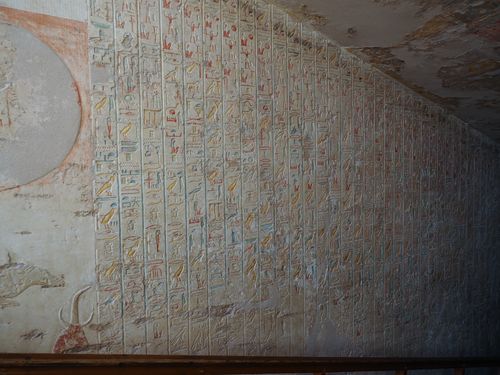
The construction team applied advanced techniques to create smooth walls and finely carved hieroglyphic inscriptions. Pigments made from natural minerals, such as ochre and lapis lazuli, were used to create vibrant frescoes. These techniques not only demonstrated the skill of the builders but also ensured the longevity of the tomb’s decorative elements, many of which remain visible today.
Architectural Layout and Notable Features
KV8 features a linear layout, characteristic of royal tombs in the Valley of the Kings. Extending approximately 80 meters, the tomb comprises a series of descending corridors and chambers, culminating in an expansive burial chamber. This chamber was designed to house Merenptah’s massive sarcophagus, made of red granite and notable for its size and craftsmanship.
The tomb’s ceiling is adorned with intricate depictions of astronomical scenes derived from the Book of the Heavens, while the walls are inscribed with excerpts from the Book of the Dead and the Book of Gates. These motifs symbolize the pharaoh’s journey through the afterlife, emphasizing his divine nature and eternal connection to the gods.
A Fusion of Regional Traditions and Foreign Influences
The artistic and architectural features of KV8 reflect a unique blend of traditional Egyptian styles and subtle external influences. While the iconography remains deeply rooted in local traditions, certain stylistic elements, such as geometric patterns and color choices, suggest interactions with neighboring cultures, particularly those from the Levant and the Mediterranean.
This integration of external influences highlights Egypt’s role as a hub of cultural exchange during the Late Bronze Age. The tomb’s design reflects the adaptability of Egyptian artisans in incorporating diverse elements into a coherent artistic vision.
Anecdotes and Historical Insights
One remarkable feature of KV8 is its grand sarcophagus, one of the largest discovered in the Valley of the Kings. Weighing several tons and intricately carved, it underscores the grandeur associated with royal burials of the 19th Dynasty.
An anecdote from the tomb’s history involves its reuse during later periods. Like many tombs in the Valley, KV8 was looted shortly after the end of the New Kingdom. In subsequent eras, it served as a shelter or storage space, contributing to its survival through centuries of change.
UNESCO Recognition and International Importance
As part of the UNESCO World Heritage Site "Ancient Thebes with its Necropolis," the Tomb of Merenptah enjoys global recognition for its cultural and historical significance. This designation has facilitated the implementation of preservation initiatives, including advanced technologies like 3D scanning and environmental monitoring, which help protect the tomb’s delicate frescoes and structural integrity.
The international recognition of KV8 has also boosted its profile as a key destination for both scholars and tourists, enhancing awareness of the artistic and spiritual legacy of ancient Egypt.
Preservation Challenges and Modern Efforts
The preservation of KV8 faces challenges from both natural and human factors. Increased humidity caused by high visitor numbers accelerates the deterioration of its wall paintings, while temperature fluctuations and urban encroachment near Luxor threaten its structural stability.
Efforts to address these issues include restricting visitor access, using climate control systems, and employing digital documentation to record and restore the tomb’s features. These measures aim to strike a balance between accessibility and the long-term conservation of the site.
Conclusion
The Tomb of Merenptah exemplifies the technological innovation and artistic mastery of the 19th Dynasty. Its architectural design, rich decorations, and cultural significance underscore its importance as a historical and spiritual monument. Recognized as part of a UNESCO World Heritage Site, KV8 continues to inspire and educate, preserving the legacy of ancient Egypt for future generations. Through ongoing conservation efforts, the tomb remains a vital connection to one of humanity’s most extraordinary civilizations.