

 Français (France)
  Nederlands (nl-NL)
 Located in Luxor, Egypt, the Karnak Temple is one of the largest ancient religious complexes. It was primarily dedicated to the worship of the god Amun, but also served as a significant site for other Egyptian deities. The construction of Karnak spanned more than two thousand years, showcasing the evolution of Egyptian art and architecture. The complex includes a variety of temples, obelisks, chapels, and other structures spread over a vast area. Notable features of Karnak include the Great Hypostyle Hall with its 134 towering columns and the striking avenue of sphinxes. Today, Karnak stands as a vital destination for global tourists and a remarkable testament to ancient Egyptian history.
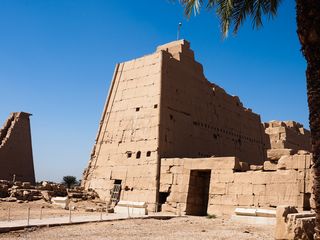
Luxor • Temple of Karnak
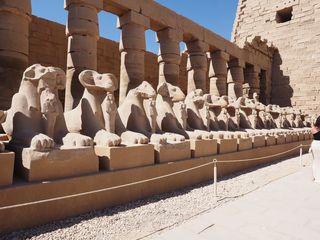
Luxor • Temple of Karnak

Luxor • Temple of Karnak
Monument profile
Temple of Karnak
Monument category: Egyptian temple
Monument family: Temple
Monument genre: Religious
Cultural heritage: Ancient Egypt
Geographic location: Luxor • Egypt
Construction period: before the 6th century BC
This monument in Luxor is inscribed on the UNESCO World Heritage List since 1979 and is part of the serial property "Ancient Thebes with its Necropolis".See the UNESCO monuments featured on this site
• Links to •
• Dynasties that contributed to the construction of the monument •

• List of videos about Luxor on this site •
Luxor • Valley of the Kings: Treasures of the Pharaohs
Luxor • Temple of Hatshepsut and Colossi of Memnon
Luxor • The Majestic Temple of Amun, Egypt
Luxor • Wonders of the Karnak Temple
The Temple of Karnak: A Testament to Political Power and Cultural Evolution
Political and Social Motivations Behind Its Construction
The construction of the Temple of Karnak in Luxor, Egypt, began during the reign of Pharaoh Senusret I of the 12th Dynasty, around 2000 BCE, during the Middle Kingdom period. The primary motivation for its construction was political and religious in nature. Dedicated primarily to the worship of the god Amun-Ra, Karnak served as a powerful symbol of the pharaohs’ divine legitimacy and their ability to maintain cosmic order, or ma’at. By expanding and embellishing the temple, successive rulers reinforced their connection to the divine, legitimizing their rule in the eyes of their subjects and rival states.
Socially, the temple complex played a central role in the economic and administrative life of ancient Thebes (modern-day Luxor). Karnak functioned as a major employer, housing thousands of priests, artisans, and laborers. It also acted as a center of wealth accumulation, receiving tributes from across the Egyptian empire and beyond. The temple's festivals, particularly the Opet Festival, which linked Karnak to the Temple of Luxor, reinforced social cohesion and strengthened the bond between the ruling elite and the people.
Key Historical Events and Their Influence
Throughout its long history, Karnak witnessed numerous pivotal events that shaped its development and the political landscape of ancient Egypt.
During the New Kingdom (1550–1070 BCE), particularly under Pharaohs Thutmose III, Hatshepsut, and Ramses II, Karnak underwent significant expansion, becoming a grand religious and political statement of Egyptian power. The military campaigns of these rulers brought vast wealth to Egypt, which was reflected in the temple’s monumental pylons, towering columns, and intricate reliefs.
However, the temple also endured periods of decline. The Third Intermediate Period (c. 1070–664 BCE) saw political fragmentation, leading to reduced resources and influence for Karnak. Later, during the Late Period and Persian invasions, the temple was plundered, and its role in the state apparatus diminished.
The Ptolemaic and Roman periods introduced foreign cultural elements into the temple complex, blending Greek and Roman artistic styles with traditional Egyptian motifs. These transformations illustrate Karnak's ability to adapt to changing political powers while maintaining its religious significance.
Karnak in the Global Context
During Karnak’s construction and peak, other great civilizations were also shaping the ancient world. In Mesopotamia, the Babylonians were developing complex legal and architectural systems, exemplified by the Code of Hammurabi and the ziggurats of Ur. In the Indus Valley, cities such as Mohenjo-Daro showcased advanced urban planning and engineering, while the Shang Dynasty in China was establishing a centralized state with a distinctive writing system.
Compared to these civilizations, Karnak stands out for its continuous architectural expansion over centuries, reflecting the enduring stability and cultural dominance of ancient Egypt. The temple’s grandeur and longevity symbolize a civilization deeply committed to religious and political continuity.
Architectural Transformations Reflecting Shifts in Power
Over time, Karnak underwent numerous architectural transformations that mirrored shifts in political power and external influences. Notable changes include:
- The Hypostyle Hall: Constructed under Seti I and Ramses II, it remains one of the most impressive features, with 134 massive columns arranged in 16 rows. This expansion signified the peak of Egypt’s imperial power.
- Ptolemaic Additions: The integration of Greek and Egyptian elements, such as the depiction of Greek rulers in pharaonic attire, reflected the Hellenistic influence on Egyptian culture.
- Christian Adaptations: During the Byzantine era, parts of the temple were repurposed for Christian worship, signifying the religious transformations that took place in Egypt.
These changes illustrate Karnak's adaptability and resilience, making it a living document of Egypt’s shifting political landscape.
Cultural Significance and Current State of Conservation
Today, Karnak is recognized as one of the most significant cultural landmarks in the world. Its designation as a UNESCO World Heritage Site in 1979 has brought increased attention to its preservation and international recognition of its historical importance. The temple attracts millions of visitors annually, drawn by its immense scale, artistic splendor, and spiritual resonance.
However, Karnak faces several challenges in terms of conservation.
Preservation Challenges in the Modern Era
The temple's preservation is threatened by various modern factors, including:
- Environmental Erosion: Rising groundwater levels, exacerbated by the Aswan High Dam, have led to salt crystallization within the stone structures, causing significant deterioration.
- Tourism Pressure: The influx of millions of visitors annually leads to wear and tear on the ancient structures, requiring continuous monitoring and maintenance.
- Urban Encroachment: The expansion of modern Luxor presents challenges in maintaining the temple’s original setting and ambiance.
- Climate Change: Extreme weather events and fluctuations in temperature further stress the fragile ancient stones.
Efforts to counter these threats include advanced digital documentation, structural reinforcements, and collaborations between Egyptian authorities and international organizations to implement sustainable conservation strategies.
Conclusion
The Temple of Karnak stands as a monumental testament to the grandeur of ancient Egypt, embodying centuries of religious devotion, political ambition, and architectural ingenuity. Despite the challenges posed by modern threats, ongoing preservation efforts ensure that Karnak remains a beacon of cultural heritage, offering invaluable insights into the world of the pharaohs and their enduring legacy.
The Architectural Brilliance of the Karnak Temple: Technological Innovation and Cultural Synthesis During the 20th Dynasty
Technological Advancements and Innovation in the 20th Dynasty
The Karnak Temple complex, a grand symbol of ancient Egyptian ingenuity, saw significant expansion and enhancements during the 20th Dynasty (1189–1077 BCE). This period, marked by the rule of pharaohs such as Ramses III, showcased notable technological advancements and construction innovations that reflected the grandeur and stability of the New Kingdom.
Architects and engineers of the time developed sophisticated techniques to transport and position massive stone blocks, utilizing an intricate system of sledges, ropes, and ramps. These advancements allowed for the construction of towering pylons and colossal columns that defined the temple's majestic presence. The use of precise measurement and leveling tools ensured architectural symmetry, demonstrating an advanced understanding of engineering principles that contributed to the temple's durability over millennia.
Materials and Construction Techniques
The primary materials used in the construction of Karnak during the 20th Dynasty included:
- Sandstone: Quarried from the nearby Gebel el-Silsila region, this material was favored for its durability and ease of carving.
- Granite: Imported from Aswan, it was used for obelisks, doorways, and statues, emphasizing the temple's grandeur and the pharaoh’s power.
- Limestone and Mudbrick: Used in auxiliary structures and for temporary construction phases.
The construction process involved assembling stone blocks with precision-cut joints that required no mortar, relying on gravity and the interlocking weight of the stones for stability. Relief carvings and inscriptions were meticulously executed using copper chisels and dolerite hammers, showcasing exceptional craftsmanship.
Architectural Features and Cultural Synthesis
Karnak’s architectural design exemplifies a unique fusion of regional artistic traditions and foreign influences absorbed through Egypt's extensive trade and military campaigns. The temple complex incorporates several key elements that illustrate this synthesis:
The Great Hypostyle Hall: A crowning achievement of Karnak, featuring 134 columns, with the central ones reaching up to 23 meters in height. The hall's intricate carvings and papyrus-shaped capitals reflect a deep connection to Egyptian symbolism while also exhibiting stylistic influences from neighboring cultures.
Avenue of Sphinxes: This monumental pathway, lined with sphinx statues, connected Karnak to the Temple of Luxor, reinforcing the temple's role in state-sponsored religious processions.
Pylons and Obelisks: These towering structures were inscribed with scenes of royal achievements and divine interactions, reflecting the artistic blend of Egyptian heritage with stylistic influences from Nubia and the Levant.
The motifs adorning Karnak’s walls, such as depictions of deities, battle scenes, and religious rituals, reflect both the traditional artistic conventions of Upper Egypt and new elements introduced through foreign contact, including representations of foreign tribute bearers and exotic animals.
Structural Layout and Notable Aspects
Karnak’s layout follows a distinct axial plan that reflects the cosmological beliefs of the Egyptians, symbolizing the journey from the earthly realm to the divine. The temple complex consists of three main precincts:
- Precinct of Amun-Ra: The largest and most significant section, containing the Great Hypostyle Hall and the sacred lake.
- Precinct of Mut: Dedicated to the goddess Mut, featuring smaller shrines and courtyards.
- Precinct of Montu: A lesser-known section devoted to the war god Montu.
The temple’s axis aligns with celestial and solar events, showcasing the advanced understanding of astronomy and its integration into religious architecture.
Remarkable Statistics and Anecdotes
The Hypostyle Hall covers an area of 5,000 square meters, making it the largest of its kind in the world.
An estimated 30 pharaohs contributed to the construction and expansion of Karnak over more than 2,000 years.
Some of the sandstone blocks used weigh over 70 tons, demonstrating the extraordinary logistical capabilities of ancient builders.
Karnak’s walls contain over 350,000 hieroglyphic inscriptions, narrating religious myths, historical events, and royal decrees.
International Recognition and UNESCO’s Impact
Karnak's inclusion as a UNESCO World Heritage Site in 1979 has significantly influenced its global recognition and conservation efforts. This designation has led to increased funding for restoration projects, international collaborations, and heightened awareness of the temple's historical significance. UNESCO’s initiatives have focused on stabilizing deteriorating structures, preserving wall inscriptions, and implementing sustainable tourism practices to ensure the site's longevity.
The temple’s UNESCO status has also elevated its profile as a major tourist attraction, drawing millions of visitors annually and contributing to Egypt’s cultural economy. However, this influx of tourism presents challenges in balancing accessibility with preservation.
Challenges in Modern Preservation
Karnak faces several contemporary threats that require ongoing conservation efforts:
- Environmental Degradation: Rising groundwater levels, exacerbated by modern irrigation and climate change, threaten the structural integrity of the sandstone blocks.
- Tourism Impact: Heavy foot traffic and exposure to pollutants accelerate the wear and tear of delicate carvings and reliefs.
- Urban Encroachment: The expansion of modern Luxor poses a risk to the temple’s surroundings and historical authenticity.
- Seismic Activity: Occasional earthquakes have caused minor structural damage over time, necessitating regular structural assessments.
Efforts to mitigate these risks include the use of modern technology such as 3D scanning, structural reinforcement techniques, and public awareness campaigns promoting responsible tourism.
Conclusion
The Temple of Karnak stands as a monumental achievement of ancient Egyptian architecture, reflecting technological innovation, artistic brilliance, and a rich blend of cultural influences. Its vast scale, structural complexity, and enduring spiritual significance make it a cornerstone of global heritage. As conservation efforts continue to preserve this remarkable site, Karnak remains an enduring symbol of human ingenuity and devotion across millennia.