

 Français (France)
  Nederlands (nl-NL)
 The tomb of Ramses IX, located in the Valley of the Kings in Luxor, Egypt, is one of the notable royal burial sites of the New Kingdom. Built during the 20th Dynasty, it served as the final resting place of Pharaoh Ramses IX, who ruled from 1126 to 1108 BCE. The tomb is distinguished by its impressive dimensions and well-preserved decorations, depicting scenes from ancient Egyptian funerary texts. This site highlights the significance of burial rituals and the afterlife in Egyptian culture.

Luxor • Tomb of Ramses IX

Luxor • Tomb of Ramses IX
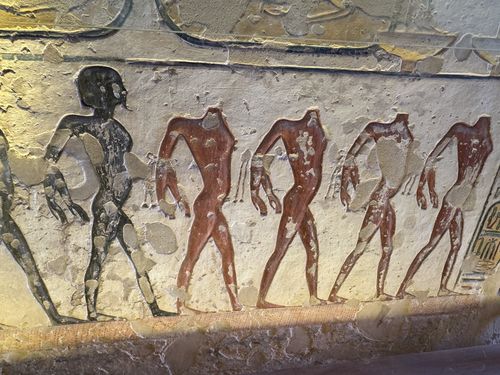
Luxor • Tomb of Ramses IX
Monument profile
Tomb of Ramses IV
Monument categories: Tomb, Rock Sanctuary
Monument families: Tomb, Necropolis, Mausoleum or Cenotaph • Rock Sanctuary and Monumental Bas-reliefs
Monument genres: Funerary, Religious
Cultural heritage: Ancient Egypt
Geographic location: Luxor • Egypt
Construction period: before the 6th century BC
This monument in Luxor is inscribed on the UNESCO World Heritage List since 1979 and is part of the serial property "Ancient Thebes with its Necropolis".See the UNESCO monuments featured on this site
• Links to •
• Dynasties that contributed to the construction of the monument •

• List of videos about Luxor on this site •
Luxor • Valley of the Kings: Treasures of the Pharaohs
Luxor • Temple of Hatshepsut and Colossi of Memnon
Luxor • The Majestic Temple of Amun, Egypt
Luxor • Wonders of the Karnak Temple
The Tomb of Ramses IX: Political Motivations, Historical Context, and Cultural Legacy
Political and Social Motivations Behind Its Construction
The Tomb of Ramses IX, located in the Valley of the Kings in Luxor, Egypt, was constructed during his reign, which lasted from 1126 to 1108 BCE, in the 20th Dynasty. This period was marked by growing internal tensions, including conflicts between the pharaoh's authority and the increasingly powerful Amun priesthood. The tomb's construction served as a political and spiritual statement, reinforcing Ramses IX's divine legitimacy at a time when the central authority of the pharaoh was diminishing.
Beyond its role as a royal burial site, the tomb reflected the enduring importance of funerary rituals and the belief in the afterlife in ancient Egyptian culture. The monument's grandeur was a demonstration of the pharaoh's enduring connection to the gods, even amid challenges to his earthly power.
Historical Events and Global Context
During the reign of Ramses IX, Egypt faced significant economic difficulties and external threats, including incursions by Libyan tribes and reduced access to key resources. These challenges weakened the central administration and contributed to rising social unrest, such as the strikes by workers in Deir el-Medina.
Globally, this period coincided with the collapse of Bronze Age civilizations across the Mediterranean, including the Mycenaeans and the Hittites. Meanwhile, the Assyrian Empire in Mesopotamia was consolidating its power, and in China, the Zhou Dynasty was emerging after the fall of the Shang, heralding a new era of social and political transformation.
In this context, Egypt under Ramses IX was struggling to maintain its status as a regional power. The construction of his tomb in the Valley of the Kings symbolized an effort to preserve the pharaonic legacy amid these shifting dynamics.
Transformations Over the Centuries
Like many tombs in the Valley of the Kings, the Tomb of Ramses IX (KV6) was looted soon after the end of the pharaonic period. During the Greco-Roman era, the Valley lost its significance as a burial site, and many tombs, including KV6, were repurposed as shelters or storage spaces.
In the 19th century, European explorers and Egyptologists rediscovered the Valley, bringing KV6 to international attention. Despite damage caused by looting and natural erosion, the tomb’s inscriptions and decorative scenes remain remarkably preserved. These transformations over the centuries reflect changes in power, cultural influences, and historical priorities, contributing to the tomb’s status as a cultural treasure.
Cultural Importance and Current Condition
Today, the Tomb of Ramses IX stands as an essential link to the religious and artistic practices of ancient Egypt. Its walls feature scenes from the Book of the Dead and other funerary texts, illustrating the complex spiritual beliefs of the time.
As part of the UNESCO World Heritage Site "Ancient Thebes with its Necropolis," the tomb attracts visitors from around the globe. This recognition has enhanced efforts to preserve the site, ensuring that its historical and cultural significance is safeguarded for future generations. However, its condition remains delicate, requiring ongoing restoration and conservation work.
Preservation Challenges
Modern preservation efforts face several challenges. Increased humidity caused by high visitor numbers accelerates the deterioration of wall paintings, while temperature fluctuations and urban development near Luxor threaten the structural integrity of the site. Additionally, climate change poses new risks, such as unpredictable weather patterns and potential flooding.
To mitigate these threats, advanced technologies like 3D imaging and environmental monitoring are being employed. However, balancing public access with the need for protection remains a critical issue.
Conclusion
The Tomb of Ramses IX is more than a royal burial site; it is a testament to the political, social, and cultural dynamics of ancient Egypt. Despite centuries of transformation and environmental challenges, the tomb continues to offer insights into the complexities of pharaonic rule and religious practices. Through dedicated conservation efforts and global recognition, KV6 remains a symbol of Egypt’s enduring legacy and its contributions to world history.
The Architectural Significance of the Tomb of Ramses IX: Innovation and Legacy
Technological Advances and Construction Techniques of the 20th Dynasty
The Tomb of Ramses IX, also known as KV6, is a remarkable example of architectural innovation during Egypt's 20th Dynasty (1126–1108 BCE). Constructed with precision and efficiency, the tomb reflects the technological capabilities of ancient Egyptian builders, particularly in carving limestone, the primary material used in its construction.
The limestone from the Theban cliffs was carefully selected for its durability and ease of carving. Workers used bronze and copper tools to shape the corridors and chambers, achieving remarkable symmetry and smooth surfaces that provided an ideal canvas for intricate decorative elements. The application of mineral-based pigments, such as ochre and lapis lazuli, demonstrates the advanced techniques in painting and preservation, which have allowed many of the tomb's vibrant details to endure over millennia.
Architectural Layout and Notable Features
The tomb of Ramses IX follows a linear design typical of royal tombs in the later periods of the New Kingdom. Spanning approximately 105 meters, it features a descending corridor leading directly to the burial chamber. This straightforward plan may have been chosen to accommodate the time constraints of Ramses IX’s relatively short reign while maintaining the symbolic alignment with the journey to the afterlife.
The burial chamber itself is adorned with intricate celestial motifs, including depictions of the goddess Nut and astronomical diagrams drawn from the Book of the Day and the Book of the Night. These decorations symbolize the pharaoh’s journey through the heavens and his transition to immortality. The vibrant wall paintings and hieroglyphic inscriptions not only serve a spiritual purpose but also highlight the artistic mastery of the craftsmen of the era.
A Fusion of Artistic Traditions and Foreign Influences
The decorative elements of KV6 represent a blend of regional artistic traditions and subtle external influences. The motifs adhere to established Egyptian conventions, with detailed depictions of deities, hieroglyphic inscriptions, and cosmic themes. However, certain geometric patterns and stylistic flourishes suggest contact with neighboring cultures, such as those in the Mediterranean and Near East.
This synthesis of artistic styles underscores Egypt’s role as a hub of cultural exchange during the Late Bronze Age. The incorporation of diverse elements within a distinctly Egyptian framework reflects the dynamic nature of the kingdom’s artistic and cultural practices.
Anecdotes and Historical Insights
One notable feature of KV6 is its unusual width, which allows for multiple passageways to be carved alongside the main corridor. This design choice, though practical, is unique among royal tombs in the Valley of the Kings. Historical records indicate that the tomb may have been completed hastily, evident from certain unfinished sections, a common occurrence for tombs constructed during shorter reigns.
KV6 also served multiple purposes throughout history. During the Greco-Roman period, it was repurposed as a shelter or storage space, contributing to its survival over centuries. Rediscovered during the 19th century, it became a focus for Egyptologists, cementing its place as a significant site in the study of New Kingdom funerary practices.
Recognition and UNESCO World Heritage Status
As part of the "Ancient Thebes with its Necropolis" UNESCO World Heritage Site, the Tomb of Ramses IX holds international significance. This recognition has amplified global efforts to preserve its delicate frescoes and architectural integrity. Conservation initiatives have utilized cutting-edge technologies, such as 3D mapping and climate control, to mitigate the impacts of tourism and natural degradation.
The tomb’s inclusion in the UNESCO listing has also elevated its cultural profile, attracting scholars and visitors from around the world. Its vivid artwork and well-preserved structure serve as a window into the spiritual and political complexities of ancient Egypt.
Preservation Challenges and Global Impact
Despite its resilience, KV6 faces modern preservation challenges. High visitor numbers contribute to increased humidity, accelerating the deterioration of wall paintings. Climate change and urban development near Luxor pose additional threats to the site’s stability. Balancing public access with conservation efforts remains a key challenge for heritage management teams.
Continued international collaboration and investment in preservation technologies are essential to maintaining KV6’s legacy. Educational initiatives aimed at raising awareness of the tomb’s cultural and historical value also play a critical role in its long-term protection.
Conclusion
The Tomb of Ramses IX stands as a testament to the architectural ingenuity and cultural richness of the 20th Dynasty. Its design, materials, and decorations exemplify a harmonious blend of tradition and innovation, reflecting the complexities of Egyptian society during a time of transition. Recognized globally as a cultural treasure, KV6 continues to captivate and inform, preserving the legacy of one of history’s most influential civilizations.