Français (France)
  Nederlands (nl-NL)
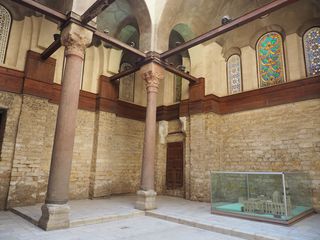
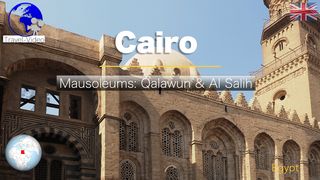
 In this video, explore the Al-Salih and Qalawun mausoleums, two iconic landmarks in Cairo's historic heart. These structures reflect distinct eras in Egyptian history, blending Ayyubid and Mamluk heritage. Situated in the bustling Khan el-Khalili bazaar, they highlight the cultural and historical richness of Egypt's capital. A unique perspective on architectural treasures embodying the diversity and depth of the dynasties that shaped Cairo.
00:00 • intro | 00:37 • Al-Salih mausoleum | 02:14 • Qalawun complex | 03:05 • Qalawun mausoleum | 04:04 • Madrasa-mosque | 05:42 • Maristan
Personal creation from visual materials collected during my travel Egypt (2024)
Map of places or practices in Cairo on this site
• Use the markers to explore the content •
Cairo Mamluk Heritage: Two Mausoleums of Power and Memory
A journey through the monumental heart of medieval Cairo
Cairo preserves one of the most important urban collections of Islamic architecture in the world. Its historic districts contain mosques, madrasas, markets, palaces and funerary complexes built over many centuries. This video focuses on two major monuments: the Mausoleum of Al-Salih and the complex of Qalawun. Together, they offer a clear introduction to the political, religious and artistic ambitions of medieval Egypt.
These sites are more than burial places. They were conceived as institutions serving the city while also preserving dynastic memory. Their architecture reflects the close relationship between rulership, charity, scholarship and public prestige. Through façades, domes, halls and ceremonial spaces, the viewer encounters a Cairo where stone construction became a language of authority.
The Mausoleum of Al-Salih
The Mausoleum of Al-Salih Ayyub belongs to the final Ayyubid period of the thirteenth century, shortly before the rise of the Mamluks. It is associated with Sultan Al-Salih Ayyub, one of the last powerful rulers of his dynasty. Its construction marked an important stage in Cairo’s funerary architecture, where royal tombs began to occupy highly visible urban settings rather than remaining separate from civic life.
Its presence within a religious and educational environment demonstrates how rulers linked remembrance with pious patronage. The monument also represents a transition between Ayyubid architectural traditions and the more ambitious Mamluk style that would soon dominate Cairo.
For visitors and viewers alike, the mausoleum helps explain how burial architecture became central to state image and dynastic continuity.
The Qalawun Complex
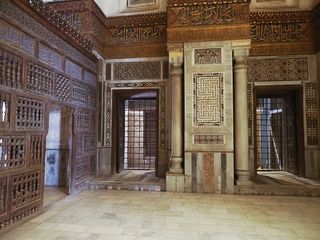
The second major monument in the video is the complex of Sultan Qalawun, one of the masterpieces of Mamluk Cairo. Built in the late thirteenth century on the great ceremonial street now known as al-Muizz, it combines several institutions in one unified foundation: a mausoleum, a madrasa-mosque and a maristan, or hospital.
This combination reveals the logic of Mamluk patronage. The ruler secured eternal remembrance through an imposing tomb while also financing education, worship and healthcare. Architecture therefore served both spiritual and practical purposes.
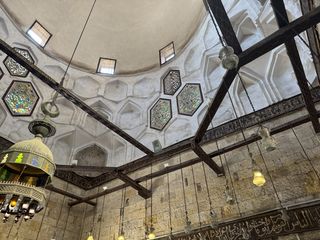
The Mausoleum of Qalawun is especially admired for the richness of its interior decoration, its scale and its sophisticated use of marble, carved surfaces and spatial composition. The madrasa-mosque expresses the importance of religious learning in legitimising political authority. The maristan reflects the advanced civic role of charitable institutions in medieval Cairo.
Historical and architectural context
During the thirteenth and fourteenth centuries, Cairo was one of the leading capitals of the eastern Mediterranean and the Islamic world. Trade routes, scholarship and political power converged there. After taking control of Egypt, the Mamluks transformed the city through an intense building programme. Former military elites, they relied heavily on monumental architecture to affirm legitimacy and prestige.
Their buildings are known for tall portals, carefully cut stonework, domes, inscriptions and complex urban integration. Rather than standing in isolation, many monuments were inserted directly into active streets lined with shops and houses. This made architecture part of daily life while ensuring constant public visibility.
The two mausoleums shown in the video illustrate this urban strategy. They were intended to be seen, visited and remembered within the movement of the city itself.
What the videos of this site make especially clear
Videos built largely from carefully selected and animated photographs are particularly effective for monuments of this kind. They allow the eye to follow façades slowly, to read carved decoration, and to understand the proportions between entrances, domes and surrounding walls.
They also help clarify the internal organisation of multi-functional complexes such as Qalawun, where several institutions coexist within one foundation. Gradual visual transitions make it easier to grasp how a tomb, mosque-school and hospital relate to one another.
Close framing can reveal stone textures, marble panels and inscriptions that may be overlooked during a quick on-site visit. Wider views, meanwhile, place the monuments within the dense historic fabric of Cairo.
Two monuments that explain a civilization
The Mausoleum of Al-Salih and the Qalawun Complex represent two decisive moments in Cairo’s medieval development: the final Ayyubid era and the confident rise of the Mamluks. Through architecture, charity and dynastic memory, they show how rulers shaped the city’s identity. The related detailed pages linked to this video offer the opportunity to explore each monument more deeply.
Links to related pages
Audio Commentary Transcript
Located in Historic Cairo, a UNESCO World Heritage Site, the complex of Qalawun and the mausoleum of Al-Salih are two architectural masterpieces reflecting the grandeur of the Ayyubid and Mamluk dynasties. These iconic monuments, combining religious and cultural functions, embody the rich and refined heritage of medieval Egypt.
Al-Salih mausoleum
The Al Salih mausoleum, located in Cairo, is a historical edifice dedicated to Al Salih Ayyub, the 13th-century sultan from the Ayyubid dynasty. A great-grandson of Saladin, the dynasty's founder, Al Salih played a pivotal role in medieval Egyptian history, which was marked by conflicts with the Crusaders and the rise of the Mamluks. Built during his reign, the mausoleum served as a symbol of the continuity of Ayyubid power in a period of significant turmoil. Today, the Al Salih mausoleum remains an important testament to Ayyubid architecture and history, reflecting the era's traditions and artistry.
Qalawun complex
The Qalawun Complex is a remarkable example of Mamluk architecture, constructed in 1285 by Sultan Al-Mansur Qalawun. This multifunctional complex consists of a mosque, a mausoleum where the Sultan is interred, and a hospital, reflecting the Islamic tradition of establishing buildings for religious and social purposes. The complex was designed to demonstrate Mamluk power and grandeur while providing essential services to the community. Through the centuries, it has remained a crucial landmark, illustrating the evolution of architecture and urban planning in medieval Cairo.
The Qalawun Complex, a Mamluk masterpiece from the 13th century in Cairo, embodies religion, knowledge, and social well-being. Its madrasa, which also served as a mosque, hosted prayers and the teaching of the four Sunni schools of law. The mausoleum, with its majestic dome, glorifies the memory of Sultan Qalawun. But the most innovative jewel remains the hospital, or maristan, where free medical care and education thrived. Featuring specialized rooms, it also included a central pool, whose gentle water sounds helped soothe patients, particularly those with mental illnesses. Today, this complex preserves the legacy of an era where spirituality, knowledge, and humanity intertwined harmoniously.
The Maristan of Qalawun, a medical marvel of the 13th century, could accommodate up to 4,000 patients in specialized rooms. At its heart, a central pool not only soothed patients with the calming sound of flowing water but also served a practical purpose in maintaining the hospital’s freshness and hygiene. This bimaristan, offering free medical care and education, stands as a testament to the remarkable advancements in medical science under the Mamluks.

Music:
- - YouTube video library - Bazaar Ballad - Patrick Patrikios
- - YouTube video library - Jasmine Whipers - Patrick Patrikios
Disclaimer: Despite its appropriateness, copyright issues prevent the use of egyptian traditional music in "Cairo, Two Mausoleums: Qalawun and Al Salih", hence the use of royalty-free music. Despite our careful selection, some might regret this decision, which is necessary to avoid potential lawsuits. Although difficult, this decision is the only viable solution.