

 Français (France)
  Nederlands (nl-NL)
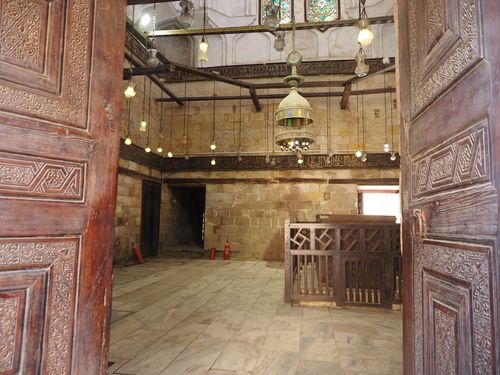
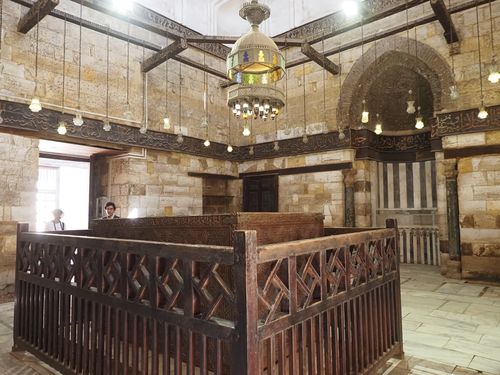
 The Al-Salih Mausoleum, located in Cairo, Egypt, is a notable example of 13th-century Islamic funerary architecture. Built during the Ayyubid dynasty, it highlights the cultural and religious significance of funerary monuments in that period. Dedicated to Al-Salih Najm al-Din Ayyub, the last Ayyubid sultan, it represents a transitional phase between Ayyubid and Mamluk architectural styles, forming an essential part of Cairo’s historical heritage.
Monument profile
Al-Salih Mausoleum
Monument category: Mausoleum
Monument family: Tomb, Necropolis, Mausoleum or Cenotaph
Monument genre: Funerary
Cultural heritage: Islamic
Geographic location: Cairo • Egypt
Construction period: 13th century AD
This monument in Cairo is inscribed on the UNESCO World Heritage List since 1997 and is part of the serial property "Historic Cairo".See the UNESCO monuments featured on this site
• Links to •
• This monument illustrates the following theme •
Architecture • Mausoleums : Muslim Mausoleums
• List of videos about Cairo on this site •
Cairo, Splendors of the Egyptian Museum • Egypt
Cairo, Two Mausoleums: Qalawun and Al Salih
The Al-Salih Mausoleum: Political Motives, Historical Significance, and Modern Challenges
Political and Social Motives Behind Its Construction
The Al-Salih Mausoleum, built between 1242 and 1249 during the reign of Sultan Al-Salih Najm al-Din Ayyub, served as a political and social statement in a tumultuous period for Egypt. As the last Ayyubid sultan, Al-Salih faced external threats from the Crusaders and internal struggles within the dynasty. By commissioning this funerary monument, he sought to legitimize his rule, project his piety, and reinforce his position as a defender of Sunni Islam.
The mausoleum also played a social role by asserting the Ayyubid dynasty's enduring legacy. Situated alongside a madrasa, it emphasized the connection between education and religion, a hallmark of Ayyubid governance. This combination of religious and civic functions reflected the dynasty’s commitment to serving both spiritual and intellectual needs.
Key Historical Events and Their Influence
The mausoleum witnessed the decline of the Ayyubid dynasty and the rise of the Mamluks in 1250, a pivotal shift in Egyptian history. The Mamluks repurposed and expanded many Ayyubid structures, marking the transition of power. The mausoleum’s enduring presence symbolized the continuity of Islamic architectural traditions amid political change.
In later centuries, the monument was affected by Ottoman rule, during which decorative elements were added to align with the prevailing artistic preferences. Under British colonial influence, the mausoleum became an object of historical interest, leading to early preservation efforts. Each of these periods left a distinct mark, reflecting shifts in cultural and political authority.
The Global Context in the 13th Century
The construction of the Al-Salih Mausoleum occurred during a transformative era globally. In Europe, the late 13th century was marked by the Crusades’ waning influence and the rise of Gothic architecture, exemplified by cathedrals such as Notre-Dame de Paris. In Asia, the Mongol Empire facilitated cultural and commercial exchanges, creating unprecedented connections between East and West.
Amid these global developments, Cairo emerged as a major Islamic cultural and economic hub. The Al-Salih Mausoleum, with its combination of religious, educational, and architectural significance, represented Cairo’s role as a center of Islamic learning and governance.
Transformations Reflecting Shifts in Power
Over the centuries, the Al-Salih Mausoleum has undergone significant transformations. During the Ottoman period, it experienced stylistic modifications, including changes to its decorative patterns and calligraphy. In modern times, the mausoleum has faced challenges from urbanization and environmental degradation.
Despite these changes, the structure retains key elements of its original Ayyubid design, such as its pointed arches and inscriptions. These features serve as a testament to the architectural innovations of the period and the enduring legacy of Ayyubid aesthetics.
Cultural Significance and Current State
Today, the Al-Salih Mausoleum is part of Cairo’s Islamic historic district, which is recognized as a UNESCO World Heritage Site. While not individually listed, its inclusion highlights its importance as a component of the city’s rich architectural and cultural heritage.
The monument’s current state reflects the challenges of balancing preservation with the pressures of urban growth and tourism. Although efforts have been made to restore its structural and decorative elements, ongoing maintenance is required to address issues such as pollution, erosion, and visitor impact.
Preservation Challenges
The primary threats to the Al-Salih Mausoleum’s integrity include urban encroachment, traffic-induced vibrations, and environmental factors like pollution and weathering. Tourism, while essential for raising awareness and funding, also poses risks to the delicate architectural features.
To preserve the mausoleum, sustainable tourism management, advanced conservation techniques, and increased funding are crucial. International collaboration and local community involvement will also play vital roles in ensuring the monument’s long-term survival.
Conclusion
The Al-Salih Mausoleum stands as a symbol of the political and cultural ambitions of the Ayyubid dynasty. Its architecture, blending local traditions with external influences, highlights the ingenuity of 13th-century Islamic design. Despite the challenges of modern preservation, the monument continues to inspire and educate, serving as a vital link to Egypt’s rich historical and architectural heritage.
The Al-Salih Mausoleum: Architectural Innovation and Cultural Significance
Architectural Innovation and Technological Advances
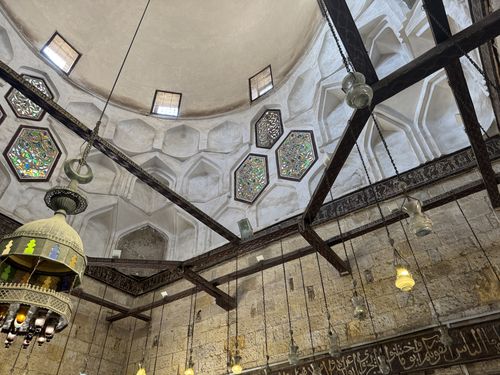
The Al-Salih Mausoleum, constructed between 1242 and 1249 in Cairo, Egypt, stands as a remarkable testament to the technological ingenuity of the Ayyubid dynasty. Its design incorporates advanced engineering techniques, particularly in the construction of its arches and domes, which exhibit precision and durability. The pointed arches used in the structure not only enhanced its aesthetic appeal but also distributed weight effectively, allowing for greater spatial openness.
Locally sourced limestone was the primary building material, chosen for its durability and availability. Decorative elements, including intricately carved marble and stucco, highlight the craftsmanship of the era. These materials were combined with innovative construction methods, such as interlocking masonry and fine detailing, which elevated the monument’s grandeur and durability.
A Unique Blend of Regional and Foreign Artistic Traditions
The mausoleum’s architecture reflects a harmonious integration of local and external artistic influences. While its overall form adheres to Islamic funerary traditions, featuring simplicity and symmetry, its decorative elements reveal influences from Byzantine and Syrian art.
Geometric patterns and arabesques dominate the mausoleum’s interior and exterior, complemented by floral motifs that exhibit regional craftsmanship. The inscriptions in Arabic calligraphy, carved into the stone and stucco, convey religious and political messages, emphasizing the piety and authority of Sultan Al-Salih Najm al-Din Ayyub. This blend of styles creates a unique aesthetic that distinguishes the mausoleum as a landmark of Islamic architecture.
Notable Structure and Layout
The mausoleum’s layout is relatively straightforward, reflecting its primary function as a funerary monument. The rectangular plan leads to a central domed chamber, where the sultan’s tomb is placed. The dome, a focal architectural feature, is supported by a series of intersecting arches, demonstrating the era’s engineering expertise.
The alignment of the mausoleum with adjacent religious and educational structures, such as the madrasa, illustrates the multifunctional nature of Ayyubid architecture. This integration highlights the importance of combining spiritual, intellectual, and social functions within a single urban space.
Anecdotes and Historical Highlights
A remarkable aspect of the mausoleum’s construction is its completion within just seven years, a relatively short time for a structure of its scale and complexity. Historical accounts suggest that Sultan Al-Salih was deeply involved in its planning, ensuring that it would serve as a lasting symbol of his reign.
An interesting anecdote notes that the sultan aimed to create a monument that would rival other prominent Islamic structures of the time, such as those in Damascus and Jerusalem, solidifying Cairo’s position as a cultural and political hub in the Islamic world.
Contribution to International Recognition
The Al-Salih Mausoleum is part of Cairo’s historic Islamic district, which has been recognized as a UNESCO World Heritage Site. While not individually listed, its inclusion within this broader designation underscores its importance as a cultural and architectural landmark.
This recognition has drawn international attention to the mausoleum, spurring conservation efforts and raising awareness of its historical significance. The preservation of its architectural features, such as its inscriptions and decorative elements, has become a priority in maintaining its integrity.
Modern Challenges and Preservation Efforts
The mausoleum faces numerous challenges in the modern era, including environmental degradation, urban encroachment, and the pressures of tourism. Pollution from Cairo’s bustling cityscape accelerates the deterioration of stone and stucco, while vibrations from nearby traffic threaten the structural stability of the dome and arches.
Efforts to address these challenges include periodic restoration projects, advanced monitoring techniques, and sustainable tourism initiatives. Collaboration between local authorities, international organizations, and heritage experts has been instrumental in preserving the monument for future generations.
Conclusion
The Al-Salih Mausoleum exemplifies the architectural and cultural achievements of the Ayyubid dynasty, showcasing a sophisticated blend of regional and foreign influences. Its innovative construction techniques and rich decorative elements reflect the technological and artistic advancements of its time. As a vital part of Cairo’s Islamic heritage, the mausoleum continues to captivate historians and visitors alike, underscoring the importance of ongoing preservation efforts to protect its legacy.