

 Français (France)
  Nederlands (nl-NL)
 Maha Bodhi Ta Htaung, located near Monywa in Myanmar, is a renowned Buddhist complex known for its monumental statues and spiritual significance. Its iconic structures include a 116-meter-tall standing Buddha and a 90-meter-long reclining Buddha, symbolizing meditation and rest. The site serves as a significant pilgrimage destination and cultural attraction, reflecting the region's religious devotion and artistic heritage.
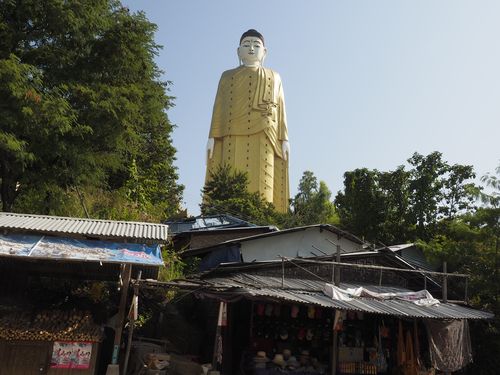
Monywa • Laykyun Sekkya : standing buddha

Monywa • Laykyun Sekkya : standing buddha
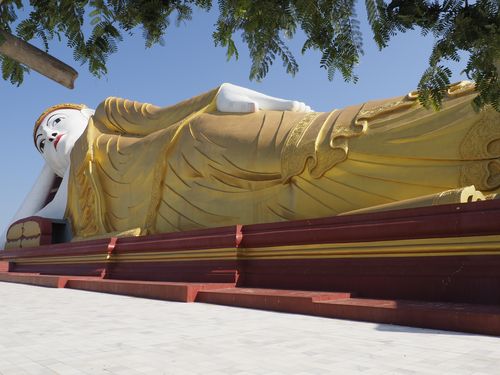
Monywa • Laykyun Sekkya : reclining buddha
Monument profile
Maha Bodhi Ta Htaung
Monument category: Giant Statues
Monument family: Giant statues or set of statues
Monument genre: Religious
Cultural heritage: Buddhist
Geographic location: Monywa • Myanmar
Construction period: 21th century AD
• Links to •
• List of videos about Monywa on this site •
Monywa, Thanboddhay pagoda • Myanmar
Monywa, Buddhas and more Buddhas • Myanmar
• References •
Wikipedia EN: Laykyun Sekkya
The Political and Social Motivations Behind the Creation of Maha Bodhi Ta Htaung in Monywa, Myanmar
Historical Context and Construction Motivations
Maha Bodhi Ta Htaung, meaning "The Great Thousand Bodhi Trees," was initiated in the 1960s by the revered Buddhist monk Sayadaw Thambuddhe. The project reflected the social and political aspirations of a nation rebuilding its identity after gaining independence in 1948. At a time when Myanmar sought to affirm its Buddhist roots, the construction of this site symbolized both spiritual revival and national pride. It aimed to create a sanctuary for meditation and learning while serving as a monumental declaration of the country’s cultural and religious heritage.
Significant Historical Events and Regional Impact
Over the decades, Maha Bodhi Ta Htaung evolved into a key spiritual and cultural landmark. The addition of the Laykyun Sekkya, the standing Buddha statue completed in 2008, became a milestone in the region's history. At 116 meters, this statue reinforced the global stature of the site, attracting pilgrims and tourists alike. These developments contributed to the economic growth of the surrounding area, establishing Monywa as a center of religious tourism and cultural exchange.
Global Context and Comparisons
The construction of Maha Bodhi Ta Htaung coincided with a global wave of cultural preservation and monumental projects. For example, in India, efforts were underway to restore the Mahabodhi Temple at Bodh Gaya, a site of immense significance to Buddhists worldwide. Similarly, nations like Thailand and Japan were investing in iconic religious structures as symbols of national identity and spiritual continuity. Maha Bodhi Ta Htaung exemplifies this trend, combining traditional Buddhist architectural elements with a modern emphasis on scale and accessibility.
Transformations and External Influences
Since its inception, the site has undergone continuous transformation. Initially conceived as a meditation retreat, it expanded into a sprawling complex featuring not only the monumental standing and reclining Buddha statues but also the Forest of a Thousand Buddhas. This evolution reflects the region's openness to adapting traditional Buddhist ideals to contemporary needs. The artistic style of the statues integrates local Burmese craftsmanship with broader influences from other Buddhist cultures, showcasing a unique cultural synthesis.
Current Conservation Status and Cultural Importance
Today, Maha Bodhi Ta Htaung stands as a testament to Myanmar’s religious devotion and artistic achievement. However, preserving its integrity faces challenges such as environmental degradation caused by tropical humidity and the increasing pressures of tourism. Efforts to maintain the site include local initiatives supported by international Buddhist communities. Despite these challenges, the complex remains a beacon of Myanmar's cultural identity, attracting pilgrims and visitors from around the world.
Conclusion
Maha Bodhi Ta Htaung is more than a religious monument; it is a symbol of Myanmar's spiritual, cultural, and national aspirations. Its history of transformation and resilience mirrors the broader narrative of the country, blending traditional values with modern expressions of faith and creativity. As a growing destination for religious and cultural tourism, its preservation will ensure its enduring legacy as a cornerstone of Buddhist heritage and a symbol of unity in a rapidly changing world.
Architectural Innovation and Cultural Synthesis in Maha Bodhi Ta Htaung, Monywa, Myanmar
Technological Advances and Materials Used
The Maha Bodhi Ta Htaung complex, developed from the 1960s onward, showcases the remarkable blend of traditional craftsmanship and modern engineering techniques. The iconic Laykyun Sekkya, a 116-meter-tall standing Buddha statue completed in 2008, exemplifies the technological advances of its time. Constructed with reinforced concrete, the statue demonstrates durability and structural ingenuity, enabling it to withstand the region's tropical climate. The outer surface features gilded details and colorful decorations, applied using a combination of local techniques and modern materials to enhance its visual grandeur.
Architectural Features and Decorative Motifs
The architectural design of Maha Bodhi Ta Htaung reflects a fusion of Burmese artistic traditions and broader Buddhist influences from Southeast Asia and beyond. The towering standing Buddha, symbolizing compassion and spiritual guidance, is paired with a 90-meter-long reclining Buddha, representing peace and enlightenment. These statues are intricately adorned with lotus motifs, mandalas, and scenes from Buddhist cosmology, underscoring the deep spiritual significance of the site.
One of the most distinctive elements is the 31 levels within the standing Buddha, representing the 31 planes of existence in Buddhist cosmology. Each level is decorated with murals and sculptures illustrating key teachings and moments from the Buddha's life, creating an immersive educational and spiritual experience for visitors. The meticulous craftsmanship of these elements demonstrates the artisans’ skill and the integration of traditional religious symbolism with large-scale modern design.
Structure and Layout
The Maha Bodhi Ta Htaung complex is carefully planned to represent harmony and spiritual growth. The expansive grounds include the Forest of a Thousand Buddhas, featuring rows of statues seated beneath umbrellas, evoking a serene meditative environment. This unique arrangement reflects the connection between spiritual practice and nature, a central tenet of Buddhism. The layout also facilitates the flow of pilgrims and tourists, allowing for both individual reflection and collective gatherings.
Notable Statistics and Anecdotes
The Laykyun Sekkya statue stands among the tallest Buddha statues in the world, attracting global attention.
Construction of the standing Buddha began in 1996 and was completed in 2008, involving hundreds of craftsmen and significant community support.
The Forest of a Thousand Buddhas features over 1,000 statues, symbolizing the omnipresence of the Buddha’s teachings.
International Recognition and UNESCO
Although not yet inscribed as a UNESCO World Heritage Site, Maha Bodhi Ta Htaung holds growing international recognition for its architectural and cultural significance. Its towering structures and unique design elements draw visitors from around the world, enhancing its status as a key spiritual and cultural landmark. Inclusion in the UNESCO list would amplify conservation efforts and secure its preservation against environmental and human-made challenges.
Conservation Challenges
The complex faces several preservation issues, including the effects of tropical weather, such as heavy rains and humidity, which can damage its surfaces. The increasing influx of tourists adds pressure on the infrastructure, necessitating sustainable tourism practices. Efforts by local and international organizations are crucial in addressing these challenges to ensure the site's longevity.
Conclusion
The Maha Bodhi Ta Htaung complex in Monywa is a masterpiece of architectural innovation and cultural synthesis. Its monumental structures, intricate motifs, and profound spiritual symbolism make it a beacon of Myanmar’s Buddhist heritage. By combining traditional artistry with modern construction techniques, it bridges past and present, drawing global admiration and reinforcing its significance as a symbol of faith and unity. Preservation of this iconic site will ensure its enduring legacy as a source of inspiration and spiritual enrichment for future generations.