

 Français (France)
  Nederlands (nl-NL)
 The Queen's Pyramids, located in Giza, Egypt, are funerary structures from the Old Kingdom of ancient Egypt. Smaller than the main pyramids on the site, these monuments were built to honor the queens and significant members of the royal family. Their symbolic purpose and placement near the pharaohs' pyramids highlight the reverence given to queens in ancient Egyptian culture. These structures are part of the UNESCO World Heritage Site designated in 1979.
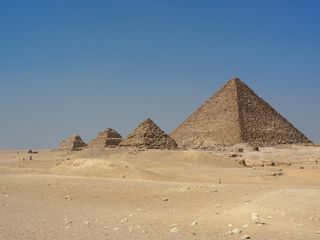
Giza • Queen's Pyramids

Giza • Queen's Pyramids
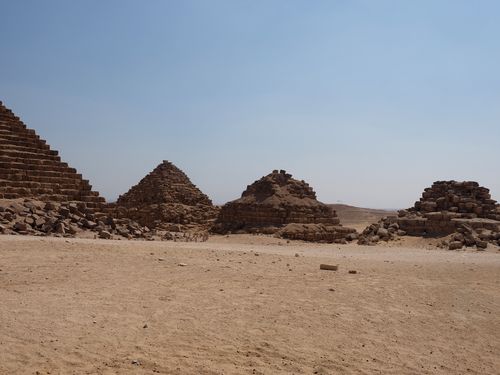
Giza • Queen's Pyramids
Monument profile
Queen's Pyramids
Monument category: Pyramide
Monument family: Tomb, Necropolis, Mausoleum or Cenotaph
Monument genre: Funerary
Cultural heritage: Ancient Egypt
Geographic location: Giza • Egypt
Construction period: before the 6th century BC
This monument in Giza is inscribed on the UNESCO World Heritage List since 1979 and is part of the serial property "Memphis and its Necropolis – the Pyramid Fields from Giza to Dahshur".See the UNESCO monuments featured on this site
• Links to •
• Dynasties that contributed to the construction of the monument •

• List of videos about Giza on this site •
Giza, Royal Necropolis of the Old Kingdom • Egypt
The Queen's Pyramids at Giza: Political Motives, Historical Evolution, and Modern Challenges
Political and Social Motivations Behind Their Construction
The Queen's Pyramids at Giza were constructed during the Fourth Dynasty of Egypt's Old Kingdom (circa 2600–2500 BCE). These smaller pyramids, built adjacent to the massive pyramids of pharaohs, were designed as burial sites for queens and significant members of the royal family. Politically, their construction symbolized the divine authority of the pharaoh, reinforcing the hierarchical structure of the state by emphasizing the central role of the royal family in maintaining cosmic and social order.
Socially, the pyramids represent the collective effort of an organized workforce, showcasing the unity of the kingdom. Their creation involved large-scale mobilization of resources and labor, uniting various social classes in a shared religious and political project. These monuments emphasized the queens' importance in legitimizing the pharaoh's rule and underscored the dynastic continuity.
Major Historical Events and Their Impact
Over the centuries, the Giza plateau has been a focal point of significant historical events. During the New Kingdom (circa 1550–1070 BCE), the pyramids remained influential in religious practices, often serving as symbols of the enduring legacy of Egypt's ancestors. Under Greek and Roman rule, the site gained international renown, attracting visitors fascinated by its grandeur and ancient heritage.
In the medieval period, the pyramids suffered extensive damage due to the repurposing of limestone casing blocks for construction in Cairo. However, renewed interest during the 19th and 20th centuries, driven by archaeological expeditions, revealed their historical and cultural significance. These explorations led to the inclusion of the site as a UNESCO World Heritage Site in 1979, elevating its global importance.
Global Context and Comparisons
When the Queen's Pyramids were being constructed, other regions of the world were experiencing their own architectural and cultural advancements. In Mesopotamia, ziggurats were being built as religious structures that similarly emphasized the connection between rulers and deities. The Indus Valley civilization, contemporaneous with the Old Kingdom, was developing sophisticated urban centers like Mohenjo-Daro, showcasing advanced urban planning.
Meanwhile, in Europe, megalithic structures like Stonehenge were being erected, reflecting ritualistic and astronomical concerns. Unlike these regions, Egypt's pyramids stood out for their monumental scale, complex logistics, and their dual purpose as both tombs and symbols of centralized authority.
Transformations Over the Centuries
The Queen's Pyramids have undergone significant changes over time. Originally covered in polished white limestone, most of this casing was removed due to natural erosion and human activities, particularly during the medieval period. The structures themselves, while less elaborate than the pharaohs' pyramids, contained small burial chambers and funerary temples, some of which have been excavated, revealing fragments of statues and reliefs.
These transformations reflect shifts in political power and cultural influences. The damage and re-purposing of materials during periods of instability illustrate the region's fluctuating priorities, while archaeological discoveries highlight the enduring interest in and reverence for these monuments.
Current State and Challenges
Today, the Queen's Pyramids remain part of the larger Giza Necropolis, recognized as a UNESCO World Heritage Site. Despite this protection, they face numerous challenges:
- Natural Erosion: Wind and sand continue to wear down the exposed stonework.
- Urban Encroachment: The rapid expansion of Cairo threatens the integrity of the site through pollution and vibrations from nearby activities.
- Tourism Pressure: High visitor numbers necessitate careful management to minimize physical impact.
- Climate Change: Variations in temperature and humidity accelerate material degradation.
Efforts to address these challenges include advanced monitoring systems, restoration projects, and international collaborations to ensure the site's preservation.
Cultural Significance and UNESCO Recognition
The Queen's Pyramids symbolize not only the architectural ingenuity of ancient Egypt but also its social and political systems. Their inclusion in the UNESCO World Heritage list has heightened global awareness of their importance, leading to enhanced conservation measures and scholarly research. These initiatives aim to preserve the pyramids as enduring symbols of humanity's shared cultural heritage.
Conclusion
The Queen's Pyramids at Giza serve as a testament to the political ambition, technological prowess, and cultural sophistication of ancient Egypt. Their historical evolution, from their construction during the Old Kingdom to their modern status as a UNESCO World Heritage Site, underscores their enduring significance. Preserving these monuments amidst modern threats requires ongoing commitment to safeguarding their legacy for future generations.
Architectural Innovation and Technological Advancements: The Queen's Pyramids at Giza
Technological and Architectural Achievements of the Fourth Dynasty
The Queen’s Pyramids, constructed during the Fourth Dynasty of ancient Egypt’s Old Kingdom (circa 2600–2500 BCE), are exemplary of the era’s technological innovation and architectural sophistication. Although smaller in scale than the Great Pyramids of Giza, these structures were constructed with the same precision and attention to detail, reflecting the grandeur and ambition of the time. Their design demonstrates an advanced understanding of geometry, material durability, and construction techniques.
Materials and Construction Techniques
The Queen's Pyramids were primarily constructed from locally quarried limestone, used for the core blocks, while the outer casing was made of finely polished white limestone, which gleamed under the sun. Granite from Aswan, transported over 800 kilometers via the Nile, was utilized for specific elements like burial chambers and sarcophagi. This choice of materials underscored the builders’ logistical capabilities and the monument’s symbolic importance.
The construction techniques employed reveal impressive engineering expertise. Massive stone blocks, weighing several tons, were precisely cut and positioned without the use of modern machinery. Ramps, levers, and an organized labor force were integral to this process. The inclination of the pyramidal sides, carefully calculated, ensured stability and symbolically represented the rays of the sun—a connection to the divine.
Architectural Features and Decorative Elements
The architectural layout of the Queen's Pyramids includes a simple yet functional design, featuring a pyramid structure accompanied by a small chapel or temple at the base. These adjunct structures served as sites for rituals associated with the afterlife, underscoring the integration of religious practices into architectural planning.
Decorative elements, though sparse compared to the larger pyramids, highlight a blend of regional artistry and evolving styles. Reliefs and inscriptions discovered in adjacent temples depict scenes of daily life and religious ceremonies, symbolizing the connection between the terrestrial and the divine. While the influence of foreign styles in the Queen’s Pyramids is minimal, subtle artistic elements may reflect interactions with neighboring cultures, such as Nubia or the Levant, during trade or conquest.
Notable Structural Aspects and Anecdotes
Dimensions: The Queen’s Pyramids are modest in size, typically ranging from 20 to 30 meters in height. Their smaller scale contrasted with the pharaohs’ pyramids, yet they retained symbolic prominence due to their proximity.
Arrangement: The pyramids were strategically placed around the larger structures of the pharaohs, creating a necropolis that emphasized the divine and hierarchical order of the royal family.
Historical Anecdote: Many of these pyramids were built for queens whose exact identities remain unknown, sparking ongoing debates among historians and archaeologists regarding their roles in the royal court.
Global Recognition and UNESCO Impact
The Queen’s Pyramids are part of the larger Giza Necropolis, inscribed as a UNESCO World Heritage Site in 1979 under the series "Memphis and its Necropolis – the Pyramid Fields from Giza to Dahshur." This designation has amplified their international recognition, reinforcing their status as a cultural and historical treasure.
UNESCO’s involvement has spurred efforts to preserve these monuments, including initiatives to counteract erosion, manage tourism, and study the pyramids using advanced technologies. These measures have not only safeguarded the site but have also elevated its profile as a symbol of ancient ingenuity and cultural heritage.
Challenges and Conservation Efforts
The preservation of the Queen’s Pyramids faces several challenges, including:
- Natural Erosion: Wind, sand, and temperature fluctuations gradually degrade the limestone structure.
- Urban Expansion: Proximity to Cairo exposes the site to pollution and vibrations from modern construction.
- Tourism Impact: The increasing number of visitors necessitates stringent management to minimize damage.
To mitigate these issues, conservationists employ modern tools like 3D scanning to monitor structural integrity and implement protective measures against environmental damage.
Conclusion
The Queen’s Pyramids at Giza epitomize the technological advancements and cultural richness of the Fourth Dynasty. Their construction techniques, materials, and architectural features highlight a period of great innovation and ambition in ancient Egypt. Today, they stand as enduring symbols of a civilization’s ability to blend functionality, artistry, and spiritual significance. Recognized globally and protected under UNESCO, these monuments continue to inspire awe and demand concerted efforts for their preservation for future generations.