

 Français (France)
  Nederlands (nl-NL)
 The Aung Myae Oo Forest, located in Monywa, Myanmar, is a significant spiritual site known for its rows of seated Buddha statues beneath umbrellas. Representing meditation and enlightenment, this space offers a serene setting for Buddhist teachings and reflection, attracting pilgrims and visitors interested in spiritual culture and religious architecture.
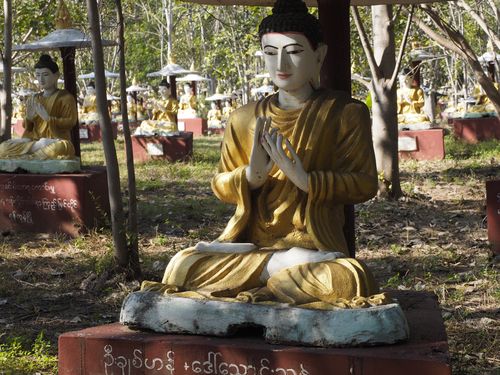
Monywa • Maha Bodhi Ta Htaung
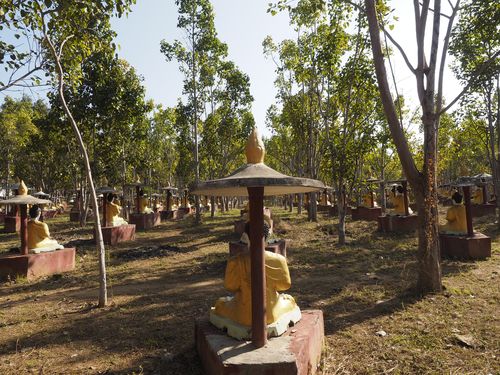
Monywa • Maha Bodhi Ta Htaung
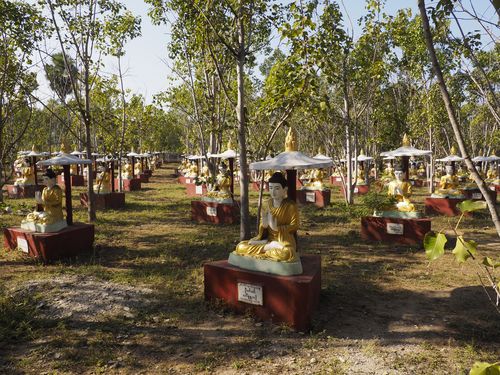
Monywa • Maha Bodhi Ta Htaung
Monument profile
Aung Myae Oo Forest
Monument category: Set of statues
Monument family: Giant statues or set of statues
Monument genre: Religious
Cultural heritage: Buddhist
Geographic location: Monywa • Myanmar
Construction period: 20th century AD
• Links to •
• List of videos about Monywa on this site •
Monywa, Thanboddhay pagoda • Myanmar
Monywa, Buddhas and more Buddhas • Myanmar
The Political and Social Motivations Behind the Creation of Aung Myae Oo Forest in Monywa, Myanmar
Historical Context and Motivations for Construction
The Aung Myae Oo Forest, located in Monywa, Myanmar, was established in the latter half of the 20th century as part of a broader movement to strengthen Buddhist values and education in the country. Its creation was driven by a combination of political and social motives, rooted in Myanmar's post-independence efforts to reaffirm its cultural and spiritual identity. The project aimed to provide a space for meditation and Buddhist teachings while fostering unity and social cohesion during a period marked by political transitions and internal conflicts.
This initiative also reflected the Buddhist principle of living harmoniously with nature, symbolized by the alignment of Buddha statues under protective parasols in a serene forest environment. These elements were designed to inspire reflection and spiritual awakening, making the site both a place of worship and a cultural statement.
Key Historical Events and Regional Impact
The establishment of Aung Myae Oo Forest coincided with the rise of Buddhist nationalism in Myanmar. During periods of political instability, religious institutions and monuments like this forest became central to preserving the nation's identity and providing solace to the population. The forest has since evolved into a center for pilgrimage and education, attracting monks, scholars, and tourists.
Its development has also contributed to the local economy by creating jobs and boosting tourism. The alignment of over 1,000 statues reflects the dedication of the community, which played an active role in funding and constructing the site.
Global Context and Comparisons
During the same period, similar projects were being undertaken in other Buddhist-majority countries, such as the restoration of the Mahabodhi Temple in India and the construction of monumental Buddhist statues in Sri Lanka and Thailand. These efforts shared a common goal of reinforcing cultural identity and promoting religious tourism in a rapidly changing world. Aung Myae Oo Forest is part of this global trend, exemplifying how spiritual heritage can contribute to both national pride and international recognition.
Transformations and External Influences
Over the decades, the Aung Myae Oo Forest has undergone significant transformations. Initially a local project, it has grown into a prominent religious and cultural landmark. The artistic style of the statues incorporates traditional Burmese aesthetics while also drawing inspiration from other Buddhist cultures, such as Thailand and Sri Lanka. These influences demonstrate Myanmar's openness to external cultural elements while maintaining its unique identity.
The forest's layout, featuring rows of Buddha statues, reflects a meticulous design aimed at creating a harmonious and meditative atmosphere. This structure embodies the Buddhist concept of order and balance, making it a place of both spiritual and architectural significance.
Current Conservation Status and Cultural Importance
The Aung Myae Oo Forest remains well-preserved, thanks to the efforts of local communities and monks. However, it faces challenges related to Myanmar's tropical climate, including heavy rainfall and humidity, which accelerate wear on the statues and infrastructure. Additionally, the increasing number of visitors requires sustainable tourism practices to ensure the site’s long-term preservation.
Culturally, the forest has become a symbol of Myanmar's Buddhist heritage and a testament to the collective spirit of its people. It attracts pilgrims and visitors from across the country and beyond, solidifying its role as a site of spiritual significance and cultural pride.
Challenges to Preservation and Modern Threats
The main threats to the Aung Myae Oo Forest include environmental factors, such as erosion and weathering caused by the tropical climate. The growing influx of tourists also puts pressure on the site’s infrastructure. Financial constraints and competing priorities in Myanmar’s broader cultural preservation efforts further complicate conservation.
Conclusion
The Aung Myae Oo Forest is more than a religious site; it is a reflection of Myanmar's cultural and spiritual identity, embodying both tradition and modernity. Its creation, evolution, and ongoing preservation illustrate the dynamic interplay between politics, society, and religion in shaping the nation’s heritage. With sustained efforts to address modern challenges, the Aung Myae Oo Forest can continue to inspire future generations while serving as a symbol of Myanmar’s enduring devotion and cultural richness.
Architectural Innovation and Cultural Fusion in Aung Myae Oo Forest, Monywa, Myanmar
Technological Advances and Materials Used
The Aung Myae Oo Forest showcases a combination of traditional craftsmanship and modern construction techniques, reflecting the architectural advancements of its era. The seated Buddha statues, each under an intricately designed parasol, are made using durable materials such as concrete and stone, with some parasols incorporating lightweight metals or reinforced concrete. These materials were chosen to ensure longevity in Myanmar’s tropical climate. The gilded details and painted surfaces of the statues illustrate a meticulous application of traditional decorative methods, enhanced by modern tools for precision.
The use of aligned and standardized molds for creating hundreds of identical Buddha statues demonstrates an innovative approach to scaling traditional craftsmanship for a monumental project. This blending of handcraft and mechanized production allowed for the creation of a harmonious and visually striking forest of statues.
Unique Architectural Features and Decorative Motifs
The architectural design of Aung Myae Oo Forest is both symbolic and functional. The rows of Buddha statues represent a serene order, symbolizing enlightenment and the path to spiritual awakening. Each statue, seated in a meditative pose, is sheltered by a parasol, a traditional symbol of protection and reverence in Buddhist culture. The parasols vary in their decorative details, with some incorporating regional artistic influences such as lotus motifs and floral patterns, common in Southeast Asian Buddhist art.
The motifs on the statues and parasols also highlight a fusion of regional and foreign influences, including Thai and Sri Lankan traditions. This blending is evident in the intricate carvings and the symbolic use of gold, which signifies purity and spiritual wealth.
Structure and Layout
The forest is designed in a carefully planned linear arrangement, creating symmetrical rows of Buddha statues that stretch across the site. This layout not only facilitates the movement of visitors but also enhances the meditative ambiance of the space. The open landscape is integrated with the architecture, emphasizing the Buddhist principle of harmony between humanity and nature.
The scale and precision of the layout reflect both spiritual intent and technical mastery. The alignment of the statues draws the eye towards key focal points, encouraging reflection and spiritual introspection among visitors.
Notable Statistics and Anecdotes
The Aung Myae Oo Forest features over 1,000 Buddha statues, making it one of the largest collections of its kind.
Each parasol is unique, with subtle variations in decoration, symbolizing the diversity within unity in Buddhist philosophy.
The construction involved the participation of local artisans, monks, and community members, emphasizing the collective dedication to the project.
International Recognition and UNESCO
Although not yet inscribed as a UNESCO World Heritage Site, the Aung Myae Oo Forest has gained international recognition for its cultural and spiritual significance. Its unique layout and monumental scale make it a significant site in the context of global Buddhist heritage. An inscription by UNESCO would further elevate its profile, encouraging conservation efforts and increasing awareness of Myanmar’s rich cultural legacy.
Conservation Challenges and Modern Threats
Preserving the Aung Myae Oo Forest requires addressing several challenges. The tropical climate, characterized by heavy rainfall and high humidity, accelerates the wear and tear of the statues and parasols. Additionally, the growing number of visitors, while beneficial for the local economy, adds pressure on the site’s infrastructure. Effective conservation strategies, including routine maintenance and the use of weather-resistant materials, are essential to protect the site.
Conclusion
The Aung Myae Oo Forest in Monywa is a remarkable example of architectural innovation and cultural synthesis. Its symbolic design, rooted in Buddhist traditions, and its fusion of local and foreign artistic influences highlight its significance as a spiritual and cultural landmark. With continued preservation efforts, the forest can remain a testament to Myanmar’s religious devotion and artistic heritage, inspiring generations to come. Its recognition on a global scale would further solidify its place as an iconic representation of Buddhist culture and architecture.