

 Français (France)
  Nederlands (nl-NL)
 The Baphuon Temple, located in Angkor, Cambodia, is a significant monument from the 11th century. Originally dedicated to the Hindu god Shiva, it was later converted into a Buddhist site. This multi-tiered pyramidal structure reflects key aspects of religious cosmology, and its massive architecture showcases the advanced engineering skills of its time. The restoration of Baphuon was a major challenge, contributing to the preservation of one of Angkor’s most important landmarks.
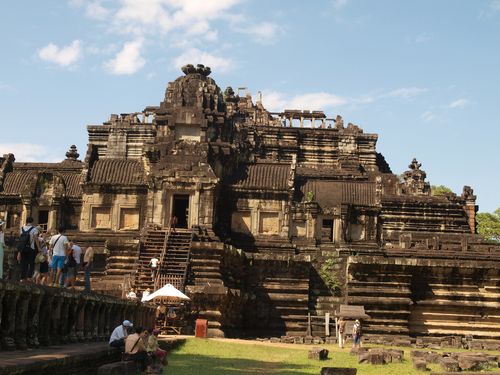
Angkor • Baphuon Temple
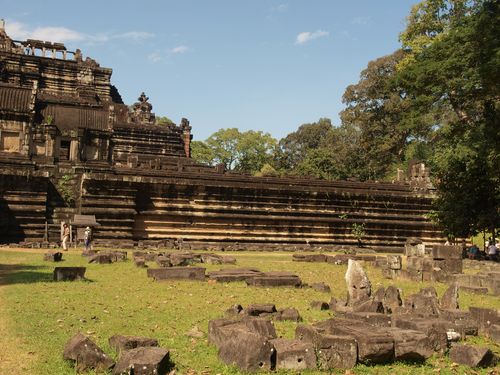
Angkor • Baphuon Temple
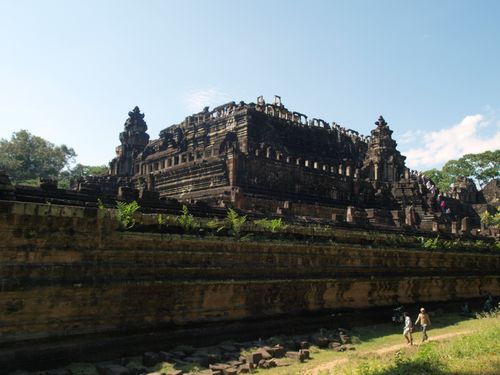
Angkor • Baphuon Temple
Monument profile
Baphuon Temple
Monument categories: Hindu Temple, Buddhist temple
Monument family: Temple
Monument genre: Religious
Cultural heritages: Hindu, Buddhist
Geographic location: Angkor • Cambodia
Construction period: 11th century AD
This monument in Angkor is inscribed on the UNESCO World Heritage List since 1992 and is part of the serial property "Angkor".See the UNESCO monuments featured on this site
• Links to •
• Dynasties that contributed to the construction of the monument •

• List of videos about Angkor on this site •
Angkor, the Preah Khan temple • Cambodia
Angkor, Ta Prohm temple • Cambodia
Angkor Thom, the Great City • Cambodia
Angkor Wat, masterpiece of Khmer architecture • Cambodia
• References •
Wikipedia FR: Baphuon
The Baphuon Temple at Angkor: Political Motivations, Historical Transformations, and Modern Conservation Challenges
The Baphuon Temple, located in the Angkor complex in Cambodia, is a monumental example of Khmer architecture from the mid-11th century. Its construction, initiated under King Udayādityavarman II around 1060, was driven by political and social motives aimed at consolidating royal authority and reinforcing religious devotion. Over the centuries, the temple has witnessed numerous historical transformations, reflecting the region's political shifts and external cultural influences. This article explores the reasons behind its construction, the key events that shaped its history, and the challenges it faces in modern times.
Political and Social Motivations Behind the Construction
The construction of the Baphuon Temple occurred during a period of consolidation for the Khmer Empire. King Udayādityavarman II sought to reinforce his legitimacy and authority through religious monuments that symbolized his connection to the divine. By dedicating the temple to the Hindu god Shiva, the king aligned himself with the supreme deity, thus asserting his right to rule as a god-king, a common practice among Southeast Asian monarchs of the time. Socially, the temple played a crucial role in uniting the Khmer elite under a shared religious and cultural identity, fostering loyalty to the central authority.
The Baphuon was designed not just as a place of worship but as a political statement, reinforcing the idea of the Khmer king as both a spiritual leader and a sovereign ruler. The construction of grand temples served to legitimize the ruler’s reign and centralize the empire’s power, projecting both spiritual and earthly dominance over the region.
Key Historical Events and Their Impact on the Region
Over the centuries, the Baphuon Temple became a reflection of the shifting political and religious dynamics in the region. One of the most significant events was its conversion from a Hindu temple dedicated to Shiva into a Buddhist temple in the 15th century. This transformation came after the fall of the Khmer Empire and the rise of Theravāda Buddhism, which replaced Hinduism as the dominant religion in Cambodia. The transition from one faith to another mirrored broader regional shifts as the influence of Indianized Hindu traditions began to wane and the rise of Buddhist ideologies spread across Southeast Asia.
In a broader global context, this period in Cambodia parallels similar transitions in other parts of the world. For example, while the Khmer Empire was adapting to Buddhist influence, Europe was emerging from the Dark Ages and entering a period of economic growth and religious transformation with the early stages of the Renaissance. In the Islamic world, powerful empires such as the Seljuks and later the Ottomans were consolidating their rule, using religious architecture much like the Khmers to project power and divine favor.
Major Transformations of the Monument Over the Centuries
The Baphuon Temple underwent significant physical and symbolic transformations that reflected changes in power and external influences. The most notable transformation was the construction of a large reclining Buddha on the temple's western side in the 15th century, which symbolized the region's shift to Buddhism. This modification marked a departure from the original Hindu purpose of the temple and signified the growing dominance of Buddhist thought in the post-Khmer Empire era.
The temple’s structure itself posed challenges over time. Built on an unstable foundation of sand, the massive pyramid-shaped monument began to suffer from subsidence and structural failure. Abandoned for centuries, it became overgrown with vegetation, which further contributed to its decay.
The temple’s history of decline and eventual restoration parallels the fate of many ancient monuments worldwide. Similar to the Renaissance efforts to preserve classical architecture in Europe, the restoration of Angkor’s temples, including the Baphuon, represents a cultural resurgence and global recognition of their historical value.
Cultural Importance and the Role of UNESCO in Conservation
The Baphuon’s architectural grandeur and historical significance have long made it a symbol of Cambodian heritage. Its importance was internationally recognized when the Angkor complex was declared a UNESCO World Heritage site in 1992. This recognition brought global attention to the need for preservation and provided the resources necessary for a massive restoration effort.
One of the most challenging restorations in the history of archaeology, the Baphuon’s reconstruction began in the 1960s but was interrupted by Cambodia’s civil war and the Khmer Rouge regime. When the war ended, much of the documentation necessary for the restoration had been lost, making the process akin to reassembling a giant puzzle. The project was finally completed in 2011, restoring much of the temple’s former glory.
UNESCO’s involvement has been crucial in preserving the Baphuon, as international cooperation and funding allowed the monument to be saved from complete ruin. Today, the temple is a symbol not only of Cambodia’s rich history but also of the global commitment to preserving cultural heritage.
Modern Challenges to Preservation
Despite its restoration, the Baphuon Temple continues to face numerous challenges in terms of preservation. The tropical climate of Cambodia, characterized by heavy monsoons and intense humidity, accelerates the deterioration of the temple’s sandstone structure. Additionally, the encroachment of vegetation, with tree roots threatening the integrity of the monument, presents an ongoing problem.
Tourism, while beneficial to the local economy, also poses a threat to the temple’s preservation. The steady stream of visitors increases the risk of physical damage, necessitating strict management of visitor access to protect the fragile structures.
Moreover, the effects of climate change, including more intense weather patterns and potential flooding, could further threaten the stability of the monument. Conservation efforts must continually adapt to these evolving challenges to ensure the long-term survival of the Baphuon.
Conclusion
The Baphuon Temple stands as a testament to the political ambitions and technological prowess of the Khmer Empire. Its transformations over the centuries, from a Hindu monument to a Buddhist temple, reflect the dynamic cultural shifts in Southeast Asia and the resilience of Cambodia’s heritage. Today, thanks to international efforts led by UNESCO, the Baphuon has been preserved as a symbol of Cambodia’s rich history and architectural achievements. However, the ongoing challenges of climate, tourism, and environmental degradation mean that the work to preserve this iconic monument is far from over.
Architectural features
Technological Innovation and Artistic Fusion: The Architecture of Baphuon Temple in Angkor
The Baphuon Temple, one of the grandest monuments in the Angkor region of Cambodia, is a striking example of architectural innovation from the mid-11th century. Built under King Udayādityavarman II, this majestic structure represents both the technological advancements and the artistic creativity of the Khmer Empire during its golden age. The materials, construction techniques, and artistic influences that shaped the temple reflect not only the grandeur of the time but also a unique blend of regional and foreign influences. The architectural features of Baphuon have contributed significantly to its recognition as a cultural and historical treasure, cemented by its inscription as a UNESCO World Heritage site.
Technological Advances and Construction Materials
The construction of Baphuon illustrates the advanced engineering skills of the Khmer builders. The temple’s primary material is sandstone, quarried locally and transported to the site, where it was meticulously shaped and fitted to create the monumental structure. The absence of mortar in the construction required extraordinary precision in cutting and aligning the stones, reflecting the technological expertise of the time. Sandstone was chosen for its durability and its ability to be intricately carved, making it ideal for the temple's elaborate decorative features.
One of the key innovations at Baphuon was the foundation system. Given the size and weight of the temple, along with the marshy conditions of the ground in Angkor, Khmer engineers had to develop solutions to prevent subsidence. They implemented a technique that involved compacting the ground with layers of sand to create a stable base. Despite these efforts, the temple faced structural challenges due to its sheer mass, leading to restoration efforts centuries later.
Unique Architectural Characteristics and Artistic Fusion
Baphuon’s design is centered around the symbolic representation of Mount Meru, the mythical sacred mountain in Hindu cosmology, often depicted as the center of the universe. The temple is a three-tiered pyramid, standing approximately 34 meters tall and covering a base area of 120 meters by 100 meters. This imposing structure served as both a religious site and a testament to the king’s divine connection.
The temple’s decorative elements further highlight the fusion of regional Khmer traditions and external influences. The intricate bas-reliefs carved into the sandstone depict scenes from Hindu mythology, particularly those associated with Shiva, to whom the temple was originally dedicated. The detailed representations of deities, mythical creatures, and natural motifs reflect a deep connection to Indian artistic traditions, which had a strong influence on Khmer culture.
Over time, as the Khmer Empire shifted toward Buddhism, the Baphuon was transformed to accommodate Buddhist worship. This is most notably reflected in the addition of a 70-meter-long reclining Buddha, built into the western wall of the temple during the 15th century. This architectural modification not only demonstrates the fluidity of religious practice in the region but also introduces stylistic changes that blend Hindu and Buddhist artistic traditions.
Notable Structure and Construction Anecdotes
One of the most remarkable aspects of the Baphuon is its sheer size and complexity. At the time of its completion, it was one of the largest temples in Angkor, often referred to as a “mountain temple” due to its towering pyramid structure. The monument's height and layered design required advanced knowledge of weight distribution and structural integrity. Unfortunately, the foundations began to deteriorate shortly after construction, leading to partial collapses and necessitating later restoration efforts.
A fascinating anecdote from the Baphuon’s history is its reconstruction in the 20th and 21st centuries. After centuries of abandonment, the temple had fallen into ruin, with over 300,000 stone blocks scattered across the site. French archaeologists began a meticulous restoration project in the 1960s using anastylosis—a method where original elements are reassembled in their original positions. However, the outbreak of civil war and the Khmer Rouge regime halted the process, and critical documentation of the temple’s layout was lost. When the project resumed in the 1990s, archaeologists faced the monumental challenge of piecing together a “giant puzzle” of stones without the original plans. After decades of work, the restoration was completed in 2011.
Global Recognition and UNESCO Impact
The architectural grandeur and historical significance of the Baphuon have earned it international recognition, particularly after the Angkor complex was designated a UNESCO World Heritage site in 1992. This recognition has brought global attention to the importance of preserving the Baphuon, not only as a cultural relic of Cambodia but also as a monument of universal value. The UNESCO designation was crucial in securing international support and funding for the restoration efforts, ensuring that the temple could be saved from further deterioration.
UNESCO’s involvement has also elevated the Baphuon’s status on the world stage, attracting scholars, tourists, and cultural enthusiasts. The temple’s inclusion in the World Heritage list has contributed to Cambodia’s efforts to preserve its rich history while promoting sustainable tourism. This has created a balance between cultural heritage preservation and economic development for the region.
Modern Conservation Challenges
Despite the successful restoration of the Baphuon, the temple continues to face significant conservation challenges. The tropical climate of Cambodia, characterized by heavy rainfall and humidity, accelerates the erosion of sandstone, threatening the intricate carvings and the overall structural integrity of the monument. Additionally, the rapid growth of vegetation, particularly the invasion of tree roots, puts further pressure on the fragile foundations.
Tourism, while beneficial for raising awareness and generating revenue for preservation efforts, also poses risks to the site. The large number of visitors can cause physical damage to the temple, especially on its staircases and delicate carvings. Managing the impact of tourism while ensuring the temple’s long-term preservation is a delicate balancing act for conservationists.
Conclusion
The Baphuon Temple stands as a symbol of the Khmer Empire’s technological prowess and artistic achievement. Its architecture, blending regional traditions with external influences, reflects the rich cultural heritage of Angkor and its role in Southeast Asia’s history. Despite the challenges posed by time, climate, and human activity, the restoration of Baphuon has ensured that this monumental site continues to be admired and studied around the world. The UNESCO designation has played a pivotal role in its preservation, and ongoing efforts will be necessary to protect the temple for future generations to appreciate and explore.