

 Français (France)
  Nederlands (nl-NL)
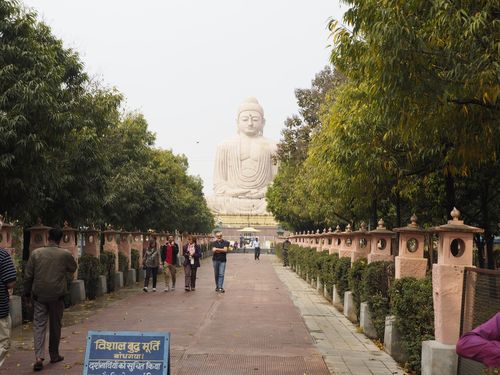
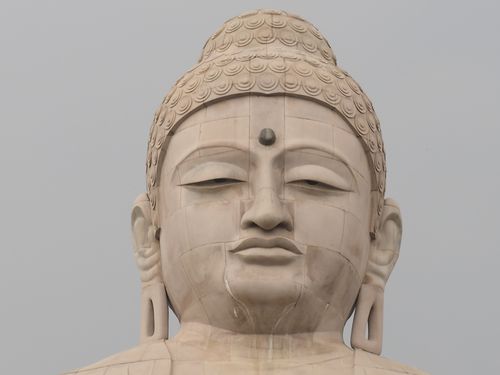
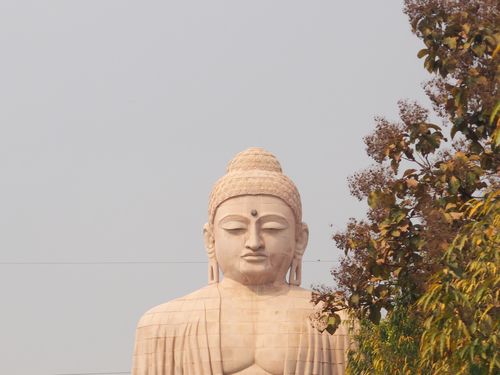
 The Great Buddha of Bodhgaya, located in Bihar, India, is an impressive statue depicting the Buddha in a meditative pose. Standing 25 meters tall, it is one of the country's most iconic landmarks, drawing visitors from around the globe. Completed in 1989, the statue is surrounded by gardens and sculptures of Buddha's disciples. The site holds great spiritual significance, particularly due to its proximity to the Bodhi Tree, where Buddha is said to have attained enlightenment.
Monument profile
Great Buddha
Monument category: Giant Statues
Monument family: Giant statues or set of statues
Monument genre: Religious
Cultural heritage: Buddhist
Geographic location: Bodhgaya • Bihar • India
Construction period: 20th century AD
• Links to •
• List of videos about Bodhgaya on this site •
Bodhgaya, the Mahabodhi temple • Bihar, India
Bodhgaya, temples in town and life in a village • Bihar, India
• References •
Wikipedia EN: Great Buddha (Bodh Gaya)
The Great Buddha of Bodhgaya: Political Motivations, Historical Significance, and Modern Challenges
The Great Buddha of Bodhgaya, a towering 25-meter statue representing Buddha in meditation, stands as a monumental symbol of peace and spirituality. Located in Bodhgaya, Bihar, the birthplace of Buddhism, this iconic statue was inaugurated in 1989. Its construction reflects a blend of political, social, and cultural motivations, while the site’s historical importance continues to shape its regional and global influence.
Political and Social Motivations Behind Its Construction
The construction of the Great Buddha was initiated by the Nipponzan Myohoji Buddhist Order, with international support from Buddhist nations such as Japan, Thailand, and Sri Lanka. Key motivations included:
- Revitalizing Buddhism in India: Despite being the birthplace of Buddhism, the religion had significantly declined in India over centuries. The project aimed to rekindle the Buddhist legacy in its homeland.
- Promoting Peace and Cooperation: The monument was designed to symbolize global harmony, fostering collaboration among Buddhist communities worldwide.
- Economic and Social Development: Bodhgaya’s growing prominence as a spiritual center attracted pilgrims and tourists, boosting the local economy and infrastructure.
This blend of spiritual aspiration and socio-political goals marked the Great Buddha as a landmark of both religious and cultural revival.
Historical Events Shaping Bodhgaya
Bodhgaya’s significance as a religious center dates back to the 6th century BCE, when Siddhartha Gautama attained enlightenment under the Bodhi Tree. Several key historical events have shaped its development:
- The Mauryan Period (3rd Century BCE): Emperor Ashoka, a pivotal figure in the spread of Buddhism, erected the Mahabodhi Temple and established Bodhgaya as a major pilgrimage destination.
- Decline During Islamic Rule (12th Century CE): The advent of Islamic empires in northern India led to the neglect and decline of Buddhist institutions in the region.
- Colonial and Postcolonial Revival (19th–20th Century): Efforts by figures like Anagarika Dharmapala and international Buddhist organizations restored Bodhgaya’s global importance.
Construction of the Great Buddha (1980s): The statue was part of a broader movement to restore Bodhgaya’s prominence as the spiritual heart of Buddhism.
Global Context and Comparisons
The Great Buddha’s construction in the late 20th century coincided with a global resurgence in the appreciation of religious monuments. Similar projects include:
Japan’s Great Buddha of Kamakura: A historic 13-meter statue, serving as inspiration for Buddhist art and architecture.
The Tian Tan Buddha in Hong Kong: Erected in 1993, this statue reflects the fusion of spirituality and modernity in the region.
The Leshan Giant Buddha in China: An ancient marvel carved during the Tang Dynasty, emphasizing the enduring legacy of monumental Buddhist sculptures.
These parallels highlight the universal appeal of Buddhism and the shared commitment to preserving its heritage through grand artistic expressions.
Transformations and Cultural Impact
While the Great Buddha itself is a relatively recent addition, the site of Bodhgaya has undergone significant transformations over centuries:
- Architectural Evolution: The statue integrates modern construction techniques with traditional Buddhist aesthetics, reflecting a fusion of innovation and heritage.
- Cultural Symbolism: The Great Buddha reinforces Bodhgaya’s status as a global spiritual hub, attracting millions of pilgrims and tourists annually.
- Economic Benefits: The monument has spurred local development, with improved infrastructure and facilities catering to visitors from around the world.
State of Conservation
The Great Buddha and the Bodhgaya complex are well-maintained through collaborative efforts between local authorities, Buddhist organizations, and international bodies. However, the site faces ongoing challenges:
- Environmental Threats: Pollution and climatic factors pose risks to the statue’s surface and structural integrity.
- Tourism Pressure: High visitor numbers strain the surrounding infrastructure, necessitating sustainable management practices.
- Preservation of Surrounding Heritage: Protecting the Mahabodhi Temple and other ancient landmarks requires coordinated efforts alongside the statue’s upkeep.
Modern Challenges and Opportunities
Despite its success as a cultural and spiritual landmark, the Great Buddha faces several challenges:
- Sustainable Tourism: Ensuring the site remains accessible while minimizing its ecological footprint is a critical concern.
- Climate Change: Rising temperatures and unpredictable weather patterns could accelerate wear on the statue and surrounding structures.
- Funding and Collaboration: Continued international cooperation and financial support are essential for long-term preservation.
Conclusion
The Great Buddha of Bodhgaya stands as a monumental tribute to the teachings of Buddhism and the enduring legacy of Bodhgaya as a global spiritual center. Its construction embodies a blend of political vision, cultural revival, and artistic innovation, while its continued preservation ensures its role as a symbol of peace and enlightenment for generations to come. Addressing modern challenges through sustainable practices and international collaboration will be key to safeguarding this landmark’s historical and spiritual significance.
The Great Buddha of Bodhgaya: Architectural Innovation and Cultural Fusion
The Great Buddha of Bodhgaya, a 25-meter-tall statue, is an extraordinary representation of spiritual and architectural ingenuity. Completed in 1989, it stands as a testament to modern construction techniques combined with traditional artistry. Situated in Bodhgaya, Bihar, India, the statue embodies a harmonious blend of regional styles and international influences, symbolizing peace and enlightenment.
Technological Advancements and Materials Used
The construction of the Great Buddha showcases the technological progress of its time, achieved through international collaboration and innovative design.
Materials:
- Reinforced Concrete: The core structure of the statue is made from reinforced concrete, providing a durable and stable foundation.
- Sandstone Cladding: Sandstone panels were carefully crafted and layered to create a seamless finish, preserving the traditional aesthetic of Indian stone carvings.
- Metal Alloys: Small decorative elements and internal reinforcements were crafted from metal alloys, adding both strength and visual refinement.
Construction Techniques:
- Segmented Assembly: The statue was built in multiple sections, each meticulously aligned and assembled to ensure precision.
- Traditional Carving Methods: While employing modern materials, the surface detailing relied on traditional sculpting techniques, reflecting India’s rich artisanal heritage.
- Structural Integrity: The base of the statue is designed to withstand environmental stresses, ensuring its longevity.
These advancements reflect a unique synergy of modern engineering and traditional craftsmanship.
Architectural Features and Cultural Fusion
The Great Buddha exemplifies a blend of regional traditions and influences from other Buddhist cultures, making it a symbol of global unity.
Pose and Symbolism:
The statue depicts Buddha in the dhyana mudra, a meditative pose symbolizing inner peace and enlightenment. This is a universally recognized posture in Buddhist art.
Decorative Elements:
The flowing robes of the Buddha are intricately detailed, reflecting Indian sculptural traditions.
Subtle design motifs, such as floral and geometric patterns, draw inspiration from other Buddhist cultures, including Japanese and Thai influences.
Cultural Integration:
The overall design was supervised by Japanese architects, while Indian artisans executed the detailed work. This collaboration underscores the shared heritage and universal appeal of Buddhism.
Structure and Layout
The statue’s structure and the surrounding landscape have been meticulously designed to enhance its spiritual and aesthetic appeal.
The Base:
The statue is elevated on a large platform, providing a sense of grandeur and serving as a gathering space for pilgrims.
Surrounding Sculptures:
Ten smaller statues of Buddha’s disciples are arranged around the main statue, adding to the narrative of devotion and teaching.
Landscaping:
The gardens and pathways around the monument are laid out symmetrically, creating a serene environment conducive to meditation and contemplation.
Notable Statistics and Anecdotes
- Height: At 25 meters (82 feet), the Great Buddha is one of the tallest statues in India.
- Duration of Construction: The project took seven years to complete, from 1982 to 1989.
- International Collaboration: The Nipponzan Myohoji Buddhist Order from Japan spearheaded the project, with contributions from countries such as Thailand, Sri Lanka, and Bhutan.
- Artisanal Work: Hundreds of local artisans were employed to sculpt and assemble the intricate sandstone cladding, ensuring the monument’s authenticity.
Global Recognition and UNESCO Impact
Although the Great Buddha itself is not inscribed as a UNESCO World Heritage Site, its location in Bodhgaya, near the Mahabodhi Temple (a UNESCO site), enhances its significance.
Conservation and Promotion:
The proximity to the Mahabodhi Temple has ensured better management and maintenance of the Great Buddha as part of the larger Bodhgaya heritage complex.
UNESCO recognition of Bodhgaya has brought international attention to the statue, promoting it as a symbol of global Buddhist heritage.
Cultural and Tourism Value:
The Great Buddha attracts thousands of visitors annually, contributing to the cultural and economic vitality of the region.
Modern Challenges and Preservation
Despite its strong construction, the Great Buddha faces several preservation challenges:
Environmental Factors:
Pollution and climatic changes can affect the sandstone surface, requiring regular cleaning and treatment.
Tourism Pressure:
High visitor numbers pose challenges in managing wear and tear on the monument and surrounding areas.
Long-Term Funding:
Continued maintenance relies on a combination of local efforts and international support, highlighting the need for sustainable financial strategies.
Conclusion
The Great Buddha of Bodhgaya stands as a remarkable blend of technological innovation, artistic excellence, and spiritual significance. Its construction highlights the collaborative efforts of diverse cultures, making it a beacon of global harmony. As a centerpiece of Bodhgaya’s spiritual landscape, the statue continues to inspire millions, reminding the world of Buddhism’s timeless teachings. Ongoing efforts to preserve and promote the monument will ensure its enduring legacy for future generations.