Français (France)
  Nederlands (nl-NL)
 The market of Bago is an important element of daily life in this historic city of Myanmar. It brings together vendors, craftsmen and residents in a space dedicated to economic exchange and social interaction. Stalls display a wide range of goods including fresh produce, fish, spices, textiles and everyday household items. Beyond its commercial function, the market also plays a social role by encouraging encounters between inhabitants from different neighborhoods and exchanges between rural producers and urban consumers. Market activity reflects local rhythms and food practices while illustrating the traditional forms of trade that remain common in many Burmese towns and cities.
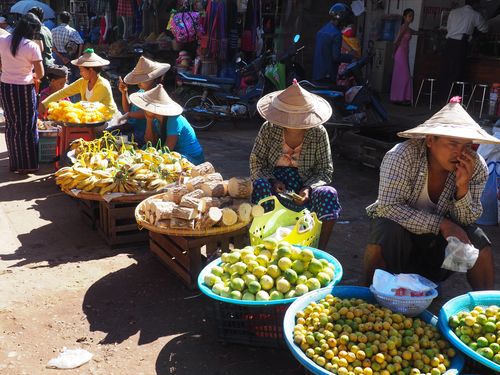
Bago • The Market

Bago • The Market

Bago • The Market
Tradition profile
The Market
Tradition category: Local market
Tradition family: Traditional markets and fairs
Tradition genre: Trade and Local Creativity
Geographic location: Bago • Myanmar
• Links to •
• List of videos about Bago on this site •
Bago (Pegu), monks and Buddhas • Myanmar
History of the Market Tradition in Bago (Myanmar)
Political and Social Context of Emergence
The tradition of organized markets in Bago developed within the broader historical context of urban growth and regional trade networks in Lower Myanmar. Bago, historically known as Pegu, became one of the most important political and economic centers of the Mon kingdom of Hanthawaddy between the fourteenth and sixteenth centuries. Its geographical position in the fertile delta region, close to navigable rivers and routes linking the interior of mainland Southeast Asia with the Bay of Bengal, made the city a strategic hub for commerce and population concentration.
Markets emerged as essential institutions in this environment. Urban populations depended on regular exchanges with surrounding agricultural areas for food supplies, while rural communities relied on urban centers to distribute surplus production. These commercial interactions gradually took structured forms through the establishment of designated trading areas where producers, traders and consumers could gather.
Political authorities played an important role in the formation of these market systems. The rulers of the Hanthawaddy kingdom supported the development of regulated marketplaces because they allowed the administration to supervise trade and collect taxes. Local officials and merchant communities participated in organizing commercial spaces, ensuring the stability of supply chains and the circulation of goods within the city.
Religious institutions also influenced the emergence of market traditions. Buddhist monasteries, which were central to the social and cultural life of the region, maintained close relationships with both rural producers and urban populations. Donations of food and goods to monastic communities required an efficient distribution system, reinforcing the importance of marketplaces as nodes linking economic and religious life.
The early development of markets in Bago was therefore shaped by a combination of political authority, economic necessity and religious patronage. Merchant groups, agricultural producers and urban residents all contributed to the establishment of this enduring social practice.
Major Historical Events Shaping the Tradition
Over the centuries, the market tradition of Bago experienced several transformations associated with shifts in political power and regional dynamics. The fall of the Hanthawaddy kingdom and the expansion of the Burmese Toungoo dynasty in the sixteenth century altered the political landscape of Lower Myanmar, yet urban commercial practices were largely preserved. Markets continued to function as essential institutions for provisioning cities and facilitating regional trade.
During the later Konbaung dynasty in the eighteenth and nineteenth centuries, the monarchy maintained a system of local trade networks centered on markets. These marketplaces enabled the distribution of agricultural goods, textiles and craft products while supporting connections between different parts of the kingdom.
A major turning point occurred with the British conquest of Lower Burma in the nineteenth century. Colonial rule integrated Bago into a global economic system centered on the export of rice and other agricultural commodities. Infrastructure projects such as railways, roads and river transport expanded the reach of regional markets. Although new forms of commerce emerged under colonial administration, traditional marketplaces remained central to everyday economic life.
The twentieth century introduced additional changes following Myanmar’s independence in 1948. Political reforms, economic policies and periods of centralized planning affected trade structures across the country. Nevertheless, local markets continued to serve as vital channels of exchange, particularly for small-scale producers and informal economic actors.
Throughout these periods, the tradition of the market demonstrated resilience. Even when commercial practices adapted to changing political regimes, the social role of the marketplace as a gathering point for economic and community interaction remained largely intact.
Global Context and Historical Comparisons
The development of market traditions in Bago reflects broader patterns observed across urban societies worldwide. From medieval Europe to the Islamic world and East Asia, cities historically relied on marketplaces as centers of exchange, regulation and social interaction.
In Southeast Asia, markets were integral to the functioning of port cities and inland trade centers alike. Cities such as Ayutthaya in present-day Thailand, Malacca in the Malay Peninsula and various riverine towns along major waterways developed similar systems in which local production, regional trade and international commerce intersected.
The markets of Bago therefore formed part of a wider commercial culture that linked Southeast Asia to networks extending across the Indian Ocean and the South China Sea. Merchant communities from South Asia, China and the Malay world participated in regional trade, contributing to the diversity of goods and practices found in urban markets.
In comparison with European medieval marketplaces, which were often regulated through guilds and municipal charters, Southeast Asian markets tended to operate with greater flexibility and direct participation by producers. This pattern allowed agricultural communities to engage directly in urban commerce, reinforcing the economic integration between cities and surrounding rural regions.
Transformations of the Tradition
The market tradition of Bago has undergone significant changes as a result of social and economic transformations during the twentieth and twenty-first centuries. Urban expansion, demographic growth and the modernization of transport systems altered the spatial organization of markets and the flow of goods.
Traditional open-air trading spaces gradually evolved into more structured environments that sometimes include permanent stalls or covered halls. At the same time, the range of products available expanded to include manufactured goods and imported commodities alongside locally produced food and handicrafts.
Technological developments also influenced market practices. Improved transportation enabled goods to arrive from more distant regions, while refrigeration and packaging technologies changed the ways in which food products were stored and sold. Despite these innovations, many aspects of traditional market interaction, such as bargaining and personal relationships between vendors and customers, have remained fundamental elements of the practice.
Periods of economic hardship and political transition occasionally affected the vitality of local markets. However, the tradition repeatedly adapted to new circumstances, demonstrating a capacity for continuity even as its forms evolved.
Contemporary Role and Cultural Importance
In contemporary Bago, markets continue to play a central role in daily urban life. They provide access to fresh food, household goods and locally produced items while supporting livelihoods for a wide range of vendors, farmers and small-scale traders.
Beyond their economic function, markets remain important social spaces. Residents visit them not only to purchase goods but also to exchange information, maintain social relationships and participate in the rhythms of community life. These interactions contribute to the preservation of local identity and collective memory.
Markets also reflect broader cultural patterns associated with Burmese society. Food preparation, culinary traditions and everyday consumption practices are closely linked to the products sold in these spaces. As a result, marketplaces serve as living expressions of local culture and regional diversity.
In addition, markets can become focal points during festivals and religious observances. Increased demand for specific foods or ceremonial items during these occasions illustrates the close relationship between commercial activity and cultural traditions.
Preservation and Modern Challenges
Despite their continuing importance, traditional markets in Bago face several contemporary challenges. Rapid urban development, the expansion of supermarkets and the influence of globalized retail systems are gradually transforming consumer behavior. Younger generations may increasingly rely on modern commercial facilities rather than traditional marketplaces.
Urban planning policies and infrastructure projects can also threaten historic market locations. When cities expand or redevelop central districts, older market spaces may be relocated or replaced by new commercial complexes.
Efforts to preserve traditional markets often focus on recognizing their cultural and social significance. Municipal authorities and local communities sometimes promote markets as heritage spaces that represent the historical continuity of urban life. In some cases, initiatives aim to improve facilities while maintaining traditional forms of trade.
The future of Bago’s market tradition depends largely on its capacity to adapt to changing economic conditions while retaining the social and cultural practices that have defined it for centuries. Maintaining this balance remains a central challenge for communities seeking to safeguard an essential component of local urban heritage.
Characteristics of the Market Tradition in Bago (Myanmar)
Origins and Context of Emergence
The tradition of the market in Bago developed within the broader historical and cultural context of urban life in Lower Myanmar. Bago, historically known as Pegu, has long been an important administrative, religious and commercial center. Its position in the fertile plains of southern Myanmar and its proximity to river routes connecting inland agricultural regions with maritime trade networks created favorable conditions for the emergence of organized marketplaces.
Markets appeared as a response to the practical needs of an expanding urban population. Rural communities surrounding the city produced rice, vegetables, fish and other food products that required regular distribution points. The establishment of marketplaces provided a structured environment where producers and consumers could meet, exchange goods and negotiate prices. This function was essential in societies where transportation infrastructure was limited and where direct interaction between sellers and buyers remained the most efficient form of trade.
Political authorities historically supported the existence of markets because they contributed to economic stability and allowed for the supervision of commercial activities. Local administrators often designated specific areas for trade and regulated the movement of goods within the city. Religious institutions, particularly Buddhist monasteries, also played an indirect role by influencing patterns of consumption and redistribution through alms offerings and ceremonial gatherings that required food and goods.
In this context, the market tradition of Bago became embedded in the cultural and social fabric of the city. It reflected a long-standing relationship between urban residents and rural producers and formed part of a broader Southeast Asian tradition of open public markets that functioned as essential economic and social institutions.
Constituent Elements and Practices
The functioning of a market in Bago involves a range of daily practices that structure the commercial and social activities of the space. Vendors typically arrive early in the morning to arrange their goods, creating rows of stalls that display agricultural products, fish, spices, prepared foods, textiles and household items. The arrangement of stalls often follows informal patterns shaped by custom and specialization rather than rigid planning.
The gestures associated with market trade include the preparation and presentation of goods, the weighing and packaging of products and the negotiation of prices. Bargaining between sellers and customers remains a common practice and reflects a tradition of direct commercial interaction. Personal relationships between vendors and regular buyers frequently develop over time, reinforcing the social dimension of market exchange.
Participants in the market include several distinct groups. Some vendors are farmers or fishermen who bring their own products from nearby villages, while others are professional traders who purchase goods in bulk and redistribute them in smaller quantities. Food vendors may prepare dishes on site, creating a lively atmosphere that blends commercial activity with culinary traditions.
Certain forms of knowledge are transmitted across generations within families of traders. These include skills related to the selection and preservation of food products, the preparation of traditional dishes and the techniques used to display merchandise attractively. Experience in negotiation, customer interaction and product quality assessment also forms part of this inherited expertise.
Symbolism and Cultural Meanings
Beyond its economic function, the market in Bago embodies symbolic meanings associated with social interaction and collective life. It represents a place where different social groups intersect and where the diversity of the local population becomes visible through everyday exchanges.
The sensory environment of the market contributes to its cultural significance. The bright colors of tropical fruits and vegetables, the aromas of spices and cooked foods and the constant flow of voices and movement create a distinctive atmosphere. These sensory elements are part of the identity of the marketplace and contribute to the perception of the market as a living cultural space.
Certain products sold in the market also carry symbolic significance. Foods prepared for religious offerings or ceremonial events reflect the connection between economic life and spiritual practices in Burmese society. During specific periods associated with Buddhist festivals or communal celebrations, markets often display items linked to ritual activities, demonstrating the close relationship between commerce and cultural tradition.
Local variations in market practices can also express symbolic differences. Some sections of the market may specialize in goods associated with particular communities or regional traditions, reflecting the historical diversity of populations present in Bago.
Evolution and External Influences
Over time, the market tradition in Bago has adapted to changing political, economic and technological circumstances. Historical transformations, including the colonial period and later national economic policies, influenced the organization of trade and the types of goods available.
Foreign commercial contacts introduced new commodities and trading practices that gradually became integrated into local markets. Imported fabrics, manufactured goods and packaged foods expanded the range of products sold alongside traditional agricultural produce.
Urban growth during the twentieth and twenty-first centuries led to structural changes in the layout of markets. Some areas evolved into more permanent facilities with fixed stalls or covered spaces designed to accommodate increasing numbers of vendors and customers. Nevertheless, many traditional practices such as open-air selling and direct negotiation have remained characteristic features.
Comparable traditions exist in many parts of the world. Public markets in Southeast Asia, Africa, the Middle East and Latin America share similar characteristics, including the importance of face-to-face transactions, the presence of locally produced goods and the integration of markets into everyday social life. These parallels highlight the universal role of marketplaces as fundamental institutions in pre-industrial and developing urban societies.
Social Organization and Community Impact
The market of Bago plays a significant role in structuring relationships between different segments of the population. It provides opportunities for economic participation to individuals from diverse social backgrounds, including rural farmers, small traders and urban households.
Generational interaction is particularly visible in these spaces. Older vendors often work alongside younger family members, transmitting commercial knowledge and reinforcing family continuity within the trade. The market therefore functions not only as a place of economic activity but also as a setting for intergenerational learning.
Markets also contribute to the social cohesion of the community. Residents gather there not only to purchase goods but also to exchange news, discuss local issues and maintain informal networks of support. These interactions strengthen social ties and reinforce a sense of belonging within the urban environment.
During religious festivals and communal events, the role of the market may expand as demand for specific foods, decorations and ceremonial items increases. In such moments, the market becomes closely connected to the rhythm of collective celebrations and cultural traditions.
Statistics, Anecdotes and Notable Narratives
Large markets in Bago can involve several hundred vendors operating simultaneously, particularly during peak hours in the morning when fresh produce arrives from surrounding rural areas. The activity of the market often follows daily cycles, with the most intense trading occurring shortly after sunrise.
Local stories sometimes refer to families who have maintained market stalls across several generations. These accounts illustrate the continuity of commercial traditions and the strong connection between family identity and specific forms of trade.
Municipal authorities and merchant associations have occasionally played important roles in organizing or relocating markets to adapt to urban development. These institutional interventions demonstrate the importance of the market as a recognized component of the city’s economic infrastructure.
Recognition and Preservation Challenges
Although the market tradition in Bago remains active today, it faces challenges linked to modernization and changing patterns of consumption. The expansion of supermarkets and formal retail systems can reduce reliance on traditional marketplaces, particularly among younger consumers.
Urban expansion may also threaten the continuity of historic market locations as cities redesign central districts or modernize transportation systems. Maintaining traditional markets within rapidly changing urban landscapes requires careful planning and community engagement.
Efforts to preserve these markets often focus on improving infrastructure while retaining traditional forms of trade. Local authorities and community organizations sometimes promote markets as cultural assets that reflect the historical identity of the city.
The long-term survival of the market tradition in Bago depends on balancing modernization with the preservation of social practices that have shaped urban life for centuries. As both economic institutions and cultural spaces, markets continue to represent a vital element of community heritage in Myanmar.
 Links to the main sections of the site