

 Français (France)
  Nederlands (nl-NL)
 The Valley Temple of Khafre, located in Giza, Egypt, was constructed during the 4th Dynasty of the Old Kingdom, around 2558-2532 BCE. This temple was a key element of Khafre’s funerary complex, designed for rituals associated with his funerary cult. It has been recognized as a UNESCO World Heritage Site since 1979 for its significance in ancient Egyptian religious practices.

Giza • Valley Temple of Khafr

Giza • Valley Temple of Khafr
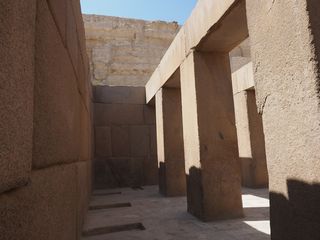
Giza • Valley Temple of Khafr
Monument profile
Valley Temple of Khafre
Monument category: Egyptian temple
Monument family: Temple
Monument genre: Religious
Cultural heritage: Ancient Egypt
Geographic location: Giza • Egypt
Construction period: before the 6th century BC
This monument in Giza is inscribed on the UNESCO World Heritage List since 1979 and is part of the serial property "Memphis and its Necropolis – the Pyramid Fields from Giza to Dahshur".See the UNESCO monuments featured on this site
• Links to •
• Dynasties that contributed to the construction of the monument •

• List of videos about Giza on this site •
Giza, Royal Necropolis of the Old Kingdom • Egypt
The Valley Temple of Khafre: Political Significance, Historical Evolution, and Modern Challenges
Political and Social Motivations for Its Construction
The Valley Temple of Khafre, constructed between 2558 and 2532 BCE during the Fourth Dynasty of Egypt's Old Kingdom, was an integral part of Khafre’s funerary complex. This temple served not only as a place for mortuary rituals but also as a political statement of the pharaoh's divine authority and central role in Egyptian society.
Politically, the temple symbolized the pharaoh's connection to the gods and his role as a stabilizing force in maintaining the cosmic order (Maat). Its construction reinforced Khafre’s legitimacy and dynastic continuity. Socially, the temple represented a monumental collective effort, uniting thousands of workers, architects, and artisans. This organization demonstrated the state's ability to mobilize resources and maintain a cohesive society around shared religious and political goals.
Historical Events and Their Impact
Throughout the centuries, the Valley Temple of Khafre has witnessed several major historical events that shaped its role and significance. During antiquity, it played a central role in the pharaoh’s funerary rites, including the purification of his body and ceremonies affirming his transition to the afterlife. The temple, connected to the pyramid and the Great Sphinx by a causeway, was also central to cult practices associated with Khafre’s deification.
Under Greek and Roman rule, the site became a focal point of admiration for foreign rulers and travelers, symbolizing the grandeur and ingenuity of ancient Egyptian civilization. In the medieval period, the temple was partially dismantled, with its stones repurposed for construction in Cairo. However, archaeological excavations in the 19th and 20th centuries uncovered the temple’s significance, reviving global interest in its history and cultural importance.
Global Context and Comparisons
The construction of the Valley Temple of Khafre coincided with significant advancements in other parts of the world. In Mesopotamia, city-states like Ur were building ziggurats, monumental structures that symbolized the connection between rulers and the divine. In the Indus Valley, cities such as Mohenjo-Daro exhibited advanced urban planning and social organization. Meanwhile, in Europe, megalithic structures like Stonehenge were being erected, reflecting a focus on ritual and astronomy.
What sets the Valley Temple apart is its scale, precision, and the integration of religious, political, and artistic elements. Unlike other contemporary monuments, the temple exemplifies centralized power, religious devotion, and a deep understanding of materials and construction techniques.
Transformations Over the Centuries
The Valley Temple of Khafre has undergone significant changes since its construction. Originally clad in polished granite and limestone, much of its outer layer was stripped during periods of instability and repurposed for other building projects. The inner structure, however, remains relatively intact, showcasing massive stone blocks arranged with remarkable precision.
Excavations revealed notable artifacts, such as the famous diorite statue of Khafre, which exemplifies the artistic excellence of the Fourth Dynasty. These transformations reflect shifts in power dynamics and external influences while highlighting the enduring fascination with the site.
Cultural Importance and Current State
Today, the Valley Temple of Khafre is recognized as a UNESCO World Heritage Site, part of the "Memphis and its Necropolis – the Pyramid Fields from Giza to Dahshur" inscription in 1979. This recognition underscores its role as a symbol of ancient Egypt’s cultural and architectural legacy.
Despite its historical significance, the temple faces challenges due to erosion, pollution, and tourism. Conservation efforts, including modern technologies like 3D scanning, aim to stabilize and preserve its structure. These initiatives help maintain the temple as a site of study and cultural appreciation.
Modern Challenges and Preservation Efforts
The preservation of the Valley Temple of Khafre is threatened by several factors:
- Natural Erosion: Wind, sand, and fluctuating temperatures gradually deteriorate the stone blocks.
- Urban Encroachment: Cairo's rapid expansion brings pollution and vibrations that impact the site's stability.
- Tourist Impact: High visitation rates require strict management to prevent further wear and tear.
- Climate Change: Shifts in humidity and temperature accelerate the degradation of materials.
Ongoing international collaboration and technological advancements are crucial to addressing these threats, ensuring the temple's longevity for future generations.
Conclusion
The Valley Temple of Khafre stands as a testament to the technological innovation, political power, and cultural richness of ancient Egypt’s Fourth Dynasty. Its architectural precision and historical role have made it an enduring symbol of human ingenuity. While modern challenges pose significant risks to its preservation, concerted conservation efforts and global recognition continue to safeguard this invaluable heritage site, keeping its legacy alive for generations to come.
The Valley Temple of Khafre: Architectural Ingenuity and Fourth Dynasty Innovation
Technological Advancements and Construction Techniques
The Valley Temple of Khafre, built during the Fourth Dynasty of Egypt's Old Kingdom (2558–2532 BCE), exemplifies the technological advancements and architectural innovation of its era. This structure, integral to Khafre’s funerary complex, showcases a mastery of engineering and construction techniques that continue to fascinate modern scholars.
Massive limestone blocks form the temple's core, many weighing up to several tons. The exterior was originally clad in polished granite, transported over 800 kilometers from quarries in Aswan. This logistical achievement highlights the Egyptians' advanced understanding of transportation and workforce management. The granite was shaped with extraordinary precision, allowing the blocks to fit seamlessly without the use of mortar. The flooring and interior walls included alabaster, adding to the aesthetic refinement of the structure.
The design incorporated a roof supported by monolithic granite columns, a feature that distributed the weight of the massive stone ceiling evenly, ensuring stability and durability. This demonstrates not only technical expertise but also a deep understanding of material properties.
Architectural Features and Decorative Elements
The temple’s layout is simple yet purposeful, designed for the rituals of purification and mummification essential to Khafre’s journey to the afterlife. Its most notable feature is the open courtyard surrounded by colonnades, which created an atmosphere of both grandeur and solemnity.
Decorative elements are minimal but striking. The temple housed several statues of Khafre, including the iconic diorite statue now displayed at the Egyptian Museum in Cairo. This piece, portraying Khafre seated on a throne with the protective god Horus behind him, is a masterpiece of Fourth Dynasty art, symbolizing both divine authority and earthly power.
While there is little evidence of direct foreign influence, the precision and artistry of the temple reflect Egypt’s engagement with neighboring cultures, such as Nubia, whose resources contributed to the construction materials.
Notable Structure and Design
The Valley Temple is connected to the Great Pyramid and the Sphinx by a causeway, forming an integrated funerary complex. This connection illustrates the Egyptians’ holistic approach to monumental architecture, where each element served both practical and symbolic purposes. The alignment of the temple with celestial bodies further emphasizes its role in religious and cosmological practices.
The temple’s geometry and symmetry exemplify the Egyptians’ command of mathematics and design, ensuring that the structure could endure millennia of natural and human-made challenges.
Statistics and Anecdotes
Size: The temple measures approximately 45 x 45 meters, with its monolithic granite blocks weighing up to 70 tons.
Diorite Statue: Found within the temple, this statue was transported from quarries in the Western Desert, showcasing the complexity of ancient logistics.
Connection to the Sphinx: The temple is directly linked to the Temple of the Sphinx, suggesting a coordinated architectural plan emphasizing the pharaoh's divine role.
International Recognition and UNESCO Inscription
The Valley Temple of Khafre is part of the Giza Plateau, inscribed on the UNESCO World Heritage List in 1979 as part of "Memphis and its Necropolis – the Pyramid Fields from Giza to Dahshur." This recognition underscores its cultural and historical significance, drawing attention to its role as a symbol of ancient Egyptian innovation and belief systems.
The UNESCO designation has bolstered conservation efforts, including modern technological interventions such as 3D scanning and structural stabilization. These initiatives have ensured the temple’s longevity and enhanced its accessibility to global audiences, fostering a deeper appreciation of Egypt’s architectural heritage.
Conservation Challenges
Preservation of the Valley Temple faces several modern threats:
- Erosion: Wind, sand, and temperature fluctuations have gradually worn away its exterior.
- Urban Expansion: Pollution from Cairo and vibrations from nearby activity threaten the stability of the structure.
- Tourism Impact: High visitor numbers necessitate strict management to prevent physical degradation.
- Climate Change: Variations in humidity and temperature accelerate material decay.
Conclusion
The Valley Temple of Khafre is a testament to the ingenuity and vision of Fourth Dynasty Egypt. Its construction techniques, materials, and design reflect a society capable of monumental achievements, combining technological expertise with profound religious and political significance. International recognition and ongoing conservation efforts ensure that this extraordinary monument continues to inspire and educate future generations about the enduring legacy of ancient Egypt.