

 Français (France)
  Nederlands (nl-NL)
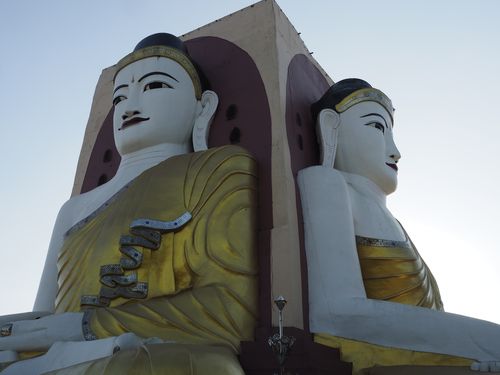
 The Kyaik Pun Pagoda, located in Bago, Myanmar, is renowned for its four towering Buddha statues, each seated in different poses and facing the four cardinal directions. Built in the 16th century during the reign of King Migadippa, this site serves as a place of meditation and worship for Buddhist devotees. Each statue, standing approximately 30 meters tall, embodies key teachings of Buddhism. The pagoda is a notable attraction for its spiritual significance and tranquil atmosphere.

Monument profile
Kyaig Pun Pagoda
Monument categories: Pagoda, Giant Statues
Monument families: Pagoda or stupa • Giant statues or set of statues
Monument genres: Religious
Cultural heritage: Buddhist
Geographic location: Bago • Myanmar
Construction period: 7th century AD
• Links to •
• List of videos about Bago on this site •
Bago (Pegu), monks and Buddhas • Myanmar
The Kyaik Pun Pagoda: Political Motivations, Historical Evolution, and Modern Challenges
The Kyaik Pun Pagoda, located in Bago, Myanmar, is a monument steeped in history and cultural significance. While traditionally attributed to King Dhammazedi in 1476 CE, some accounts suggest its origins may trace back to the 7th century, reflecting a layered history of construction, renovation, and adaptation. The pagoda’s four monumental Buddha statues symbolize the spread of Buddhist teachings, and its evolution over centuries underscores the intersection of religion, politics, and art in the region.
Political and Social Motivations Behind Its Construction
The construction of the Kyaik Pun Pagoda served dual purposes—political and religious. If built in the 7th century, it likely reflected the early adoption of Theravāda Buddhism in the region, solidifying it as a cultural and spiritual cornerstone. During the 15th century, under King Dhammazedi, its reconstruction or enhancement served as a demonstration of his devotion to Buddhism and an assertion of his legitimacy as a ruler.
Socially, the pagoda functioned as a unifying space for communities, where religious teachings fostered moral and ethical values aligned with governance. Its four Buddha statues, facing the cardinal directions, symbolize the universal reach of the Buddha’s teachings, offering spiritual guidance and fostering a shared cultural identity.
Historical Events and Their Impact
Over the centuries, the Kyaik Pun Pagoda has witnessed significant historical events that shaped its role in society.
- 7th Century Origins: If tied to this period, the pagoda reflects the early integration of Buddhism into Burmese society, coinciding with regional consolidation efforts.
- 15th Century Enhancements: Under Dhammazedi, Bago flourished as a religious and trading hub. The pagoda’s prominence during this period likely symbolized the kingdom's strength and spiritual commitment.
- 1930 Earthquake: The devastating earthquake damaged one of the four Buddha statues, necessitating restoration. This event highlighted the vulnerability of cultural heritage to natural disasters and spurred efforts to preserve the site.
Global Context and Comparisons
When the pagoda was first constructed or renovated, it paralleled significant developments in other parts of the world.
- 7th Century: In China, the Tang dynasty oversaw the flourishing of Buddhism and monumental temple construction, while Europe experienced the early Middle Ages.
- 15th Century: The European Renaissance produced architectural masterpieces like Florence’s Cathedral Dome, and in the Americas, the Aztec and Inca civilizations were at their zenith.
Unlike these regions, the Kyaik Pun Pagoda’s focus was on symbolic simplicity, emphasizing spiritual values over material opulence.
Transformations Over the Centuries
The pagoda has undergone multiple transformations due to natural disasters and changing cultural influences.
The 1930 earthquake severely damaged one statue, leading to significant restoration.
Modern restorations have introduced vivid colors and reinforced structures, blending traditional aesthetics with contemporary methods.
These changes reflect the dynamic nature of heritage preservation, where maintaining historical authenticity must balance with ensuring structural longevity.
Cultural Importance and Current State
Today, the Kyaik Pun Pagoda remains a vital religious and cultural site. It attracts pilgrims and tourists, serving as a beacon of Buddhist heritage. While it is not a UNESCO World Heritage Site, its significance has prompted efforts to preserve and protect its legacy.
Challenges in Preservation
The pagoda faces several preservation challenges:
- Environmental Factors: Exposure to Myanmar’s tropical climate accelerates weathering of the statues.
- Tourism Pressure: Increased foot traffic risks damaging the site’s physical and spiritual integrity.
- Limited Resources: Conservation efforts rely on local funding, which can hinder large-scale restoration projects.
Conclusion
The Kyaik Pun Pagoda is a testament to Myanmar’s rich cultural and spiritual heritage, embodying centuries of religious devotion and artistic achievement. Its enduring significance reflects the resilience of cultural traditions amid historical and environmental challenges. To safeguard its legacy, concerted efforts in preservation and international support are crucial, ensuring this iconic monument continues to inspire future generations.
Architectural Innovation and Cultural Significance of the Kyaik Pun Pagoda
The Kyaik Pun Pagoda, located in Bago, Myanmar, is an iconic monument that showcases architectural ingenuity and cultural fusion. Known for its four massive seated Buddha statues facing the cardinal directions, the pagoda reflects advancements in construction techniques, material usage, and artistic synthesis during its era of origin. While its precise construction date is debated, with references to both the 7th century and 1476 CE under King Dhammazedi, the pagoda remains a symbol of spiritual and architectural achievement.
Technological Innovation and Construction Materials
The construction of the Kyaik Pun Pagoda highlights advanced engineering techniques and resourceful use of materials.
- Materials: The statues are built using baked bricks as the core structural element, covered with a thick layer of stucco. This stucco was meticulously sculpted to create intricate details, from facial features to robes, and painted with natural pigments for vivid coloration.
- Techniques: The scale and stability of the 30-meter-tall statues demonstrate a sophisticated understanding of structural engineering. The builders utilized methods to distribute weight evenly, ensuring durability against environmental challenges like humidity and monsoons.
Unique Architectural and Decorative Features
The pagoda’s layout is distinctive, featuring four Buddha statues seated back-to-back around a central column. Each statue faces a cardinal direction, symbolizing the omnipresence of the Buddha’s teachings and their universal appeal.
Decorative elements further enhance its cultural significance:
The serene expressions and meditative postures reflect Theravāda Buddhist traditions, emphasizing enlightenment and compassion.
The robes’ intricate patterns and the ornate thrones suggest influences from regional and international artistic styles, including Indian and Southeast Asian motifs, underscoring Myanmar’s historical role as a hub of cultural exchange.
This blend of local craftsmanship and external influences creates a harmonious aesthetic unique to the region.
Notable Structure and Anecdotes
The four colossal Buddha statues are not only a spiritual representation but also an architectural marvel. Their arrangement around a square base provides both balance and symbolic significance, connecting the pagoda to Buddhist cosmology.
An intriguing anecdote tied to the Kyaik Pun Pagoda involves local folklore. It is said that the statues are linked to four sisters who vowed to remain unmarried to preserve the sanctity of the monument. According to legend, a statue would collapse if one of the sisters broke this vow. Following the 1930 earthquake, which damaged one statue, this story gained renewed attention, reinforcing the site’s cultural mystique.
Contribution to International Recognition
Although the Kyaik Pun Pagoda has not been designated a UNESCO World Heritage Site, its unique architecture and spiritual importance have earned it international recognition as a significant cultural landmark. Its distinctive features attract both pilgrims and tourists, contributing to global appreciation of Myanmar’s Buddhist heritage.
Challenges in Preservation
The pagoda faces several challenges to its long-term preservation:
- Environmental Degradation: The tropical climate accelerates the deterioration of stucco and painted surfaces.
- Tourism Pressure: Increased foot traffic can lead to wear and tear of the site’s structures.
- Limited Funding: Restoration efforts rely heavily on local resources, which may hinder comprehensive preservation projects.
Addressing these challenges requires a combination of traditional restoration methods and modern conservation techniques, as well as potential international partnerships to secure funding and expertise.
Conclusion
The Kyaik Pun Pagoda is a remarkable testament to Myanmar’s architectural and cultural heritage. Its innovative design, symbolic significance, and artistic fusion highlight the achievements of its builders and the enduring appeal of Buddhist teachings. While challenges persist in preserving this historical treasure, continued efforts will ensure that it remains a source of inspiration and spiritual connection for generations to come.