

 Français (France)
  Nederlands (nl-NL)
 The Terrace of the Elephants and the Terrace of the Leper King, located within the Angkor complex in Cambodia, are iconic structures that highlight the ceremonial and artistic significance of the Angkorian era. Built in the 12th century during the reign of Jayavarman VII, they were used for processions, royal ceremonies, and public performances. Adorned with intricately carved bas-reliefs depicting mythological scenes, elephants, and divine figures, these terraces showcase the artistic refinement and cultural richness of the Khmer Empire.
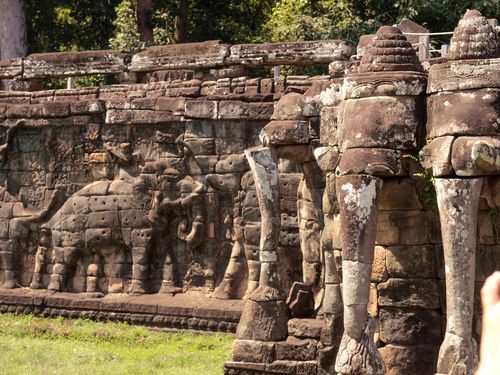
Angkor • Terrace of the Elephants and the Leper King: terrace of the elephants
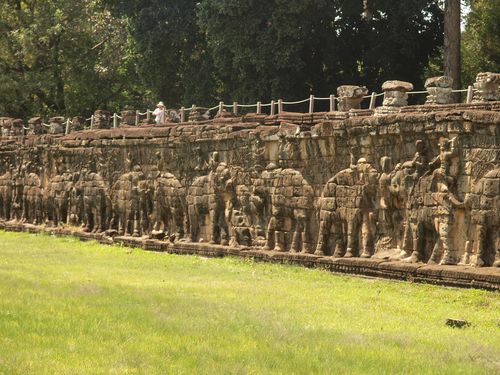
Angkor • Terrace of the Elephants and the Leper King: terrace of the elephants
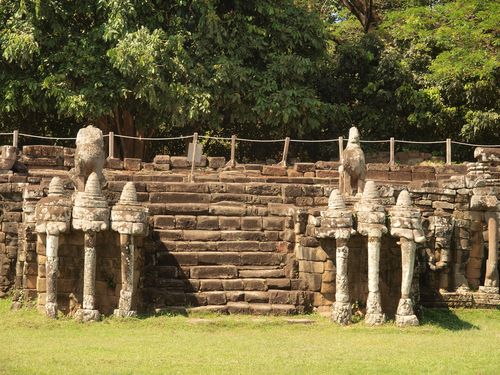
Angkor • Terrace of the Elephants and the Leper King: terrace of the leper king
Monument profile
Terrace of the Elephants and the Leper King
Monument category: Terrasse
Monument family: Palace and Annexes
Monument genre: Residential
Cultural heritages: Buddhist, Hindu
Geographic location: Angkor • Cambodia
Construction period: 12th century AD
This monument in Angkor is inscribed on the UNESCO World Heritage List since 1992 and is part of the serial property "Angkor".See the UNESCO monuments featured on this site
• Links to •
• Dynasties that contributed to the construction of the monument •

• List of videos about Angkor on this site •
Angkor, the Preah Khan temple • Cambodia
Angkor, Ta Prohm temple • Cambodia
Angkor Thom, the Great City • Cambodia
Angkor Wat, masterpiece of Khmer architecture • Cambodia
• References •
Wikipedia FR: Terrasse du Roi lépreux
Wikipedia EN: Terrasse des Éléphants
The Terraces of the Elephants and the Leper King: Political Motives, Historical Transformations, and Modern Challenges
The Terraces of the Elephants and the Leper King, located in the Angkor complex in Cambodia, are iconic structures that reflect the political, social, and artistic aspirations of the Khmer Empire. Constructed in the 12th century under King Jayavarman VII, these monuments served as both ceremonial platforms and symbols of royal authority. Over the centuries, they have undergone significant transformations, mirroring shifts in power, cultural exchanges, and historical events.
Political and Social Motives Behind Their Construction
The Terraces were built as part of the royal city of Angkor Thom, a political and spiritual center of the Khmer Empire. The Terrace of the Elephants, a 350-meter-long platform adorned with intricate bas-reliefs of elephants and mythological creatures, was used for grand public ceremonies, royal processions, and military parades. Its construction underscored the authority of King Jayavarman VII and served as a visual representation of his centralized rule.
The Terrace of the Leper King, slightly smaller but equally significant, is surrounded by detailed carvings depicting celestial beings, nagas, and apsaras. Its name comes from a statue discovered on the site, believed to represent either a king afflicted with leprosy or Yama, the Hindu god of death. This terrace is thought to have been a site for funerary rites or spiritual ceremonies, reflecting the intertwining of religion and governance in Khmer society.
Historical Context and Global Comparisons
The construction of these terraces in the late 12th century coincided with a period of global transformation. In Southeast Asia, the Khmer Empire was consolidating its dominance, while in Europe, the High Middle Ages were marked by the construction of Gothic cathedrals and the Crusades. In the Islamic world, the Abbasid Caliphate was fostering advancements in science and culture, and in China, the Song Dynasty was experiencing a golden age of economic and technological innovation.
The grandeur of the Terraces of the Elephants and the Leper King reflects a similar ambition to that seen in monumental architecture worldwide, where rulers used art and urban design to assert power and foster civic identity.
Major Transformations Over the Centuries
Following the decline of the Khmer Empire in the 15th century, the Angkor complex, including these terraces, was gradually abandoned and reclaimed by the jungle. This period of neglect, combined with the region's humid climate, led to the erosion and partial collapse of many structures.
The rediscovery of Angkor by French explorers in the 19th century marked a turning point. The terraces became a focus of restoration efforts by the École française d’Extrême-Orient (EFEO) in the early 20th century. These efforts aimed to preserve the intricate bas-reliefs and stabilize the structures, ensuring their survival for future generations.
Cultural Significance and Current Conservation Status
Today, the Terraces of the Elephants and the Leper King are celebrated as masterpieces of Khmer art and architecture. Their bas-reliefs, depicting scenes of royal ceremonies, mythological narratives, and everyday life, offer invaluable insights into the cultural and spiritual life of the Khmer Empire.
The inclusion of the Angkor complex as a UNESCO World Heritage Site in 1992 has brought international recognition and funding for conservation. Restoration projects have focused on preserving the delicate carvings and stabilizing the platforms while balancing the demands of tourism.
Modern Challenges to Preservation
The preservation of these terraces faces several challenges. The tropical climate, with heavy rainfall and high humidity, accelerates the degradation of stone materials. The roots of surrounding trees, while visually striking, pose a threat to the structural integrity of the monuments. Additionally, the increasing number of visitors places pressure on the fragile site, necessitating sustainable tourism management.
Climate change introduces new uncertainties, such as extreme weather events and fluctuating environmental conditions, further complicating conservation efforts. Limited resources and competing priorities in heritage management also pose obstacles to comprehensive restoration.
Conclusion
The Terraces of the Elephants and the Leper King stand as enduring symbols of the Khmer Empire’s artistic brilliance, political strength, and cultural depth. Their history, marked by periods of glory, neglect, and rediscovery, reflects the dynamic interplay between human achievement and the passage of time. As UNESCO World Heritage Sites, these monuments continue to inspire awe and serve as a reminder of the importance of preserving humanity’s shared cultural heritage in the face of modern challenges.
The Architecture of the Terraces of the Elephants and the Leper King: Technological Innovation and Cultural Synthesis
The Terraces of the Elephants and the Leper King, located in Angkor, Cambodia, are architectural masterpieces that showcase the technological ingenuity and artistic innovation of the Khmer Empire during its height in the 12th century. These monuments reflect not only the grandeur of the Khmer civilization but also its ability to integrate regional traditions with external influences, creating a unique cultural legacy.
Materials and Construction Techniques
The construction of the terraces relied heavily on sandstone and laterite, two materials emblematic of Khmer architecture. Sandstone, prized for its durability and ability to be intricately carved, was used for decorative elements and bas-reliefs, while laterite, a porous and robust stone, formed the structural core of the terraces.
Advanced construction techniques, including the precise alignment of stone blocks without the use of mortar, ensured the stability of these monumental platforms. The bas-reliefs were carved directly onto the sandstone, showcasing an exceptional level of craftsmanship and artistic detail. These carvings remain a testament to the technical expertise of the artisans and their ability to create intricate designs on a grand scale.
Architectural Features and Cultural Fusion
The Terraces of the Elephants and the Leper King are distinct yet complementary in their architectural and symbolic functions.
The Terrace of the Elephants, stretching over 350 meters, served as a ceremonial stage for royal events, military parades, and public spectacles. Its walls are adorned with bas-reliefs depicting elephants in dynamic procession, warriors, and mythical creatures such as garudas. These carvings illustrate the centrality of royal authority and the grandeur of state-sponsored events in Khmer society.
The Terrace of the Leper King, smaller in scale but equally ornate, is enclosed by walls covered in intricate carvings of celestial beings, nagas, and apsaras. This terrace is thought to have had a ritualistic function, possibly associated with funerary practices or spiritual ceremonies. The name derives from a statue found on the site, which, due to its eroded condition, was believed to represent a king afflicted with leprosy. However, other interpretations suggest the statue represents Yama, the Hindu god of death.
The artistic elements of both terraces highlight a synthesis of regional traditions and Indian influences, evident in the representation of Hindu and Buddhist deities and motifs. This blending of styles underscores the cosmopolitan nature of the Khmer Empire and its ability to assimilate external cultural elements into its artistic repertoire.
Notable Statistics and Anecdotes
The scale of the Terraces of the Elephants and the Leper King is impressive. The Terrace of the Elephants alone spans an area sufficient to host large public events, emphasizing its role as a center of political and ceremonial activity. An intriguing anecdote concerns the statue on the Terrace of the Leper King: it has sparked debates among historians and archaeologists regarding its identity and significance, reflecting the complex interplay of myth and history in Khmer culture.
International Recognition and UNESCO’s Impact
The Terraces, as part of the Angkor complex, were inscribed as UNESCO World Heritage Sites in 1992. This recognition has elevated their status as cultural and historical landmarks of global significance. The inscription has facilitated international collaboration in conservation efforts, bringing attention to the need for preserving these monuments for future generations.
Restoration initiatives have focused on stabilizing the structures and protecting the bas-reliefs from weathering and human impact. These efforts have ensured that the terraces remain accessible to the public while safeguarding their historical and artistic integrity.
Challenges and Preservation Efforts
Preserving the terraces poses significant challenges. The tropical climate of Cambodia accelerates the erosion of sandstone, and invasive vegetation, particularly tree roots, threatens the structural stability of the monuments. The increasing flow of tourists requires careful management to prevent further damage.
Climate change presents additional risks, with extreme weather conditions potentially exacerbating the degradation of these historical structures. Conservation strategies must balance the demands of tourism with the need for sustainable preservation practices.
Conclusion
The Terraces of the Elephants and the Leper King stand as enduring symbols of the Khmer Empire’s technological innovation, artistic brilliance, and cultural synthesis. Their architectural features and intricate carvings provide invaluable insights into the social, political, and spiritual life of the Khmer civilization. As internationally recognized heritage sites, these terraces continue to captivate and inspire, serving as a reminder of the importance of preserving cultural treasures for the enrichment of humanity.