

 Français (France)
  Nederlands (nl-NL)
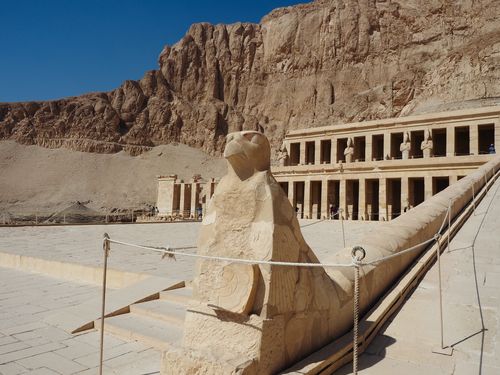
 The Temple of Hatshepsut, located in Luxor, Egypt, stands as a monumental tribute to the reign of the pharaoh-queen Hatshepsut. This structure is renowned for its distinctive terraced layout that merges seamlessly with the surrounding limestone cliffs. The temple’s grand architecture not only signifies Hatshepsut’s power and prestige during the New Kingdom but also serves a dual role as a memorial complex for the queen and Egyptian deities, representing a confluence of religious and political purposes.

Monument profile
Temple of Hatshepsut
Monument category: Egyptian temple
Monument family: Temple
Monument genre: Religious
Cultural heritage: Ancient Egypt
Geographic location: Luxor • Egypt
Construction period: before the 6th century BC
This monument in Luxor is inscribed on the UNESCO World Heritage List since 1979 and is part of the serial property "Ancient Thebes with its Necropolis".See the UNESCO monuments featured on this site
• Links to •
• Dynasties that contributed to the construction of the monument •

• List of videos about Luxor on this site •
Luxor • Valley of the Kings: Treasures of the Pharaohs
Luxor • Temple of Hatshepsut and Colossi of Memnon
Luxor • The Majestic Temple of Amun, Egypt
Luxor • Wonders of the Karnak Temple
The Temple of Hatshepsut in Luxor: A Monument of Political Vision and Global Significance
The Temple of Hatshepsut, located at Deir el-Bahari on the west bank of the Nile in Luxor, is a remarkable architectural achievement of ancient Egypt. Built during the 18th Dynasty around 1473–1458 BCE, this mortuary temple reflects not only the technological and artistic advancements of the era but also the political and social motivations of Queen-Pharaoh Hatshepsut. It serves as a testament to her reign and her ambition to legitimize her authority in a male-dominated society, leaving a legacy that continues to captivate scholars and visitors alike.
Political and Social Motivations
Hatshepsut’s construction of this temple was deeply rooted in political and social strategy. As one of the few female pharaohs, she faced challenges to her legitimacy. By commissioning this grand temple, she sought to demonstrate her divine right to rule, presenting herself as the chosen daughter of the god Amun-Re. The temple’s reliefs vividly depict this connection, reinforcing her authority and ensuring her legacy as a powerful and rightful ruler.
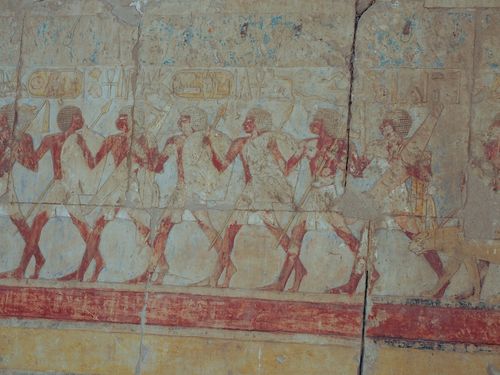
Socially, the temple celebrated Egypt’s prosperity under her reign, highlighting successful trade expeditions, particularly to the land of Punt. These depictions not only showcased the wealth brought back to Egypt but also solidified Hatshepsut’s image as a provider of stability and abundance.
Historical Events and Regional Impact
The Temple of Hatshepsut has witnessed significant historical events that shaped the political and social development of the region:
- Post-Hatshepsut Era: After Hatshepsut’s death, her successor, Thutmose III, sought to erase her memory by defacing statues, inscriptions, and reliefs. This act of "damnatio memoriae" was a political move to restore traditional male dominance in pharaonic succession.
- Greco-Roman Period: The temple was repurposed for local cults during the Greco-Roman era, reflecting the cultural exchanges and adaptations of foreign powers in Egypt.
- Christian Adaptations: During the early Christian period, parts of the temple were converted into monasteries, leading to further alterations and damage.
These transformations mirror the shifts in power and cultural influences over the centuries, each leaving its mark on the site.
Global Context During Hatshepsut’s Reign
- Hatshepsut’s reign coincided with significant developments in other parts of the world:
- Mesopotamia: The Kassites were consolidating power in Babylonia, contributing to regional stability.
- Indus Valley: The Harappan civilization was transitioning to more localized settlements.
- China: The Shang Dynasty was emerging, laying the foundations for Chinese statecraft and culture.
- Europe: Bronze Age societies were advancing, with increasing trade and cultural exchange.
In this global context, Egypt stood out for its centralized authority and monumental architecture, exemplified by Hatshepsut’s temple.
Architectural Transformations Over Time
- The Temple of Hatshepsut underwent several transformations, reflecting changes in power and external influences:
- Structural Damage and Restoration: Over the centuries, earthquakes, erosion, and human activity caused significant damage. Restoration efforts began in the 19th and 20th centuries, spearheaded by Egyptian and international teams.
- Cultural Reuse: Its conversion into a Christian monastery during the Byzantine era added a layer of historical complexity.
- Modern Archaeological Work: Excavations and conservation projects have uncovered new details about its original design and purpose.
These transformations highlight the temple’s enduring importance and adaptability.
Cultural Significance and UNESCO Recognition
The Temple of Hatshepsut was designated a UNESCO World Heritage Site in 1979 as part of the "Ancient Thebes with its Necropolis." This recognition underscores its universal value as a masterpiece of architecture and a symbol of human creativity.
The temple’s cultural significance lies in its ability to connect modern audiences with ancient history, showcasing the sophistication and vision of the 18th Dynasty. Its reliefs and design provide insights into Egyptian society, religion, and governance during one of its most prosperous periods.
Challenges to Preservation
- Despite its significance, the temple faces numerous modern threats:
- Environmental Factors: Erosion from wind, sand, and temperature fluctuations continues to endanger its delicate reliefs and structures.
- Tourism Impact: While tourism is vital for Egypt’s economy, the sheer number of visitors can accelerate wear and tear.
- Rising Groundwater: Increasing water levels threaten the stability of the temple’s foundations.
- Climate Change: Extreme weather events and shifting environmental conditions pose additional risks.
Ongoing efforts, such as 3D scanning, advanced material analysis, and international collaborations, aim to mitigate these challenges and ensure the temple’s survival.
Conclusion
The Temple of Hatshepsut is a monument to the vision, resilience, and creativity of ancient Egypt. Its construction and history reflect the interplay of politics, religion, and culture, while its architecture continues to inspire admiration worldwide. As a UNESCO World Heritage Site, it stands as a beacon of cultural heritage, reminding us of the importance of preserving the past for future generations. With continued efforts, this architectural masterpiece will remain a testament to the ingenuity and ambition of one of history’s most remarkable leaders, Queen Hatshepsut.
Architectural Innovation and Global Significance of the Temple of Hatshepsut
The Temple of Hatshepsut, located at Deir el-Bahari in Luxor, Egypt, stands as a testament to the technological and architectural advancements of the 18th Dynasty. Constructed between 1473 and 1458 BCE, this mortuary temple is one of the most remarkable achievements of ancient Egyptian architecture. Its innovative design, use of materials, and intricate decorations showcase a blend of traditional Egyptian styles and external influences, reflecting the grandeur and sophistication of Hatshepsut’s reign.
Technological Advancements and Materials
The construction of the Temple of Hatshepsut highlights the remarkable engineering capabilities of ancient Egypt. Under the guidance of Senemut, the chief architect and trusted advisor of Queen Hatshepsut, the temple was designed to harmonize with its natural surroundings at the base of the limestone cliffs of Deir el-Bahari.
Materials Used
- Limestone: Quarried locally, limestone was the primary material for the temple’s construction, particularly for the massive colonnades and walls.
- Granite: Imported from Aswan, granite was utilized for statues, door frames, and obelisks, symbolizing durability and prestige.
- Exotic woods: Imported materials such as cedar from Lebanon were used in decorative elements and doors.
Construction Techniques
- Terraced Structure: The temple’s design includes three distinct terraces connected by wide ramps, creating a sense of grandeur and visual progression toward the sanctuary.
- Carved Reliefs: The intricate reliefs on the walls depict significant events such as the expedition to Punt, emphasizing the temple’s dual function as a political statement and a religious site.
- Solar Alignment: The temple’s orientation ensures it aligns with the sun’s path during key religious events, demonstrating advanced knowledge of astronomy.
Architectural Design and Decorative Elements
The layout and decorations of the Temple of Hatshepsut reflect a harmonious blend of Egyptian traditions and influences from other cultures, highlighting the interconnectedness of the ancient world.
Notable Features
- Symmetrical Design: The temple’s layout is a masterpiece of symmetry, with colonnades and ramps aligned perfectly to draw the visitor’s eye toward the sanctuary of Amun.
- Gardens and Pools: Archaeological evidence suggests that the terraces were adorned with lush gardens and reflective pools, symbolizing fertility and prosperity.
- Scenes from Punt: The expedition to Punt, depicted in extraordinary detail, is one of the earliest records of a state-sponsored trade mission, highlighting Egypt’s economic and cultural connections.
- Statues and Sphinxes: Rows of sphinxes and statues of Hatshepsut emphasize her role as both a divine ruler and a mortal sovereign.
External Influences
The inclusion of exotic flora and fauna from Punt and the use of imported materials illustrate Egypt’s extensive trade networks. This blending of local and foreign elements enriches the temple’s cultural and artistic significance.
Historical Context and Anecdotes
- The Temple of Hatshepsut was constructed during a period of prosperity and centralized authority under the 18th Dynasty. Notable anecdotes include:
- Senemut’s Contribution: The architect Senemut is believed to have been buried near the temple, signifying his close connection to its construction.
- Posthumous Defacement: Thutmose III, Hatshepsut’s successor, attempted to erase her legacy by defacing her statues and inscriptions, showcasing the political rivalries of the time.
Global Recognition and UNESCO Heritage
- Designated as part of the "Ancient Thebes with its Necropolis" UNESCO World Heritage Site in 1979, the Temple of Hatshepsut is celebrated for its architectural ingenuity and cultural significance. This recognition has had several impacts:
- Conservation Efforts: UNESCO support has enabled extensive restoration work, preserving the delicate reliefs and stabilizing the temple’s structure.
- Global Awareness: The site’s inclusion on the World Heritage list has attracted researchers and tourists, enhancing its status as a global cultural treasure.
Preservation Challenges and Modern Efforts
Despite its significance, the temple faces numerous preservation challenges:
- Environmental Degradation: Wind erosion, temperature fluctuations, and sandstorms threaten the integrity of the reliefs and stone structures.
- Tourism Pressure: Heavy foot traffic from millions of visitors annually can lead to wear and damage.
- Climate Change: Rising temperatures and shifting weather patterns exacerbate the risks to the site.
- Groundwater Issues: The rising water table in Luxor poses a threat to the foundation of the temple.
Modern preservation efforts include advanced techniques such as 3D scanning and material analysis to document and protect the temple. Collaboration between local authorities and international organizations ensures that conservation strategies are both sustainable and effective.
Conclusion
The Temple of Hatshepsut stands as a monument to the ingenuity and ambition of ancient Egyptian civilization. Its innovative design, use of advanced construction techniques, and rich decorative program embody the ideals of the 18th Dynasty while offering a window into the political, social, and cultural dynamics of the era. Recognized globally through its UNESCO designation, the temple remains a vital link to humanity’s shared heritage, inspiring ongoing efforts to preserve its legacy for future generations.